
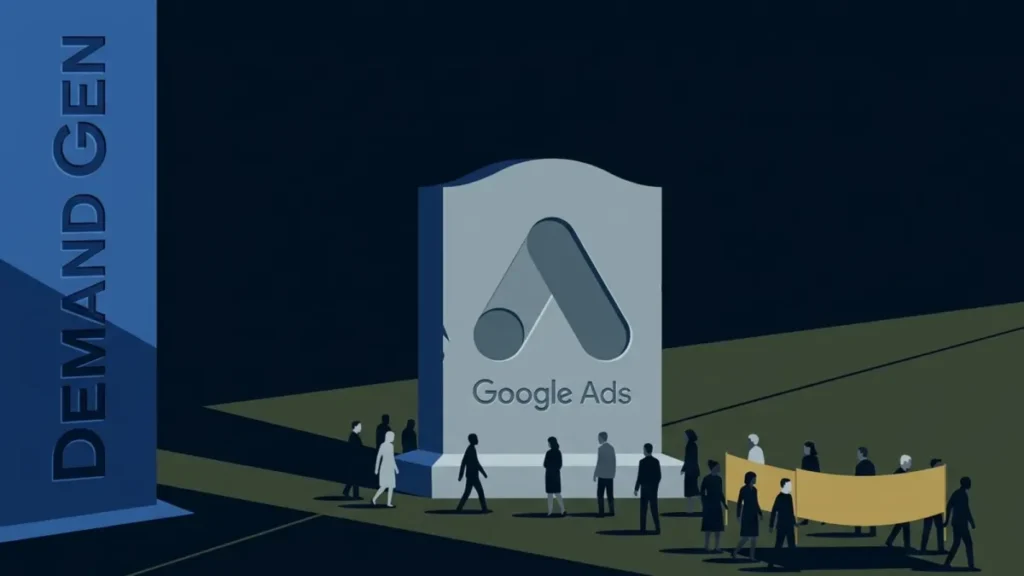
The Sunset of an Era: Google Retires Standalone Display Ads in Favor of Demand Gen
In a tectonic shift for the digital advertising industry, Google has officially announced the retirement of its standalone Google Display Ads campaigns. After more than a decade as a pillar of Google’s advertising ecosystem, the Google Display Network (GDN) is being folded into "Demand Gen," a unified, AI-driven campaign architecture. This structural consolidation, confirmed by Google on May 26, 2026, marks the end of the traditional Display-only campaign format and signals a aggressive push toward a more integrated, Google-owned inventory model.
The transition is not merely an interface update; it is a fundamental reconfiguration of how millions of advertisers manage their visual media buying. As the rollout of a phased migration tool begins this June, advertisers face a multi-year transition period that will culminate in the total phasing out of standalone Display campaigns by 2027.
The Core Transformation: What is Actually Changing?
For years, the Google Display Network has served as the backbone of the open web’s advertising infrastructure, providing reach across more than 2 million websites, videos, and apps. Under the new directive, these placements will no longer be accessible through a dedicated "Display" campaign type. Instead, they will exist as a selectable channel within the Demand Gen framework.
The Shift in Campaign Philosophy
While the underlying inventory—the vast network of third-party publishers—remains intact, the "shell" in which these ads live has changed. Advertisers who previously relied on Display-only campaigns must now adopt the Demand Gen workflow. This transition forces a departure from the granular, manual controls that long-term advertisers have mastered, pushing them toward a more automated, AI-optimised environment.
Despite the move toward consolidation, Google has confirmed that "channel controls" will allow advertisers to maintain a Display-focused strategy. By selecting specific placements, users can isolate GDN inventory, effectively mimicking the behavior of a legacy Display campaign. However, the default setting for a Demand Gen campaign is broader, encompassing YouTube, Discover, Gmail, and the newly integrated Google Maps.
A Chronological Roadmap to 2027
The transition is being managed through a carefully staged rollout to minimize disruption for global advertisers.
- May 26, 2026: Google publishes the formal announcement on the Google Ads and Commerce Blog, initiating the countdown to the retirement of standalone Display Ads.
- June 2026: The phased launch of the official migration tool begins. Eligible advertisers gain access to a streamlined process within their Google Ads accounts to port active campaigns into the Demand Gen structure.
- Late 2026 (TBD): Google will deactivate the ability to create new standalone Google Display Ads campaigns. Existing campaigns remain editable until they are migrated.
- 2027 (Final Deadline): The sunset process concludes. Any remaining standalone Display campaigns will be automatically migrated by Google, and the legacy format will be fully deprecated.
Data-Driven Performance: Google’s Claims vs. Market Reality
To justify this monumental shift, Google has highlighted performance metrics aimed at assuaging advertiser concerns. According to the company, those who have already integrated GDN into Demand Gen campaigns report an average 9.5% increase in return on investment (ROI).
A notable case study involves the food delivery platform GoFood. Google reports that, following the transition to Demand Gen, GoFood experienced a 24% decrease in cost per acquisition (CPA) and a 19% surge in total conversion volume.
However, industry analysts advise caution when interpreting these figures. While internal Google data shows promise, the performance of Demand Gen is heavily reliant on AI bidding models. Advertisers accustomed to manual bidding—such as Manual CPC or Pay for Conversions—may find that these gains are not uniform across all industries or account sizes. The "cold start" period remains a critical hurdle; without sufficient historical data, AI models may underperform during the first few days post-migration.
Operational Implications: What is Gained and Lost?
The migration to Demand Gen is a trade-off. Advertisers gain access to broader, premium inventory but lose specific legacy controls.
Expanded Reach and Creative Formats
The primary advantage of the transition is the expansion of ad surfaces. Demand Gen allows for cross-platform presence across:
- YouTube (In-feed and Shorts)
- Discover
- Gmail
- Google Maps (currently in beta)
- Google Display Network (via opt-in)
Creative capabilities have also seen an upgrade. Demand Gen supports carousel ads and generative image tools, which were not standard in traditional Display. However, some legacy formats, such as standard GIF support, are noticeably absent, necessitating a rethink of creative assets for many brands.
Targeting and Bidding Evolution
The shift mandates a change in bidding strategies. Manual CPC, Viewable Impressions, and Pay for Conversions are being retired in favor of conversion-focused models: Max conversions, Max conversion value, tCPA, and tROAS. Furthermore, the introduction of "Flighted Campaign Total Budgets" provides a new way to manage spend over time, offering more flexibility for promotional cycles but removing the simple daily budget rigidity of the past.
Perhaps most significantly, the "Similar Audiences" feature has been fully replaced by "Lookalike segments." This change reflects Google’s broader strategy to move away from rigid, manual targeting toward audience suggestions that leverage machine learning to find prospective customers.
The Revenue Shift: The "Publisher" Question
Perhaps the most contentious aspect of this migration is the financial impact on the open web. Historically, standalone Display campaigns were the primary vehicle for monetizing the 2 million-plus third-party sites in the Google Display Network. In those campaigns, publisher revenue share was the default.
In the Demand Gen environment, the dynamic changes. Demand Gen focuses heavily on "Google-owned" properties (YouTube, Discover, Gmail, and Maps), where Google retains 100% of the advertising revenue. When advertisers launch a Demand Gen campaign, they must actively opt into the Google Display Network.
Data from Alphabet’s recent earnings reports highlights this trend. By mid-2025, 90% of Google’s advertising revenue was generated on its own properties, while network advertising revenue (the portion shared with publishers) saw a steady decline. The retirement of standalone Display Ads effectively accelerates this trend, as advertisers who do not manually adjust their channel controls will naturally funnel their budgets into Google’s proprietary surfaces.
Expert Best Practices for a Seamless Transition
For marketing teams managing this migration, Google recommends a disciplined, phased approach:
- Use the Migration Tool: It is the only way to retain 42 days of performance history. This prevents the "cold start" problem and allows the bidding algorithms to hit the ground running with established data.
- Maintain Continuity: During the migration, keep the "Google Display Network" setting selected in your channel controls. Once the campaign is safely migrated, you can gradually experiment by enabling YouTube, Discover, or Gmail.
- Consolidate for Efficiency: Don’t just move campaigns; improve them. Merge similar ad groups and audience themes to provide the AI with the largest possible dataset to optimize against.
- Mind the Approval Cycle: Migrated ads are treated as new entities. Even if they were previously approved, they will undergo a fresh review process. Ensure you have a buffer time before any major campaign launches to avoid serving delays.
- Monitor Early: Expect performance volatility during the first 48 to 72 hours. Avoid the temptation to make drastic bid changes; wait at least a week before adjusting targets by more than 15%.
Conclusion: Adapting to an AI-Centric Future
The retirement of standalone Display Ads is the final piece of a multi-year puzzle aimed at simplifying Google’s advertising ecosystem. From the phasing out of Video Action campaigns to the removal of Display from the Performance Planner, the message from Google has been consistent: the future of advertising is consolidated, AI-driven, and centered around Google’s owned-and-operated inventory.
While the transition presents logistical challenges and requires a departure from legacy management styles, it also offers a more powerful, integrated toolkit for brands willing to embrace the change. Advertisers who move early to understand the mechanics of Demand Gen—and who learn to balance the reach of the Google Display Network with the high-intent surfaces of YouTube and Discover—will be best positioned to thrive in the new, automated landscape.
As the industry prepares for the full sunset of Display in 2027, the focus for marketers must shift from managing campaigns to managing data inputs. In this new era, the strategy is no longer about which network you select, but how well you feed the machine.
