
Beyond the Checkout: Why HubSpot is Becoming the Operating System for Modern Ecommerce
When entrepreneurs envision launching an ecommerce brand, their minds almost exclusively drift toward storefront builders. They focus on product photography, inventory management, and the aesthetics of the digital shelf. Rarely, in those early, frantic stages of startup life, does the name "HubSpot" appear at the top of the procurement list.
However, a growing trend among mid-market and scaling B2B/B2C brands reveals a strategic pivot: companies are no longer treating their CRM as a mere repository for contact info. Instead, they are integrating HubSpot as the central nervous system of their entire ecommerce operation. This article explores why the shift is happening, how the ecosystem functions, and why the "storefront vs. CRM" debate is becoming a false dichotomy.
The Evolution of the Ecommerce Tech Stack: Main Facts
For years, the ecommerce industry relied on a fragmented "Franken-stack"—a collection of disparate apps where one tool handled the shopping cart, another managed email marketing, and a third attempted to track sales. This leads to data silos, where customer intent is lost in the gaps between the storefront and the sales office.
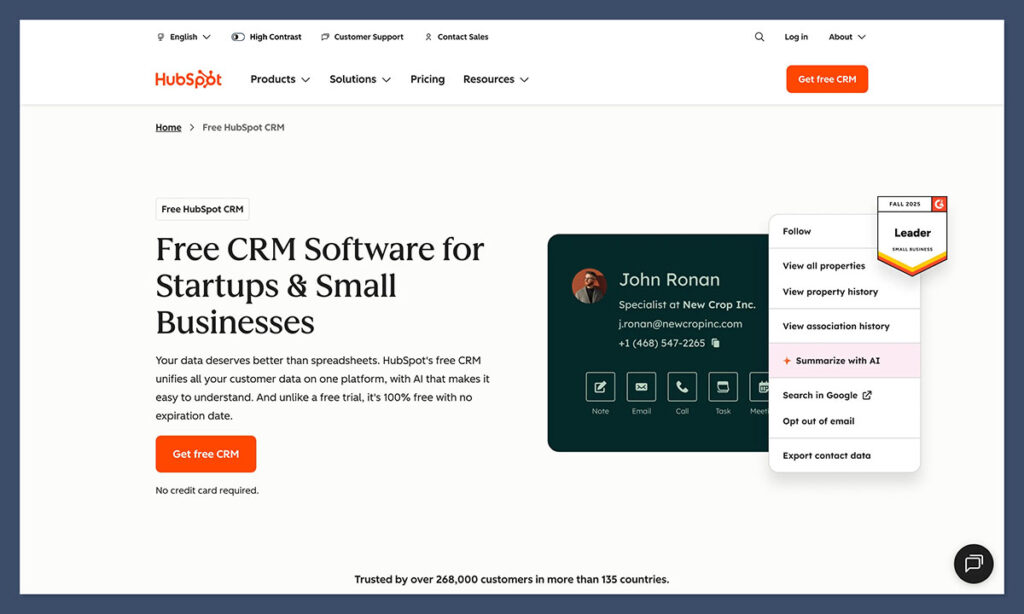
HubSpot’s entry into the broader ecommerce space changes the fundamental premise of online retail. By utilizing its CRM, CMS, and Commerce Hub, businesses can bridge the gap between anonymous browsing and long-term customer lifetime value (CLV).
Core capabilities of the HubSpot ecosystem include:
- Unified Customer Timelines: Every interaction—from an initial click on a Facebook ad to a support chat—is unified in a single record.
- Behavioral Triggering: If a user abandons a cart, the system doesn’t just send a generic email; it triggers a sophisticated, personalized workflow that can involve a sales rep if the deal size meets a specific threshold.
- Seamless Integration: For stores with massive SKU counts, HubSpot acts as the "intelligence layer" atop platforms like Shopify or BigCommerce, ensuring that the CRM is always aware of purchase history and product affinity.
Chronology: From Contact Management to Commerce Powerhouse
To understand HubSpot’s current standing, one must look at its trajectory. Initially a tool for inbound marketing automation, HubSpot expanded into a robust CMS (Content Management System) to allow businesses to build high-converting websites without the need for heavy development resources.
As the platform matured, it introduced "HubSpot Payments" and "Commerce Hub." This was the tipping point. Suddenly, the CRM wasn’t just recording that a transaction happened; it was facilitating the transaction itself.
- Phase One: The Data Foundation. Early adopters used HubSpot strictly to manage leads who hadn’t yet purchased.
- Phase Two: The CMS Integration. Businesses moved their landing pages and blogs to HubSpot, allowing them to track the exact content that led to a sale.
- Phase Three: Commerce Hub. With the introduction of payment links, subscription management, and quoting tools, the platform transitioned from a "pre-purchase" tool to a full-cycle commerce solution.
Supporting Data: Measuring the Impact
The effectiveness of this model is evidenced by the performance of companies that have successfully integrated the CRM with their revenue streams. For instance, the high-end watchmaker CODE41 reported a 257% increase in sales and a 223% increase in revenue after optimizing their HubSpot stack.
These results aren’t outliers; they are symptomatic of the "contextual advantage." When a sales team knows exactly what a customer has viewed, how long they’ve spent on the site, and which support tickets they’ve filed, the conversion rate on follow-up communications skyrockets. Data shows that stores leveraging centralized CRM data for personalized marketing experience a 15–20% higher conversion rate on abandoned cart recovery compared to those using standard, template-based recovery emails.
Official Perspectives: The Strategic Shift
Industry analysts note that the rise of "Composable Commerce"—the idea that you should pick the best tool for every job—is favoring platforms like HubSpot.
"The modern merchant is tired of fighting with data that doesn’t talk to each other," says a leading digital transformation consultant. "HubSpot is positioning itself as the ‘single source of truth.’ When you look at the growth of Commerce Hub, it’s clear that merchants don’t want a storefront builder that pretends to be a CRM; they want a CRM that understands the nuance of a customer’s shopping journey."
By focusing on the "human" side of ecommerce—nurturing, onboarding, and service—HubSpot fills the void left by traditional storefront builders, which are largely designed to focus only on the mechanics of the transaction.
The Practical Implementation: A Step-by-Step Approach
If you are looking to integrate HubSpot into your ecommerce architecture, the transition does not need to be disruptive.
1. The CRM as the Brain
Start by centralizing your contact records. Ensure that your existing store (Shopify, BigCommerce, or WooCommerce) is synced with HubSpot via the official connectors. This ensures that every order flows into the CRM automatically.
2. Choosing Your Commerce Strategy
- The "Storefront" Approach: Use HubSpot CMS if you are selling digital products, subscriptions, or a curated list of physical goods. It offers the tightest integration between site activity and CRM data.
- The "Hybrid" Approach: Keep your high-volume store on a platform like Shopify, but use HubSpot for all post-purchase communication, loyalty programs, and high-touch B2B lead nurturing.
3. Workflow Automation
Don’t overcomplicate. Start by creating a simple "Post-Purchase" workflow. If a customer buys a product, wait three days, then send a personalized email asking for a review or suggesting a complementary product based on their purchase history.
4. Leveraging Payments
For B2B ecommerce, move away from static PDFs. Use HubSpot’s payment links to send quotes that can be signed and paid for in a single click. This reduces friction in the sales cycle by hours, or even days.
Implications for the Future of Retail
The implications of this shift are profound. As AI continues to permeate the tech landscape, the value of data context becomes the most important asset a business can hold. AI is only as good as the data it is fed. By keeping marketing, sales, support, and payments in one ecosystem, you are creating the cleanest, most robust dataset possible.
This allows for:
- Predictive Churn Analysis: Flagging customers who are likely to stop purchasing based on a decline in their site engagement.
- Hyper-Personalized Content: Using AI to generate marketing copy that speaks directly to the specific products a customer has bought in the past.
- Operational Efficiency: Reducing the number of subscriptions your company pays for by consolidating functions that were previously handled by five or six different apps.
FAQs: Addressing the Common Myths
Q: Is HubSpot meant to replace Shopify?
A: Not necessarily. For large-scale retailers, they are better together. Shopify handles the catalog and checkout infrastructure, while HubSpot handles the relationship, marketing, and revenue intelligence.
Q: Is it too expensive for a small shop?
A: The entry barrier is lower than perceived. The free CRM and free CMS tools allow small businesses to build a professional foundation at no cost. As the business scales, the cost of the platform is typically offset by the increased efficiency and higher conversion rates.
Q: How does it handle subscriptions?
A: HubSpot’s Commerce Hub includes robust features for managing recurring revenue, tracking renewals, and automating billing notifications, making it ideal for subscription-box models or SaaS-style products.
Q: Does it work for B2B?
A: It is arguably the best tool on the market for B2B ecommerce. Because it tracks the complex, multi-person buying journey typical of B2B, it provides insights that simple storefront builders simply cannot capture.
Conclusion
HubSpot has transcended its origins as a marketing tool to become a comprehensive ecommerce engine. By prioritizing the customer’s journey over the simple mechanics of a digital checkout, it provides a level of intelligence that can transform a struggling store into a data-driven powerhouse.
For the modern entrepreneur, the decision to integrate HubSpot is not about buying more software—it is about choosing a unified way to understand, serve, and grow your customer base. Whether you are a one-person startup or a growing mid-market brand, the ability to see the "full picture" of your customer’s life is the ultimate competitive advantage.
