
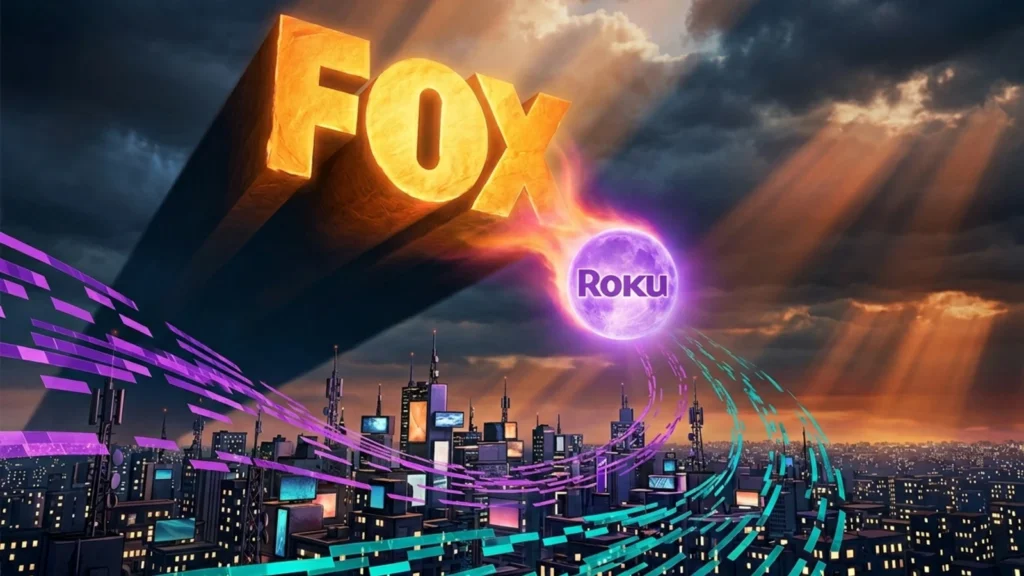
The Great Realignment: Fox’s $22 Billion Roku Acquisition and the Reshaping of the CTV Landscape
The media and advertising landscape underwent a seismic shift on June 15, 2026, as Fox Corporation announced a definitive agreement to acquire Roku in a deal valued at approximately $22 billion. This transaction, representing the most significant structural change to the US Connected Television (CTV) advertising market in years, marks a definitive pivot in the "streaming wars," moving from a battle for subscriber counts to a war for control over the underlying platform, identity data, and programmatic inventory.
Main Facts: The Deal Architecture
Under the terms of the agreement, Fox will acquire Roku at a valuation of $160 per share, comprised of a blend of $96 in cash and 0.9693 shares of Fox Class A common stock. The offer represents a 34 percent premium over Roku’s unaffected share price as of June 11 and a 21 percent premium to its 52-week high.
The transaction is subject to shareholder approval from both entities and must pass regulatory scrutiny under the Hart-Scott-Rodino Act. Industry analysts expect the deal to close in the first half of 2027. Upon completion, Roku founder and CEO Anthony Wood will join the Fox Corporation board, signaling a long-term integration of Roku’s streaming operating system into Fox’s broader media ecosystem.
Chronology of a Corporate Reversion
The acquisition represents an ironic inversion of a six-year chapter in Fox’s corporate history. In 2020, Fox divested its stake in Roku to secure the $440 million required to acquire the ad-supported streaming service Tubi. At the time, Tubi was a nascent player. By Q4 2025, however, Nielsen Gauge data indicated that The Roku Channel held a 6.3 percent share of all US ad-supported streaming, while Tubi followed closely at 6.2 percent.
By reuniting these two powerhouses under the Fox umbrella—and layering them atop Fox’s formidable live sports, Fox News, and entertainment portfolios—the combined entity will instantly become the third-largest player in US television by share of viewing, trailing only YouTube and Netflix. This consolidation effectively brings the platform, the content, and the distribution under a single corporate roof.
Supporting Data: The Economics of Scale
The financial architecture underpinning this deal is rooted in the aggressive growth of streaming advertising. Roku disclosed its advertising revenue for the first time in Q1 2026, reporting $612.7 million—a 27 percent year-over-year increase. With subscription revenue also climbing by 30 percent to $518.5 million, Roku reached a quarterly net revenue of $1.25 billion.
Market analysts at Madison and Wall estimate that the combined Fox-Roku entity will generate approximately $9 billion in total advertising revenue. This volume would command roughly 14 percent of total US advertising spend and an impressive 16 percent of US streaming ad expenditures.
Furthermore, the scale is evident in the programmatic inventory landscape. As of February 2026, the Roku platform controlled a 32 percent share of open programmatic CTV inventory, significantly outperforming competitors like Amazon Fire TV (16 percent), Apple TV (15 percent), and Samsung (14 percent). By controlling both the supply and the primary demand-side platform (Roku’s OneView), Fox is positioning itself to capture the lion’s share of the $2.7 billion projected for the 2026 midterm political CTV cycle.
Official Responses and Strategic Vision
Lachlan Murdoch, executive chair and CEO of Fox Corporation, characterized the acquisition as a "defining moment" for the industry. During an analyst call on June 15, Murdoch emphasized that the combination of Roku’s first-party data—spanning over 100 million global streaming households—and Fox’s live sports assets creates a "differentiated advertising offer" that no pure-play broadcaster can replicate.
"This combination will transform the scope of our company," Murdoch noted. The strategic intent is clear: to leverage Roku’s deterministic, account-level identity graph to move away from the probabilistic, panel-based measurement that has historically plagued CTV advertising. By controlling the content and the identity layer, Fox aims to offer advertisers a "closed-loop" ecosystem that provides unprecedented precision in a fragmented market.
Implications for the Industry
1. The Death of Platform Neutrality?
The most pressing question for the industry is whether Roku will maintain its status as an "open, partner-friendly platform." Currently, competing streaming services depend on the Roku OS and its homescreen for content discovery. With a direct competitor now owning the operating system, industry experts are questioning the future of data-sharing protocols, existing DSP partnerships, and potential favoritism. If Fox uses the Roku OS to prioritize its own inventory, it could trigger a wave of regulatory challenges and defensive consolidation from rival media giants.
2. The DSP Arms Race: Publicis and The Trade Desk
Parallel to the Fox deal, a quieter but equally significant event occurred on June 12: Publicis Groupe and The Trade Desk resolved their months-long dispute. Publicis had pulled The Trade Desk as a recommended DSP in March following an audit that alleged irregularities in fee application. While the settlement was short and opaque, its implications are profound.
The standoff highlighted the structural tension between media holding companies and independent ad tech providers. As the "walled gardens" (Google, Amazon, and now Fox-Roku) continue to build full-stack alternatives, the role of independent DSPs is being questioned. The resolution ensures that The Trade Desk remains a major player, but the incident served as a stark reminder that the industry’s "trust layer"—including TAG fraud certifications—is currently under severe strain.
3. AI and the Publisher Revolt
While media giants consolidate, smaller publishers are fighting for survival against AI-driven content consumption. On June 15, UK publishers launched "Search-Only Contracts," a legal mechanism designed to charge AI companies £500 per article scraped. By utilizing county courts rather than protracted IP litigation, these publishers are creating a deterrent against AI models that synthesize answers from content without providing traffic or revenue in return.
This move comes as data shows AI Overviews from search engines like Google are causing catastrophic traffic losses—sometimes as high as 70 percent—for independent sites. The shift toward AI-mediated discovery, as noted by recent HubSpot data showing AI search as a top driver of purchase intent, suggests that the very nature of the web is changing. Publishers are now forced to choose between licensing deals or legal warfare.
4. Google’s Structural Reshaping
Google Ads is simultaneously accelerating its own transformation. With significant updates arriving on August 17, 2026, Google is further automating the auction process. The expansion of Smart Bidding Exploration into Performance Max campaigns, coupled with the introduction of "Information Agents" (which perform background searches for paid subscribers), suggests a move toward a more opaque, AI-managed advertising environment. For advertisers, these changes necessitate a new approach to attribution and budget management, as the distinction between a human-initiated query and an agent-initiated interaction becomes increasingly blurred.
Conclusion: A New Era of Concentration
The events of mid-June 2026 point to a singular trend: the concentration of power within the digital media economy. Whether through the $22 billion merger of Fox and Roku, the consolidation of retail media models by platforms like Uber, or the rise of agentic AI planning, the market is moving away from a decentralized, open web toward a series of highly controlled, vertically integrated environments.
For advertisers, this shift offers the promise of better data, more efficient targeting, and massive scale. However, it also introduces significant risks regarding transparency, competition, and the sustainability of the open publishing model. As the industry moves toward 2027, the success of these new structures will depend on whether they can maintain the "trust layer" that has historically underpinned digital advertising—or if that layer will continue to fracture under the weight of such massive corporate and technological ambition.
