
The Banana Revolution: How the Savannah Bananas Are Outplaying Major League Baseball in the Digital Arena
It’s not about changing the game of baseball—it’s about fundamentally altering the way the game is shared.
In an era where professional sports leagues are fighting a desperate battle for the attention of Gen Z and a fragmented digital audience, one organization has emerged from the collegiate summer league circuit to challenge the hegemony of Major League Baseball (MLB). The Savannah Bananas, a team known for their choreographed dance routines, kilts, and rule-bending "Banana Ball," have effectively transformed from a local attraction into a global content powerhouse. By treating every game as a hybrid of a circus, a TikTok challenge, and a live comedy special, they have achieved a level of engagement that industry titans are struggling to replicate.
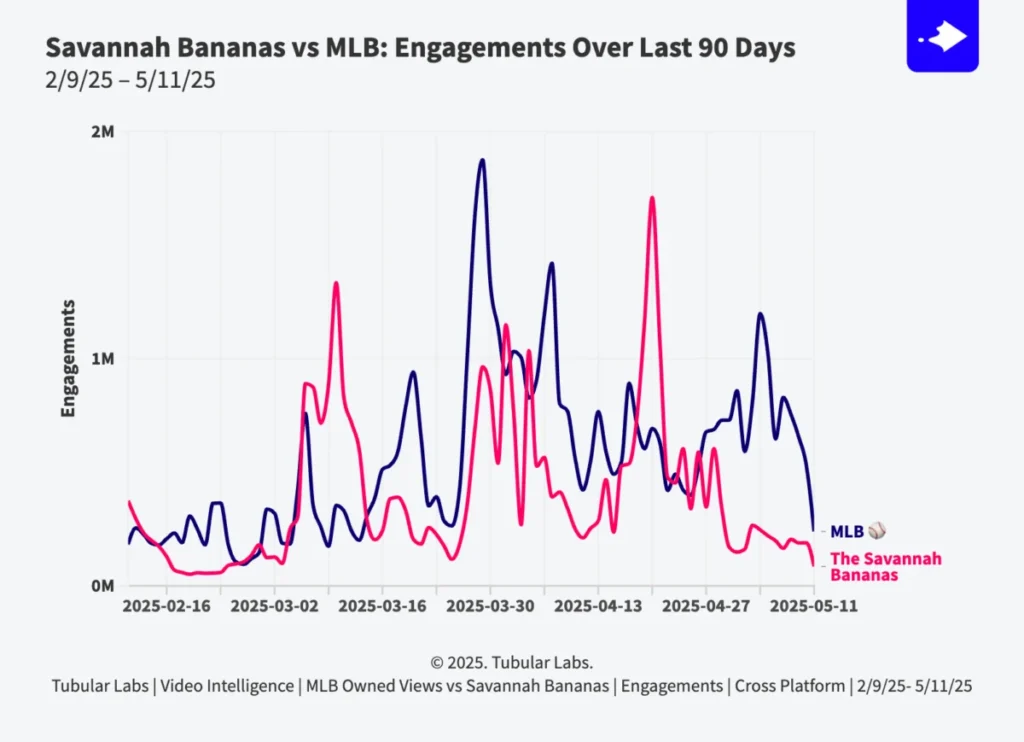
The numbers are startling. In the last 90 days, the Savannah Bananas generated 42.9 million views on YouTube—a figure that, when compared to the collective output of all 30 MLB teams, places them in a position of striking parity. While the MLB teams combined for 71.7 million views in the same period, the Bananas’ singular, agile approach has allowed them to capture a massive share of the digital landscape, proving that in the modern sports economy, the size of your stadium matters far less than the reach of your feed.
A Chronology of the Viral Pivot
The rise of the Savannah Bananas was not an overnight fluke; it was the result of a calculated transition from traditional sports marketing to a "content-first" media philosophy.
The Origins: From Savannah to the World
Founded as a collegiate summer team, the Bananas originally operated within the conventional bounds of baseball. However, ownership recognized early on that the slow pace of the traditional game was failing to engage younger demographics. They began experimenting with "Banana Ball," a version of the sport featuring a two-hour time limit, no walks, and the mandate that if a fan catches a foul ball, the batter is out.
The Digital Surge (2024–2025)
By 2025, the Bananas’ digital strategy reached a fever pitch. In Q1 of 2025 alone, the team produced 385 pieces of content across TikTok, Instagram, Facebook, and YouTube. This relentless output frequency—averaging more than 1.5 videos per day on YouTube alone—shattered the industry standard. For context, this is four times the volume of the Atlanta Braves during the same period.
The growth has been exponential. In January 2025, the team’s TikTok viewership sat at a respectable 7.3 million. By March, that figure had exploded to 117 million, representing a 1,503% increase in just 60 days. This growth trajectory was anchored by a deliberate pivot toward short-form vertical video; of their 132 YouTube videos posted in that timeframe, nearly 70% were YouTube Shorts.
Supporting Data: The Engagement Gap
The data provided by Tubular Labs reveals a stark reality for traditional sports franchises. The Savannah Bananas are currently tied for social video engagements with MLB-owned content.
Key Performance Indicators:
- Volume: 385 videos produced in Q1 2025 by the Bananas vs. significantly lower outputs from legacy clubs.
- Platform Dominance: 92 out of 132 YouTube uploads were Shorts, demonstrating a mastery of algorithmic preferences.
- Demographic Shift: Perhaps most impressively, the Bananas have cultivated an audience that is 56% female on Facebook. By comparison, established clubs like the Los Angeles Dodgers maintain a female audience share of approximately 21%.
This demographic skew is not accidental. The Bananas have successfully blended sports with the aesthetics of pop music, dance culture, and influencer-style storytelling, effectively expanding the definition of who a "sports fan" can be.
Official Perspectives: The Philosophy of "Banana Ball"
While the MLB has focused on pace-of-play rule changes—such as the pitch clock—to keep viewers engaged, the Savannah Bananas have focused on the packaging of the experience. Jesse Cole, the founder of the Savannah Bananas, has long advocated for "Fans First" entertainment.
In interviews and internal strategy discussions, the organization emphasizes that their players are not just athletes; they are performers. By assigning players nicknames, backstories, and recurring character arcs, the team has turned the dugout into a stage. This allows fans to follow their favorite "characters" in a manner similar to reality TV stars, creating a parasocial connection that traditional, stoic sports coverage often lacks.
Five Pillars of the Digital Playbook
Traditional sports organizations looking to pivot can distill the Bananas’ success into five actionable pillars:
1. Entertain First, Inform Second
The Bananas treat every moment—even a routine groundout—as a content opportunity. If a player performs a dance move or a coach engages in a skit, that content is prioritized over the box score. Traditional teams, often shackled by a focus on "game highlights," could learn to prioritize locker room culture, athlete banter, and behind-the-scenes camaraderie to build authentic fan connections.
2. Platform-Native Optimization
The Bananas do not simply post long-form game footage to social media. They understand that a 2-hour game is a library of potential micro-content. They slice full games into punchy Reels, TikToks, and Shorts. Broadcasters and teams must stop treating social media as a place to dump "trailers" and start treating it as a primary destination for platform-specific content.
3. The Characterization of Athletes
In the MLB, players are often presented as interchangeable parts of a roster. The Bananas treat them as protagonists in a narrative. By highlighting off-field personalities, family life, and individual quirks, teams can build a "personal brand" ecosystem. Fans follow players because they like them as people, not just because they wear a specific jersey.
4. Co-Creation as a Strategy
The Bananas’ most successful content—such as their April 2025 post that garnered 17.6 million views in 30 days—was not a top-down announcement. It was a direct reply to a fan comment. By treating the comment section as a co-creation tool, the Bananas make fans feel like shareholders in the team’s success rather than passive spectators.
5. Universal Appeal
The Bananas’ content strategy is a masterclass in dual-audience targeting. They appeal to the adult demographic through cheeky, high-energy, and occasionally provocative content, while simultaneously winning over families with wholesome, "melt-your-heart" moments. By refusing to pigeonhole their content into a single niche, they have ensured that their videos are shareable across generations.
Implications for the Future of Sports Media
The rise of the Savannah Bananas suggests that we are entering a "post-sport" era where the quality of the athletic competition is secondary to the quality of the entertainment experience.
A Warning to Legacy Leagues
If a collegiate-level team can outpace the social media engagement of the world’s most profitable sports league, the current model of broadcasting is clearly failing to meet the demands of modern consumption. Major League teams have the advantage of history, massive payrolls, and the world’s best athletes, but they lack the agility to pivot toward the "creator economy" model that the Bananas have perfected.
The Path Forward
For the New York Mets, the Chicago Cubs, or any other traditional franchise, the solution is not to start wearing kilts or performing dances on stilts. Rather, it is to adopt the mindset of a digital media company.
The implication is clear: The competition for eyeballs is no longer against other baseball teams; it is against Netflix, TikTok creators, and gaming streamers. If traditional sports teams continue to focus exclusively on the final score while the Savannah Bananas focus on the final experience, the gap in engagement will only continue to widen.
The "Banana Revolution" has provided a blueprint for the future. It is a future where the wall between the field and the feed is dismantled, where the fan is a participant, and where every moment is designed to be shared. The Savannah Bananas have proven that you don’t need a century of tradition to capture the hearts of the next generation—you just need a camera, a sense of humor, and a strategy that puts the audience at the very center of the game.
