

Unlocking the Digital Pulse: Why Customer Engagement Analytics is the Linchpin of Modern Business Success
In an increasingly digitized and competitive landscape, businesses face a perennial challenge: discerning genuine customer engagement from fleeting interest. The digital realm offers unprecedented opportunities for interaction, yet it simultaneously creates a deluge of data, making it difficult to ascertain who is truly captivated and what motivates their actions. This is where customer engagement analytics emerges as an indispensable tool, providing the clarity needed to transform transient interactions into lasting customer relationships and, ultimately, sustained conversions.
By meticulously tracking, collecting, and interpreting data on how audiences interact with a brand across myriad touchpoints – from websites and mobile applications to social media platforms and email campaigns – companies can gain profound insights into user behavior. These insights are the bedrock upon which effective strategies for retention, personalization, and growth are built. Ignoring this critical data leaves businesses navigating a complex digital ecosystem blindfolded, risking misallocated resources and missed opportunities for cultivating loyalty.
The Evolution of Engagement: A Chronology of Digital Understanding
The journey of understanding customer interaction has evolved dramatically. In the early days of the internet, simple website "hits" and page views were the primary metrics. Businesses celebrated high traffic, often without a deeper understanding of whether these visitors found value or simply stumbled upon their site.
As the digital landscape matured, so too did the sophistication of analytics. The introduction of tools like Google Analytics provided more granular data, enabling businesses to track sessions, bounce rates, and user paths. This marked a shift from mere quantitative presence to a qualitative assessment of user behavior. However, these early tools were often siloed, providing snapshots of individual channels rather than a holistic view of the customer journey.
The proliferation of social media, mobile apps, and diverse digital marketing channels in the 2010s ushered in an era of multi-touchpoint interactions. Customers no longer followed a linear path; their journeys became intricate webs woven across various platforms. This complexity necessitated a more integrated approach to analytics, leading to the development of sophisticated customer engagement platforms and the emphasis on cross-channel data unification.
Today, with the advent of artificial intelligence (AI) and machine learning (ML), customer engagement analytics is entering a new frontier. These advanced technologies enable businesses not just to track past behavior but to predict future actions, personalize experiences in real-time, and identify high-value customer segments with unparalleled precision. This chronological progression highlights a fundamental truth: understanding customer engagement is not a static endeavor but an continuously evolving discipline, adapting to the ever-changing dynamics of digital interaction.

Deconstructing Engagement: What is Customer Engagement Analytics?
At its core, customer engagement analytics is the systematic process of collecting, tracking, and interpreting data related to how customers interact with a brand, its products, or services. These interactions span the entire digital ecosystem, encompassing everything from a website visit and an app launch to a social media comment, an email open, or a video view. Crucially, engagement metrics capture activities that occur before a final conversion, serving as vital indicators of interest and intent.
While the principles of customer engagement apply to both online and offline environments, the focus in modern marketing overwhelmingly centers on its digital manifestations. In this context, customer engagement analytics typically encompasses several key categories, each offering a unique lens into customer behavior:
- Website & App Engagement: Interactions with owned digital properties.
- Social Media Engagement: How users interact with brand content on social platforms.
- Paid Ads & Email Engagement: Responsiveness to marketing communications.
- Product Engagement: How users interact with the product or service itself.
The goal is to move beyond superficial metrics and delve into the depth and quality of these interactions, recognizing that a truly engaged customer is one who not only visits but actively explores, consumes content, and shows genuine interest in the brand’s offerings.
The Imperative of Engagement: Why It Matters for Sustainable Growth
Customer engagement analytics is not merely a data-crunching exercise; it is fundamental to measuring the efficacy of an organization’s audience connection strategies. Higher levels of engagement are directly correlated with an increased likelihood of desired conversions, whether that’s a purchase, a newsletter subscription, a demo request, or any other critical action.
Engagement occupies a pivotal position in the marketing funnel, bridging the gap between initial awareness and eventual conversion and retention. By meticulously analyzing engagement metrics, businesses can pinpoint "friction points" – areas in the user journey where interest wanes or users drop off. Addressing these friction points through data-driven optimization can dramatically improve conversion rates.
Consider the journey of a typical customer: few users convert on their first interaction. They may visit a website, browse, leave, and return multiple times. Engagement analytics ensures that during these multiple touchpoints, users are consistently interacting with the brand in meaningful ways. This continuous interaction builds familiarity, fosters trust, and cultivates affinity, which are essential ingredients for long-term customer retention and higher conversion rates. Without robust engagement, growth becomes unsustainable, reliant solely on attracting new, potentially less loyal, customers. Engaged customers are more likely to become brand advocates, repeat purchasers, and contribute positively to customer lifetime value (CLV).

Cultivating Connection: Best Practices for Customer Engagement Analytics
While many analytics platforms offer pre-built engagement metrics, the concept of "engagement" remains fluid and context-dependent. What constitutes meaningful engagement for one business might be irrelevant for another. Therefore, decision-makers must proactively define engagement based on their specific business objectives. For instance, while a tool might provide "Average Engagement Time," a business needs to determine whether 10 seconds or 30 seconds on a particular page signifies true interest. Furthermore, specialized engagement metrics (e.g., points earned in a gamified experience) often require custom configurations.
Given that engagement metrics precede conversions, they are inextricably linked to a business’s bottom line. Understanding these precursor interactions and their relationship to macro conversions is crucial for identifying bottlenecks in the user journey and implementing targeted optimizations.
Key Steps for Implementing a Robust Customer Engagement Analytics Strategy:
-
Determine Analysis Needs Through Stakeholder Consultation:
The first critical step involves comprehensive consultation with all relevant stakeholders, including clients, marketing teams, product development, sales, and customer service. Each department may have unique perspectives on what constitutes valuable engagement. For example:- Marketing: Might prioritize social media interactions and ad click-through rates.
- Product: Focuses on feature adoption, time spent in the app, and user paths.
- Sales: Interested in content consumption that indicates purchase intent.
- Customer Service: May track engagement with help articles or chatbots.
Educating stakeholders on the full spectrum of available tracking options is also vital, ensuring a more holistic and actionable analysis. While custom metrics are powerful, it’s often prudent to begin by leveraging default engagement metrics available in standard analytics tools. Key examples include:
- Page Views, Sessions, Engagement Time, Pages per Session, Engaged Sessions (for website/app).
- Likes, Comments, Shares, Reach, Impressions (for social media).
- Click-Through Rate (CTR), Open Rate (for paid ads/email).
- Feature Usage, Frequency of Use, User Paths (for product).
-
Leverage In-Built Customer Engagement Analytics, Then Customize:
Most modern analytics platforms, such as Google Analytics 4 (GA4), Adobe Analytics, or Mixpanel, provide a foundational set of engagement metrics by default. These are excellent starting points. However, businesses will often find that critical micro-interactions, like specific button clicks, form submissions, or video plays beyond a certain threshold, require additional, custom tracking configurations. This involves setting up custom events and parameters to capture nuanced user behavior that directly aligns with specific business goals.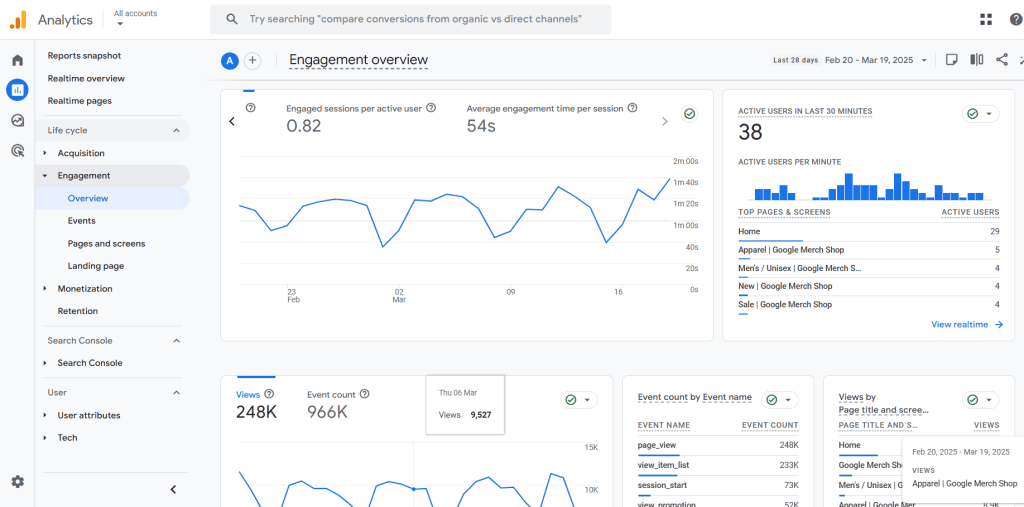
-
Create a Comprehensive Implementation Guide:
Once key engagement metrics, both default and custom, have been identified and defined, best practice dictates the creation of a detailed Implementation Guide. This document serves as a blueprint, providing clear, step-by-step instructions for all implementation teams – web analysts, digital marketers, developers – on precisely how to track, measure, and report on engagement effectively. A well-crafted guide ensures consistency, accuracy, and scalability of data collection, minimizing errors and maximizing the utility of the analytics program.
Key Customer Engagement Metrics to Track: A Multi-Channel Perspective
It’s important to reiterate that "conversions" are typically excluded from this list of engagement metrics. While conversions undeniably represent a deep level of engagement, they are categorized as decisive, bottom-of-the-funnel actions. Engagement metrics, conversely, focus on the mid-funnel activities that lead up to a conversion, reflecting ongoing interest and interaction.
The following metrics are categorized by digital channel, providing a comprehensive overview:
1. Website & App Engagement Metrics
These metrics offer insights into how users interact with a brand’s owned digital properties.
- Page Views: Tracks the total number of times a webpage, landing page, or website is accessed. While foundational for understanding content reach, page views alone don’t indicate depth of engagement. It’s a volume metric.
- Sessions: Represents a period of active engagement with a website or app. Google Analytics 4 (GA4) typically defines a session as 30 minutes of continuous user activity, resetting after inactivity.
- Engagement Time: Measures how long users actively interact with content. In GA4, this includes:
- Time a page is in focus (browser tab active).
- Time an app screen is in the foreground.
- Time a user is actively interacting (scrolling, clicking).
- Pro tip: Within GA4’s "Reports > Engagement > Pages and Screens" report, you can analyze engagement time for individual pages, allowing for granular content performance comparisons.
- Pages per Session: This metric indicates how many unique pages a user visits within a single session. While a session confirms general presence, pages per session reveal the extent of content exploration. A benchmark of at least two pages per session is generally considered good, with three or more indicating strong engagement.
- Engaged Sessions*: GA4’s proprietary metric for a session that meets at least one of the following criteria:
- Lasts longer than 10 seconds.
- Includes a conversion event.
- Includes two or more page or screen views.
Engaged sessions provide a far more accurate picture of meaningful user activity compared to total sessions, filtering out superficial visits.
- Scroll Depth: Tracks how far down a page users scroll. This is crucial for long-form content, indicating whether users are consuming the full message or just scanning the top.
- Event Tracking (Clicks, Downloads, Video Plays): Custom events configured to track specific user interactions like clicking a call-to-action button, downloading a resource, or watching a video to completion. These micro-interactions are strong indicators of interest.
2. Social Media Engagement Metrics
A robust digital marketing strategy integrates social media. These metrics gauge audience interaction on platforms like Facebook, Instagram, X (formerly Twitter), and LinkedIn.
- Likes/Reactions: Basic expressions of approval or emotion towards content.
- Comments: Indicate a deeper level of engagement, prompting conversation and feedback.
- Shares/Retweets: The strongest indicator of content resonance, as users actively promote it to their own networks.
- Reach & Impressions: While not engagement per se, these foundational metrics show the potential audience size and visibility of content, which are prerequisites for engagement.
- Mentions & Tags: Show users actively referencing or interacting with the brand.
- Sentiment Analysis: Interpreting the emotional tone of comments and mentions to understand brand perception.
- Video Views (e.g., 3-second, 10-second, 75% completion): Measures the consumption of video content, with completion rates being a strong engagement signal.
- Click-Through Rate (CTR) on Social Posts: Percentage of users who click a link within a social media post, driving traffic to owned properties.
3. Paid Ads & Email Engagement Metrics
These metrics assess the effectiveness of direct marketing and advertising efforts.
- Click-Through Rate (CTR): Measures the percentage of users who click a link after seeing an ad, search result, email, or social media post. Higher CTR indicates stronger ad/content appeal. Benchmarks vary significantly by industry and platform, but generally:
- Search Ads: 2-5%
- Display Ads: 0.1-0.5%
- Email Marketing: 2-5%
- Social Media Ads: 1-3%
- Note: For platforms like Facebook/Meta, "CTR (All)" can include various click types (likes, shares, comments, link clicks), so it’s essential to differentiate "Link Clicks" for website traffic.
- Open Rate (Email/SMS): The percentage of recipients who open an email or SMS message. While not a guarantee of deep engagement, it’s a crucial first step, indicating the effectiveness of the subject line and preview text in capturing attention.
- Bounce Rate (Email): The percentage of emails that could not be delivered. A high bounce rate indicates issues with list hygiene.
- Forward Rate (Email): The percentage of recipients who forward an email, indicating strong content resonance and advocacy.
- Unsubscribe Rate (Email): The percentage of recipients who opt out of future communications. A rising unsubscribe rate signals declining engagement or irrelevant content.
4. Product Engagement Metrics
For SaaS, eCommerce, and digital products, engagement tracking focuses on user interactions within the product experience, typically before a final purchase or subscription renewal.
- Feature Usage: Tracks which specific features of a product or service users interact with, and how frequently. This reveals adoption rates and perceived value.
- Time Spent in Product: Measures the duration of active use within an application or platform.
- Frequency of Use: How often users log in or interact with the product (e.g., daily active users, weekly active users). This indicates product stickiness and habit formation.
- User Paths/Flows: Analyzing the sequence of actions users take within a product. This helps identify common workflows, popular features, and potential areas of confusion or drop-off.
- Retention Rate: The percentage of users who continue to use the product over a specific period. This is a critical indicator of long-term engagement and product value.
- Churn Rate: The inverse of retention, representing the percentage of users who stop using the product. High churn indicates a significant engagement problem.
- Net Promoter Score (NPS) / Customer Satisfaction (CSAT): While qualitative, these surveys indirectly measure engagement by assessing user sentiment and willingness to recommend.
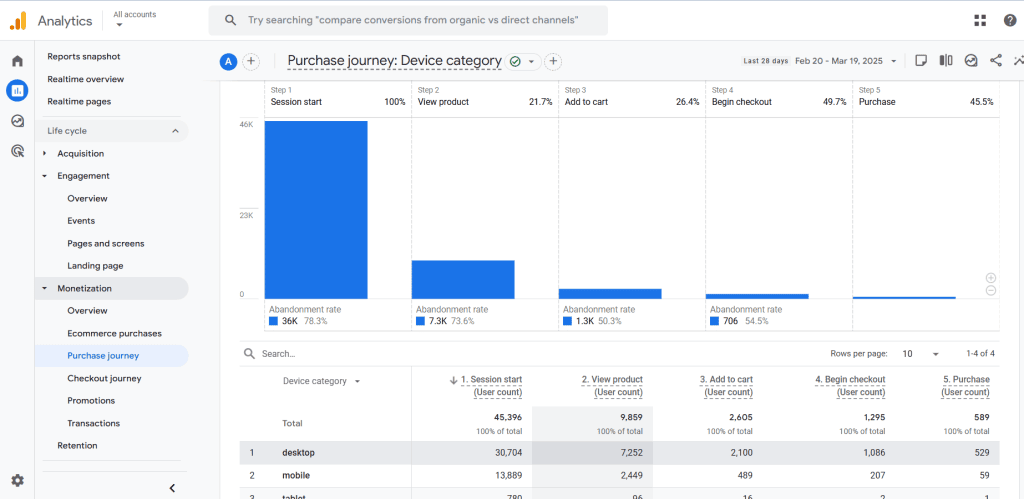
If a conversion funnel for a product (e.g., viewing an item, adding to cart, initiating checkout) presents issues, analyzing these preceding engagement metrics helps precisely identify where users are disengaging and enables targeted optimization efforts.
Strategic Implications: The Future of Customer Relationships
Robust customer engagement analytics offers profound implications for businesses seeking to thrive in the digital age.
- Enhanced Personalization: By understanding individual user behavior, brands can tailor content, recommendations, and offers, creating highly relevant and compelling experiences that foster deeper connections.
- Optimized User Journeys: Data-driven insights reveal friction points and opportunities for streamlining user flows, leading to smoother, more intuitive, and ultimately more satisfying customer experiences.
- Improved Return on Investment (ROI): By focusing resources on strategies that demonstrably drive engagement, businesses can optimize marketing spend, increase efficiency, and achieve higher conversion rates for every dollar invested.
- Stronger Customer Loyalty and Lifetime Value: Engaged customers are loyal customers. By proactively nurturing engagement, businesses build lasting relationships, reduce churn, and significantly increase the lifetime value of each customer.
- Competitive Advantage: Organizations that master customer engagement analytics gain a significant edge. They can adapt more quickly to market shifts, identify emerging trends, and outmaneuver competitors through superior understanding and responsiveness to customer needs.
Looking ahead, the integration of predictive analytics and real-time AI capabilities will further revolutionize customer engagement. Businesses will not only understand past behavior but anticipate future needs, offering proactive support and hyper-personalized experiences that solidify customer loyalty and drive unprecedented growth.
Conclusion
Customer engagement analytics is more than just a collection of data points; it is the compass guiding businesses through the intricate labyrinth of digital customer relationships. By providing invaluable insights into user behavior before conversions occur, it empowers organizations to refine their strategies, enhance customer retention, and drive both immediate and sustainable conversions. In an era where customer attention is the ultimate currency, mastering the art and science of engagement analytics is no longer optional—it is a strategic imperative for long-term success.
The journey to understanding customer motivation is continuous. As businesses delve deeper into the nuances of interaction, they uncover the true drivers of loyalty and advocacy. How do you measure customer engagement within your organization? We’d be interested to know how your approach aligns with, or diverges from, these evolving best practices.
