
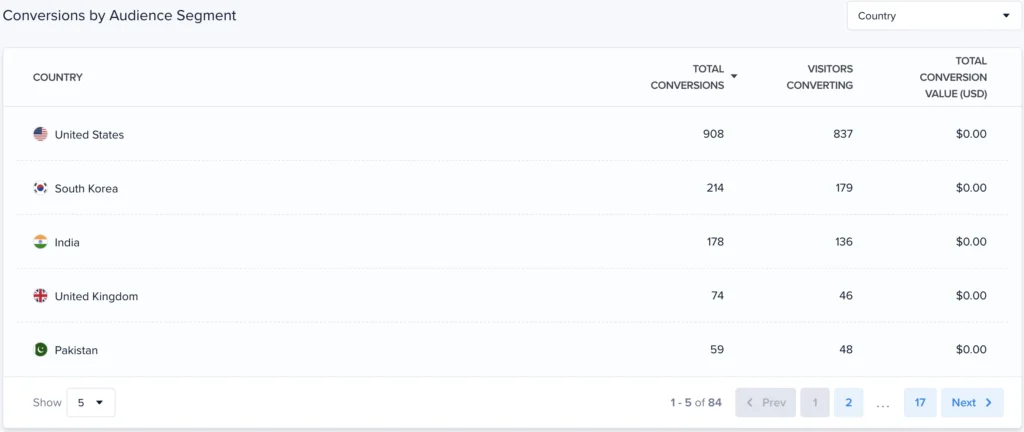
Unlocking Precision: Crazy Egg’s New Audience Segment Conversion Reporting Changes the Game for Digital Marketers
In the hyper-competitive landscape of digital commerce, the difference between a successful campaign and a sunk cost often comes down to a single metric: granular visibility. Today, Crazy Egg has announced a significant evolution in its analytics suite, introducing "Conversions by Audience Segment." This new reporting feature promises to bridge the gap between high-level conversion tracking and the specific behavioral nuances of diverse user cohorts, allowing marketers to move beyond surface-level insights and into the realm of hyper-targeted optimization.
The Core Innovation: What’s New?
For years, digital marketers have relied on conversion tracking to tell them what is happening on their sites. However, the who has often remained a frustrating enigma. Crazy Egg’s latest update fundamentally changes this. By breaking down conversion performance by Audience Segments, the platform now provides a clear window into which specific groups—defined by traffic source, device, geography, or custom behavior—are actually driving the bottom line.
The most striking aspect of this update is its retroactive nature. Unlike many analytics features that require developers to implement new tracking tags or wait for weeks of data collection, this reporting is available immediately. Any conversion data previously tracked by a user’s Crazy Egg account is now automatically retrofitted into these new segmented reports. This "plug-and-play" capability ensures that users can derive actionable value from their historical data without the administrative burden of site-wide updates.
A Chronology of Data-Driven Evolution
To understand the magnitude of this update, one must look at the trajectory of conversion optimization tools over the last decade.
Phase 1: The Era of General Traffic
In the early days of web analytics, tools focused on aggregate traffic. Marketers knew their total conversion rate, but had little visibility into the behavioral differences between a visitor coming from a paid social ad versus one coming through an organic search query.
Phase 2: The Emergence of Heatmapping
Crazy Egg built its reputation by visualizing user behavior through heatmaps and scroll maps. This moved the industry toward visual diagnostics, allowing teams to see where users were clicking or dropping off. While this solved the "where" problem, it still left a gap in the "why."
Phase 3: The Integration of Segmentation
Over the past three years, the industry has shifted toward privacy-conscious, segment-first marketing. The introduction of Audience Segments allowed users to categorize traffic, but these segments were often isolated from the hard conversion data.
Phase 4: The Current Convergence
The launch of "Conversions by Audience Segment" marks the final convergence of these two worlds. By embedding conversion metrics directly into segment reporting, Crazy Egg has effectively closed the loop, providing a holistic view of the customer journey from entry to conversion.
Supporting Data: Why Segmentation Matters
Why should a marketing team prioritize this level of reporting? The data consistently shows that generalized conversion strategies are becoming less effective as consumer expectations for personalization rise.
According to industry benchmarks, businesses that utilize segment-specific data typically see a 15% to 20% improvement in conversion rates within the first quarter of implementation. By understanding that "Visitor Segment A" converts at a 4% rate while "Visitor Segment B" converts at only 0.5%, teams can stop wasting ad spend on the latter and double down on the former.
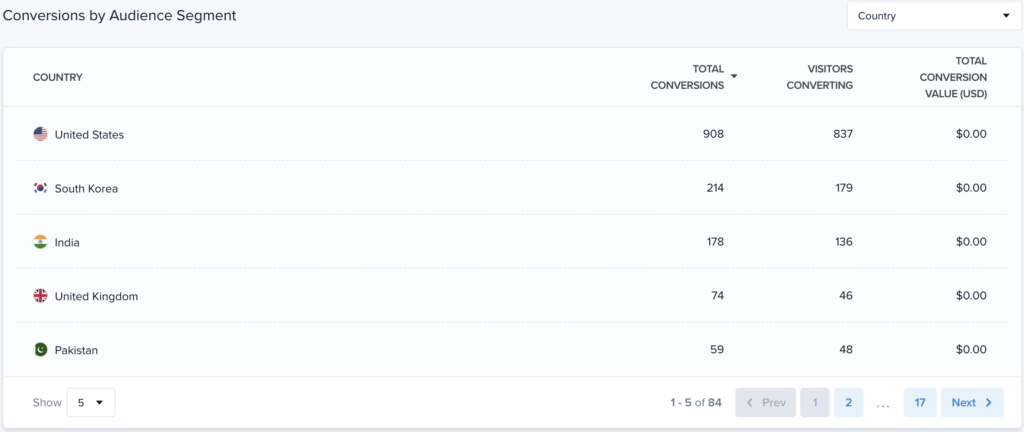
Consider the following implications of this data granularity:
- Ad Spend Optimization: By identifying segments with the highest conversion rates, teams can pivot their budget from low-performing channels to high-intent traffic sources.
- CRO (Conversion Rate Optimization): For segments that are showing high interest but low conversion, teams can design specific A/B tests to remove friction points, rather than implementing generic changes that might alienate higher-converting segments.
- Content Personalization: Recognizing that a particular segment converts better when exposed to video content allows teams to tailor landing pages dynamically.
Official Perspective: The Vision Behind the Update
"Our mission has always been to make sophisticated data accessible to everyone, not just data scientists," noted a spokesperson for the development team. "We noticed that our users were constantly asking, ‘Which of my traffic sources is actually buying?’ and ‘How does my mobile audience compare to my desktop audience in terms of checkout completion?’"
The official stance from Crazy Egg is that this feature is not merely an incremental improvement, but a foundational shift in how their users should approach growth. By reducing the "technical debt" of setting up complex tracking pixels for every possible segment, Crazy Egg is democratizing the ability to perform high-level analysis. The focus remains on "actionable intelligence"—the idea that data is useless unless it points toward a specific, profitable action.
Implications for the Marketing Industry
The release of this feature will likely ripple through the digital marketing ecosystem, forcing a re-evaluation of how agencies and in-house teams manage their reporting stacks.
The Death of the "Average"
The most significant implication is the decline of the "average conversion rate." In the past, marketers would obsess over a site-wide conversion rate. However, an average often masks the reality of a site that is performing exceptionally well with a niche audience while failing a broad, general audience. With segmented reporting, the "average" becomes obsolete, replaced by a nuanced understanding of specific customer personas.
Operational Efficiency
For agencies, the value proposition here is immediate. Generating custom reports for clients that break down conversion success by segment typically takes hours of manual work in platforms like Google Analytics. With Crazy Egg’s streamlined approach—accessing the report via the simple Conversions dashboard and clicking the linked Conversion Name—the time-to-insight is reduced to seconds. This allows agencies to spend more time on strategy and less on data wrangling.
The Privacy-First Future
As third-party cookies face increasing scrutiny and regulation, first-party data is the new gold standard. Because Crazy Egg tracks behavior on the client side with a focus on intent and interaction, this segmented reporting provides marketers with a privacy-compliant way to understand their audience without relying on intrusive tracking methods that may be blocked by modern browsers or privacy regulations.
How to Get Started
For users eager to leverage these insights, the path is straightforward:
- Navigate to the Conversions Tab: Locate the "Conversions" section within your Crazy Egg dashboard.
- Select Your Conversion: Click on the specific Conversion Name you wish to analyze. Whether it’s a "Thank You" page visit or a button click, the system is designed to handle custom events.
- Scroll to the Report Base: At the bottom of the detailed conversion report, the "Conversions by Audience Segment" module will now populate with your data.
- Analyze and Iterate: Compare the conversion rates across your segments. Look for anomalies—segments that are underperforming despite high traffic, or segments that are punching above their weight.
Conclusion
The launch of "Conversions by Audience Segment" by Crazy Egg is a timely reminder that the most powerful tool in a marketer’s arsenal is not the most complex one, but the one that provides the clearest path to decision-making. By stripping away the need for additional tracking and providing a seamless interface to view performance data, Crazy Egg has enabled teams of all sizes to behave like enterprise-level analytics powerhouses.
As the digital landscape continues to evolve, the winners will be those who can identify the "who" behind the "what" with speed and precision. With this update, Crazy Egg has ensured that its users are well-equipped to navigate that future, turning every visitor into a piece of actionable, revenue-driving intelligence. The days of guessing which audience segments move the needle are officially over; the era of precise, segmented optimization is here.
