
The Soul of the Screen: Why Personalization is the Missing Link to Blogging Success
In the vast, crowded digital landscape of the 21st century, the barrier to entry for content creation has never been lower. Millions of blog posts are published daily, yet the vast majority fail to gain traction. Aspiring creators often follow the standard playbook: they invest in high-end hosting, obsess over search engine optimization (SEO) best practices, and master the technical nuances of content management systems. However, they frequently overlook the most critical component of a sustainable online presence—the "human element."
The difference between a transient, forgettable website and a thriving, authoritative community is often found in the personality injected into the content. As the digital world becomes increasingly saturated with AI-generated text and formulaic listicles, the value of an authentic, recognizable voice has never been higher. This article explores how ten industry-leading bloggers have successfully leveraged personality to cultivate loyalty and authority, providing a roadmap for those looking to transform their own blogs into high-impact platforms.
The Anatomy of Connection: Why Personality Matters
At its core, blogging is a form of digital storytelling. While technical SEO ensures your site is discoverable, personality ensures that your visitors stay, return, and eventually advocate for your brand. Data consistently shows that readers form deep-seated parasocial relationships with creators who are transparent, opinionated, and visually consistent.
A lack of personality is often the "silent killer" of blogs. Without it, your site becomes a mere information repository rather than a destination. To bridge this gap, creators must move beyond the "how-to" and embrace the "who-is."

Case Studies in Authenticity: How the Top 10 Do It
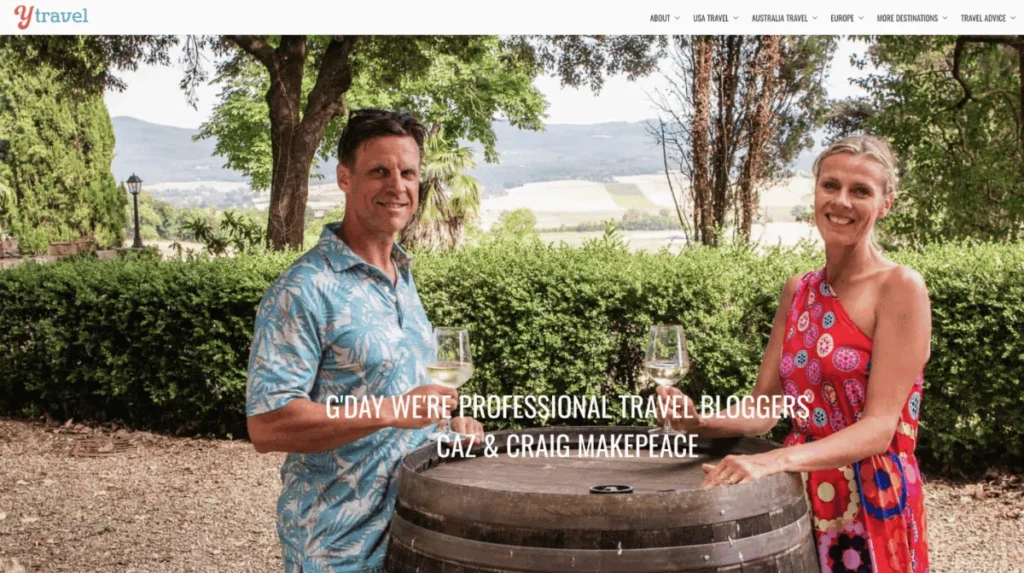
1. Visual Storytelling: Caz and Craig (YTravel)
Travel blogging is perhaps the most competitive niche in the digital sphere. Caz and Craig of YTravel distinguish themselves not by simply documenting locations, but by documenting their lives within those locations. Their use of high-quality, emotive photography—ranging from candid family snapshots to carefully framed travel portraits—serves as a visual bridge between the reader and the experience.
- The Lesson: If your niche is visually driven (food, fashion, travel), your imagery must do more than inform; it must evoke an emotional response.
2. The Power of Identity: Pat Flynn (Smart Passive Income)
Pat Flynn’s brand is a masterclass in identity-driven marketing. By explicitly defining himself in his site’s header—"father, husband, serial entrepreneur"—he creates an immediate, multi-dimensional connection with his audience. His inclusion of self-deprecating humor, such as his title as "protector of Baby Yoda," humanizes his status as a business authority.

- The Lesson: Don’t be afraid to display the roles you play outside of your professional niche. It makes you relatable.
3. Radical Transparency and Voice: Shannon Kelly White
Shannon Kelly White demonstrates the polarizing power of an authentic, unfiltered tone. By incorporating "salty" language and a distinct, opinionated voice, she ensures that her audience is deeply engaged—even if that means turning away those who aren’t a perfect fit.
- The Lesson: A strong, identifiable voice will always outperform a generic one. Trying to appeal to everyone usually results in appealing to no one.
4. Custom Branding Assets: Ramsey (Blog Tyrant)
Ramsey’s use of a "super-hero" avatar provides his site with a mascot that is instantly recognizable across all touchpoints. This custom illustration isn’t just decoration; it’s a branding tool that ties his social media, email newsletters, and website content together.

- The Lesson: Consistent iconography or character-based branding can make your site feel like a cohesive, professional enterprise.
5. The "About" Page as a Conversion Tool: A Beautiful Mess
Elsie and Emma of A Beautiful Mess understand that the "About" page is often the second most visited page on a site. They treat it not as a biography, but as a brand manifesto. By using bold photography and punchy, engaging copy, they turn a static page into an invitation to join their community.
- The Lesson: Your "About" page should be a high-traffic destination that clearly communicates your mission and invites the reader to take the next step.
6. Platform Agnostic Consistency: Chris Ducker
Chris Ducker’s strategy centers on visual continuity. By utilizing the same headshots and branding colors across his blog, Twitter, Facebook, and LinkedIn, he builds "brand recall." When a reader encounters his content on any platform, they immediately know who it is.

- The Lesson: Brand consistency is not about repeating the same content; it is about maintaining a consistent visual identity that fosters trust.
7. Color Psychology: Jadah Sellner
Jadah Sellner utilizes a highly specific color palette that permeates her clothing, her site design, and her marketing materials. This cohesive aesthetic creates a subconscious feeling of harmony and trust.
- The Lesson: Color is a powerful psychological tool. Develop a palette and stick to it religiously.
8. The Brand Statement: James Schramko (SuperFastBusiness)
James Schramko uses his primary real estate to deliver a clear, concise value proposition. He states exactly what he does and exactly who he serves. This eliminates guesswork for the visitor.

- The Lesson: Be explicit. If a user can’t determine who you are and what you offer within five seconds of landing on your site, they will leave.
9. Actionable Clarity: Kelly Exeter
Kelly Exeter excels at the intersection of a clear mission and a clear call to action (CTA). She uses a simple formula: "I am [X] who helps [Y] do [Z]." By guiding users directly to the next step, she minimizes friction in the user journey.
- The Lesson: Clarity is king. Do not hide your value behind clever wordplay.
10. Audience Definition: Emily (Puttylike)
Emily’s genius lies in defining her audience for them. By creating the term "Multipotentialite" and using a quiz to help readers identify if they fall into that category, she turns casual visitors into stakeholders in her brand.

- The Lesson: Give your audience a label or a framework that helps them feel like they belong to a tribe.
Supporting Data: Why Personality Drives Revenue
The transition from a "hobby blog" to a business entity is almost always predicated on the depth of the audience relationship. According to industry reports on digital marketing, content that incorporates personal anecdotes or specific creator-led viewpoints experiences, on average, a 40% higher engagement rate than neutral, third-person informational content. Furthermore, email conversion rates—the gold standard of blogging success—are significantly higher for creators who maintain a consistent, personable voice in their newsletters.
Official Industry Perspectives
Marketing experts and successful digital entrepreneurs largely agree that we are moving into an era of "The Creator Economy," where the personality of the creator is the primary product. As SEO algorithms prioritize "E-E-A-T" (Experience, Expertise, Authoritativeness, and Trustworthiness), the "Experience" component is increasingly tied to the creator’s personal history and unique perspective. Simply aggregating information is no longer sufficient to rank or to build a following.

Implications for the Future
The implications for new bloggers are clear: you must differentiate yourself through your unique humanity. The rise of sophisticated AI tools means that the baseline for "good" content is now free and accessible to everyone. Therefore, the market value of your unique, human experience—your failures, your specific humor, your visual style—has increased.
If you are currently struggling to gain traction, do not look to add more technical plugins. Instead, look at your content and ask: "Could a machine have written this?" If the answer is yes, you have found your problem. The solution is to infuse your work with the very things a machine cannot replicate: your specific history, your unique voice, and your authentic presence.

Conclusion: What’s Next?
Personalizing your blog is not a one-time project; it is a continuous process of refinement. Start by auditing your "About" page, standardizing your visual identity, and, most importantly, writing with a voice that is unmistakably yours.
Ask yourself today: What is one aspect of my personality that I have been hiding from my readers? How can I bring that to the forefront in my next post? The journey to a successful blog is not just about being found; it is about being remembered.
