
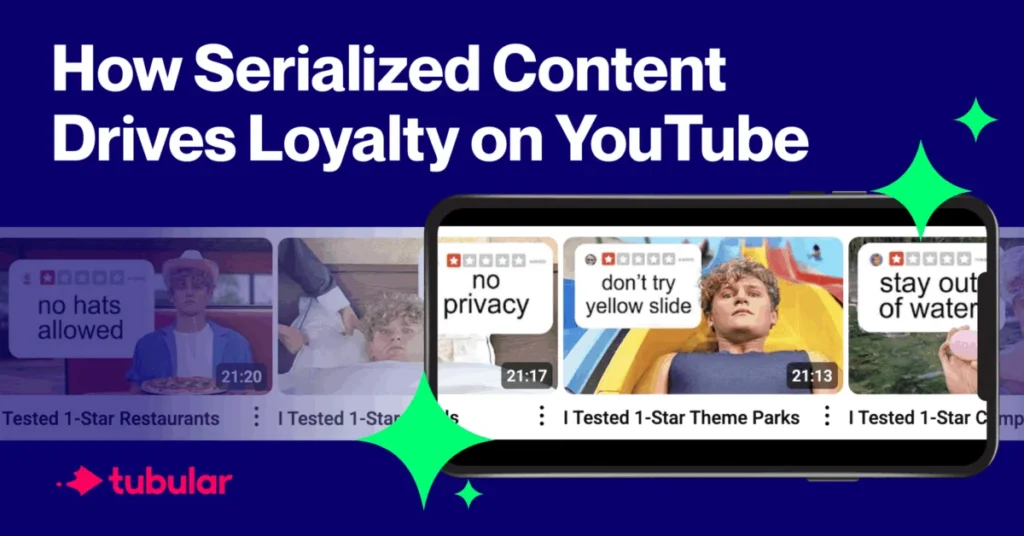
The Serialized Revolution: Why YouTube is Reclaiming the Primetime TV Experience
As the boundary between traditional linear television and digital streaming continues to dissolve, YouTube has emerged as the definitive "living room" platform. With global viewership increasingly migrating to TV devices, the platform’s content ecosystem is undergoing a fundamental transformation. Creators and brands are no longer just producing isolated, viral snippets; they are pivoting toward serialized, long-form storytelling that mirrors the episodic structure of cable television. By fostering appointment viewing through daily or weekly releases, these pioneers are successfully driving the kind of recurring engagement that once defined the golden age of broadcast.
This shift isn’t just an aesthetic choice; it is a calculated strategy to capture the lucrative, high-attention audience now consuming YouTube on 65-inch screens. To understand how this evolution is reshaping the digital media landscape, we must examine the pioneers who are effectively treating the YouTube algorithm like a television programming grid.
The Rise of "Appointment Viewing" in a Digital Age
The modern YouTube audience is showing a clear preference for depth over brevity. While the "short-form" craze dominated the early 2020s, a counter-movement is currently in full swing: the return of the 20-to-40-minute episodic experience. This format, characterized by cliffhangers, narrative arcs, and consistent scheduling, is designed to turn casual viewers into loyal "subscribers" in the truest sense of the word.
Data suggests that as watch-time on TV devices grows, the demand for serialized content—content that keeps a user on the platform for hours rather than minutes—has become the primary driver for channel growth. This trend represents a seismic shift in how creators leverage playlist functionality and release cadences to maximize retention.
Case Study: Ryan Trahan’s 50-State Marathon
Perhaps no creator has better demonstrated the power of the serialized narrative than Ryan Trahan. In mid-2025, Trahan achieved record-breaking watch-time metrics by applying a high-stakes, "travel-reality" format to the American landscape. His series, 50 States in 50 Days, moved away from his traditional video style, embracing a documentary-lite, serialized approach that demanded consistent tune-ins.
The Strategy Behind the Journey
Trahan’s genius lay in the daily release schedule. By committing to a 50-day marathon, he transformed his channel into a daily destination. Each 20–25 minute episode functioned as a chapter in a larger story, effectively mimicking the pacing of a Travel Channel hit.
The results were statistically staggering. In June, Trahan’s U.S. watch-time surged by 120% month-over-month, reaching 569.8 million minutes. This performance placed him at No. 24 among all U.S. accounts, outperforming major legacy television networks and established news organizations. His success proves that when a creator offers a "peer-to-peer" narrative—one that feels personal yet produced at a broadcast quality—the audience will commit to long-form engagement in ways previously thought impossible for digital creators.
Corporate Integration: State Farm’s "Gamerhood"
While creators are building audiences from scratch, brands are leveraging the same serialized playbook to maintain relevance. State Farm’s Gamerhood stands as a masterclass in branded entertainment. Now in its fourth season, the gaming-themed competition show has evolved into a staple of the brand’s YouTube presence.
Bridging the Gap Between Ads and Entertainment
State Farm’s success with Gamerhood stems from its refusal to act like a commercial. Instead, it operates as a reality competition series. By casting gaming influencers and leaning into "insurance tropes" for comedic effect, the brand secures two hours or more of sustained viewer attention per episode.
With over 4.7 million minutes watched in July alone, the brand has proven that if the production value is high and the content is endemic to the audience’s interests, viewers will willingly spend significant time with a corporate entity. Gamerhood serves as a blueprint for other brands: move away from the 30-second spot and toward the 30-minute episode.
The Evolution of Legacy Media: Vice’s Naked Truths
Even legacy digital publishers are pivoting to match this shift. Vice Media’s revival of the Refinery29 property Naked Truths serves as a prime example of "format evolution." Originally a short-form, 1–5 minute series centered on self-confidence, the revamped version has been transformed into a high-production, 15+ minute docuseries.
Monetization and the "TV Substitute"
The shift in duration is not accidental. By extending the runtime, Vice creates natural "ad breaks," enabling a viable monetization strategy that doesn’t rely on external streaming platform acquisition. By taking a raw, unfiltered look at subcultures—such as findom streamers—Vice satisfies the audience’s appetite for "TV-quality" investigative content. The series has already begun generating a consistent audience, averaging over 65,000 views per upload, proving that even existing intellectual property can be "re-engineered" to fit the modern YouTube-on-TV consumption model.
Data-Driven Implications: Why Serialized Content Wins
The transition toward serialized content is supported by several key behavioral shifts in the YouTube audience.
1. Playlist Utility
Platforms are no longer just discovery engines; they are now hubs for marathon viewing. Creators who utilize playlists effectively are seeing higher "session times," which the algorithm rewards with increased discoverability.
2. The "TV Device" Effect
When a viewer watches YouTube on a television, they are less likely to click away to a different app. This "lean-back" experience favors longer, narrative-driven content. The statistics from platforms like Tubular Labs confirm that watch-time for long-form video on connected TVs is significantly higher than on mobile devices, where attention spans are more fragmented.
3. Monetization Longevity
Serialized content allows for mid-roll ad integration, which is more effective at generating revenue than pre-roll ads on short videos. For publishers, this means the content itself pays for its production, reducing the reliance on brand deals or external funding.
Official Perspectives: The Future of the Creator Economy
Industry analysts note that the "serialized" trend is reaching a tipping point. "We are seeing a convergence where the distinction between a ‘YouTuber’ and a ‘Showrunner’ is disappearing," says one industry lead. "Creators are beginning to realize that the most valuable asset they own is their audience’s time. Serialized formats are the most efficient way to secure that time."
Responses from major platforms indicate a strong push toward supporting this behavior. Recent updates to YouTube’s interface—such as enhanced "watch next" features and improved series-tagging capabilities—are specifically designed to encourage this episodic consumption.
Lessons for Creators and Publishers
For those looking to replicate these successes, the data points to three essential pillars:
- Commit to a Consistent Cadence: Whether daily or weekly, the audience must know exactly when the next "installment" is arriving. Reliability is the bedrock of loyalty.
- Prioritize Narrative Arcs: A video should not just be a standalone topic; it should contain a beginning, middle, and end that connects to the previous and upcoming episodes.
- Optimize for the Big Screen: Visuals, pacing, and audio should be designed for a living room environment. If the content feels "small" or frantic, it will struggle to hold the attention of a viewer sitting ten feet away from a screen.
Conclusion: The New Primetime
The "Wild West" era of YouTube—where creators chased viral hits and one-off trends—is slowly giving way to a more sophisticated, structured media landscape. By mimicking the serialized formats of television, creators and brands are not just surviving in the attention economy; they are dominating it. As YouTube continues to solidify its place as the primary source of entertainment for a new generation, the creators who think in series will define the future of media. The lesson is clear: if you want to hold the audience, you must invite them back for the next episode.
