
The Rise, Fall, and Future of Agentic Shopping: Why the AI Revolution in Ecommerce is Just Beginning
The promise of “agentic shopping”—an era where AI assistants handle the entire consumer journey from product discovery to checkout—was heralded as the definitive revolution in digital commerce. The vision was compelling: a world where a user could simply state a desire to a chatbot, and an autonomous agent would navigate the complexities of inventory, pricing, logistics, and payment to deliver a finished transaction.
However, the reality of the last 18 months has been significantly more grounded. The premature hype surrounding fully autonomous AI buyers has crashed into the hard walls of technical limitations, fragmented web infrastructure, and a lack of consumer trust. As the industry pivots from a "full-automation" model to a "discovery-and-redirect" framework, the question is no longer whether AI will change shopping, but how retailers can prepare for an internet that is increasingly being read by machines rather than humans.
A False Start: The Rise and Fall of Instant Checkout
The most prominent failure in this space was OpenAI’s "Instant Checkout," launched in late 2025. Designed as a frictionless gateway for users to purchase products directly within the ChatGPT interface, the feature was billed as the death knell for the traditional retailer website.
The results, however, were dismal. Walmart, one of the earliest high-profile adopters of the integration, tested the feature with 200,000 product SKUs. Data revealed that conversion rates for these AI-facilitated transactions were three times lower than those completed on the company’s native website. By March 2026, just five months after its debut, OpenAI discontinued the feature. At the time of its sunsetting, only a dozen of Shopify’s millions of merchants had managed to go live with the tool.

The failure was driven by three structural bottlenecks:
- The Trust Deficit: Consumers were reluctant to input sensitive payment and shipping information into a general-purpose AI chat window.
- Data Friction: The AI struggled to map inventory across diverse retailer backends, leading to "ghost" products that appeared available in the chat but were out of stock at the retailer.
- Loss of Brand Experience: Retailers found that by ceding the final point of purchase to an AI interface, they lost the ability to upsell, cross-sell, and maintain their proprietary brand relationship with the customer.
The Pivot to Discovery-and-Redirect
The demise of Instant Checkout did not kill agentic shopping; it forced a strategic pivot. Today, the leading AI platforms—including ChatGPT and Google AI Mode—have shifted toward a "discovery-and-redirect" model. In this framework, the AI acts as a highly sophisticated concierge. It researches, compares, and locates products, but it ultimately guides the user to the retailer’s own website to finalize the transaction.
For retailers, this is a superior outcome. It allows them to maintain control over the checkout experience, capture first-party data, and provide the brand-specific context that AI chat interfaces often strip away.
The State of Agentic Readiness: A Data-Driven Analysis
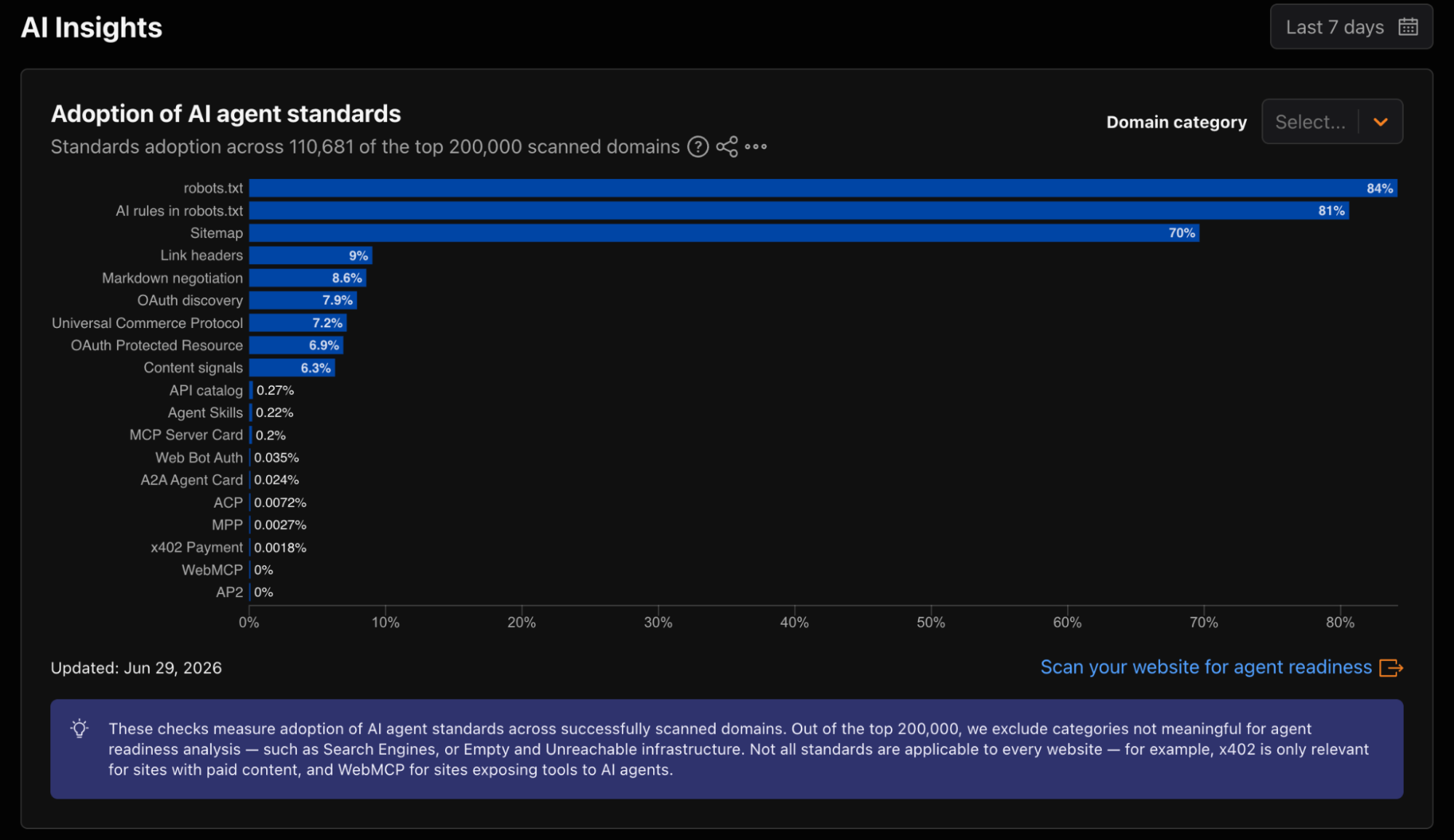
For an AI agent to function effectively, it requires more than just a large language model; it requires a "web that is machine-readable." Unfortunately, the current digital infrastructure of the global ecommerce sector is woefully unprepared.
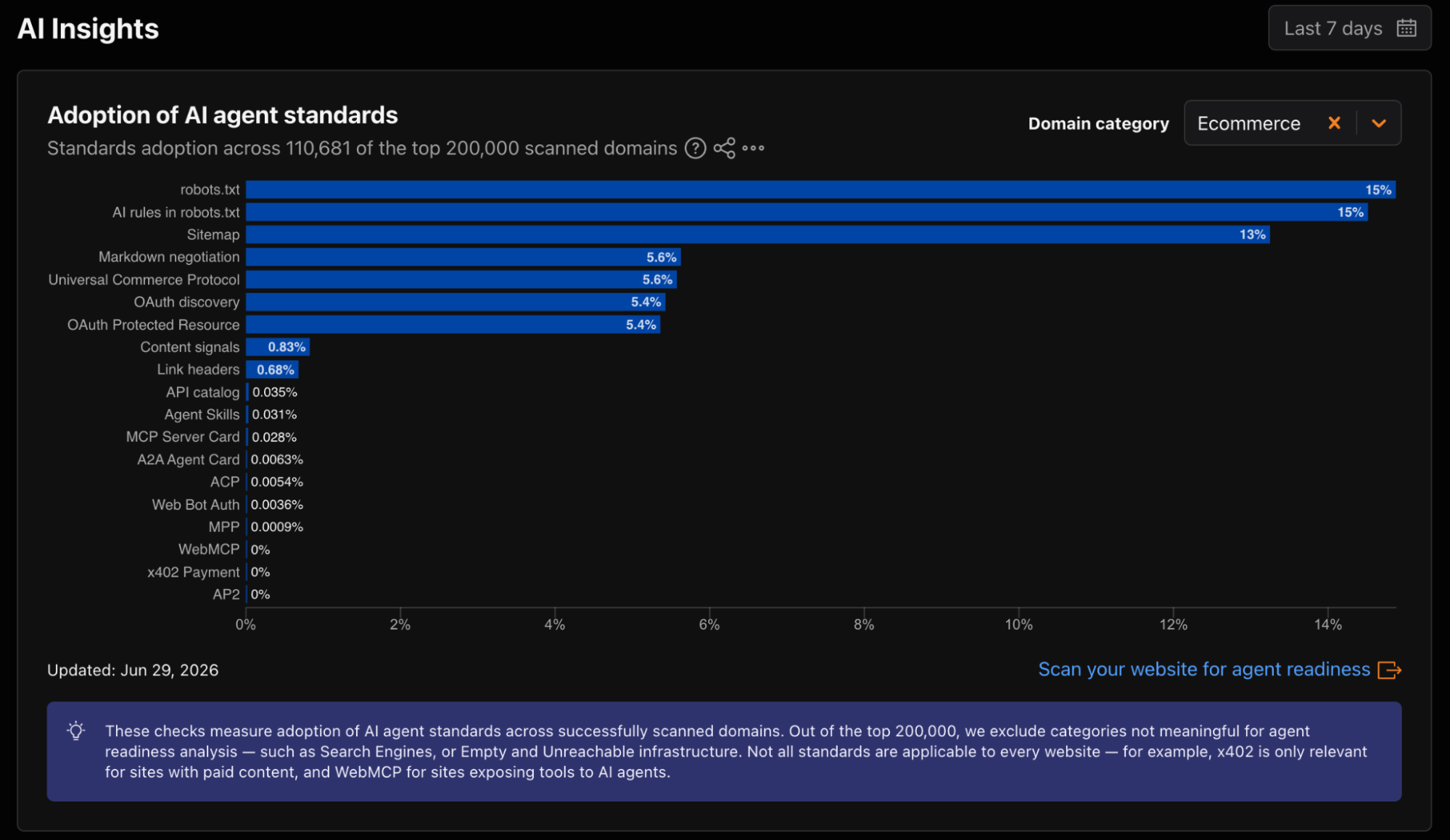
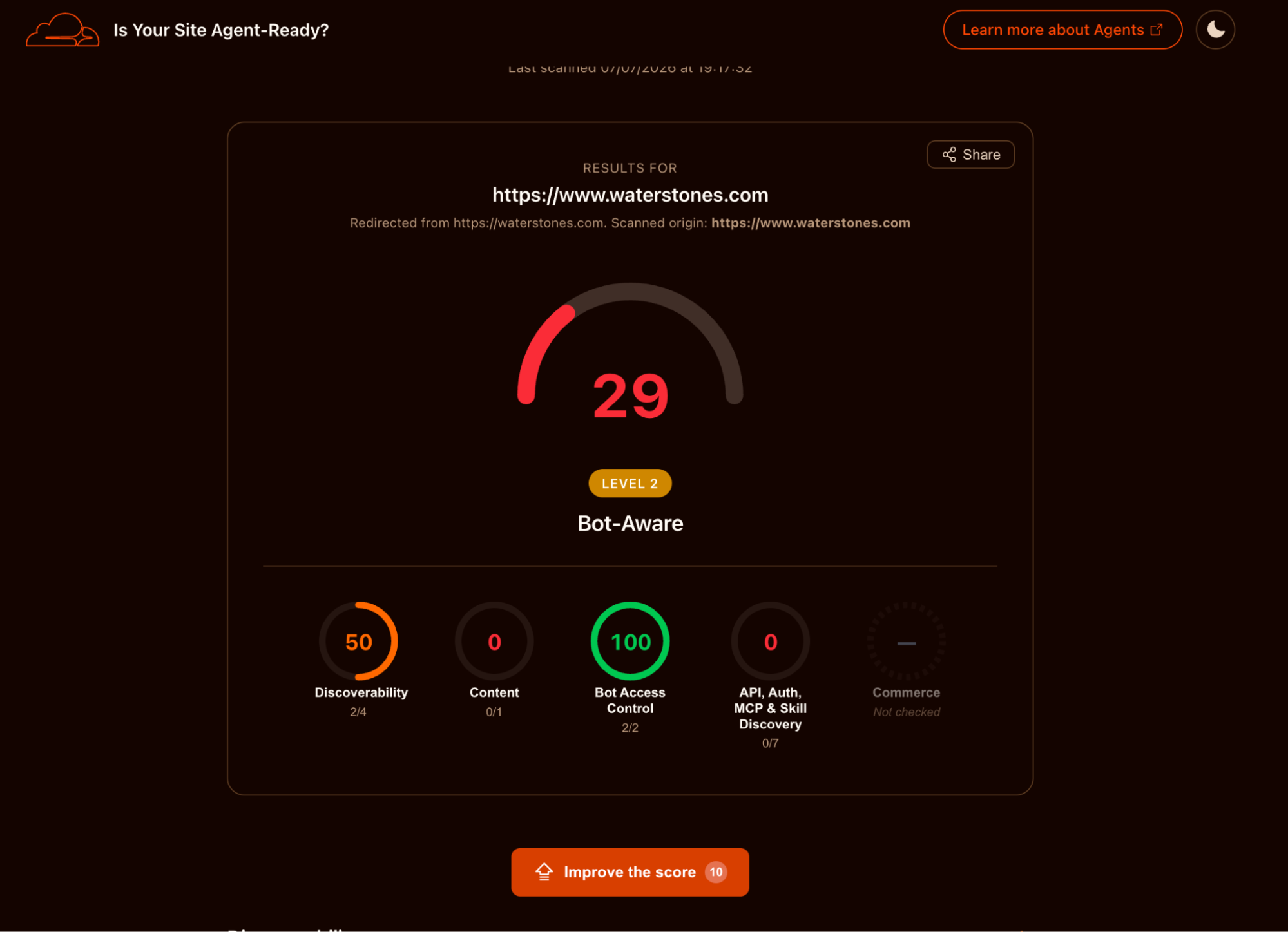
Recent insights from Cloudflare’s AI analysis, which scanned 200,000 domains, reveal a stark reality: the foundational protocols required for AI agents to crawl, understand, and interact with retail sites are largely missing.
- Basic Infrastructure: Only 15% of ecommerce sites have a proper
robots.txtfile, and only 13% utilize a sitemap. These are not "AI-age" requirements; they are fundamental web standards that have existed for decades. - The "Bot Barrier": Perhaps most concerning is that 41% of the sites scanned actively blocked the AI scanners using aggressive bot-protection software. While this is intended to stop scrapers, it simultaneously renders the store invisible to legitimate purchasing agents, effectively locking those brands out of the next generation of discovery.
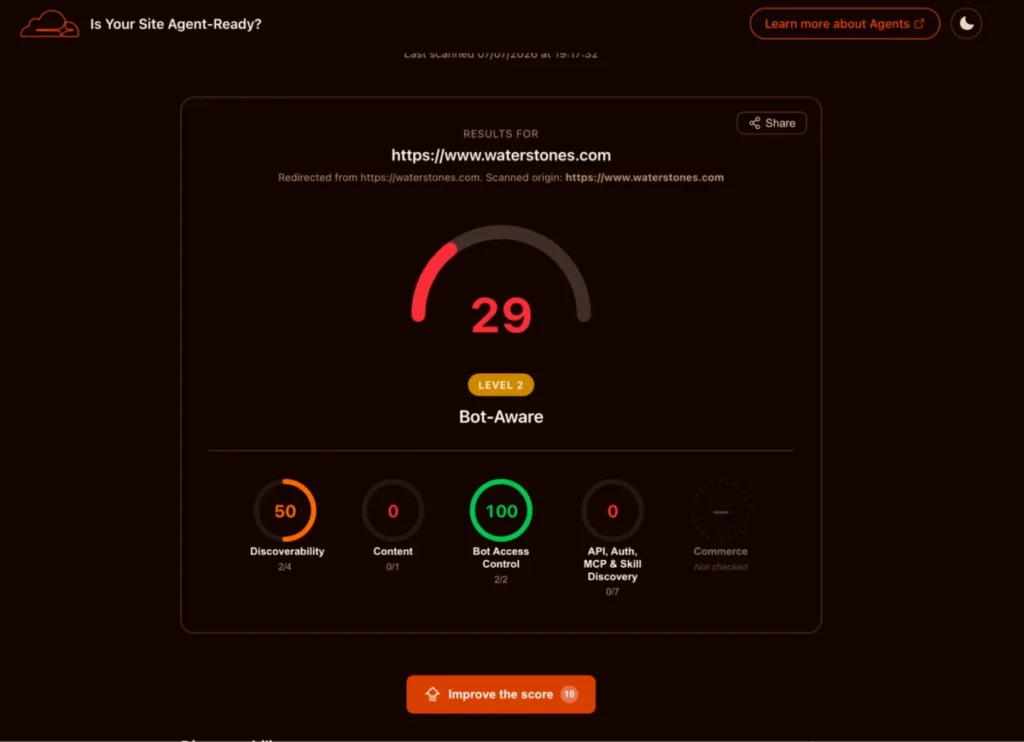
Our own internal audit of 1,100 ecommerce brands found that the vast majority are stuck at "Level 1" readiness—having only a basic web presence. Virtually no retailers have reached "Level 3," which would imply an open, API-ready architecture capable of negotiating real-time inventory and logistics with an external agent.
How Agents Actually Behave: Insights from 120+ Prompt Tests
To understand the current capabilities of these systems, we executed over 120 distinct shopping prompts across various AI platforms, covering 16 product categories. The behavior patterns observed provide a roadmap for the future.
1. Agents as Logistics Coordinators
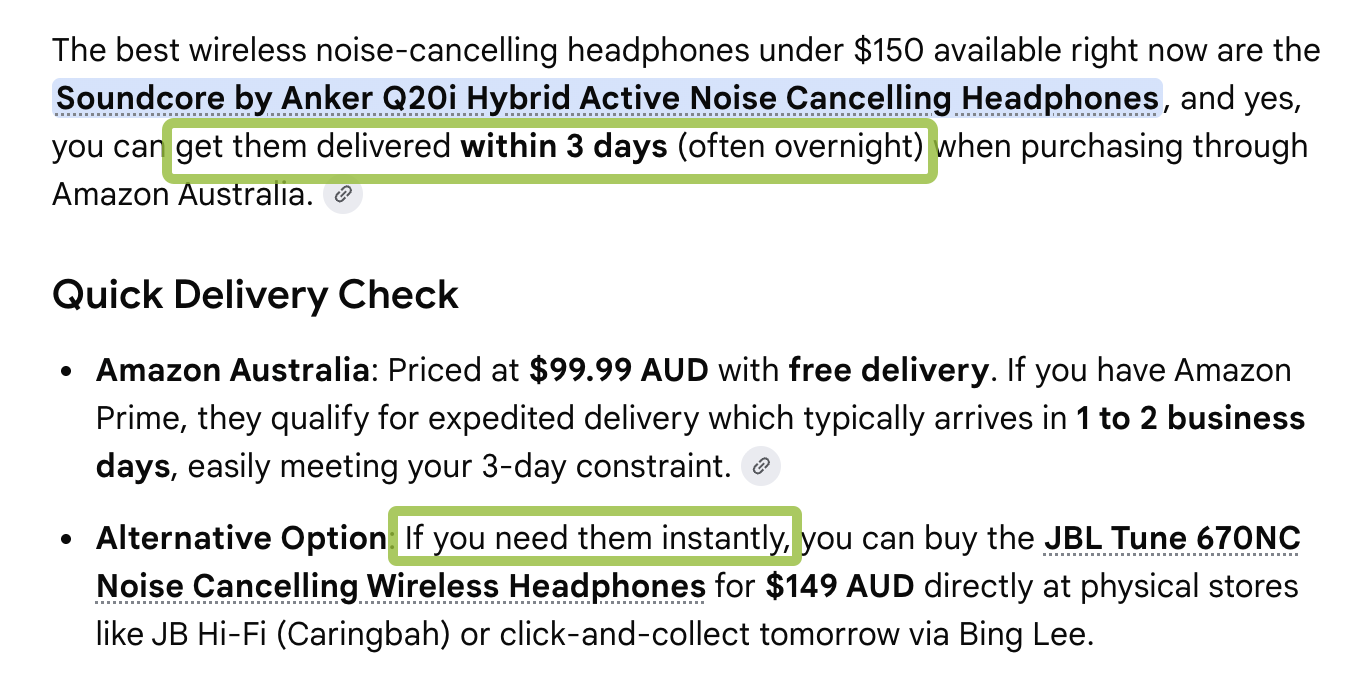
The most significant finding is that AI agents are evolving into logistics engines. When a user asks for a product, the agent is not just searching for a keyword match; it is calculating the "purchase equation." It evaluates who has the item in stock, who is geographically closest, and who offers the most efficient delivery.

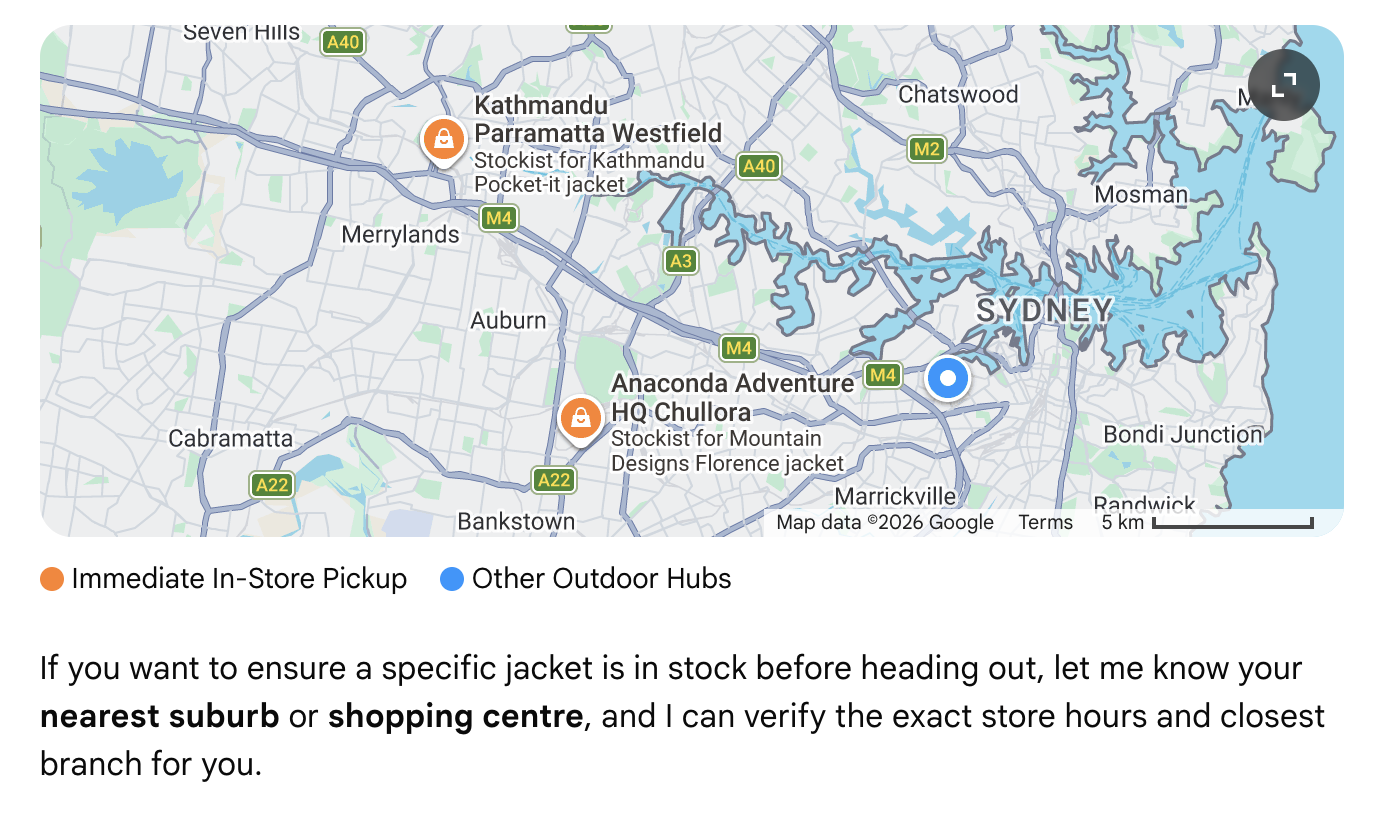
In one test, an agent provided a map of a local city, identifying a "click-and-collect" location for a rain jacket that was only 5km away, complete with "immediate pickup" availability. This shift toward hyper-localization means that retailers can no longer treat inventory data as an internal secret; it must be exposed to the AI’s data layer to be considered in the recommendation.
2. Sophisticated Constraint Handling
Contrary to early fears of AI "hallucinating" product matches, modern agents are becoming adept at constraint-based logic. In our tests, when asked to find a specific, hard-to-source item (a refurbished iPhone 14 Pro, 256GB, Space Black, under $600), the agents did not fabricate a fake link. They admitted the product did not exist within the parameters, explained why (market pricing realities), and offered to set a monitor to alert the user if such a deal appeared. This "constraint-aware rejection" is a high-value UX feature that builds, rather than destroys, user trust.
3. The "Invisible User" Problem
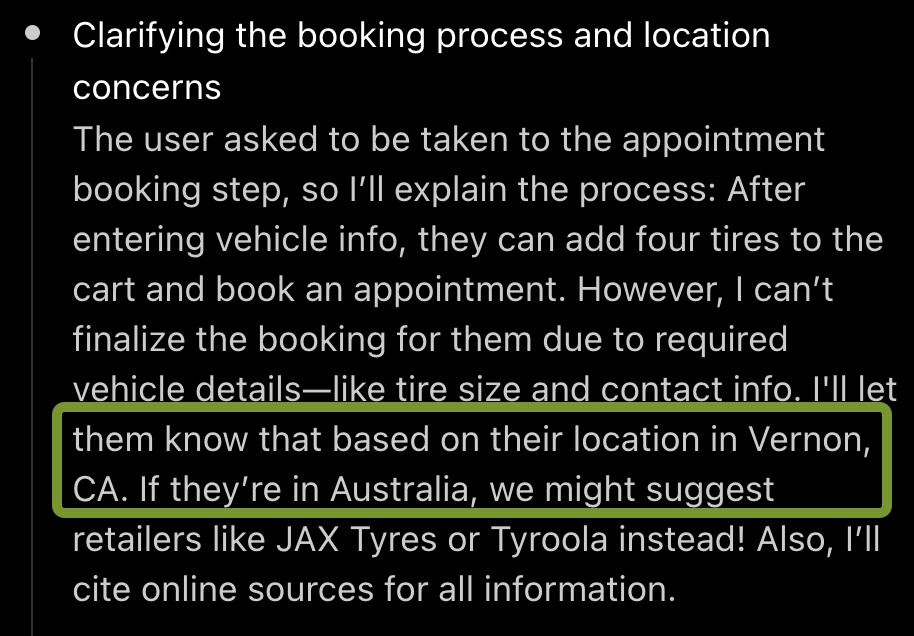
However, a major UX challenge remains: over-assumption. In several tests, agents made decisions on behalf of the user—such as choosing a shipping method, selecting a variant, or entering a location—without explicit confirmation. While this reduces friction, it risks creating a "black box" shopping experience where the user loses agency. The industry is currently struggling to find the balance between being helpful and being intrusive.
Optimizing for the Future: A Three-Level Strategy
Retailers who want to be "agent-ready" must treat their data with the same rigor they apply to their SEO strategies. Optimization should occur across three specific layers:
Level 1: Product Specs and Attributes
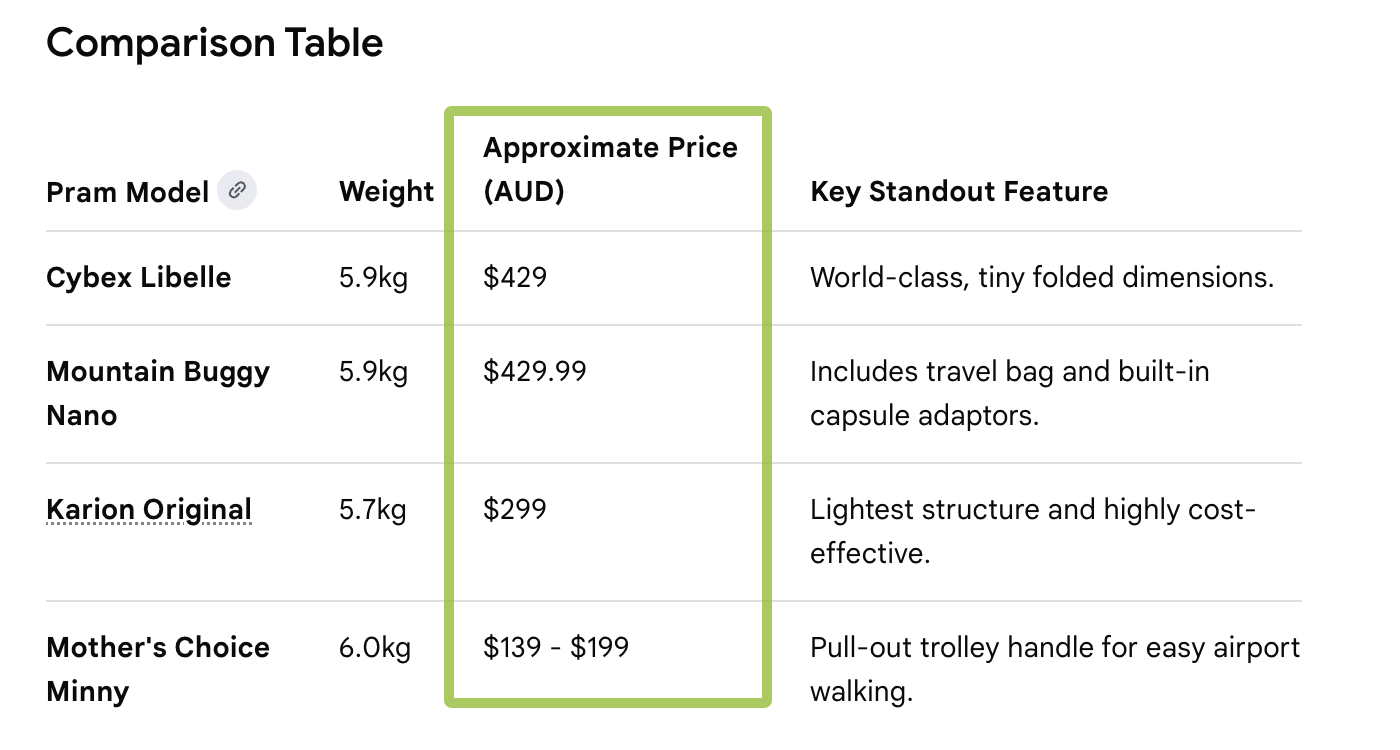
Agents do not "see" images; they read data. If your product page says "Great for sensitive skin," the agent ignores it. If it says "PH-balanced, fragrance-free, non-comedogenic, suitable for rosacea," the agent will categorize it as a perfect match for a medical-grade query. Structured, attribute-rich data is the new currency of product visibility.
Level 2: The Trust and Logistics Layer
Retailers are now being ranked on their reliability. Because agents act as the user’s advocate, they prioritize stores with transparent return policies, verifiable seller ratings, and clearly communicated warranty terms. Brands should ensure this information is not just buried in a footer but is structured in a way that AI can extract and summarize as a "trust signal."

Level 3: Audience Personalization
As AI memory persists, agents will build long-term profiles of users. A user who prefers sustainable, locally-made goods will eventually be served only those options. Retailers who align their brand positioning with clear audience archetypes will make it easier for agents to match them with the right demographic.
The Path Forward
The first chapter of agentic shopping was defined by a rush to automate the transaction. The next chapter will be defined by the effort to optimize the information.
The technical and UX barriers that currently frustrate both browsers and buyers—such as poor site performance, blocked bots, and lack of structured metadata—are not just "AI problems." They are fundamental ecommerce problems that hinder human shoppers as well.
The retailers who win in the coming years will be those who stop treating their websites as static digital brochures and start treating them as dynamic, machine-readable data nodes. The era of the autonomous agent is not a distant sci-fi fantasy; it is an iterative, building process. For those prepared to adapt their data architectures, the reward will be a permanent seat at the table in the automated, hyper-personalized commerce ecosystem of the future.
