
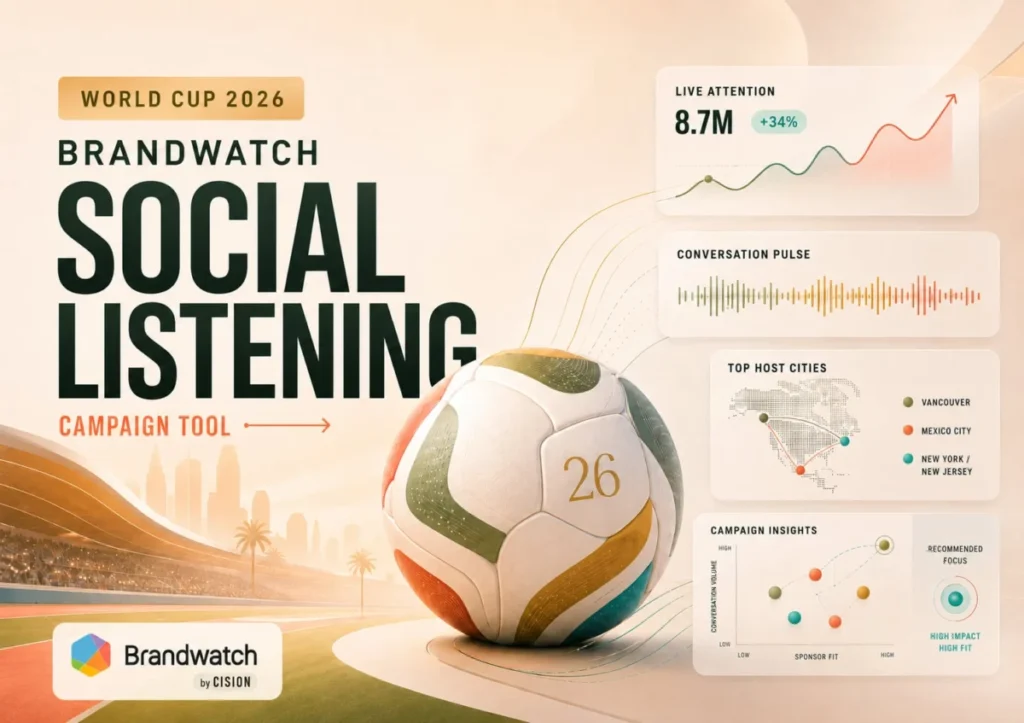
The Real-Time Revolution: How World Cup 2026 is Redefining Sports Marketing
World Cup marketing has historically been a game of massive, static investments. For decades, brands have operated on a rigid playbook: purchase high-cost sponsorship packages, produce glossy campaigns months in advance, and wait for the final whistle to measure "impact" through traditional recall surveys and reach reports.
However, the upcoming 2026 FIFA World Cup is rendering that legacy approach obsolete. As the largest iteration of the tournament in history—featuring 48 teams, 104 matches, and 16 host cities across Canada, Mexico, and the United States—the sheer scale of the event creates a chaotic, fragmented attention economy. In this environment, reach is no longer the metric that matters; attention is the new currency. To capture it, marketers must move away from static planning and embrace a real-time "attention layer."
The Shift: From Passive Exposure to Active Engagement
The fundamental challenge for sponsors in 2026 is that attention will not move linearly. It will fluctuate wildly, shifting by match, city, player performance, viral creator reactions, and unpredictable cultural flashpoints. A static, pre-planned campaign may achieve reach, but it often fails to create meaningful resonance.
This shift has necessitated the development of tools like Brandwatch’s "Football Attention Index," which tracks brand presence, trending topics, and host-city sentiment in real-time. The index serves as a diagnostic dashboard for the modern marketer, allowing them to decide exactly when to activate, amplify, localize, or pull back while the tournament is still unfolding.
The core philosophy is simple: exposure is merely visibility, but attention is conversation. A logo on a stadium board provides the former, but a timely social media activation or a viral creator-led moment provides the latter. The question for 2026 is no longer "How much reach did we buy?" but rather "Where is our brand becoming part of the narrative, and how do we lean into that conversation?"
The Anatomy of the Football Attention Index
To navigate the tournament’s complexity, Brandwatch has organized the data landscape into three distinct, marketer-friendly views:
- The Brand View: This tracks commercial names against their competitors. It is essential for quantifying the "share of voice" and determining whether a brand is gaining organic momentum beyond its paid placements.
- The Topic View: This identifies the narratives driving the discourse. Often, a brand’s planned theme—such as "national pride"—may be eclipsed by fan discussions regarding stadium logistics, refereeing, or travel mishaps. Understanding these shifts allows brands to pivot their messaging to remain relevant.
- The Host-City View: With 16 host cities, the 2026 tournament is effectively 16 different, simultaneous events. Each city has its own local creator ecosystem, tourism economy, and fan culture. Monitoring this allows for hyper-localized regional activations that feel authentic to the fans on the ground.
Chronology of an Attention Strategy
The lifecycle of a World Cup campaign now demands a multi-phase approach that mirrors the tournament’s own progression.
- Pre-Tournament (The Baseline Phase): Marketers use the index to establish baseline sentiment for their brand and category. This is the time to map out potential "creator types"—identifying influencers who specialize in the unique cultures of the host cities.
- The Group Stages (The Discovery Phase): As matches begin, attention is volatile. The strategy here is to track narrative shifts. If a specific city becomes a hub of activity or a specific player becomes a viral sensation, the brand must be ready to deploy localized content within 24 hours.
- The Knockout Stages (The Amplification Phase): By this point, the "noise" is at its peak. The strategy shifts to high-intent actions. Brands use search intelligence to see what fans are actively looking for—such as ticket info or watch parties—and position their brand as the solution.
- Post-Tournament (The Evaluation Phase): Finally, the data collected during the event is synthesized. Marketers compare the "attention spikes" against actual campaign outcomes to build a proprietary playbook for future high-stakes events.
Supporting Data and the "Intent" Layer
While social listening tracks what people are saying, it is only half the picture. The missing piece is intent. Fans rarely post about their search queries, yet these queries reveal the most valuable data: what they need, where they are going, and what they are struggling to find.
By integrating Search Intelligence, brands can track demand across traditional search, shopping environments, and generative AI platforms. For example, if a specific beverage category sees a surge in "where to buy" searches in a particular host city, it provides a direct signal for where to allocate experiential marketing budgets.
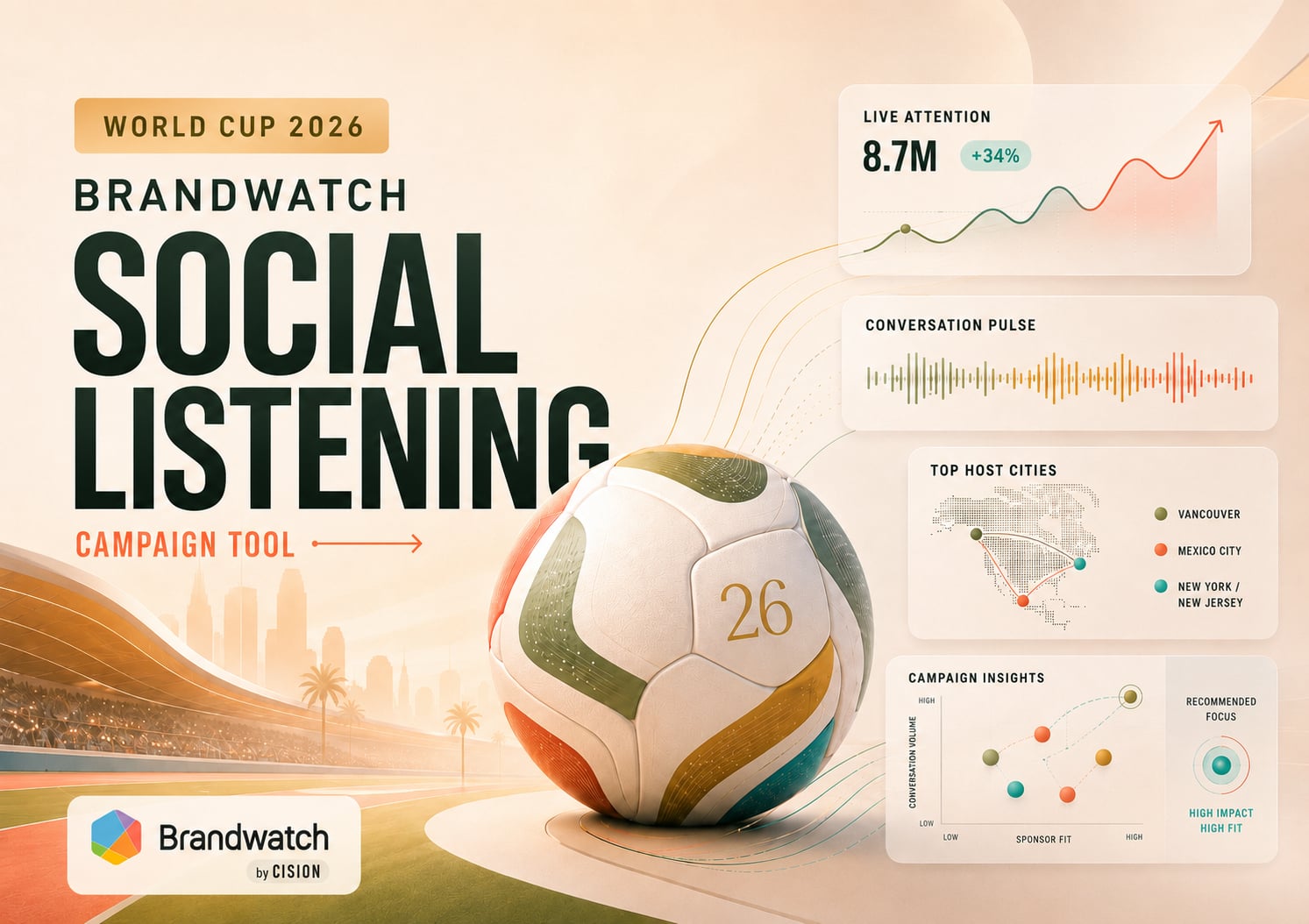
This multi-source approach—combining social listening (emotion/momentum) with search intelligence (intent/demand)—allows marketers to anticipate trends before they hit the mainstream. A topic often surfaces as a niche search query days before it explodes into a global social trend.
Official Responses and Industry Implications
Industry analysts are increasingly viewing the 2026 tournament as the "Data-First World Cup." Sponsorship experts argue that the traditional "set-it-and-forget-it" model is now a liability.
"The brands that will win in 2026 are those that treat social listening as a tactical operations center, not a reporting tool," says one leading digital marketing strategist. "If you are waiting for a weekly report to see how your campaign is performing, you have already missed the moment."
The implications for marketing departments are profound. It requires a more agile structure, where legal and PR teams are prepared to approve content at high speeds. It also demands a closer relationship with creator networks. Creators are no longer just an "add-on" for reach; they are the frontline ambassadors who translate brand messaging into the authentic, local language of the tournament.
Practical Strategies for Success
To capitalize on the 2026 landscape, marketers should focus on these five core pillars:
- Contextual Sponsor Visibility: Don’t track raw volume. Focus on "meaningful mentions"—conversations where your brand is linked to positive experiences or purchase intent.
- Category Momentum: Look for opportunities outside your direct lane. If you are a fintech brand, look for category trends in travel or hospitality to find "permission" to enter the conversation.
- Host-City Hyper-Localization: Treat every host city as its own market. Use data to determine which cities require retail support, PR monitoring, or influencer takeovers.
- Narrative Agility: Establish "red lines" and "green lights" for trends. Know which topics are safe for your brand to engage with and which are high-risk.
- Sentiment and Risk Management: Before amplifying any piece of content, run a sentiment check. A spike in conversation is only good if the sentiment is positive; otherwise, it is a brand safety crisis waiting to happen.
Conclusion: The Future of Live-Event Marketing
The 2026 World Cup represents a massive paradigm shift. The tournament’s immense scale means that no single brand can "own" the conversation through traditional means. Instead, the winners will be the brands that read the attention landscape with precision and agility.
By integrating social listening with search intelligence and creator strategies, companies can transform from passive sponsors into active participants. The goal is to move beyond the vanity metrics of reach and into the actionable metrics of influence. As the whistle blows in 2026, the question won’t just be who won the match, but which brands were clever enough to be the ones the world was talking about when it mattered most.
Success will be found in the silence between the loud moments—the ability to listen, adapt, and act with speed in an era where the conversation never stops.
