
The PRISM Revolution: Architecting Brand Identity in the Age of Agentic AI
Introduction: From Transactional Tools to Conversational Companions
For decades, technology was a tool we operated—a digital interface sitting between human intent and desired outcomes. Today, that paradigm has shifted entirely. Thanks to the rapid evolution of artificial intelligence, technology has transformed from a static utility into an immersive, living ecosystem. We no longer just use technology; we operate within it.
This shift marks a departure from transactional computing to conversational intelligence. AI responses are no longer limited to retrieving static database entries; they are synthesizing new contexts and generating original content in real-time. As human-to-machine interactions become increasingly fluid and empathetic, the implications for brand management are profound. Marketing is no longer just about visual identity or catchy slogans; it is about defining the digital soul of a brand as it navigates the agentic economy.
The Evolution of Emotional Connection: From Lovemarks to Agentic Lovemarks
The foundational objective of marketing has remained constant since the early 20th century: to foster an emotional connection between the consumer and the brand. This strategy was formalized by Kevin Roberts’ concept of the "Lovemark"—a brand that transcends mere utility to capture the hearts and loyalty of its audience.
However, the mechanism for achieving this connection is undergoing a radical metamorphosis. Arjan Kapteijns, former CEO of Saatchi & Saatchi Netherlands, has recently pushed this theory into the future, introducing the concept of "Agentic Lovemarks." In this new reality, consumers are delegating their decision-making to digital agents—AI assistants that browse, compare, and purchase on our behalf.
For brands to remain relevant, they must now win the "digital shortlist." This requires an emotional connection not only with the human end-user but also with the AI agent that acts as the gatekeeper to that human. The challenge for marketers today is to orchestrate emotional connection through the cold, algorithmic logic of machines.

The Obsolescence of Static Archetypes
For 25 years, the gold standard for brand personality was the 12-brand archetype model, popularized by Margaret Mark and Carol Pearson in The Hero and the Outlaw. These archetypes provided a rational framework for managing irrational consumer behavior, defining how a brand should look, talk, and act.
Yet, as we enter the era of autonomous AI, this framework faces a crisis of precision. Archetypes are, by design, broad and open to interpretation. When a human interacts with a human, nuance is intuitive. When a machine interprets a brand’s "Archetype" to generate a response, the lack of granular instruction can lead to inconsistent, unpredictable, and often "generic" outputs. If a brand relies solely on an archetype, the AI might generate a different "personality" every time it is queried, destroying brand equity and trust.
The Legible-Lovable Law: Bridging the Technical Gap
To solve the ambiguity of the agentic economy, Thomas Marzano—the former brand lead at Philips and ASML—proposes the "Legible-Lovable Law." This concept mandates that for a brand to survive, it must be:
- Legible to AI: The brand’s identity must be structured as data that an LLM (Large Language Model) can parse, understand, and render accurately.
- Lovable to Humans: The AI-generated output must retain the emotional resonance and personality that keeps the human user engaged.
This is not the end of emotional branding; it is its technical reinforcement. A brand must provide the AI with explicit instructions on tone, vocabulary, and response behavior to ensure the machine becomes a "branded AI" rather than a neutral, robotic interface.
Introducing the PRISM Model
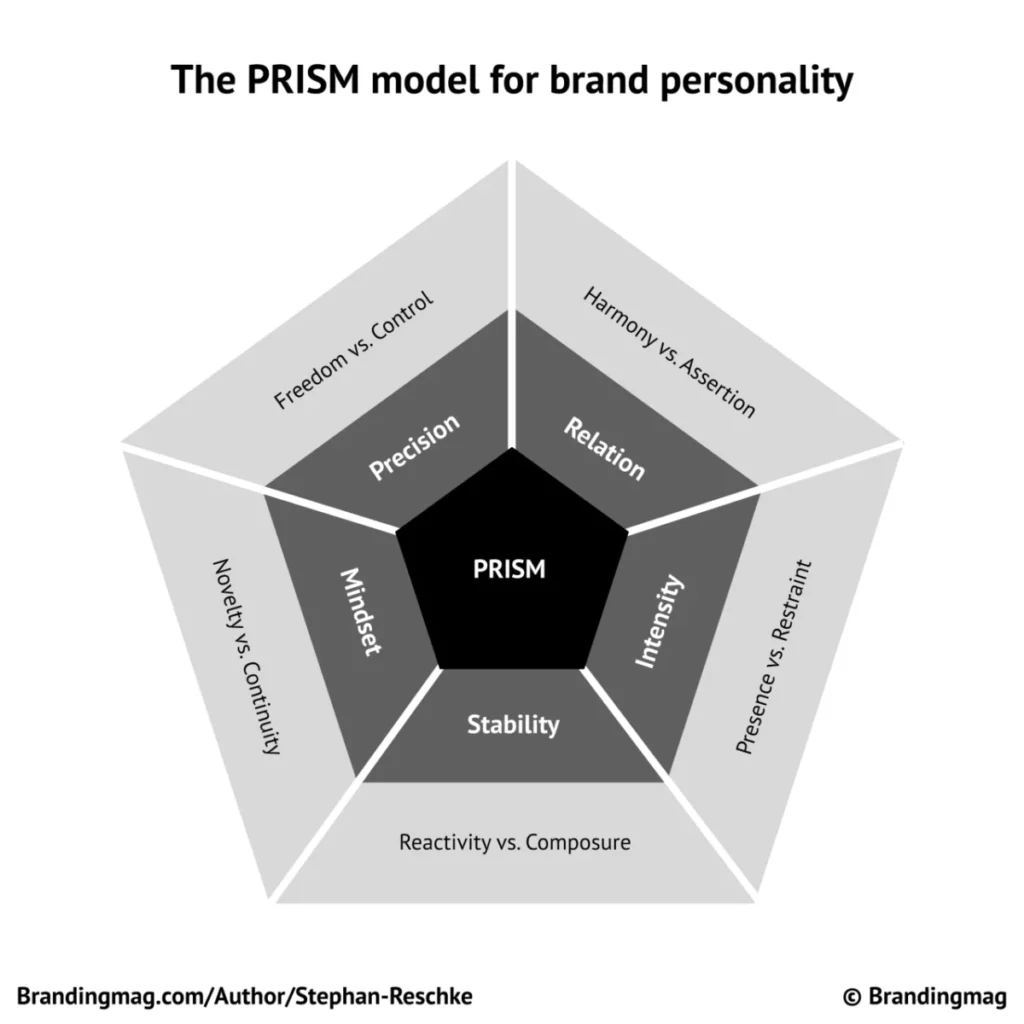
To bridge the gap between human personality and machine execution, the industry is shifting toward the PRISM model. Unlike the archetypes, which focus on symbolic roles, the PRISM model is rooted in the "Big Five" (OCEAN) psychological framework, refined specifically for the brand-as-an-entity.
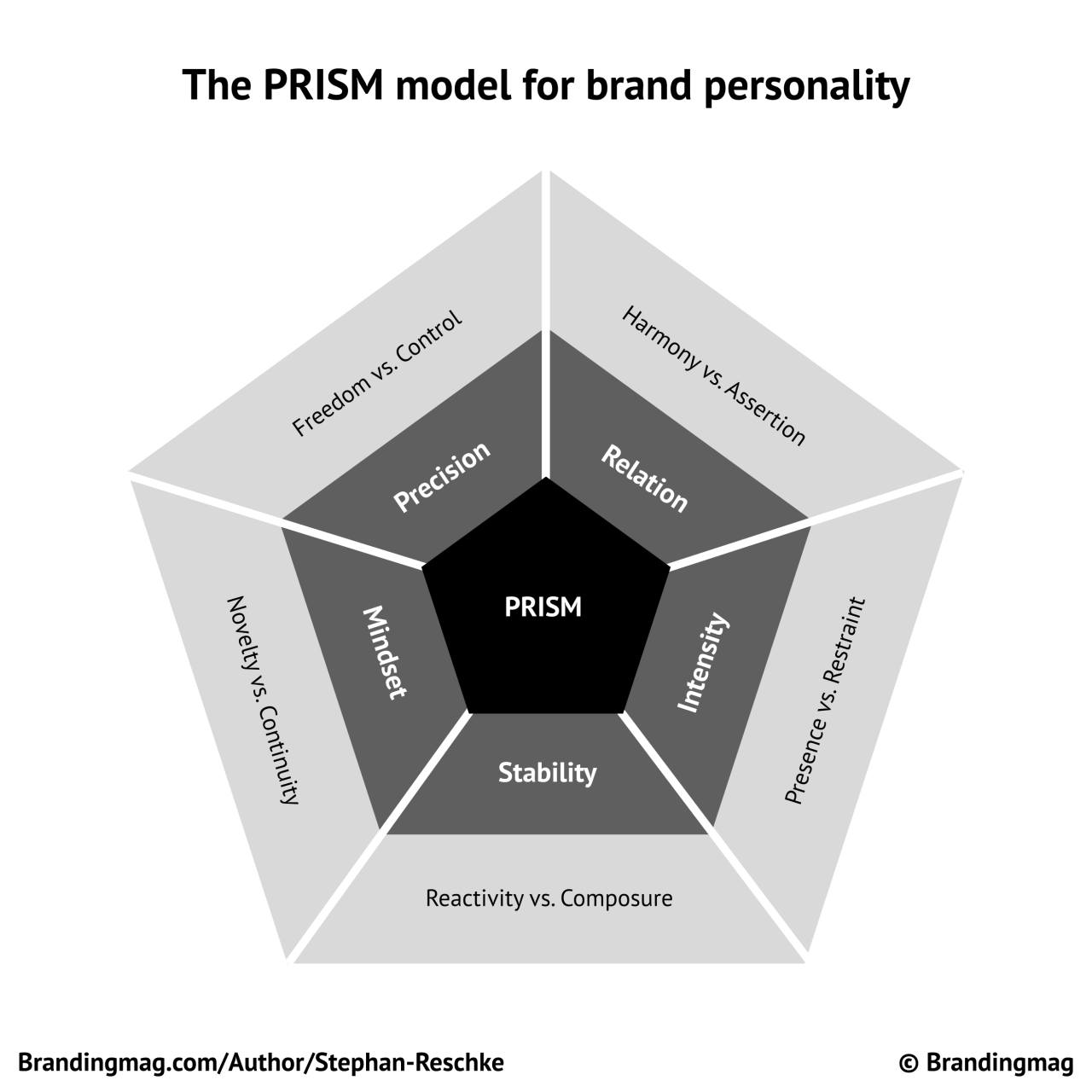
The Five Core Domains of PRISM:
- Persuasion (Openness): How the brand approaches new ideas, innovation, and intellectual flexibility.
- Responsiveness (Conscientiousness): The brand’s level of reliability, efficiency, and organizational structure.
- Interactivity (Extraversion): The energy level of the brand—is it bold and outgoing or reserved and reflective?
- Sympathy (Agreeableness): The brand’s focus on empathy, kindness, and cooperative engagement.
- Maturity (Neuroticism/Stability): How the brand handles stress, pressure, and uncertainty in its messaging.
Each domain is broken down into six defining characteristics, allowing for a highly nuanced, quantifiable "personality score." By quantifying these traits, marketers can create a "digital DNA" for their brand that is machine-readable and instruction-ready.
Implications for the Future of Brand Language
In an age of voice-driven interfaces and conversational AI, language is the primary touchpoint. Campaigns are being replaced by "Brand Language"—a set of grammatical and tonal rules that guide every AI-generated response.
How the PRISM Model transforms brand output:
- System Prompt Engineering: Instead of a static brand book, the PRISM profile serves as the core "system prompt" for LLMs, ensuring every interaction feels consistent.
- Contextual Adaptability: Because PRISM uses a scale-based approach, the AI can modulate the brand’s "personality" based on the context of the user’s request, while staying within defined guardrails.
- Digital Soul Implementation: The model’s parameters are embedded into the brand’s web infrastructure, allowing the AI to "read" the brand identity before it crafts a response.
Chronology of the Shift
- Early 2000s: Marketing is dominated by visual identity and the 12-archetype model.
- 2023–2024: The explosion of Generative AI creates a disconnect between traditional brand guidelines and real-time AI generation.
- 2025: Industry leaders begin identifying the "Agentic Economy," where AI agents represent the primary purchasing force.
- 2026: The PRISM model emerges as the industry standard for defining "Agentic Lovemarks," shifting the focus from static design to programmable personality.
Strategic Implications for Marketers
The move to the PRISM model and Agentic Lovemarks carries significant weight for corporate strategy:
- Decentralization of Control: Marketers must accept that they no longer control the "last mile" of the brand experience. The AI controls the output; the marketer controls the input parameters.
- Technical Literacy as a Prerequisite: Brand managers must become conversant in prompt engineering and data architecture. The brand book is no longer a PDF; it is a code repository.
- The Death of Generic AI: Brands that fail to implement a "Legible-Lovable" standard will be filtered out by AI agents that prioritize efficiency and utility over brand identity.
Conclusion: Embracing the Digital Unknown
The transition toward an agentic, AI-driven marketing environment is a source of both excitement and professional anxiety. However, history shows that the most effective way to navigate uncertainty is through rigorous experimentation and the adoption of new frameworks.
The PRISM model is not merely a classification tool; it is an "Experience Engine." It provides the technical scaffolding necessary for brands to thrive in a world where machines act as the primary intermediaries of our lives. As we continue to refine how brands "speak" to AI, we are moving toward a future where our digital creations don’t just mimic humanity—they honor it. The era of the Agentic Lovemark has begun; those who act now to define their digital soul will lead the next generation of commerce.
