
The Infinite Expansion: Inside the 2025 Martech Landscape and the Rise of the ‘Hypertail’
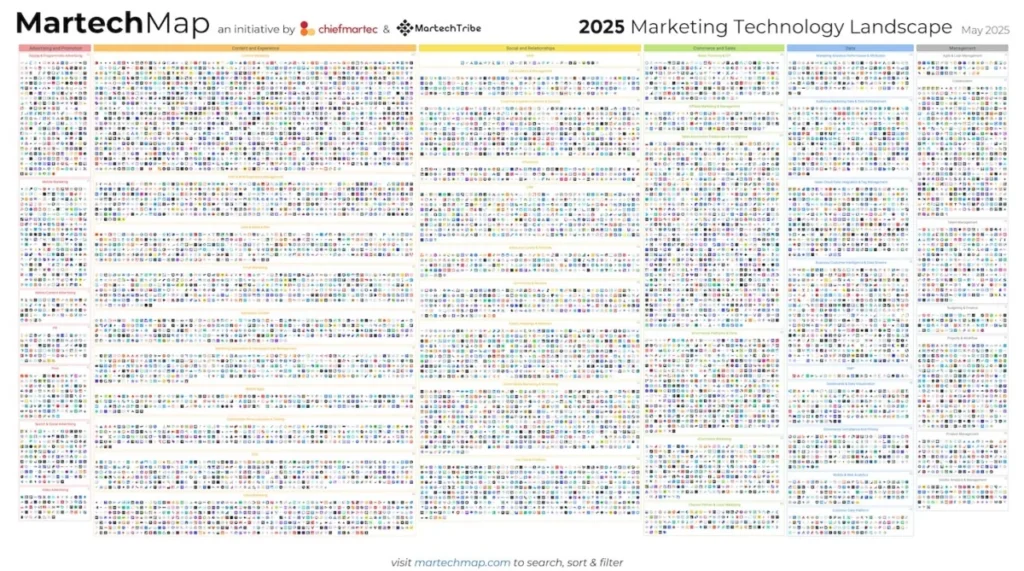
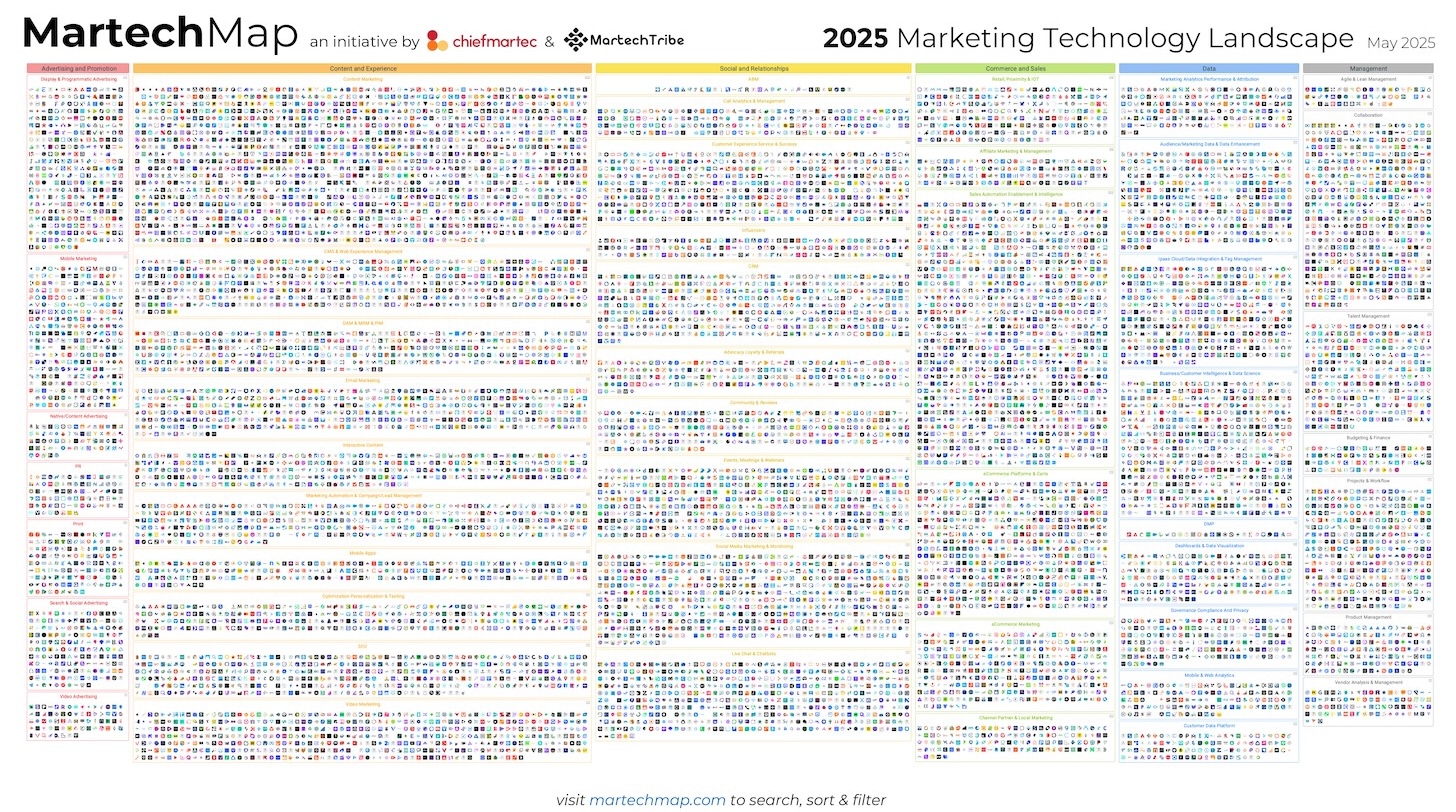
The marketing technology industry has once again defied the skeptics. For over a decade, industry pundits have breathlessly predicted a “great consolidation” or a total collapse of the fragmented software ecosystem. Yet, as the 2025 Marketing Technology Landscape supergraphic reveals, the industry has done the exact opposite: it has evolved, matured, and expanded with startling momentum.
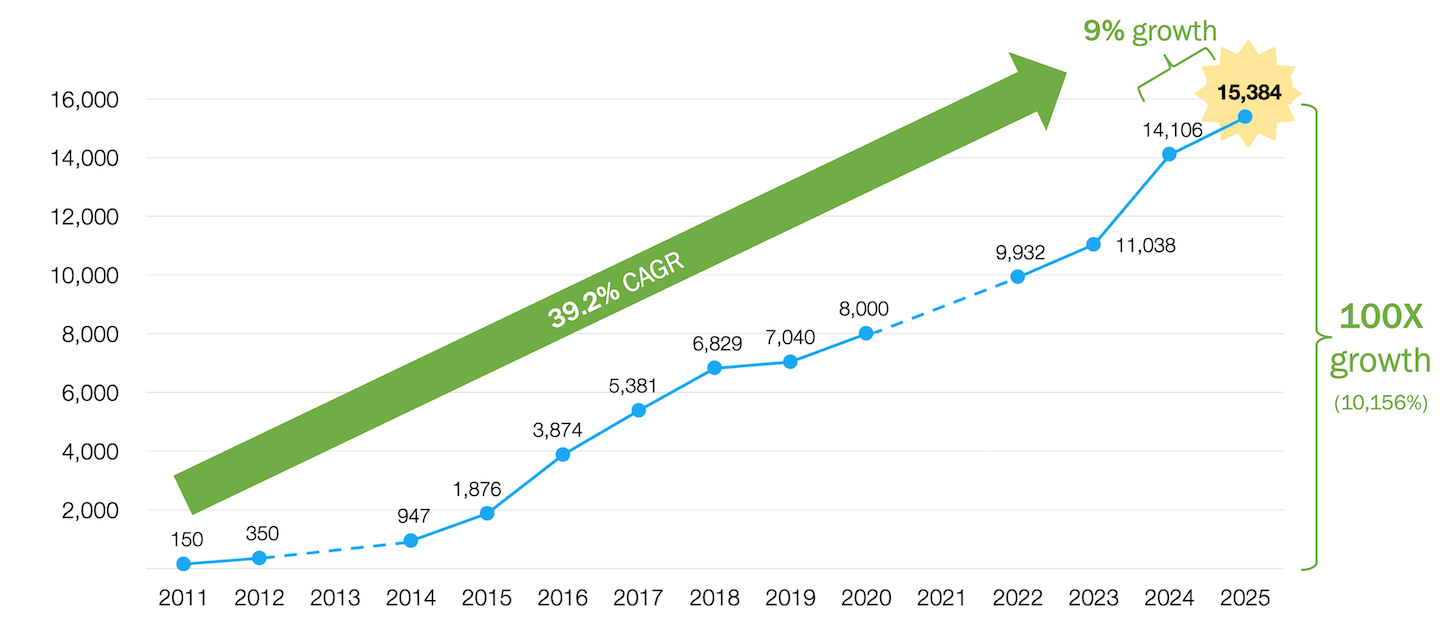
Today, the total number of martech solutions stands at an staggering 15,384. This represents a 9% growth over last year’s count of 14,106. Far from a market in decline, the martech space is currently undergoing a structural transformation, shifting from a collection of broad, monolithic platforms to a highly nuanced ecosystem of AI-native tools and, more importantly, an emerging, massive layer of custom-built, ephemeral software known as the “hypertail.”
A 15-Year Chronology: From 150 to 15,000
The journey to the 2025 landscape began in 2010, when Scott Brinker, the editor of ChiefMartech, first presented a slide on the "Rise of the Marketing Technologist." At the time, the concept of a "marketing technologist"—a professional who sits at the intersection of creative strategy and software engineering—was nascent.
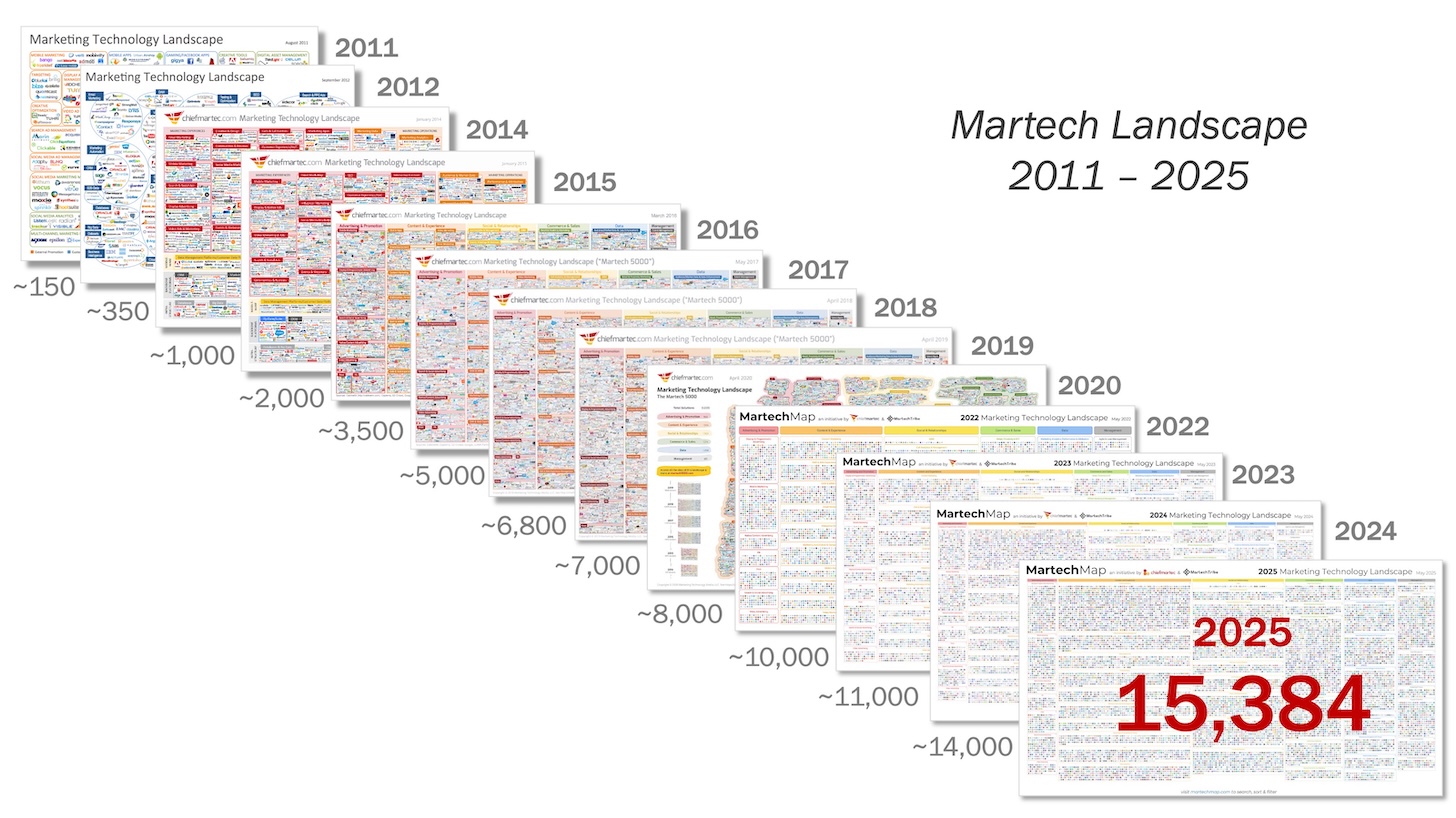
By 2011, the first official "Marketing Technology Landscape" infographic was published, featuring 150 solutions. It was viewed as a curiosity, a snapshot of a niche field. However, the years that followed saw an exponential explosion of venture capital investment, the rise of cloud-native SaaS, and the democratization of digital marketing tools.
- 2011: 150 solutions (The inception).
- 2014: ~1,000 solutions.
- 2018: ~7,000 solutions.
- 2022: ~9,900 solutions.
- 2025: 15,384 solutions.
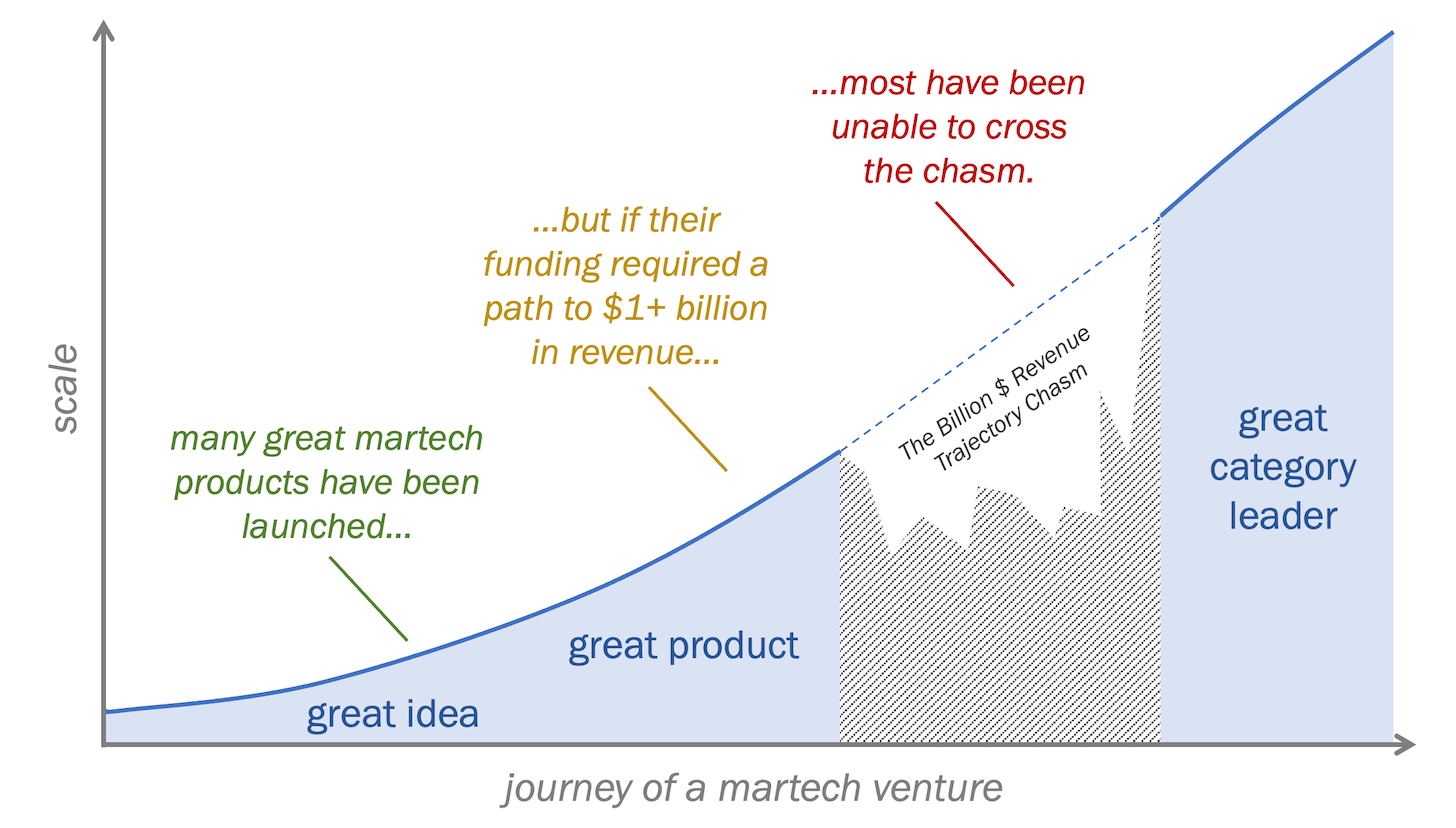
The growth trajectory is nothing short of 10,156%—a 100x increase since the project began. While many analysts argued that such proliferation was unsustainable, the "empirical reality," as Brinker notes, has consistently outpaced the projections of market consolidation.
Supporting Data: The Dynamics of Churn and Entry
Critics often argue that the sheer volume of products on the landscape is inflated by "noise"—unviable startups that shouldn’t count toward a professional stack. However, the 2025 data tells a more disciplined story.
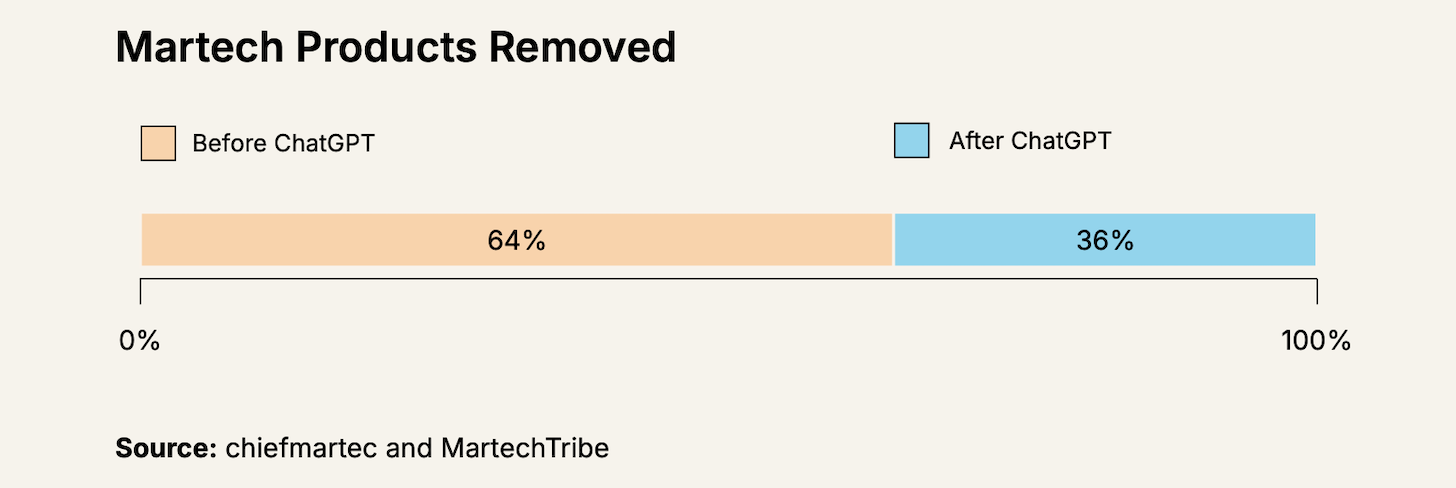
To maintain the integrity of the 15,384 figure, the research team evaluated 11,133 new candidates this year alone, with only 2,489 meeting the rigorous qualification criteria for inclusion. Simultaneously, the landscape saw a 8.6% churn rate, with 1,211 products being removed due to acquisition, dissolution, or total market exit.
Crucially, the "death" of these products is not limited to the AI-native "flash-in-the-pan" startups created post-ChatGPT. In fact, two-thirds of the products removed in 2025 originated from the 2010–2020 era. This suggests that the "first wave" of martech, which relied on traditional venture models and legacy architectures, is finally hitting a wall, while newer, more agile AI-native solutions are filling the void.
The New Frontier: AI and the "Hypertail"
If the 15,384 commercial solutions represent the visible landscape, the "hypertail" represents the massive, unseen iceberg beneath the surface. For years, the barrier to building software was high, requiring specialized engineering teams and significant capital. Today, that barrier has all but vanished.
The Rise of Citizen Development
Low-code and no-code platforms have spent the last decade laying the foundation for "citizen development." Marketers, once relegated to using pre-built tools, are now building their own custom applications to solve specific, localized problems. This trend is being supercharged by generative AI, which serves as a force multiplier for software creation.
Vibe Coding and Instant Software
"Vibe coding"—the practice of using natural language prompts to have AI generate functional, complex code—has fundamentally altered the economics of martech. A marketing manager today can describe a specific workflow automation to an AI assistant, and the system can construct the program in hours rather than weeks.
This leads to a world where software is increasingly disposable. Many of these custom programs are "ephemeral," created to handle a single campaign or data transformation and then archived or deleted. We are likely moving toward a reality where there are trillions of custom-built martech "agents" and apps operating within the enterprise, far exceeding the count of commercial, off-the-shelf software.
Implications for CMOs and Marketing Operations
The expansion of the landscape has profound implications for how marketing departments organize their technology stacks.
The Center of the Stack
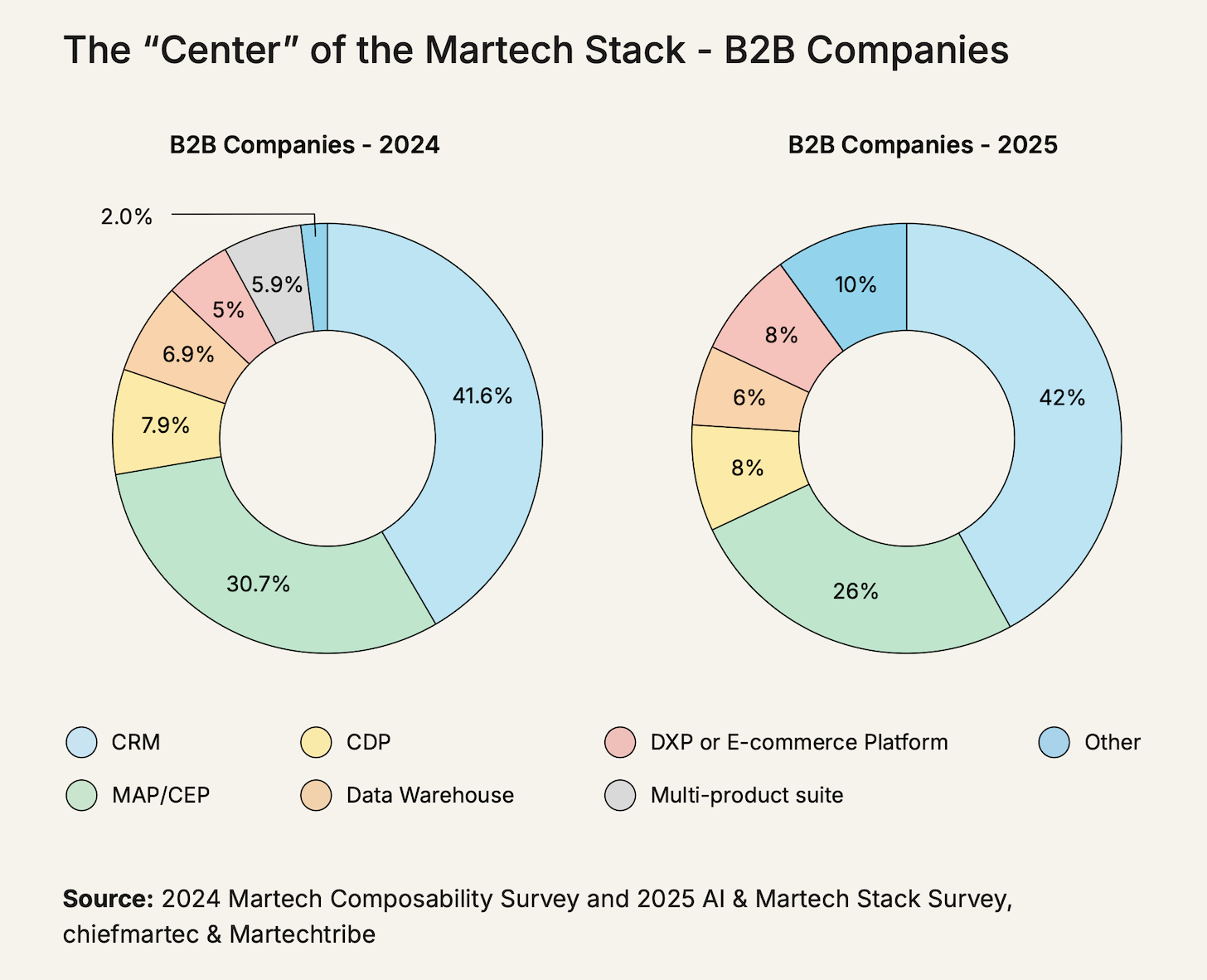
For years, the Customer Data Platform (CDP) was hailed as the "brain" or the "center" of the marketing stack. However, the 2025 data indicates a shifting power dynamic. In B2C and hybrid organizations, the influence of the standalone CDP has waned, dropping from 26.9% to 17.4% in terms of being identified as the "center" of the stack.
Instead, companies are gravitating toward two poles:
- The Data Layer: Cloud data warehouses (like Snowflake or BigQuery) are increasingly serving as the source of truth, rising from 20.9% to 23.9%.
- The Engagement Layer: Marketing Automation Platforms (MAP) and Customer Engagement Platforms (CEP) have seen significant growth, rising from 19.4% to 26.1%.
This suggests that the "CDP" as a distinct product category is being commoditized, with its core capabilities being absorbed either into the data warehouse (the "Composable CDP" model) or directly into the engagement platforms where the actual customer interaction occurs.
SEO: The Ironic Growth Leader
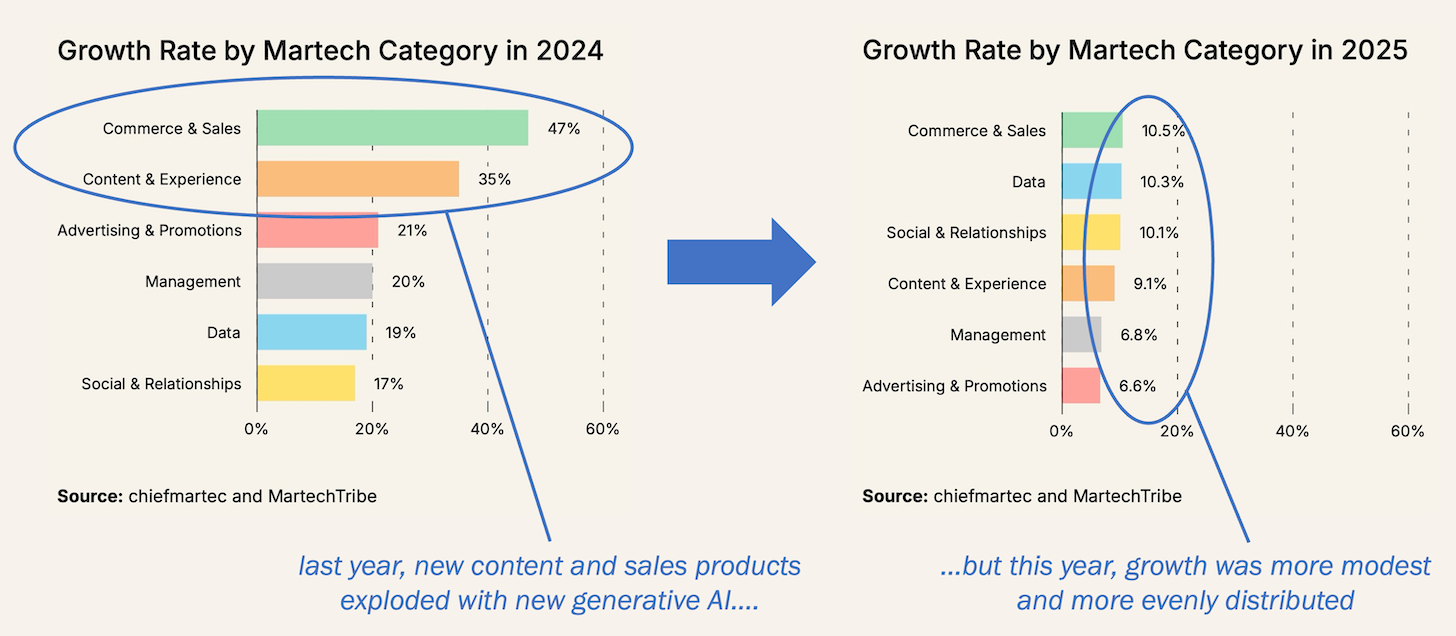
One of the most counterintuitive findings in the 2025 report is the growth of the SEO category. Despite a year dominated by headlines declaring that "SEO is dead" due to AI-generated search results, the SEO category expanded by 24%—the highest growth rate of all subcategories.
This growth is driven by the emergence of "AI Optimization" (AIO). As search engines evolve into answer engines, brands are scrambling to optimize their content for Large Language Models (LLMs) and AI search features, proving that when one digital channel matures, another is immediately born in its wake.
Official Perspectives: Navigating the Complexity
The "State of Martech 2025" report, which is available to the public in an ungated format, frames this era not as one of chaos, but as one of "managed fluidity."
For leaders in the space, the challenge is no longer about selecting the "right" tool from a limited set of options. It is about creating an architecture that can accommodate both a stable "system of record" (the core CRM or MAP) and a highly experimental, high-velocity layer of custom, AI-driven agents.
The 2025 landscape is a testament to the fact that the "Marketing Technologist" role has moved from the fringe to the boardroom. As businesses continue to compete on the quality of their digital experiences, the ability to rapidly deploy, discard, and integrate technology will be the primary determinant of competitive advantage.
Conclusion: The Future of the Landscape
Will the landscape continue to grow to 20,000 or 30,000 solutions? Likely. The economic incentives for software innovation have never been higher, and the cost of entry has never been lower. However, the "landscape" as we know it is becoming less of a static map and more of a living, breathing ecosystem.
For the modern CMO, the lesson of 2025 is clear: Stop looking for the one perfect tool that will solve every problem. Instead, focus on building an agile stack that treats software as a utility—a flexible, ephemeral, and increasingly intelligent component of the brand’s ability to connect with customers in a hyper-digital world.
The martech revolution isn’t slowing down; it is simply becoming decentralized, automated, and invisible. The 15,384 solutions listed are just the tip of the iceberg—the rest is being written in real-time, one prompt at a time.
