
The Great Plateau: Has the Marketing Technology Industry Finally Reached ‘Peak Martech’?
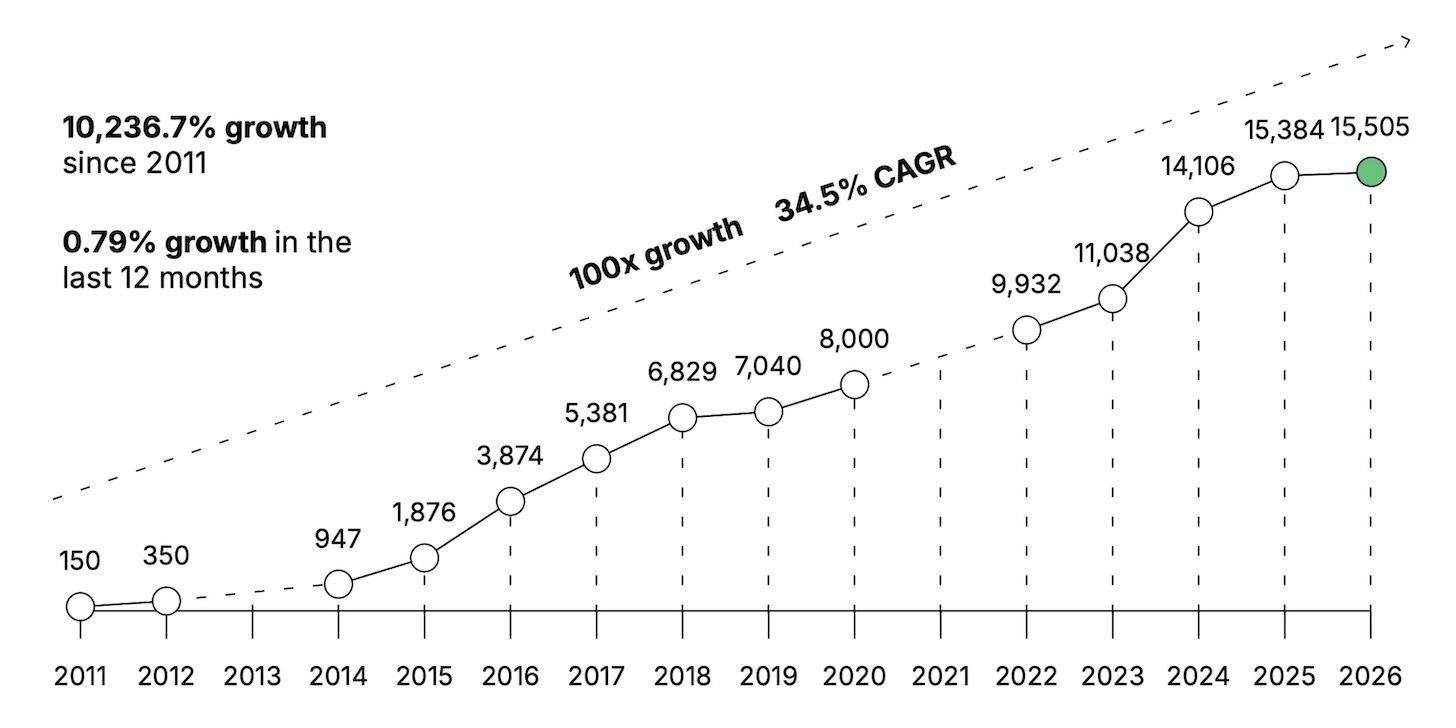
For fifteen years, the annual release of the Marketing Technology Landscape—the iconic "martech supergraphic"—was a testament to relentless, almost chaotic growth. Each year, industry observers braced themselves for the same spectacle: a sprawling, ever-expanding mosaic of logos representing a digital gold rush. From a modest 150 startups in 2011 to a staggering 15,384 in 2025, the narrative was one of infinite expansion.
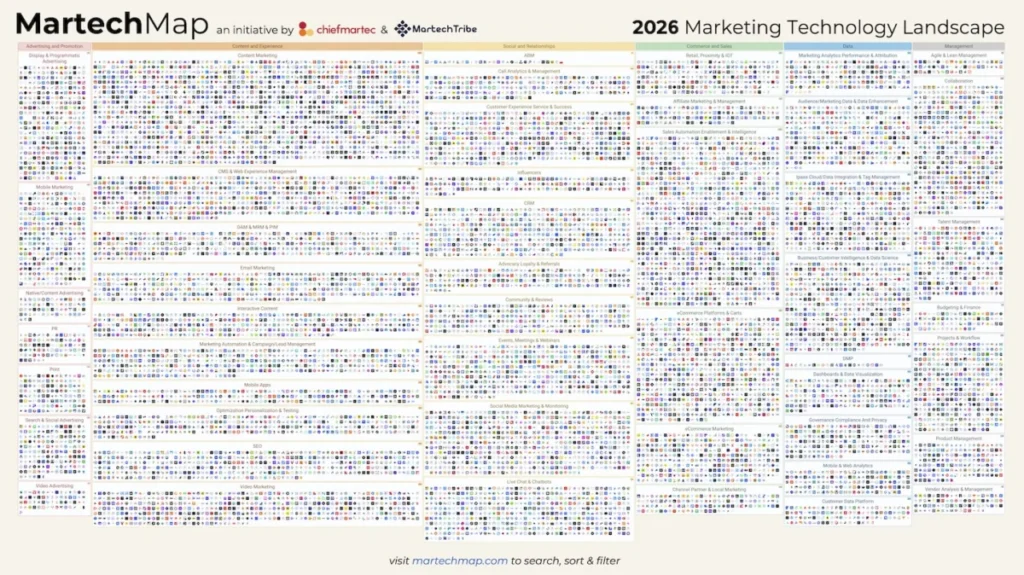
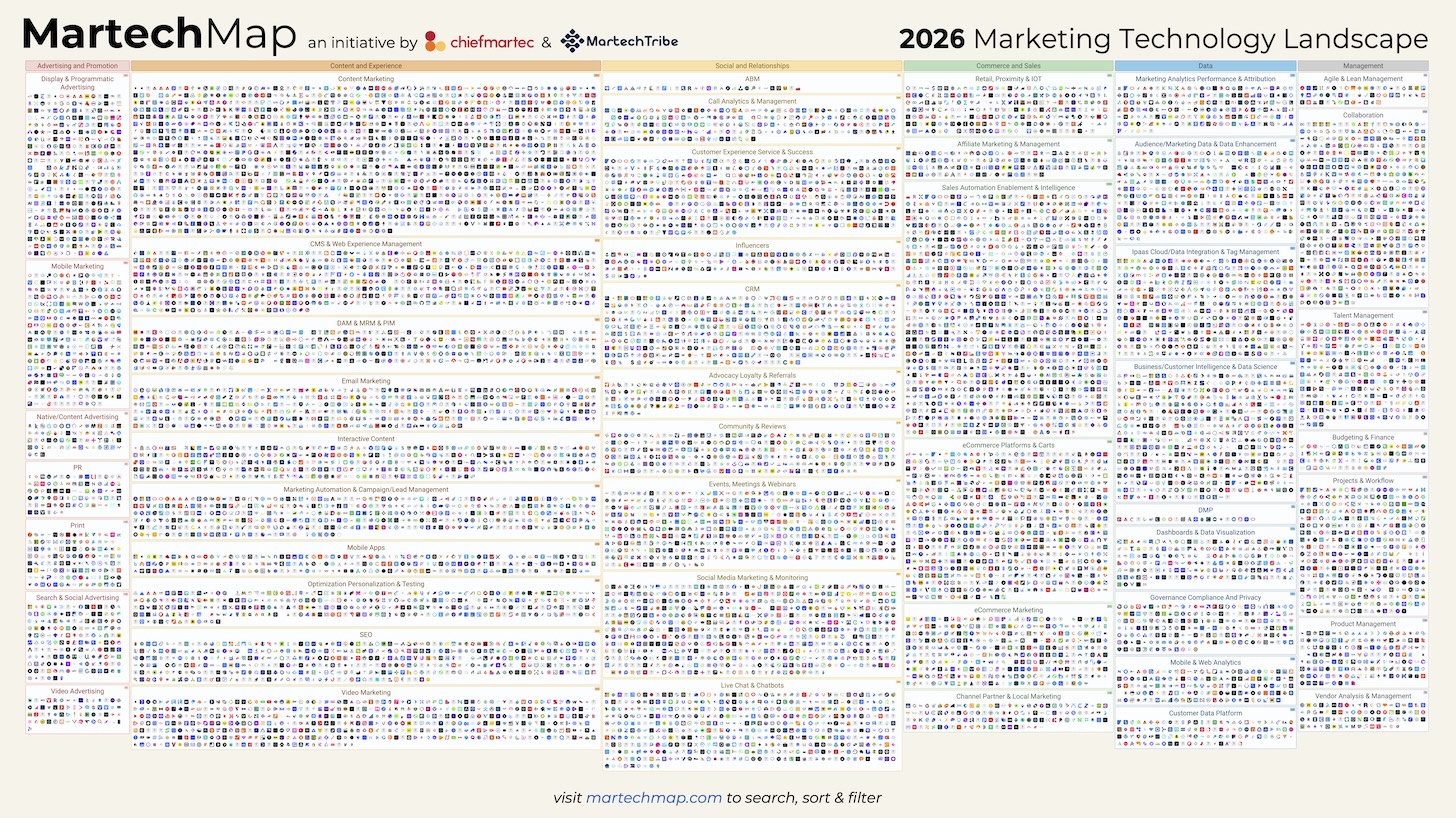
However, the 2026 edition, released this week, suggests a seismic shift in the industry’s trajectory. With 15,505 products now documented, the landscape has seen a net growth of just 0.79%. For all intents and purposes, the era of exponential proliferation has come to a screeching halt. We may have finally hit "Peak Martech."
The End of an Era: The Data Behind the Plateau
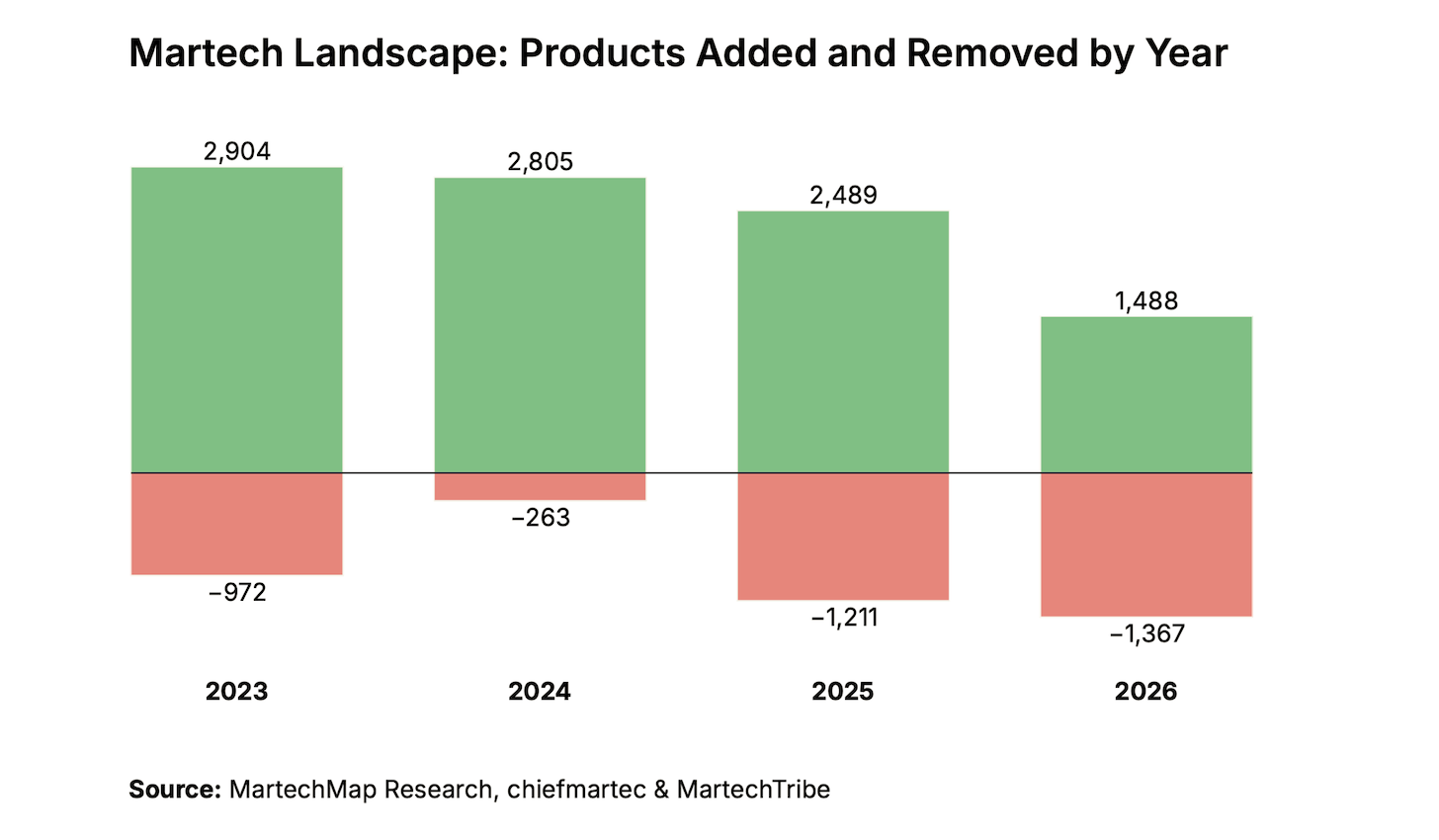
To understand the current state of the industry, one must look beyond the headline figure. While the net addition of 121 products suggests stagnation, the underlying ecosystem is experiencing a period of "ferocious churn."
The data indicates that the industry is no longer in a phase of unchecked accumulation. In 2026, 1,488 new products were introduced to the market, representing a significant 40% decline in new entrants compared to the previous year. Simultaneously, the industry saw 1,367 products removed—a 13% increase in exit velocity.
This isn’t merely a minor correction; it is a fundamental transformation of the martech lifecycle. The largest cohort of departures (51.7%) came from the "SaaS wave" of 2010–2019. These are not necessarily failed "AI wrapper" startups; they are established, mid-sized companies that found initial market fit but could not sustain their momentum in an increasingly consolidated and competitive environment.
Chronology of a Revolution (2011–2026)
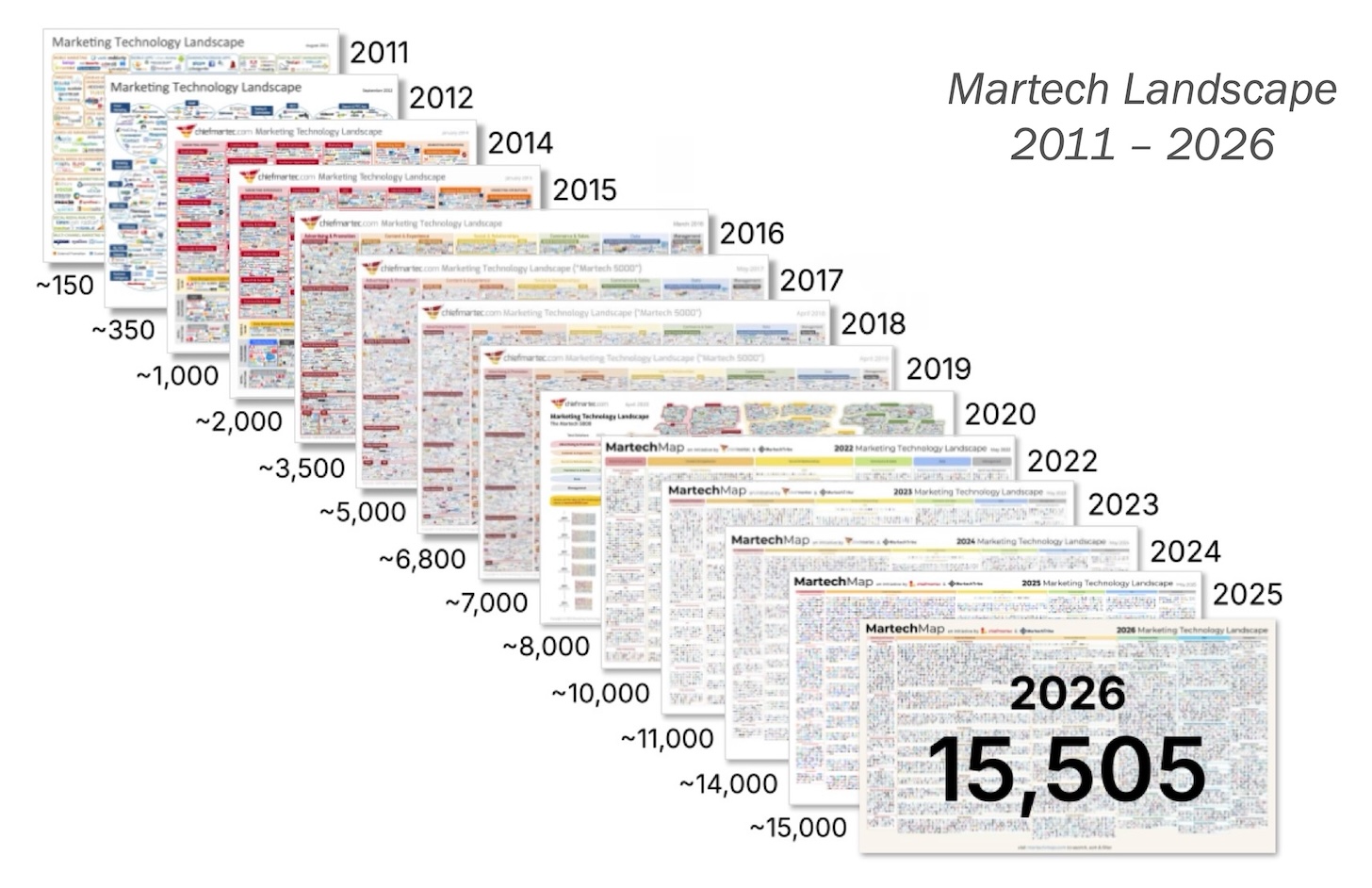
The history of the martech landscape is a mirror of the broader digital economy.
- 2011–2015: The Infrastructure Foundation. During this period, the landscape focused on the basics: CRM, email marketing, and rudimentary web analytics. The entry barrier was relatively high, and the players were primarily enterprise-focused.
- 2016–2020: The Proliferation Phase. Driven by the ubiquity of cloud computing and the ease of SaaS distribution, thousands of "point solutions" entered the market. This was the era of the "best-of-breed" strategy, where marketers were encouraged to assemble custom stacks of specialized tools.
- 2021–2024: The AI Gold Rush. The emergence of generative AI led to a massive influx of venture capital and a subsequent explosion of small, AI-native startups.
- 2025–2026: The Rationalization Phase. The market is currently undergoing a "great pruning." Incumbents are bundling AI features directly into their platforms, while buyers, suffering from "subscription fatigue," are consolidating their stacks.
The Resilience of Mature Categories
While the overall landscape has plateaued, specific niches are experiencing a resurgence. This phenomenon challenges the idea that "mature" categories are destined for irrelevance. In reality, AI is breathing new life into the foundational layers of the marketing stack.
CMS and Web Experience Management
The Content Management System (CMS) and Web Experience Management sector saw a remarkable 21.4% growth, climbing from 504 to 612 products. Historically, websites were designed for two distinct audiences: human visitors and search engine crawlers. Today, a third, critical audience has arrived: the "machine agent."
These agentic browsers and shopping bots do not "browse" a site in the traditional sense. They scan, extract, compare, and summarize. Companies are now investing heavily in CMS platforms that can provide structured, machine-readable data, effectively optimizing their digital real estate for the AI-driven web.
Ecommerce and Transactional Infrastructure
Ecommerce platforms and carts grew by 19.9% this year. This growth is driven by the demand for "context engineering"—the process of ensuring that AI models have access to accurate, real-time product data, pricing, and inventory information. As AI concierges and shopping assistants become the primary interface for consumers, the underlying ecommerce infrastructure must evolve to support these complex, automated interactions.
Supporting Data: The Squeeze in the Middle
The "middle" of the market is currently experiencing the most intense pressure. The data from the 2026 report reveals that 45.5% of removed products were in the $1M–$10M annual revenue range. Furthermore, 41.2% of these defunct companies had between 1 and 10 employees.
This segment is being squeezed from two directions:
- From Above: Major incumbents (the "platforms") are aggressively rolling out generative AI features that effectively commoditize the niche capabilities previously offered by smaller players.
- From Below: Lean, AI-native startups are launching with lower cost structures and higher agility, displacing legacy point solutions with superior, AI-first workflows.
This "pincer movement" has created an environment where being "pretty good" is no longer enough. To survive in the 2026 climate, companies must either be an essential, high-utility platform or a highly specialized, low-cost AI disruptor.
Implications for CMOs and Marketing Technologists
The shift toward a plateaued landscape has profound implications for how organizations build and manage their marketing technology stacks.
The Return of Orchestration
With thousands of tools now being retired or consolidated, the role of the Marketing Technologist is evolving from "collector" to "architect." The priority is no longer about finding the newest tool; it is about ensuring that existing systems can communicate effectively. This is reflected in the 8% growth in iPaaS and data integration tools.
The Rise of Governance
As AI agents gain the ability to act across multiple systems—moving data from a CRM to an analytics platform and eventually to an execution layer—the need for robust governance, privacy, and compliance becomes paramount. The 7.1% growth in this category underscores the reality that as marketing becomes more automated, it must also become more regulated and secure.
Context as the New Currency
The most successful marketers of 2026 will be those who master "context engineering." An AI model is only as effective as the data it can access. As customer journeys become increasingly fragmented and mediated by AI, marketers must focus on instrumenting the touchpoints they can still control. This explains the steady growth in mobile and web analytics (11.3%) and call analytics (8.9%).
Official Perspectives: A Note on the Future
In the State of Martech 2026 report, industry analysts emphasize that while the sheer number of logos may have reached a ceiling, the market’s internal dynamism is higher than ever.
"Martech is a river, not a lake," the report notes. The flow of innovation has not ceased; it has simply changed direction. We are moving away from an era where the goal was to add more tools to the stack. We are entering an era where the goal is to make the stack more intelligent, more integrated, and more responsive to the requirements of machine-to-machine interaction.
The 100x growth since 2011 is a historical outlier that likely won’t be repeated. However, the plateau we are witnessing should not be interpreted as a lack of innovation. Instead, it signals the maturation of an industry that is finally transitioning from a phase of "accumulation" to a phase of "utility."
Conclusion
The 2026 Marketing Technology Landscape serves as a mirror to the current state of the digital economy. The frantic pace of the last decade has given way to a more measured, strategic, and consolidated environment. While the era of "more is better" has officially ended, the era of "better is better" has just begun.
For marketers, the challenge ahead is not to keep up with a growing list of thousands of vendors, but to cultivate a stack that can bridge the gap between human intent and machine execution. As we look toward the future, the winners will be those who prioritize integration, data quality, and the strategic deployment of agents over the mere accumulation of software.
The landscape may be flat, but the technology within it has never been more vibrant. For those ready to embrace this new, more complex phase of martech, the opportunities for innovation remain boundless.
