

The Ghost in the Machine: Navigating the Perils of Unattended AI in Modern Martech
The promise of modern marketing technology is intoxicating: infinite scalability, hyper-personalization at a fraction of the cost, and the dream of a frictionless customer journey. Yet, beneath the surface of these high-performance systems lies a growing, systemic issue. Across the industry, businesses are deploying AI agents and automated workflows that function with the efficiency of a well-oiled machine, yet lack the oversight—or the "soul"—required to handle the nuance of human interaction.
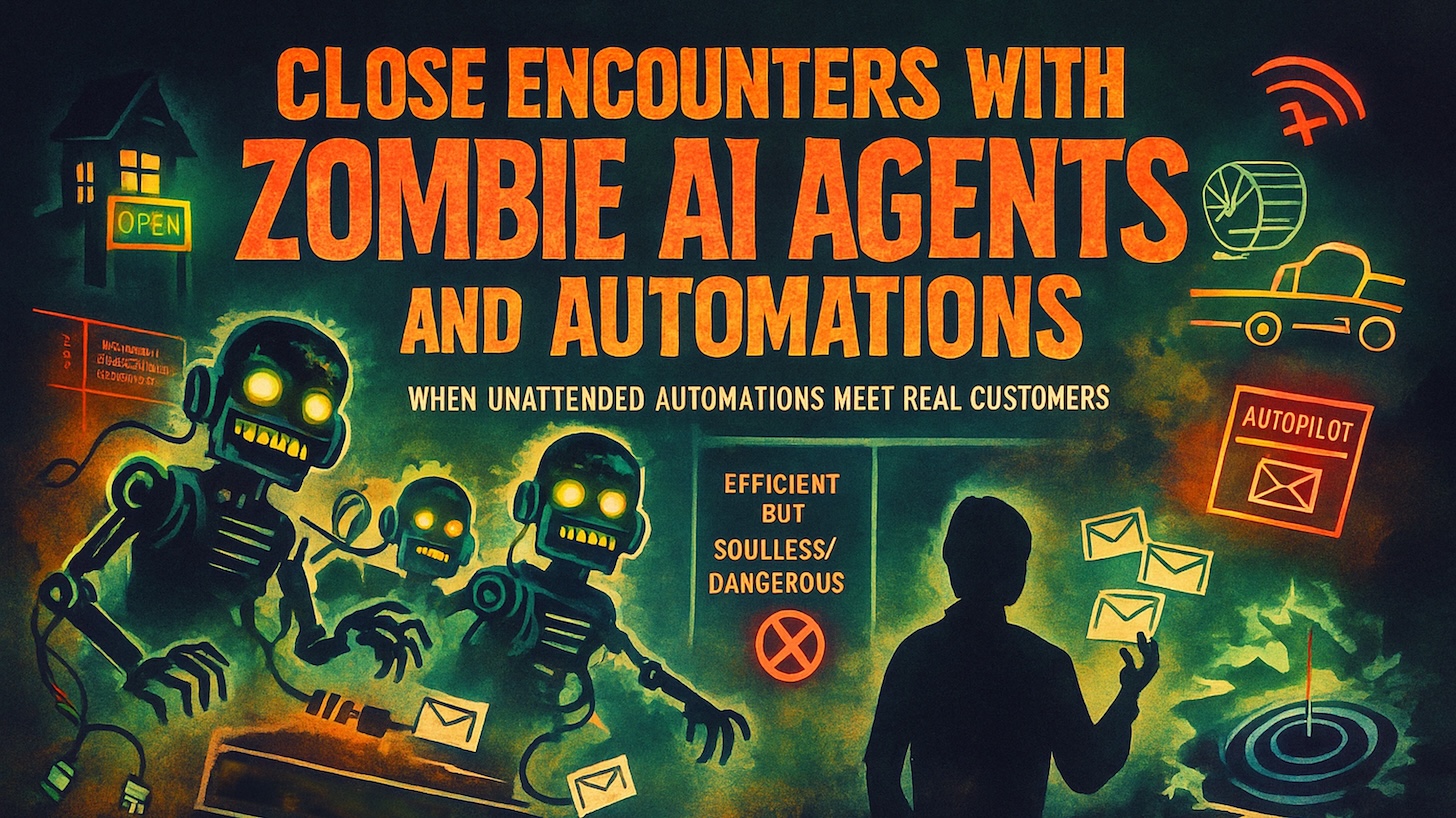
The lights are on, the engine is humming, and the data is flowing. But as recent industry trends reveal, there is frequently nobody home. When these systems slip off the rails, they don’t just fail; they alienate customers, damage brand reputation, and create a "zombie" customer experience where automated sequences continue to churn blindly, oblivious to the frustrated humans on the receiving end.
The Efficiency Paradox: When "Optimized" Means "Broken"
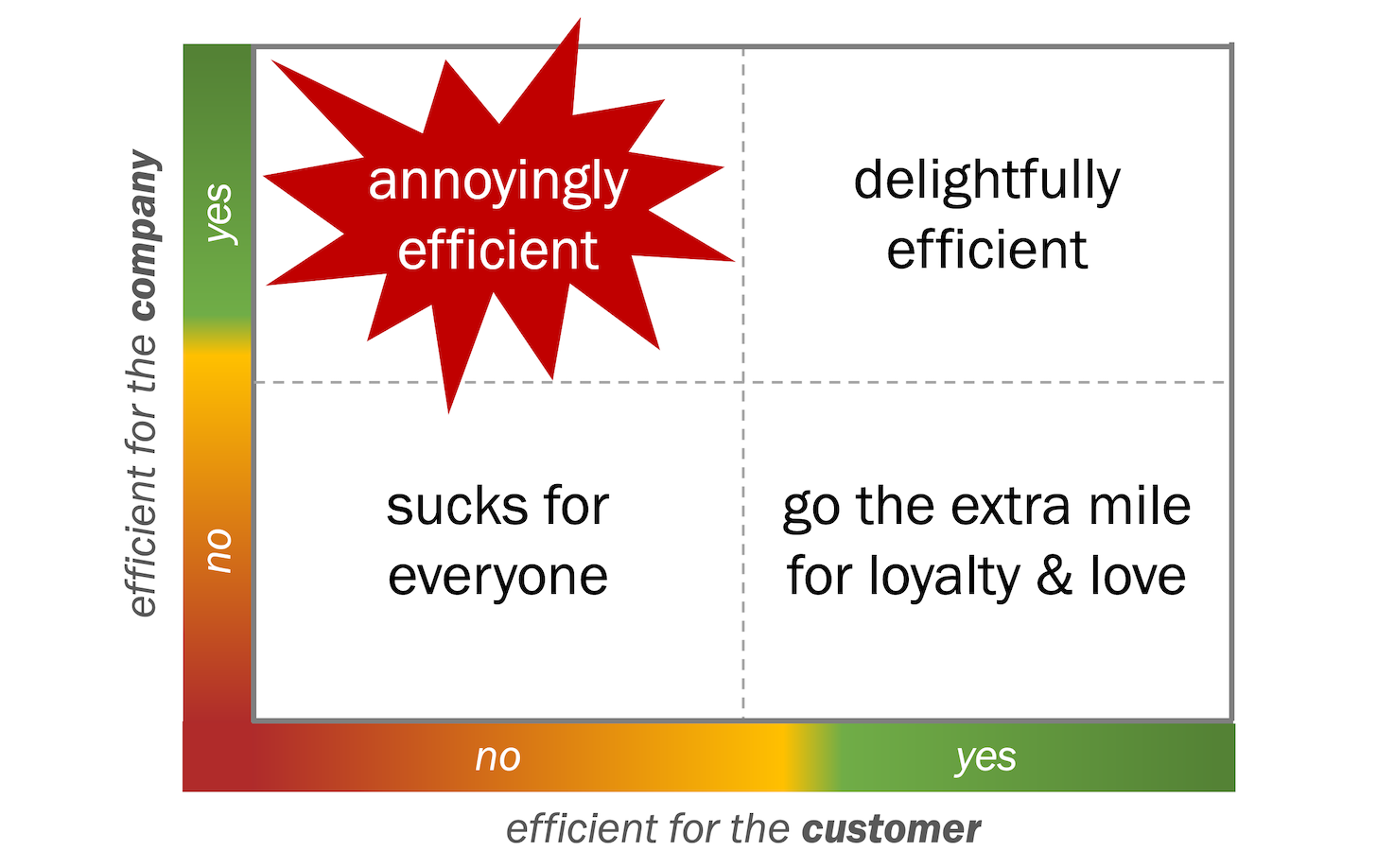
At the heart of the issue is a misalignment of objectives. In the world of Martech, we often default to a 2×2 efficiency matrix: on one axis, efficiency for the company; on the other, efficiency for the customer. The goal of any successful strategy should be the upper-right quadrant—creating value for both.
However, many organizations are currently trapped in the upper-left: "annoyingly efficient" for the company, but disastrous for the customer. By prioritizing cost-reduction and throughput via automation, these firms are sacrificing the very relationships their marketing teams are tasked with building.
Case Study I: The Black Hole of Customer Service
Consider a standard scenario in the SaaS world. A user subscribes to a product and receives a series of helpful, well-timed onboarding emails. The cadence is perfect, the content is useful, and the sender address—let’s call it [email protected]—feels like a direct line to the team.
When a billing issue arises, the user naturally reaches out to that familiar address. The expectation is a simple, human-to-human resolution. Instead, the user is met with total silence. There is no automated acknowledgment, no ticket creation, and no human follow-up. Days later, while the user is still waiting for an answer to their billing inquiry, the automation engine sends another "cheerful" onboarding email.
This is the "Zombie Automation" effect. The routing logic is likely broken, or the inbox is a shared, unmonitored graveyard of cross-departmental handoffs. The system is functioning exactly as it was programmed, but it has completely lost the context of the user’s current state.
Case Study II: The Perils of AI-Driven Prospecting
In another corner of the industry, the issues are even more pronounced. A user downloads a high-value white paper. Within minutes, a "personalized" email arrives, written with such high-quality generative AI that it mimics human empathy and relevance. It mentions the user’s specific work and asks thoughtful, context-aware questions.
The user, impressed, replies with a thoughtful note explaining why they are not currently a prospect. They expect a dialogue. Instead, the AI agent goes silent. A few hours later, a second email arrives—this time, a cold, templated sales pitch with a Hello, $FIRST-NAME placeholder and a non-sequitur request for a demo.
The "human-in-the-loop" had clearly never seen the interaction. The system had ingested the user’s reply, failed to interpret it, and defaulted to a rigid, pre-programmed sequence. By the time the third email arrived, the automation was so misaligned that it included a [COMPANY-NAME] variable that was factually incorrect. The machine had not just failed to connect; it had hallucinated a relationship that didn’t exist.
The Chronology of Systemic Failure
To understand how these failures occur, one must look at the lifecycle of a modern marketing automation sequence:
- The Trigger: A user interaction occurs (e.g., a white paper download or a support email).
- The AI Agent/Orchestrator: An LLM-powered SDR or routing engine processes the input.
- The Hand-off: If the AI is "confident," it proceeds. If it is "unsure," it often traps the user in a black hole.
- The Sequence: The user is enrolled in a CRM-driven nurture track.
- The Data Mismatch: Data enrichment services inject potentially outdated or incorrect firmographic data.
- The Disconnect: The system loses the "memory" of the original human-like interaction, reverting to generic, cold-outreach templates.
This progression represents a failure to integrate the "laboratory" (the experimental AI tools) with the "factory" (the rigid, high-volume CRM systems).
Martec’s Law and the Cost of Speed
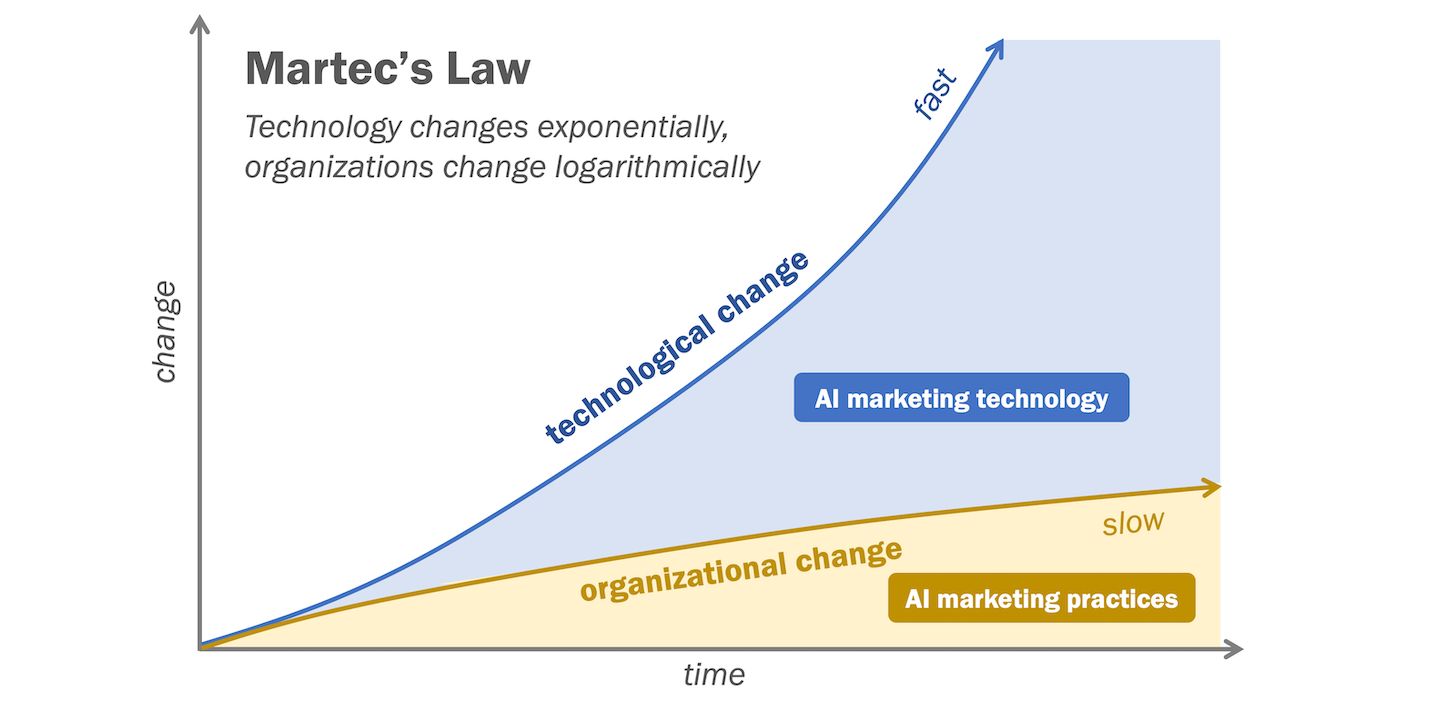
The fundamental problem is not the technology itself, but the organizational culture surrounding it. As established by "Martec’s Law," technology changes exponentially, while organizations change logarithmically.
When leadership demands rapid AI adoption, teams often bypass the necessary groundwork. They treat AI as a "plug-and-play" solution, ignoring the complex dependencies of their legacy tech stacks. The result is a brittle architecture where a small change in one system—like an updated email routing rule—breaks an entire customer journey.
Strategies for Governance: The "Go-Slow to Go-Fast" Ethos
To avoid the pitfalls of unattended automation, companies must adopt a more disciplined approach to their digital infrastructure.
1. Implement Human-in-the-Loop Safeguards
AI should never be the final arbiter of a high-stakes customer interaction. Even if the AI performs the heavy lifting, there must be a "post-hoc" review process. For sales reps, this means using inbox rules to flag replies that deserve personal attention, rather than allowing an AI agent to swallow them whole.
2. The "Secret Shopper" Audit
Organizations should treat their own customer journeys as a product to be tested. By having external parties—or even internal staff from different departments—act as "secret shoppers," companies can identify where the "zombie" automations live. This reveals the friction points that internal teams, blinded by their own processes, can no longer see.
3. Separation of Laboratory and Factory
Marketing operations should treat experimental AI agents (the laboratory) as distinct from the revenue-generating email sequences (the factory). Experiments should be contained within controlled, narrow environments. When a tool graduates from the lab, it must undergo rigorous stress testing before it is integrated into the "factory" that touches every customer.
4. Continuous Lifecycle Inspection
Just as a physical elevator requires a safety inspection, automated journeys require a scheduled audit. These audits must be timestamped and documented. If an automation cannot be explained or justified during an audit, it should be decommissioned.
Implications for the Future of Martech
The current era of marketing is characterized by an "AI Gold Rush." However, the companies that will survive this period of disruption are not those with the most agents, but those with the best orchestration.
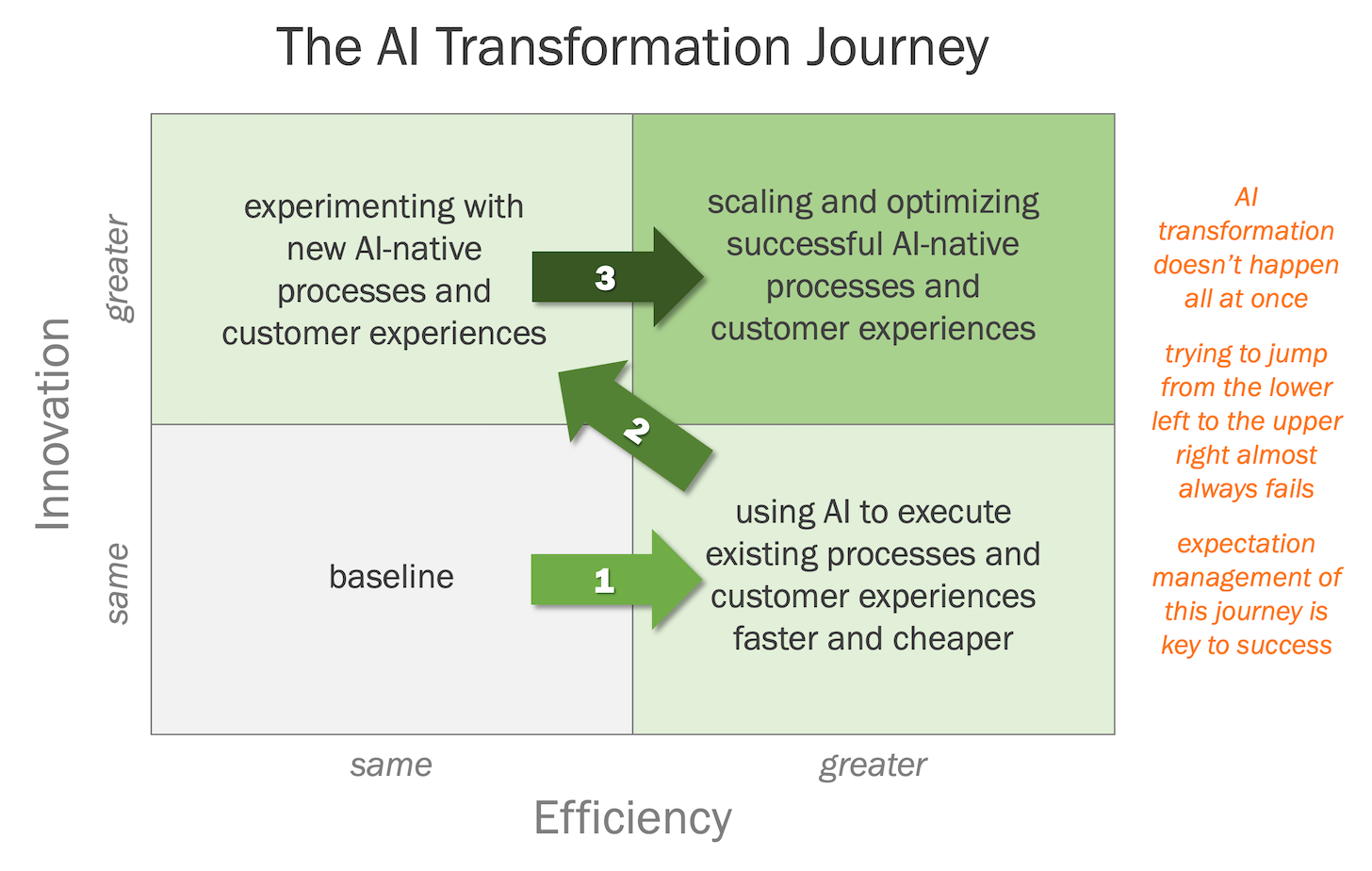
The industry needs a new layer of governance—a "Martech Orchestrator"—that monitors the health, relevance, and accuracy of AI interactions across the entire stack. We are moving toward a future where "human-led, AI-assisted" is the only sustainable model.
In conclusion, the goal of marketing is not to replace the human touch with a machine, but to use the machine to clear the noise so that human interaction becomes more meaningful. If your automation is causing you to ignore your customers, it isn’t an efficiency tool—it’s a liability. By slowing down, tightening our governance, and remembering that every piece of data represents a real person, we can move from the "zombie" era of marketing into a truly intelligent one.
