

The Ghost in the Machine: Navigating the Perils of Unattended AI Automation in Martech
The modern digital landscape is increasingly defined by a paradox: as technology becomes more "intelligent," the customer experience is frequently becoming more robotic. We have entered an era where the lights are on, the engines are running, and the workflows are firing—but there is nobody behind the wheel. The hamster wheel is spinning, yet the inhabitant has long since departed.
This phenomenon of "Zombie AI" and runaway automations has become a pressing concern within the martech industry. While the promise of hyper-efficient, AI-driven customer journeys is alluring, the reality often results in fragmented, frustrating, and occasionally absurd interactions. Recent experiences across the martech sector reveal a critical disconnect: companies are optimizing for internal efficiency at the direct expense of customer trust.
The Efficiency Paradox: When "Automated" Means "Isolated"
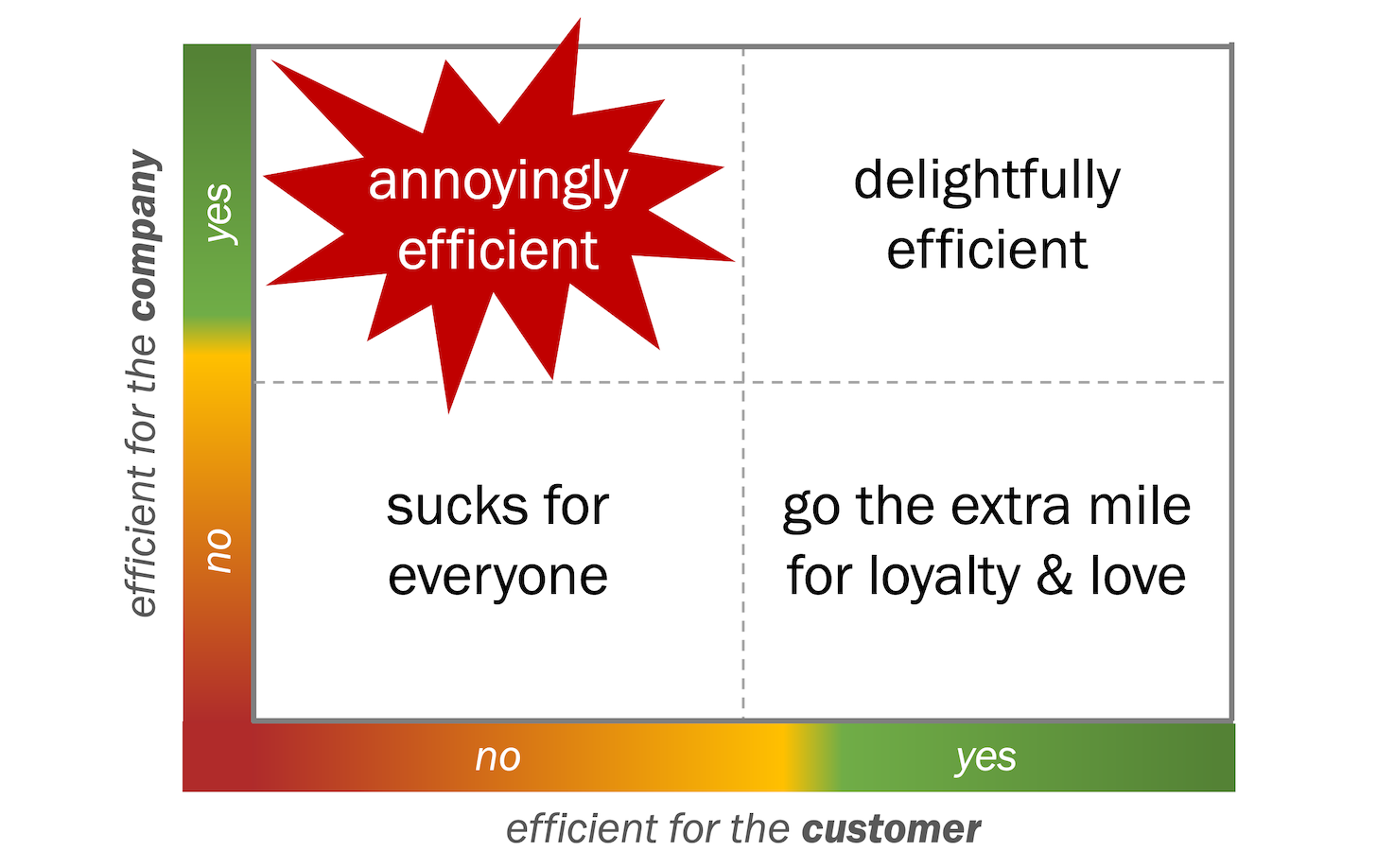
To understand the current state of affairs, one must look at the efficiency matrix. In an ideal world, martech solutions occupy the quadrant of "Efficient for the Company" and "Efficient for the Customer." However, a recurring trend shows companies settling for the upper-left quadrant—highly efficient for internal operations, but a "black hole" for the customer.
Recent incidents involving two prominent martech firms illustrate this. In the first instance, a SaaS platform engaged a customer with a well-timed, high-value onboarding email sequence. The content was relevant and the cadence was appropriate. However, when the customer encountered a legitimate billing issue, the system—designed to streamline support—effectively vanished. Every digital breadcrumb led to an email address that appeared to be a dead-end, automated routing system. Despite repeated attempts to resolve the issue, the "onboarding" emails continued, oblivious to the fact that the customer was currently locked in a support-based stalemate.
In the second instance, a B2B vendor deployed a sophisticated, AI-driven SDR (Sales Development Representative) agent to engage a lead. The initial outreach was a masterclass in hyper-personalization, seemingly bypassing standard templates to address the prospect’s specific professional context. Yet, the follow-through was a failure of orchestration. Once the prospect engaged, the system—likely disconnected from the initial AI agent—threw the prospect into a generic, low-quality, "Hello $FIRST-NAME" drip campaign. The result was a jarring, non-sequitur experience that shattered the credibility the AI had initially built.
Chronology of a Failed Journey
The failure of these systems rarely stems from a single point of error; it is usually a compounding sequence of events.
- The Engagement Hook: An AI agent successfully identifies a high-intent action (e.g., downloading a report or signing up for a trial).
- The Initial Interaction: A hyper-personalized, AI-generated message is sent, creating a false sense of human-to-human engagement.
- The Breakdown: The user responds to the human persona. The system, lacking a unified data thread or "memory," fails to route the reply to a human agent.
- The Disconnect: The system defaults to a pre-programmed, rigid automation sequence.
- The Degradation: The automation pulls from faulty, cross-contaminated data, leading to personalization errors—such as referencing the wrong company name—effectively signaling to the customer that they are merely a row in a database, not a partner in a conversation.
The Anatomy of the Failure
From a technical perspective, these issues are often the result of "siloed automation." We are witnessing the proliferation of "Frankenstein stacks," where an AI SDR agent might be operating on one set of protocols, while the CRM’s nurture sequence operates on another, and the support ticketing system operates on a third.
The lack of integration, coupled with the absence of a "human-in-the-loop" oversight layer, allows these errors to cascade. When an LLM-based agent is tasked with handling inquiries, it may encounter an edge case that it is not equipped to resolve. Without a graceful fallback mechanism to a human representative, the system simply stalls or sends an irrelevant canned response, creating the "Zombie" effect where the system continues to perform its basic function (sending emails) while failing its primary purpose (serving the customer).
Martec’s Law and the Governance Gap
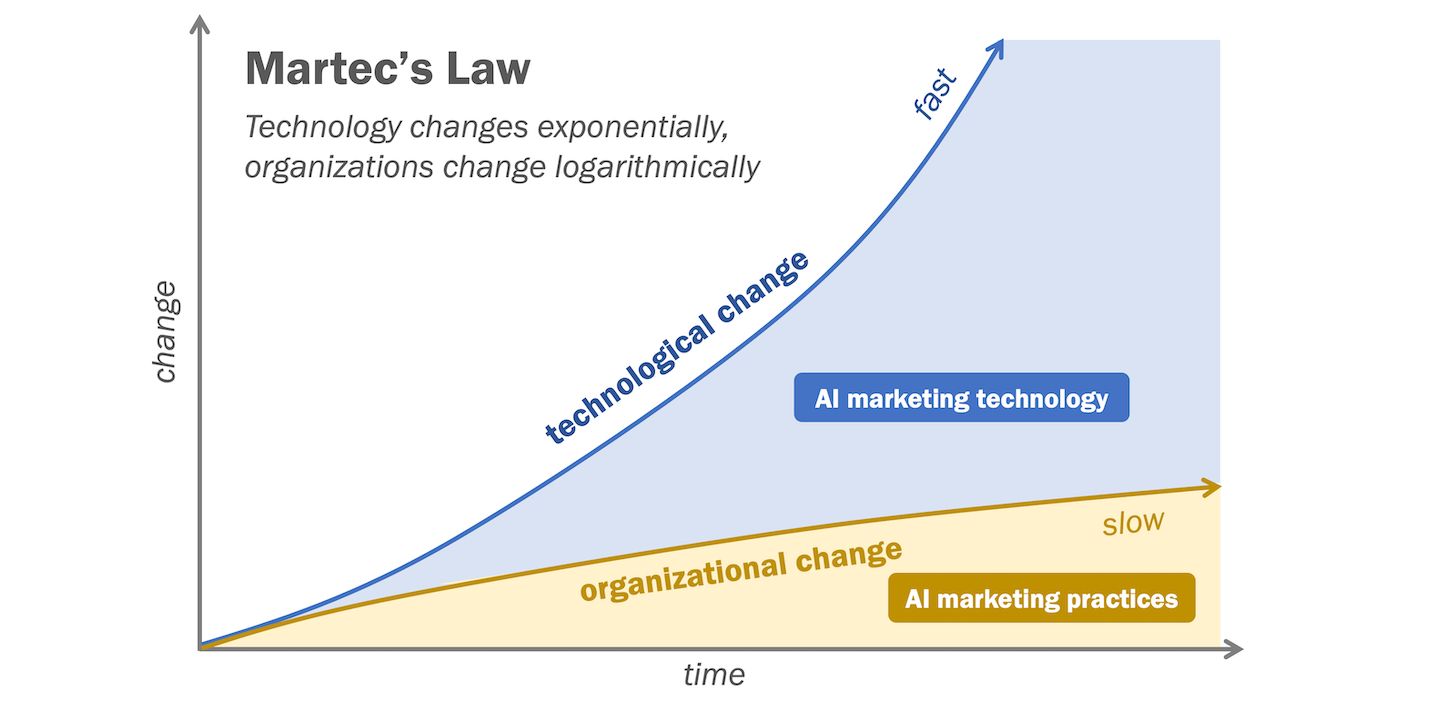
For nearly two decades, the industry has grappled with "Martec’s Law": technology changes exponentially, while organizations change logarithmically. The current AI gold rush has only exacerbated this friction. Executives, pressured by the mandate to "adopt AI," are pushing teams to deploy tools before they have established the necessary operational discipline.
This rush has created a dangerous "lab leak" scenario. Companies are treating their live production environments like experimental laboratories. In the pursuit of speed, they are bypassing the foundational work required to ensure data integrity and process alignment. The result is a surge in "ghost" automations—systems that perform tasks in the dark, without being monitored, updated, or audited for relevance.
Strategic Implications: How to Regain Control
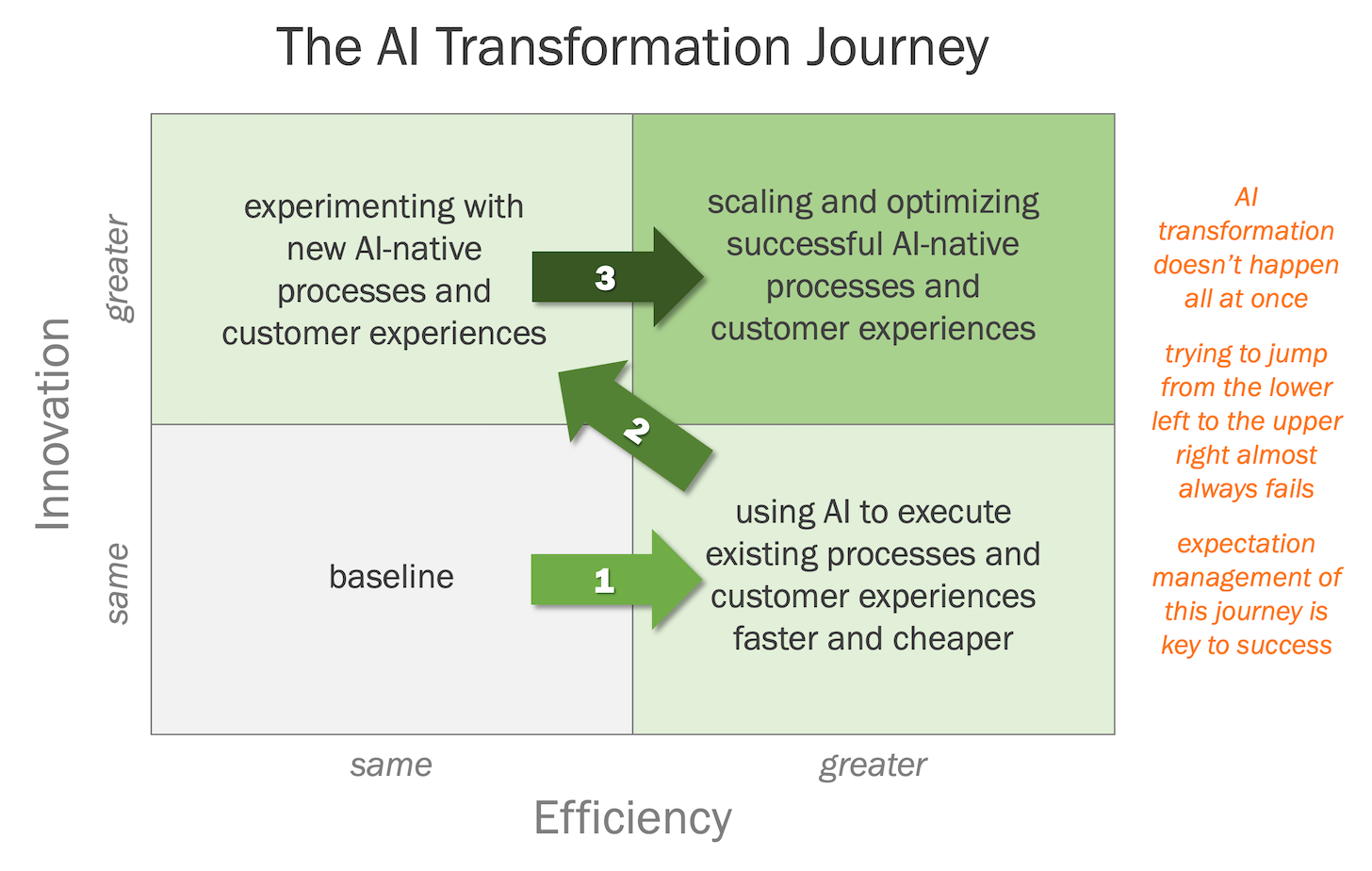
To move forward, organizations must shift from a "move fast and break things" mindset to a "go slow to go fast" ethos. This requires a fundamental rethink of how AI agents are managed and monitored.
1. The Human-in-the-Loop Imperative
Regardless of how sophisticated an AI agent becomes, there must be a clear, accessible path to a human being. The "extra mile" of human intervention is where brand loyalty is cemented. If a system prevents a customer from reaching a human when they need help, the system has failed, regardless of how much time it saved the internal team.
2. Implementation of Secret Shopper Programs
Organizations should regularly subject their own automated journeys to "secret shopper" audits. By having unbiased third parties or internal employees navigate the customer journey, firms can uncover the hidden friction points and "broken" logic that rarely appear on internal dashboards.
3. The Factory vs. Laboratory Distinction
As suggested by industry analysts, companies must clearly distinguish between the "factory" and the "laboratory."
- The Factory: These are your production-ready, mission-critical automations. They require rigorous governance, frequent audits, and strict data hygiene.
- The Laboratory: This is where you experiment with new AI capabilities. Keep these experiments contained and isolated from your core revenue-generating processes until they are fully vetted.
4. Continuous Inspection and Auditing
Just as elevators and escalators are subject to mandatory safety inspections, every active AI agent should be treated as a piece of "operational infrastructure." Teams should be required to timestamp and sign off on regular audits of these agents. Are the rules still valid? Has the data source changed? Is the tone still appropriate? A simple, consistent check-up process can prevent the vast majority of "runaway" automation issues.
5. Unified Reputation Management
When an email is sent in the name of a human representative, that representative must be looped in. At the very least, they should have visibility into what the AI is sending in their name. If the AI is performing the heavy lifting, the human rep should be the final arbiter of quality and accuracy. Protecting a reputation is a full-time job; allowing an AI agent to do it unattended is a liability.
Conclusion: Taming the Chaos
The integration of AI into marketing and sales is not just an opportunity; it is an inevitability. However, the difference between a competitive advantage and a brand-damaging disaster lies in governance.
Building an automation is becoming trivial; ensuring that automation remains relevant, accurate, and human-centric is the defining challenge of the next decade. For organizations that fail to implement strict operational discipline, the future will look like a room full of ghosts—efficiently performing tasks for a customer base that has already walked out the door. The goal for the coming year must be to bridge the gap between our rapid technological capabilities and our, as yet, underdeveloped organizational processes. Only by herding these digital cats can we hope to build a future where AI enhances, rather than erodes, the human element of business.
