
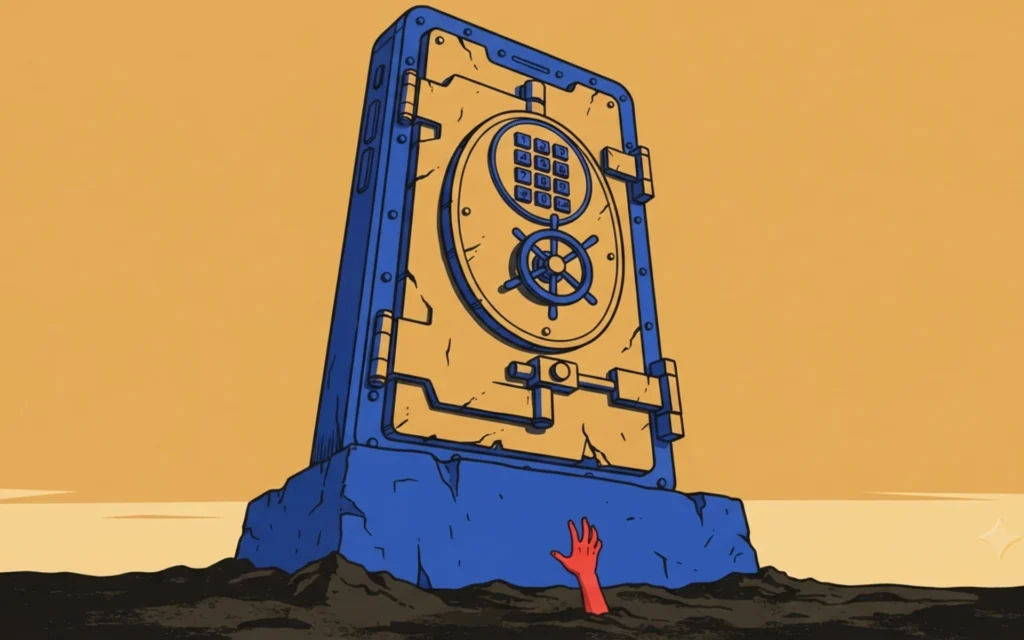
The Erosion of Trust: Why Americans Are Withdrawing Their Digital Identities
In the modern digital economy, the phone number has evolved from a simple communication tool into the "master key" of identity. It serves as the bridge between online behavior and offline identity, powering the automated, machine-led buying systems that form the backbone of modern advertising, attribution, and customer relationship management. However, a new reality is setting in: consumers are increasingly slamming the door on this exchange.
According to groundbreaking research published by privacy technology firm Cloaked on July 7, 2026, the foundational trust required to sustain this data ecosystem is fracturing. A survey of 1,000 U.S. consumers revealed that 42 percent of Americans trust none of the fifteen major institutions—ranging from telecom giants and tech conglomerates to federal agencies—to handle their phone data with integrity. This is not merely a passive sentiment; it is driving a profound shift in consumer behavior, as individuals actively withhold their contact information from social media, retail platforms, and loyalty programs.
The State of Institutional Distrust
The core of the Cloaked dataset revolves around a singular, structural question: Whom do you trust with your phone data? The answer from 42 percent of the population is an unequivocal "no one." When presented with a list of fifteen entities—including carriers like Verizon, federal bodies like the FCC, and technology titans like Apple—a plurality of respondents selected none of them.
Trust, where it does exist, is remarkably thin. The Do Not Call Registry holds the highest level of confidence at 23 percent, followed by a fragmented landscape where no single private corporation or government agency commands more than a quarter of the public’s faith.
Generational divides further complicate this picture. Baby boomers remain the strongest supporters of the Do Not Call Registry (40 percent), while Gen Z displays a higher propensity to trust major tech players like Apple (15 percent) and the federal government (17 percent). Yet, for marketers, the overarching trend is one of widespread skepticism. This distrust is manifesting as "data hoarding" by the consumer, with 43 percent of respondents admitting they avoid sharing their real phone number online entirely, and 33 percent explicitly refusing to provide valid numbers to online retailers.
A Chronology of the Privacy Crisis
The current landscape of digital skepticism did not appear overnight. It is the culmination of decades of rising cybercrime and the perceived failure of institutions to curb the proliferation of spam and fraud.
- 2001–2024 (The Rise of the Scam): Over the past twenty-four years, the volume of reported cybercrime has skyrocketed. According to FBI data, the number of complaints filed with the Internet Crime Complaint Center (IC3) surged from roughly 49,700 in 2001 to over 1 million by 2025—an increase of nearly 2,000 percent.
- 2025 (The Financial Breaking Point): The year 2025 marked a sobering milestone, with reported cybercrime losses exceeding $20 billion for the first time in history. This included nearly $900 million in losses tied specifically to AI-driven fraud.
- April 2026 (The AI Skepticism Gap): A prior study by Cloaked highlighted that only 18 percent of Americans trust AI systems to secure their personal data, with one in three admitting to using fake credentials to bypass AI data collection.
- June 2026 (The Current Survey): Cloaked conducted its latest research, capturing the sentiment of a population that has reached a "defensive threshold," where the fear of fraud outweighs the convenience of seamless digital experiences.
- July 7, 2026: The official publication of the report, confirming that a quarter of the population would withhold their data even if promised a 95 percent reduction in spam.
Supporting Data: The "95 Percent" Barrier
Perhaps the most alarming finding for the advertising industry is the failure of the "value-exchange" model. Marketers have long operated on the assumption that if they offer enough value—be it discounts, convenience, or a reduction in spam—consumers will trade their data.
Cloaked tested this hypothesis by asking respondents if they would opt into sharing personal data in exchange for a significant reduction in unwanted calls and texts. While 36 percent of consumers would opt in for an 80 percent reduction in spam, a "hard ceiling" emerged at the 95 percent threshold. Even with the promise of near-total elimination of spam, 25 percent of respondents maintained their refusal to share data.
This suggests that for a quarter of the American public, their phone number is no longer a negotiable asset. It has become a protected, private identifier that they are unwilling to part with, regardless of the incentives provided by brands. This behavior directly undercuts the identity graphs that modern attribution systems depend on, as the "signal base" for consumer identity continues to shrink.
Phishing vs. Robocalls: The Psychology of Fear
While robocalls are the most frequent source of daily irritation—cited by 58 percent of respondents as their biggest frustration—they are not the most effective trap. The data reveals a counterintuitive reality: phishing emails remain the most "convincing" threat.
Forty percent of respondents identified phishing emails as the most dangerous spam format, largely because they are more likely to prompt an accidental click or disclosure of sensitive information compared to a robocall. This creates a psychological hazard for legitimate marketing teams. Because consumers are now conditioned to view unsolicited or even semi-solicited email with deep suspicion, legitimate brands are inadvertently competing against the baseline of scams. A subject line that looks too much like a phishing attempt is often discarded by a consumer who has learned to treat their inbox as a high-risk zone.
The Impact on Marketing and Attribution
For the advertising industry, these findings describe a structural constraint that cannot be fixed by better UI or more attractive rewards.
1. The Death of the Outbound Channel
With 8 in 10 Americans rarely or never answering calls from unrecognized numbers, the traditional outbound marketing funnel is effectively broken. Two-thirds of respondents reported missing important calls—including from doctors, employers, and financial institutions—simply because they are so conditioned to screen for spam.
2. The Fragmentation of Identity
As consumers withhold their numbers at every point of entry—from social media sign-ups to retail checkouts—the accuracy of identity resolution vendors declines. When 55 percent of people refuse to provide a real number to social platforms and nearly one-quarter refuse to provide it to professional networks like LinkedIn, the "identity graph" becomes pockmarked with holes.
3. Regulatory Friction
The FCC’s ongoing push for carrier-level identity verification faces a massive public relations and practical hurdle. Mandating the technical infrastructure for verification is meaningless if the public refuses to provide the data that these systems are designed to verify. The regulatory push is effectively colliding with a wall of consumer non-compliance.
Implications for the Future
The research from Cloaked paints a picture of an industry at a crossroads. The era of "data-at-all-costs" is being replaced by an era of "privacy-as-default."
For brands, the path forward requires a shift from relying on third-party identifiers to building genuine, high-trust, first-party relationships. However, as the data shows, that trust is currently at an all-time low. Companies that treat consumer data as a "red line" rather than a "negotiable asset" will be the ones that survive the coming contraction.
The industry must now grapple with a reality where incentive design has reached its limit. As AI continues to accelerate both the sophistication of fraud and the ease of automated marketing, the consumer’s instinct to withdraw will likely only strengthen. The challenge for 2027 and beyond will not be how to capture more data, but how to provide enough value to justify the existence of a digital connection in the first place—if the consumer is still willing to make the trade.
