
The End of the Free-Trade Loophole: EU Overhauls E-Commerce Customs as of July 2026
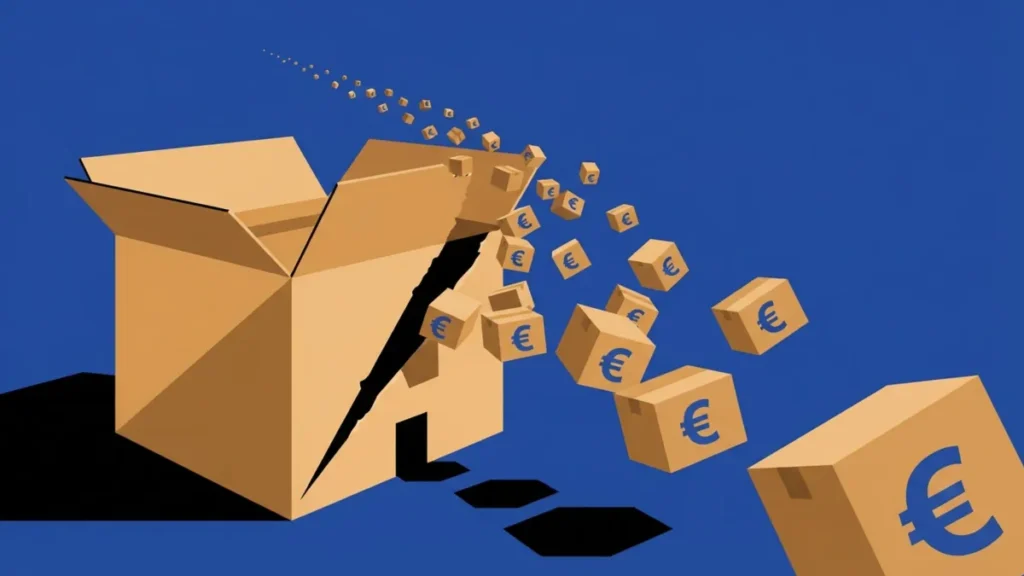
BRUSSELS – In a move that signals a seismic shift in global retail and digital trade policy, the European Union officially abolished its long-standing customs duty exemption for low-value e-commerce shipments on July 1, 2026. For years, packages valued at less than €150 had entered the bloc free of import duties—a relic of an era when cross-border online shopping was a niche activity. Today, that threshold has been replaced by a mandatory, flat €3 charge applied to every individual item, marking the end of the "de minimis" era for international digital marketplaces.
The policy, which primarily targets high-volume, low-cost platforms founded in China—most notably Shein and Temu—is designed to level the playing field for domestic European retailers and ensure that the surge in direct-to-consumer imports meets the same rigorous safety and compliance standards as goods sold within the Single Market.
The Mechanics of the New Duty
Under the new regulation, the duty is calculated based on the tariff classification of each item, rather than the total value of the parcel. This distinction is critical: a consumer ordering three different products in a single shipment will now trigger three separate €3 charges.
According to the European Commission, the duty is collected directly from the digital platforms and the logistics providers facilitating the sale. Importantly, the Commission has stated that consumers will not be billed separately at the point of delivery. Instead, the cost is expected to be baked into the platforms’ pricing models or absorbed by the sellers, effectively stripping away the "duty-free" advantage that fueled the rapid growth of non-EU e-commerce giants.
Chronology of a Regulatory Pivot
The road to this implementation has been marked by mounting tension between the EU and international e-commerce platforms.
- November 2025: The EU Council reaches an initial agreement to eliminate the €150 exemption, prompted by data showing that nearly two-thirds of small parcels were being systematically undervalued to dodge existing taxes.
- February 2026: The European Commission opens formal proceedings against Shein under the Digital Services Act (DSA), citing concerns over illegal product sales and "addictive" design features.
- March 26, 2026: The European Parliament and Member States formally ratify the broader EU Customs Reform, a comprehensive legislative package that places greater compliance responsibility on platforms.
- July 1, 2026 (Today): The €3 flat-rate duty takes effect, alongside the introduction of a voluntary product identifier (PID) declaration system.
- November 1, 2026: The declaration of Product Identifiers (PIDs) becomes mandatory. A new, legally defined "handling fee" is also scheduled for implementation by this date to cover the administrative costs of customs processing.
- July 2028: The transitional flat-rate system is set to expire. It will be replaced by the EU Customs Data Hub, which will apply standard, variable customs duties based on the true value and origin of goods.
Supporting Data: The Scale of the "De Minimis" Problem
The Commission’s decision to act was driven by staggering statistics that highlight a profound structural imbalance in the EU’s import landscape. In 2025 alone, 5.9 billion individual items entered the EU in low-value packages without paying a cent in customs duties.
While these items account for 97% of all goods imported into the bloc by volume, they represent a mere 2% of the total import value by declared worth. Officials argue that this discrepancy is proof of widespread "systemic undervaluation." If the goods were genuinely of low value, they would still constitute a larger portion of the total trade value. By splitting shipments and masking the true cost of goods, these platforms were effectively bypassing the tax system while distorting competition against EU businesses that import in bulk and pay full customs duties.
Furthermore, a 2025 EU-wide investigation found that over 60% of these low-value goods failed to comply with basic safety or labeling requirements. The presence of toxic materials, hazardous electrical components, and misleading health claims led the Commission to view the reform not just as a fiscal measure, but as a public safety imperative.
Official Responses and Political Framing
Maroš Šefčovič, the European Commissioner for Trade and Economic Security, has been the primary architect of this rhetorical and policy shift. In his statement accompanying the July 1 launch, Šefčovič emphasized the concept of "parity."
"Open market, equal rules," Šefčovič stated. "The EU e-commerce market stays open—but it cannot come at the expense of European consumers and businesses. Goods entering the Union should meet the same standards of compliance and traceability as goods sold in our Single Market. Those profiting from European consumers must play by the same rules as European businesses."
This framing aligns with a broader European strategy to protect the continent’s "high street" retailers and local job markets, which have been severely strained by the influx of hyper-cheap, non-compliant goods. The Commission noted that the environmental impact is equally concerning; the current business model relies on carbon-heavy, long-distance logistics and an unsustainable volume of returns, which effectively doubles the transportation pollution footprint.
Implications for Industry and Commerce
1. The End of "Free" Shipping Economics
For the marketing and advertising community, the immediate impact is a disruption of unit economics. Platforms that have relied on "duty-free" status to offer low prices will now face a recurring €3 tax per item. Given the competitive nature of these platforms, this cost will likely lead to higher shelf prices, which may, in turn, dampen consumer demand.
As seen in the United States following the 2025 removal of the de minimis exemption, when the cost structure changes, so does marketing behavior. Following the U.S. move, platforms like Temu saw their Google Shopping presence shrink significantly. We may see a similar trend in the EU, where platforms scale back their aggressive paid advertising as their profit margins tighten.
2. The Move Toward EU Warehousing
To avoid the per-item customs duty, major non-EU platforms may pivot toward an EU-based warehousing model. By holding stock within the bloc, they would move from a "direct-from-China" shipping model to a traditional "bulk import" model. While this would satisfy the new customs rules, it would also expose these companies to the full spectrum of EU corporate, tax, and labor laws, fundamentally altering their business models.
3. Product Identifiers (PIDs) and Data Compliance
The transition from voluntary to mandatory PIDs in November 2026 is a significant technological hurdle. For marketers managing product feeds, this means that every item sold must be accompanied by structured, granular data. Customs authorities will use this data to identify risk patterns across entire product categories. If a specific class of toys or electronics is flagged for safety violations, authorities will be able to intercept similar items more efficiently. This will likely force platforms to improve their data management and audit their supply chains far more stringently than they have in the past.
4. Comparison to Global Precedents
The EU is not acting in a vacuum. By eliminating the exemption, the EU is aligning itself with the United States, which effectively ended its own $800 de minimis exemption in July 2025. While the U.S. justification focused heavily on national security—specifically the influx of illicit substances like fentanyl—the EU’s focus remains firmly on consumer safety, environmental sustainability, and market fairness.
Conclusion: A New Era of Oversight
The implementation of the €3 duty is a clear declaration that the EU is no longer willing to accommodate the "wild west" era of direct-to-consumer e-commerce. By introducing a transitional fee, demanding product identifiers, and preparing the groundwork for the 2028 Customs Data Hub, the Commission is forcing a high-stakes evolution.
For the millions of consumers who have become accustomed to ultra-low prices, the "era of the bargain" may be entering a period of significant recalibration. For the digital platforms, the grace period is over; the cost of doing business in Europe now includes not just the price of the product, but the full price of regulatory compliance. As of today, the border is no longer just a physical line on a map—it is a digital checkpoint, and the era of the duty-free parcel has officially closed.
