
The Digital Product Passport: Beyond Compliance Toward a New Era of Consumer Connection
In less than nine months, the regulatory landscape for consumer goods in Europe will undergo a seismic shift. Millions of batteries sold across the continent will be required to carry a "battery passport"—a digital record detailing the item’s origin, composition, and lifecycle. While currently focused on energy storage, this mandate represents the first major rollout of a broader, transformative concept: the Digital Product Passport (DPP). As jurisdictions globally begin to eye similar requirements for a wide array of goods, ranging from high-end electronics to mass-market apparel, the DPP is poised to become the new standard for transparency, sustainability, and consumer engagement.
The Evolution of the Digital Product Passport
The DPP is, at its core, a comprehensive, machine-readable digital record that tracks a product throughout its entire life cycle. While the initial impetus for this technology is legislative—driven by the European Union’s push for circular economy standards—the implications extend far beyond simple regulatory compliance.
A Chronology of Implementation
The concept of the product passport has been gaining momentum for years, transitioning from theoretical framework to reality:
- 2020–2022: The Conceptual Phase. Policymakers in Brussels began drafting the Circular Economy Action Plan, identifying product passports as a vital tool for ensuring that raw materials are tracked and recycled efficiently.
- 2024: The Breakthrough. Volvo set a significant industry milestone by introducing the world’s first EV battery passport. The company’s EX90 electric SUV now features a physical QR code inside the driver’s door, allowing users and service technicians to instantly access real-time data regarding the battery’s health, carbon footprint, and mineral sourcing.
- 2025: The Regulatory Tipping Point. As of early 2025, the mandate for battery passports in Europe becomes a legal reality, signaling the end of the pilot phase and the beginning of mandatory integration for manufacturers.
- 2026 and Beyond: The Expansion. Experts predict that by 2026, the DPP framework will expand into textiles, furniture, and consumer electronics, forcing global brands to reconcile their supply chains with the need for radical transparency.
Why the DPP is More Than a Compliance Burden
Most corporate executives currently view the DPP through the lens of risk mitigation—a "sustainability and compliance" hurdle to be cleared by the legal or environmental, social, and governance (ESG) departments. However, this narrow perspective risks missing a generational opportunity.
Treating the DPP as a mere compliance exercise is a strategic error. When leveraged correctly, a digital passport acts as a "bridge to your customer," transforming an inanimate product into an interactive asset. By providing consumers with verifiable information, brands can build trust in an era of rampant "greenwashing."
Five Strategic Use Cases for DPPs
To move beyond compliance, businesses should consider how the DPP supports these five critical business functions:
- Supply Chain Traceability: Providing a granular view of every component, from raw material extraction to final assembly, ensuring ethical sourcing and operational efficiency.
- Sustainability Verification: Offering customers irrefutable proof of a product’s carbon footprint, water usage, and recyclability, moving the narrative from vague claims to hard data.
- Customer Lifecycle Management: Enabling personalized post-purchase services, such as maintenance reminders, repair tutorials, and trade-in programs, which extend the life of the product.
- Regulatory Future-Proofing: Establishing a standardized data infrastructure now to avoid the costly, rushed implementation of future mandates across different global jurisdictions.
- Enhanced Resale and Circularity: Facilitating a secondary market by providing verified information about a product’s condition, which is essential for resale platforms and circular business models.
Anatomy of a Digital Product Passport
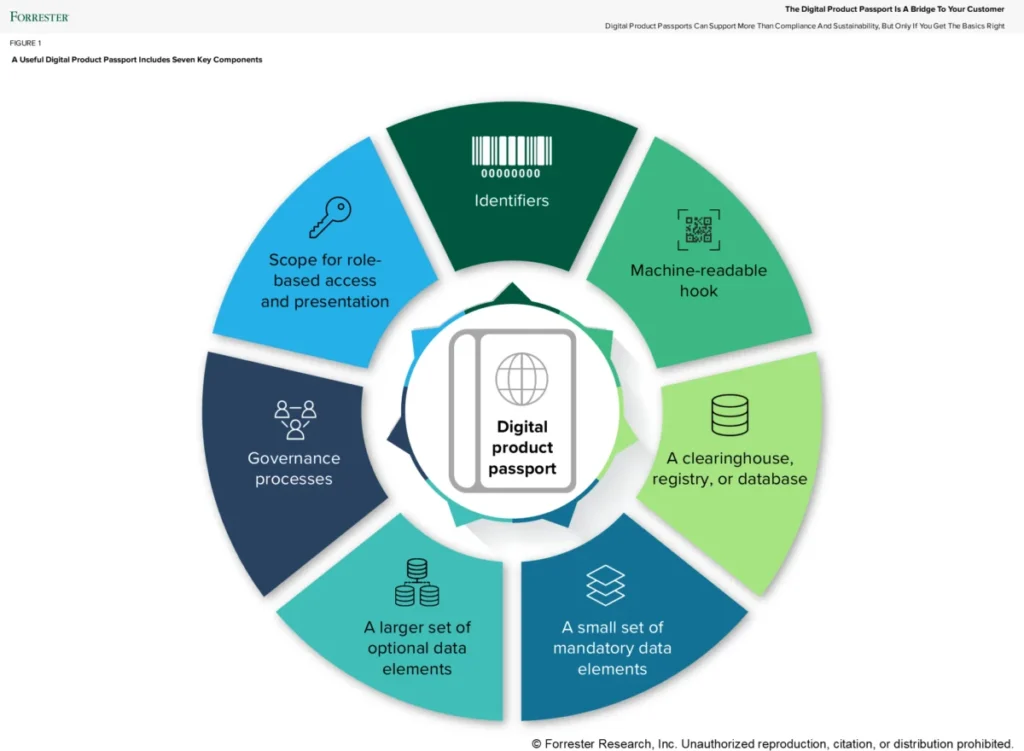
While specific requirements vary by industry and region, a robust DPP typically comprises seven key components. These elements ensure that the data is not only accessible but also actionable for manufacturers, retailers, and end-users.
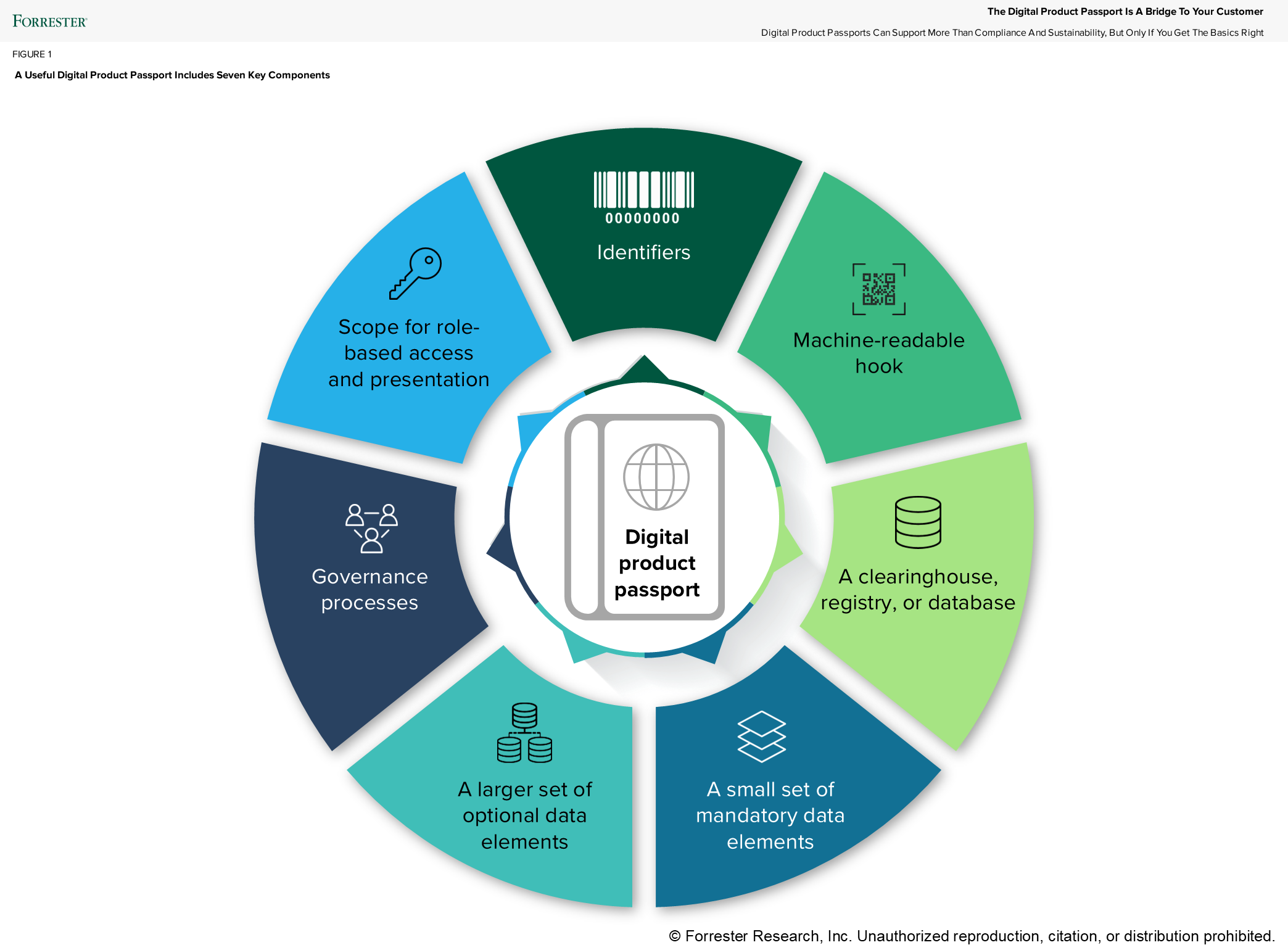
- Unique Identifier (UID): A persistent, machine-readable code (such as a QR code or RFID tag) that acts as the gateway to the product’s digital twin.
- Origin and Provenance: Documentation of where raw materials were sourced and where the product was manufactured, providing the foundation for ethical supply chain auditing.
- Material Composition: A detailed breakdown of the substances used, which is critical for safety, recycling, and health compliance.
- Carbon and Environmental Footprint: Quantitative data on the energy and resources consumed during production.
- Maintenance and Repair History: A log of repairs or component upgrades, which increases the residual value of the item in the secondary market.
- Recycling and End-of-Life Instructions: Clear, standardized guidance for consumers or waste management facilities on how to dismantle or recycle the product.
- Authenticity Credentials: Digital signatures or blockchain-backed verification that prevent counterfeiting and ensure the product is genuine.
Implications for Global Industry
The shift toward mandated DPPs will have profound implications for global commerce. It will create a "transparency gap" between companies that invest in digital infrastructure and those that rely on traditional, opaque supply chains.
The Competitive Advantage of Radical Transparency
As seen with early adopters like Volvo, the ability to scan a QR code and receive immediate, transparent information creates a "wow" factor for consumers. However, it also creates a competitive burden. An Italian luxury shoemaker might utilize a DPP to build a deep, values-based relationship with their customer, offering details on the leather source and artisan craftsmanship. A competitor in the same shop, lacking this data, suddenly appears less reliable or less "conscious" to the modern, value-driven buyer.
Addressing the Infrastructure Challenge
Despite the excitement, we are not yet at full scale. Most DPPs today remain "opt-in" vanity projects dependent on individual company enthusiasm. To move from fragmented efforts to a truly systemic shift, three things must happen:
- Regulatory Alignment: Governments must coordinate to ensure that a DPP requirement in Europe is compatible with emerging standards in the United States and Asia. A fractured regulatory environment would be a nightmare for global supply chains.
- Technological Standardization: Manufacturers and software providers need to agree on data formats. If every brand uses a different proprietary protocol, the utility for recyclers and consumers will be severely limited.
- Moving Beyond "Sustainability": The conversation needs to broaden. While sustainability is the initial driver, the real value lies in the data’s ability to drive customer loyalty and operational efficiency. Executives who treat this as a boardroom priority rather than an intern-level compliance task will lead their industries.
A Call to Action for Leadership
The integration of the Digital Product Passport is not a "future" problem—it is a present-day operational reality. Organizations must start by auditing their existing supply chain data and identifying where the gaps lie.
The successful implementation of a DPP requires a cross-functional approach, involving teams from IT, supply chain management, marketing, and legal. It is about creating a thread of truth that connects the factory floor to the customer’s smartphone. Those who view the passport as a chore will be left struggling to meet compliance deadlines. Those who view it as a bridge will find themselves in a unique position to redefine their brand’s relationship with the conscious consumer.
As the industry prepares for the upcoming regulatory wave, the message is clear: the era of the "dumb product" is coming to an end. In the very near future, if your product doesn’t have a passport, it may soon find itself barred from the most lucrative markets in the world. Now is the time to build the infrastructure, define the data, and prepare for a more transparent, connected, and circular future.
