

The B2B Social Media Playbook: Mastering the Long-Game for Revenue Growth
In the high-stakes world of Business-to-Business (B2B) marketing, the traditional "impulse buy" does not exist. Unlike B2C environments, where a viral video can spark immediate consumer action, a single B2B sale often involves a dozen stakeholders, months of internal deliberation, and a complex journey toward trust. As the landscape shifts, social media has evolved from a branding afterthought into a critical revenue-generating machine.
This guide explores the strategic imperative of B2B social media marketing, detailing how modern organizations can leverage platforms to nurture decision-makers, build institutional trust, and ultimately, drive measurable business results.

The Evolution of B2B: Trust as the New KPI
B2B social media marketing is no longer about simply broadcasting product updates; it is about reaching the architects of business decisions—founders, department heads, and procurement executives. The fundamental shift in this sector is the transition from "transactional" to "relational" marketing.
Because B2B sales cycles can stretch for the better part of a year, the goal of social media is to maintain a constant, credible presence throughout the buyer’s journey. By the time a lead engages with a sales representative, they should already have been "warmed up" by a consistent stream of educational content, peer testimonials, and industry insights.

Strategic Channel Selection: Where Your Buyers Live
Choosing the right channel is not about being everywhere; it is about being exactly where your audience is paying attention. While LinkedIn remains the undisputed heavyweight for B2B—with 98% of Fortune 500 CEOs active on the platform—the emergence of younger decision-makers is forcing a shift in strategy.
The Rise of the Millennial Decision-Maker
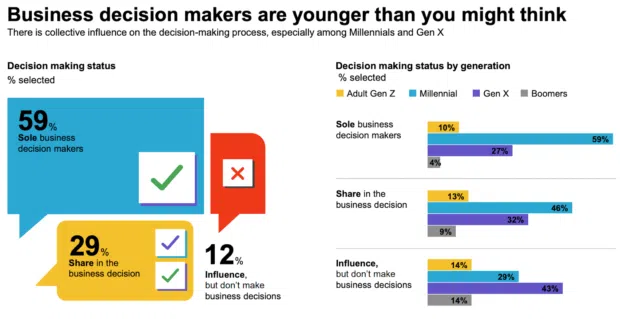
Data indicates that Millennials now lead 59% of B2B buying decisions. As this demographic assumes more power, the "professional-only" facade of B2B marketing is cracking. Platforms like Instagram and even TikTok are becoming viable channels for brand storytelling, provided the content remains relevant to professional pain points.
To identify your ideal channel mix, follow these steps:
- Audience Mapping: Research where your current customers go to learn about industry trends.
- Competitive Analysis: Identify where your top three competitors are most active and engaged.
- Internal Resource Assessment: Determine which platforms your team can realistically support with high-quality, consistent content.
Mapping Content to the Marketing Funnel
To convert a casual follower into a paying client, your content must address the specific psychological stage of the prospect. We categorize this into the classic funnel:
1. Top of Funnel (TOFU): Awareness
At this stage, you are not selling; you are establishing relevance. Your goal is to get on the prospect’s radar.
- Content Types: Commentary on trending industry news, myth-busting carousels, and quick educational tutorials.
- The Goal: To provide immediate value that encourages the user to follow or subscribe.
2. Middle of Funnel (MOFU): Consideration
The buyer knows they have a problem and is now comparing solutions. They are looking for proof that your company is the safest, most effective choice.

- Content Types: In-depth webinars, "how-to-choose" comparison guides, and expert interviews that highlight your unique value proposition.
- The Goal: To help the prospect evaluate your offering with confidence.
3. Bottom of Funnel (BOFU): Decision
This is the "home stretch." The prospect is looking for reassurance and social proof.
- Content Types: Customer case studies, detailed product demos, and testimonials that address specific objections.
- The Goal: To validate the decision to purchase and shorten the time to contract.
The "Human" Advantage: Advocacy and Influencers
Perhaps the most significant trend in modern B2B is the move toward human-centric marketing. As buyers become increasingly skeptical of polished, corporate-speak, two tactics have emerged as leaders in driving ROI:
The Power of Key Opinion Leaders (KOLs)
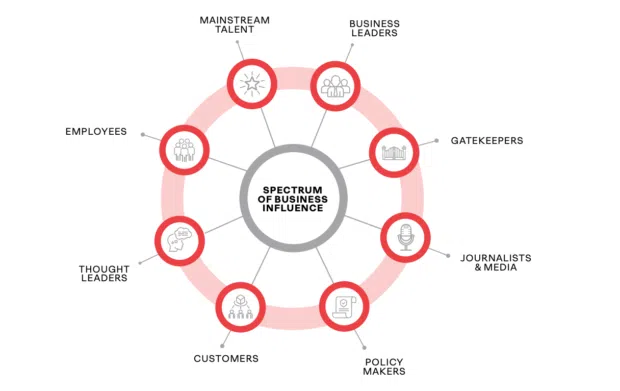
Partnering with business influencers—industry experts with established credibility—is a fast-track to trust. Research shows that 53% of B2B organizations are increasing their KOL budgets, recognizing that an endorsement from a respected peer carries more weight than a thousand paid advertisements.
Employee Advocacy: The Trust Multiplier
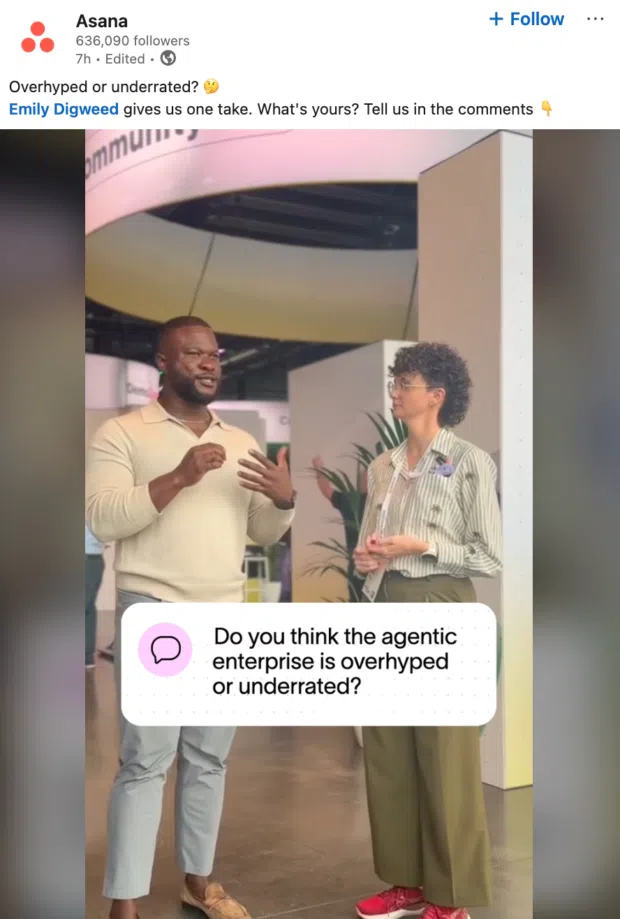
Your employees are your most underutilized marketing assets. When employees share content, it sees up to 200% higher click-through rates and 700% more engagement compared to company-branded posts. By empowering your staff to share their expertise, you transform your organization from a faceless entity into a community of trusted professionals.

Unlocking the Potential of "Dark Social"
A significant portion of B2B interaction happens in "dark social"—the private channels like Slack communities, DMs, and email chains where analytics tools cannot track clicks. While you cannot "track" a conversation in a private Discord server, you can measure its impact by:
- Using UTM parameters for all shared links.
- Asking customers during the sales process: "How did you hear about us?"
- Building your own private, invite-only communities where your brand can facilitate high-level industry discussions.
Proving ROI: From Vanity Metrics to Revenue
The greatest challenge for B2B social media managers is proving that their work is not just "noise," but a driver of the bottom line. To satisfy the executive team, you must shift your reporting from engagement metrics (likes/comments) to revenue-focused KPIs.

The Attribution Framework
Multi-touch attribution is the gold standard for B2B. Since a buyer might engage with a LinkedIn post, then a whitepaper, then a podcast, before eventually reaching out to sales, a single-touch model (which gives all credit to the last click) is fundamentally flawed. By implementing a multi-touch model, you can demonstrate the value that social media provided at every stage of the long-term journey.
Reporting to the C-Suite
When presenting to stakeholders, focus on the following financial indicators:
- Customer Acquisition Cost (CAC): How social media has lowered or stabilized your acquisition costs.
- Lead Quality: The conversion rate of leads sourced via social vs. other channels.
- Pipeline Velocity: How engagement with social content shortens the time between lead generation and closed deals.
The Future of B2B Strategy
The future of B2B social media lies in the marriage of high-level brand storytelling and granular data analytics. As AI and automated reporting tools continue to evolve, the burden of data collection will decrease, allowing marketers to focus on the human element of their work: building deep, long-lasting relationships with the people who make business happen.
Whether you are just starting your journey or looking to refine your multi-channel strategy, remember that B2B social media is a marathon, not a sprint. By focusing on genuine education, leveraging the voices of your employees, and rigorously tracking your contribution to revenue, you can transform social media into a powerhouse for your organization’s growth.
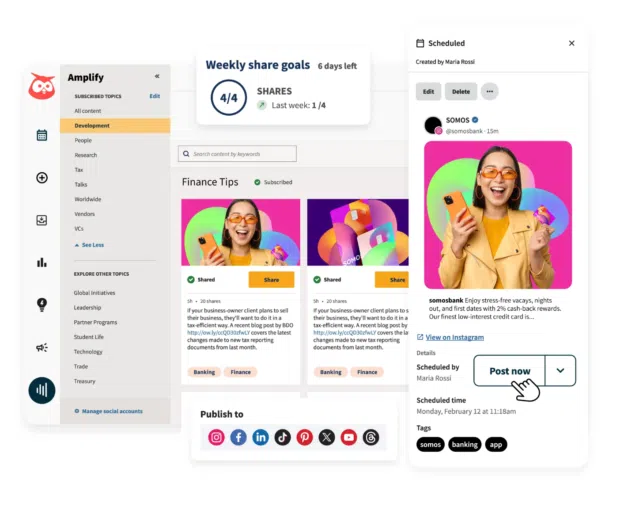
The takeaway for 2025 and beyond: Trust is the ultimate currency. Spend it wisely, invest it in your audience, and watch your B2B sales pipeline grow.
