
The Architecture of Desire: Why Modern Brands Are Moving Beyond Products to Build Immersive Worlds
Why do we find ourselves inexplicably drawn to specific brands while remaining indifferent to others? Why does a $15 wellness smoothie feel like a rational, even necessary, indulgence, while a cheaper alternative feels like a compromise?
In the contemporary marketplace, the answer no longer lies in the utility of the product. The most successful brands—from the cult-favorite Dairy Boy sweatshirts to the precision-engineered Dyson Airwrap—have transcended the role of "retailer." They have become architects of identity. They aren’t just selling items; they are selling entry into a curated, aspirational world.
The Shift: From Utility to Identity
For decades, traditional marketing focused on the "Unique Selling Proposition" (USP)—the functional benefit that made a product superior. Does this vacuum have better suction? Is this sneaker more durable?
Today, that paradigm has shifted. Consumers are no longer shopping for tools; they are shopping for signals. A Canon PowerShot G7 X isn’t just a camera; it is a signal of a specific aesthetic sensibility. A Loewe tank top isn’t just clothing; it is a membership card to a particular cultural stratum.
As we navigate an increasingly digital landscape, the "extended self"—a concept pioneered by psychologist Russell Belk—has become our primary driver of consumption. We use products to bridge the gap between who we are and who we aspire to be. When a brand successfully aligns with that aspiration, it ceases to be a commodity and becomes a part of the consumer’s personal narrative.
The Psychology of Belonging: A Chronology of Consumption
To understand why this shift has occurred, we must look at the evolution of consumer behavior through the lens of psychological theory.
The Era of Function (Pre-1990s)
In the mid-20th century, consumption was largely utilitarian. The goal was to acquire goods that performed tasks efficiently. Advertising was informational, focusing on quality, price, and durability.
The Era of Status (1990s–2010s)
As the global middle class expanded, luxury and lifestyle branding took center stage. Consumption became a marker of social hierarchy. Brands like Ralph Lauren or Mercedes-Benz were signals of arrival. Here, consumption was about proving you had "made it."
The Era of Identity and World-Building (2015–Present)
We have now entered the age of "Self-Congruity." As M. Joseph Sirgy suggested, we gravitate toward brands that reflect our internal values. This is not about status in the traditional sense; it is about "cultural capital," as defined by Pierre Bourdieu. Possessing the "right" aesthetic—the right matcha, the right sustainable home goods, the right vintage tech—signals that you understand the nuances of a specific cultural ecosystem.
This sense of belonging is amplified by what Aron & Aron call "Self-Expansion Theory." Humans are hardwired to seek experiences and communities that expand their sense of self. By purchasing into a brand’s world, we aren’t just buying a product; we are participating in a communal expansion of our own identity.
Supporting Data: Why "World-Building" Drives Revenue
The financial implications of this shift are profound. Brands that successfully cultivate a "world" see higher customer lifetime value (CLV) and significantly lower acquisition costs.
According to recent market analysis, brands that leverage creator-led, world-building strategies report:
- A 30% increase in customer retention: By fostering a sense of community, brands turn one-time buyers into long-term advocates.
- Higher Price Elasticity: When a brand represents a lifestyle rather than a utility, consumers are less sensitive to price hikes. They aren’t paying for the ingredients; they are paying for the "vibe."
- Viral Advocacy: In an era of social-first discovery, the "world" acts as a magnet. Fans don’t just buy; they create content, share rituals, and defend the brand online.
The Creator as the New Architect
The most critical development in this transition is the rise of the Creator Economy. Traditional enterprise brands often struggle with "cultural fluency." They have the budget and the distribution, but they lack the organic, human connection required to make a brand feel "real."
Creators close this gap. They are not merely distribution channels or "influencers" in the traditional sense; they are the gatekeepers of culture. When a brand partners with the right creator, they aren’t just buying an ad; they are borrowing the creator’s world.
For the enterprise brand, the goal is no longer to "sell" but to "participate." A successful campaign today feels like a natural extension of the creator’s existing universe. It is a subtle invitation to the audience to inhabit that space.
Implications for Enterprise Brands: A Strategic Pivot
The brands that remain stuck in the old model—treating creator partnerships as a mere line item on a media plan—are finding their conversion rates stagnating.
1. From Transactional to Relational
Enterprise brands must stop viewing creators as billboard space. Instead, they should treat them as co-architects. The most effective strategies involve giving creators the autonomy to integrate the brand into their own "lore."
2. The Importance of Ritual and Aesthetic
A "world" is defined by its rules. What are the rituals associated with your brand? Is there a specific visual language? The strongest brands have a cohesive aesthetic that is instantly recognizable without a logo, from the "clean girl" aesthetic of certain wellness brands to the rugged minimalism of outdoor gear companies.
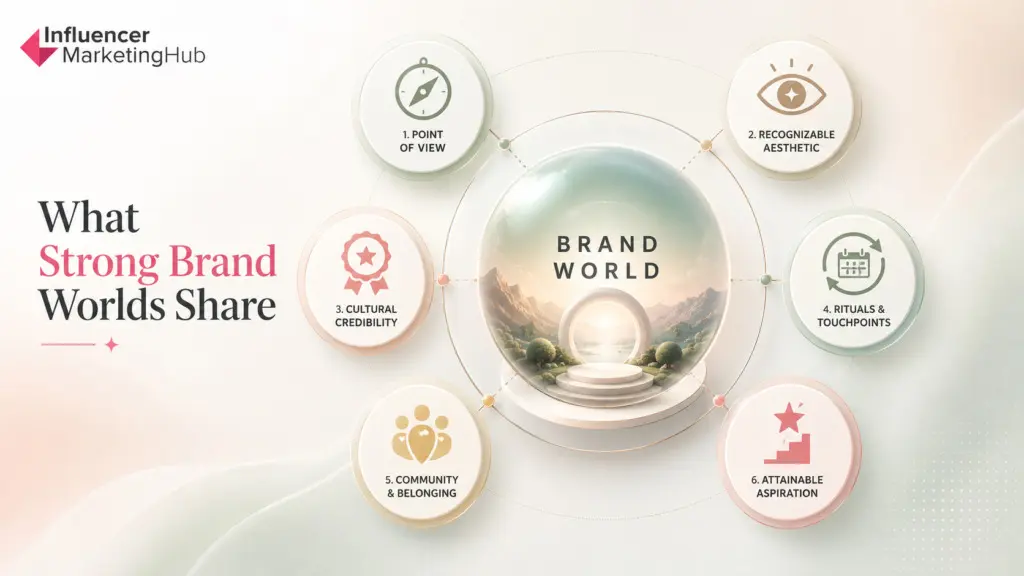
3. Cultural Fluency over Reach
In the past, brands prioritized "reach"—how many eyes see the ad. Today, the priority is "fluency"—how well does the brand resonate with the core values of the target community? It is better to have a deep, emotional connection with a niche community than a superficial impression on a mass audience.
Expert Perspective: The View from Intuition Media Group
Paula Bruno, founder and CEO of Intuition Media Group, has spent over 15 years at the intersection of cultural relevance and business performance. According to Bruno, the shift is irreversible.
"The enterprise brands that are winning today aren’t the ones with the loudest commercials," Bruno notes. "They are the ones that understand that a product is a gateway. If you can help your consumer feel like they belong to a tribe, a movement, or an aesthetic, the purchase becomes an afterthought. We aren’t in the business of selling products anymore; we are in the business of creating belonging."
Bruno’s work with global giants like Unilever, P&G, and Hyundai suggests a clear path forward: integrate early, collaborate deeply, and respect the creator’s role as the primary storyteller.
Conclusion: The Future of Brand Strategy
The future of marketing belongs to those who understand that we live in a world of infinite choice but finite attention. When a consumer chooses your brand, they are making a statement about who they are.
The "world-builders"—the brands that create rituals, foster communities, and empower creators—will continue to capture the hearts and wallets of consumers. Those who continue to compete on price alone will find themselves in a race to the bottom, commoditized and forgotten.
In the end, we don’t buy things for what they do. We buy them for what they represent. And the brands that recognize this are the ones that will define the culture of the next decade.
The message to enterprise leadership is simple: If you want to build a brand that lasts, you must stop trying to sell to your audience and start inviting them into your world. You cannot build that world alone—but if you get it right, you’ll never have to walk alone again.
