
The AI Copywriting Paradox: How Five Industry Titans Are Navigating the New Frontier
The integration of Artificial Intelligence into the professional copywriting landscape has shifted from a fringe experiment to a mainstream mandate. If you work in marketing, sales, or communications, the statistical probability that you or your team interacted with a Large Language Model (LLM) in the last twenty-four hours is exceptionally high.
But as the novelty of AI fades, a more critical question has emerged: What does smart use actually look like? To move beyond the hype and uncover the practical realities of AI in high-stakes writing, we sat down with five of the world’s most respected copywriters—Bob Bly, Kim Krause Schwalm, David Deutsch, Lorrie Morgan, and Anita Siek. With decades of collective experience and a track record of driving billions in revenue, these experts offer a masterclass in separating AI-generated "slop" from high-performance strategy.
Main Facts: The Current State of AI in Copywriting
The consensus among the experts is clear: AI is a powerful tool, but it is not a creative engine. It functions best as an assistant, a research aide, and a sparring partner. However, when it comes to the "soul" of writing—original storytelling, emotional resonance, and nuanced persuasion—it remains fundamentally flawed.
The primary takeaway is the distinction between "commodity copy" and "revenue-critical copy." For lower-stakes tasks, such as social media captions or internal administrative emails, AI can save significant time. But for high-conversion sales letters, brand-defining narratives, and direct-response campaigns, the experts agree: human intuition is irreplaceable.
Chronology of the AI Shift
The timeline of AI adoption in copywriting has been rapid and volatile.
- 2022: The public release of generative AI tools sparked immediate panic. Many agencies and copywriters feared obsolescence as the market was flooded with low-cost, automated content.
- 2023: The "correction" phase began. Businesses realized that while AI could produce volume, it often failed to convert. "Algorithm aversion"—a phenomenon where audiences reject content they perceive as robotic—became a major obstacle for brands relying too heavily on automation.
- 2024–2025: We have entered the "Hybrid Era." Professional copywriters are no longer debating whether to use AI, but rather how to integrate it into a human-led workflow. The focus has shifted from prompt engineering to strategic oversight and the training of custom models on proprietary data.
Supporting Data: Why "Human-in-the-Loop" Wins
The experts point to three major bottlenecks that prevent AI from being a total solution:
- The Homogenization Trap: As Lorrie Morgan notes, AI models have a tendency to "regress to the mean." Because they are trained on vast datasets, they default to safe, generic language that lacks the jagged, idiosyncratic edges of human thought.
- Lack of Real-World Friction: AI never experiences a "bad day." It has never lost a client, felt the sting of a failed launch, or experienced the visceral fear of a market crash. This lack of lived experience makes it struggle with authentic empathy—the cornerstone of high-converting copy.
- The Cognitive Decline: David Deutsch warns that over-reliance on AI is causing a "downward trend in cognition." When writers stop doing the heavy lifting of thinking, they lose the ability to craft unique arguments, ultimately weakening their own creative muscles.
Official Responses: Insights from the Experts
Bob Bly: AI as an "Axiomatically Inferior" Writer
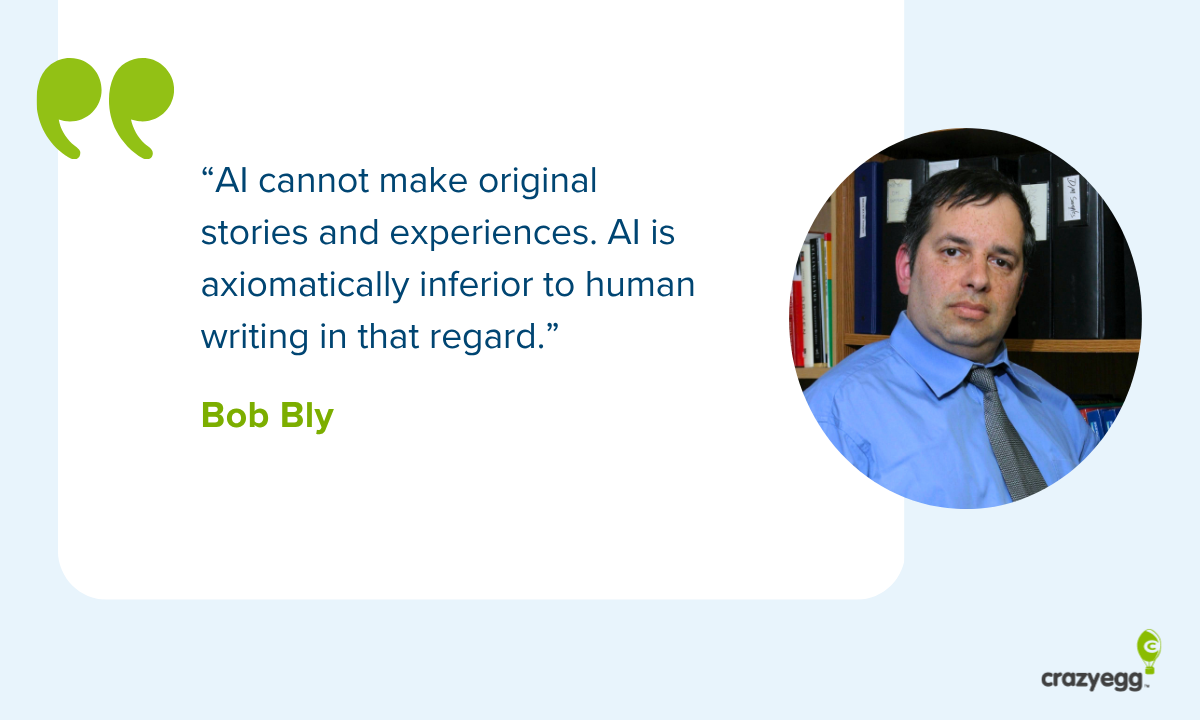
Bob Bly, author of The Copywriting Handbook, maintains a pragmatic skepticism. "AI cannot make original stories," he asserts. "It can only regurgitate other stories that are not its own." Bly uses AI primarily to "vet" big ideas—for example, asking a model to list potential consequences of a geopolitical event to see if an idea for a financial newsletter has enough "meat on the legs."
Kim Krause Schwalm: The "Prism" Researcher
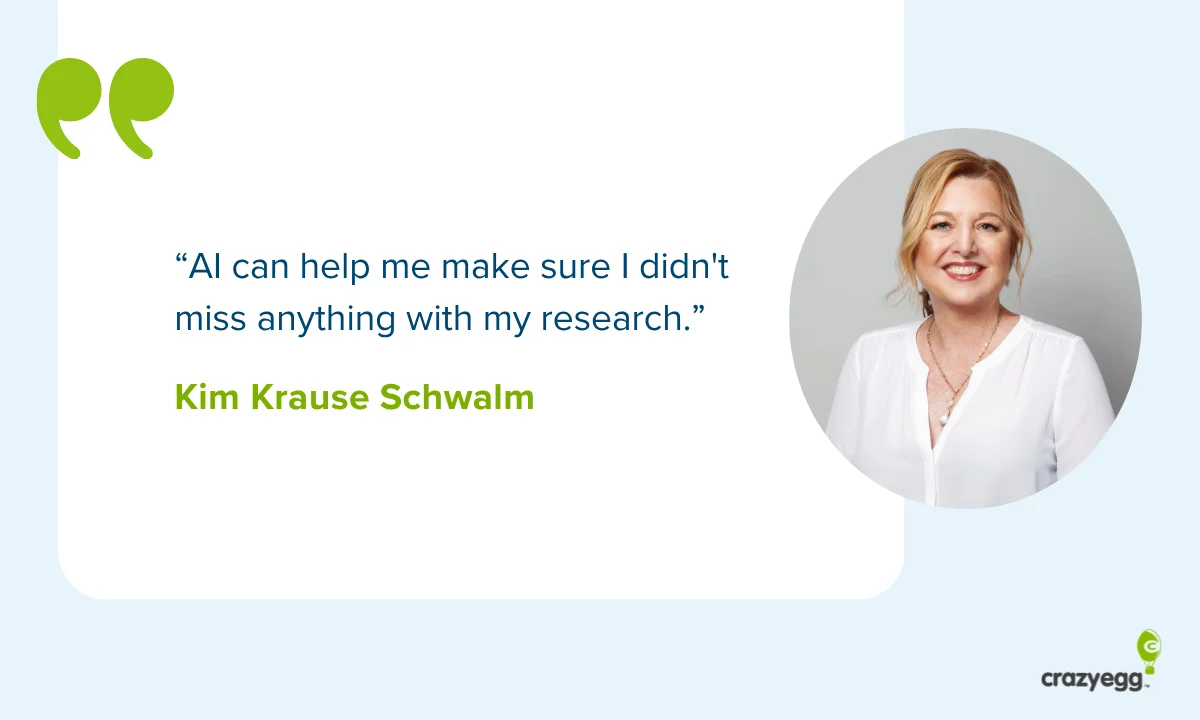
Kim Krause Schwalm treats AI as a research assistant. She utilizes it for her "Prism" exercise, which helps identify a prospect’s pain points. While she runs the exercise through AI to ensure she hasn’t missed any angles, she emphasizes that the raw output is "clinical" and must be infused with the emotional language she gathers from manual research.
David Deutsch: Protecting the Human Edge
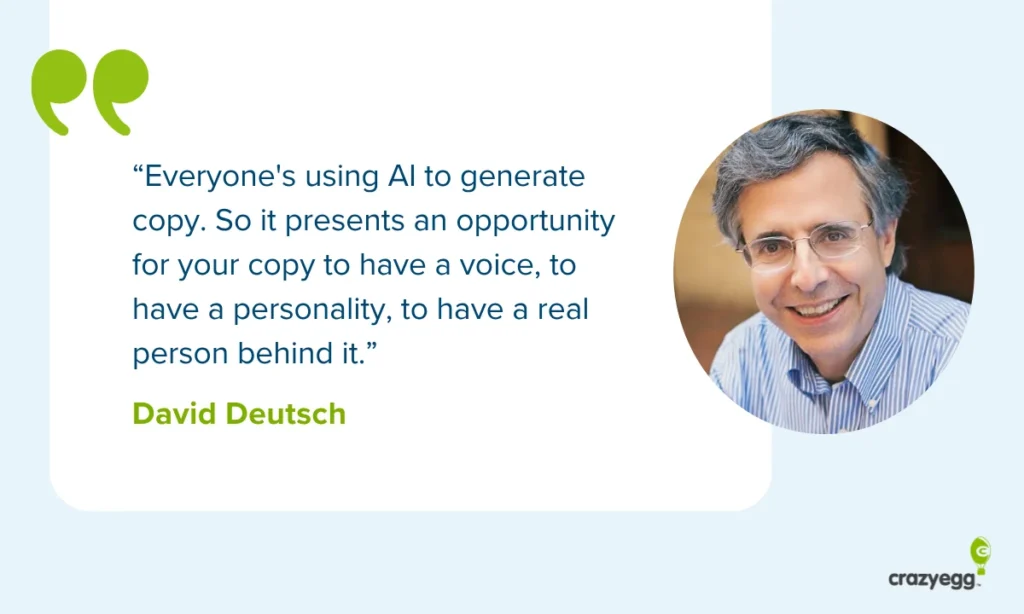
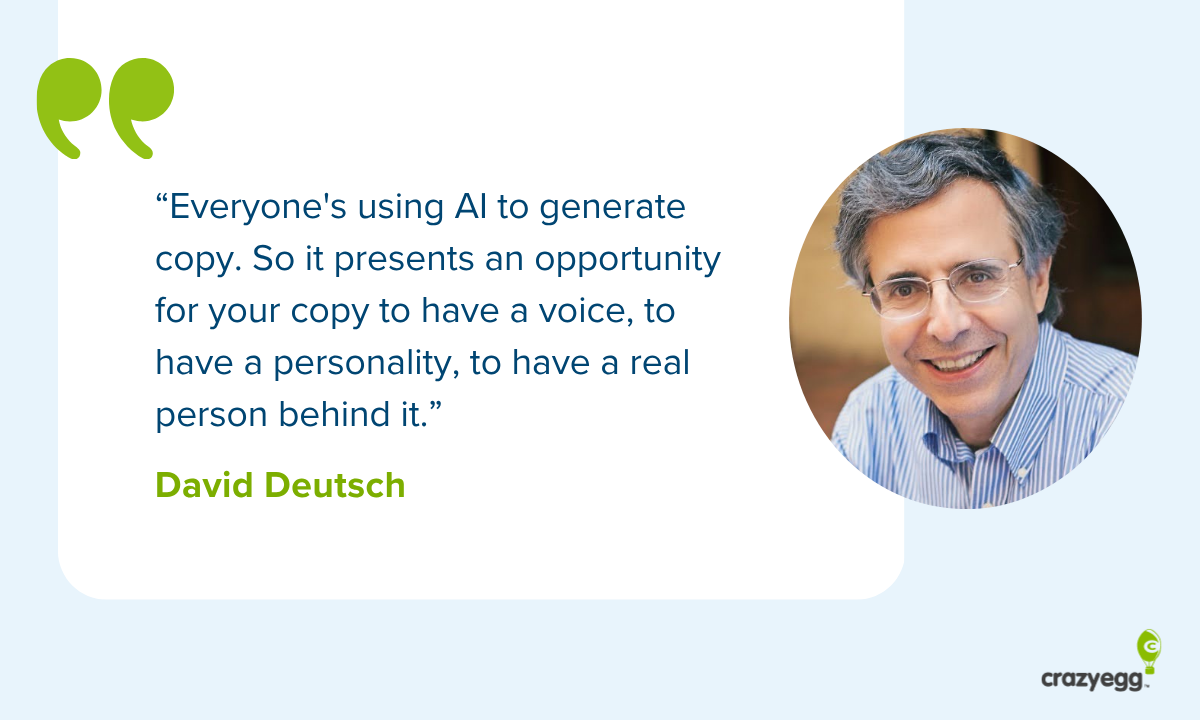
David Deutsch, who has generated over $1 billion in sales, argues that AI actually creates a competitive advantage for human writers. "Everyone is using AI to generate copy," he explains. "So, it presents an opportunity for your copy to have a personality—to have a real person behind it." For Deutsch, the best use of AI is as a "foil" to critique a draft, pointing out where it might be boring or awkward.
Lorrie Morgan: The Case Against "C-3PO"
Lorrie Morgan is blunt: "I want to hear your voice, not C-3PO’s." She warns that writers who blindly copy-paste AI outputs are sabotaging their authority. Her "Rescue Kit" approach involves using AI for outlining and brainstorming, but she insists that the final polish must be done by a human who understands the nuances of tone and pacing.
Anita Siek: Behavioral Psychology and Custom IP
Anita Siek represents the future of the field. At her agency, Wordfetti, she has developed "FETTIBot," a custom AI trained on nine years of her firm’s proprietary intellectual property. "AI is an amplifier," Siek says. "It’s only as good as the input you write." By feeding the AI specific strategies rooted in behavioral psychology, she uses it to scale her agency’s unique voice rather than diluting it.
Implications: The Future of the Copywriting Profession
The implications for the industry are profound. We are witnessing a bifurcation of the market:
- The Commoditization of Content: For low-value writing, AI will continue to drive costs toward zero. If your copy doesn’t require deep emotional intelligence or strategic positioning, it is increasingly likely to be automated.
- The Premium on Human Strategy: Paradoxically, as AI-generated text becomes ubiquitous, high-quality, human-crafted copy will become a luxury good. Brands that prioritize "human-first" storytelling will likely stand out in an ocean of AI-generated noise.
- The "AI-Fluency" Requirement: The new baseline for a professional copywriter is not just the ability to write, but the ability to act as an "AI Orchestrator." This involves knowing how to structure a brief, how to feed proprietary data into a model, and how to rigorously test the results.
Five Rules of Thumb for Modern Copywriters
To stay ahead, consider these five principles derived from our experts:
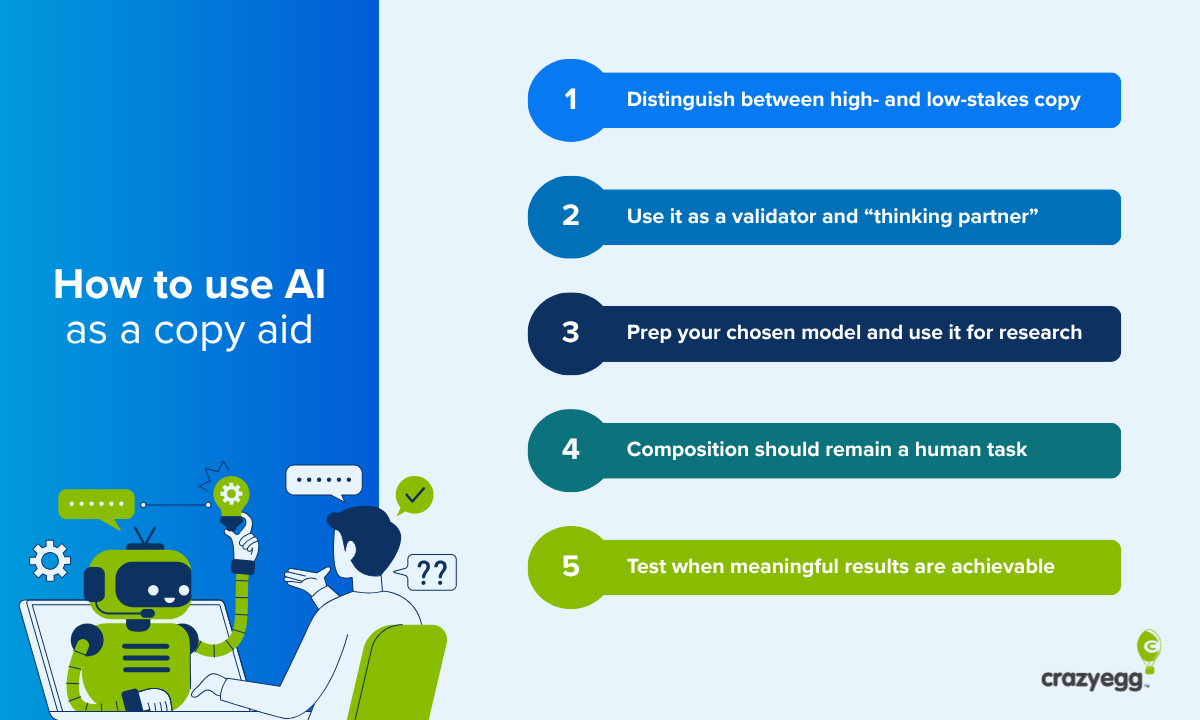
- Distinguish Stakes: If the copy is tied directly to revenue, the human role must be primary. If it is high-volume, low-impact content, leverage AI for speed.
- The "Thinking Partner" Model: Don’t ask AI to write; ask it to critique. Provide it with your draft and ask, "Where is this boring? What counter-arguments am I missing?"
- Systematize Your IP: Follow Anita Siek’s lead—create frameworks based on your own success. Teach the AI your repeatable systems rather than relying on its default patterns.
- Test, Test, Test: If you are unsure about an AI-generated angle, don’t guess. Use A/B testing to let the data decide which version performs better.
- Preserve Your Voice: Never output raw AI text. Always edit for the "human tell"—the unique stories, the emotional vulnerability, and the specific cadence of your brand.
Conclusion
The "AI Apocalypse" for copywriters has not arrived; instead, an evolution has taken place. The writers who will thrive in the coming decade are those who recognize that AI is not a replacement for human thought, but a tool that demands even higher levels of strategic rigor.
As the experts remind us, AI is a tool of efficiency, but human connection remains the currency of persuasion. By leveraging AI to handle the "grunt work" of research and structure, and keeping the core of creative strategy in human hands, copywriters can achieve a level of productivity and impact that was previously unimaginable. The future of copywriting is not "Human vs. AI"—it is "Human + AI," and the winners will be those who learn to lead the machine, rather than follow it.
