
The Agentic Revolution: Advertising’s Structural Shift in the Shadow of Cannes
The week leading up to the 2026 Cannes Lions International Festival of Creativity has historically served as a bellwether for the advertising industry, a period where market leaders signal their strategic shifts. However, the second week of June 2026 witnessed a metamorphosis of the industry’s fundamental plumbing that transcended typical pre-festival hype. In a frantic 72-hour window, the industry pivoted toward an "agentic" future, where autonomous software agents—rather than human media planners—are poised to become the primary architects of global advertising investment.
From WPP Media’s staggering $1.3 trillion forecast to a wave of product launches from Yahoo, Fox, Horizon Media, and DoubleVerify, the consensus is clear: the era of the human-dashboard interface is sunsetting. This transition is occurring against a backdrop of aggressive corporate consolidation and shifting regulatory mandates in the European Economic Area (EEA), creating a complex, high-stakes environment for marketers and publishers alike.
The $1.3 Trillion Growth Engine: A Macro View
On June 16, 2026, Kate Scott-Dawkins, Global President of Business Intelligence at WPP Media, released the latest This Year Next Year report. The headline figure—a projected $1.3 trillion in global advertising revenue by 2026 (excluding U.S. political spending)—is fueled almost entirely by the unprecedented AI investment cycle.
The report highlights a dual-sided economic engine. On one side, technology companies developing large language models (LLMs) and inference infrastructure are flooding the market with advertising spend to capture enterprise and developer attention. Simultaneously, legacy advertisers are aggressively deploying AI internally to slash production costs and automate campaign activation. This "countervailing force" is successfully insulating the industry from geopolitical shocks, including Middle East conflicts, tariff volatility, and depressed consumer sentiment.
In the U.S., WPP projects a robust 11.9% growth, an upward revision from earlier estimates, signaling that the density of AI infrastructure investment is acting as a primary catalyst for domestic market expansion.
Chronology of a 72-Hour Industry Transformation
The sheer volume of announcements between June 16 and June 19 reveals a synchronized industry movement toward a shared technical architecture:
- June 16: WPP Media publishes its midyear forecast, identifying AI search and agentic buying as the primary growth drivers for the next decade.
- June 17: DoubleVerify launches "DV Neura," a cognitive AI engine capable of massive content classification, signaling the industry’s move toward automated brand safety.
- June 18: A watershed day. LiveRamp launches its "Agent Builder" program; Yahoo introduces its "Agent Network" of 23 partners; Horizon Media discloses its agentic software layer; and Fox Corporation debuts the television industry’s first end-to-end agentic ad platform.
- June 18 (Publishing): Penske Media Corporation (PMC) finalizes the acquisition of the remainder of Vox Media, consolidating power in digital publishing. Simultaneously, Google notifies EEA publishers of the August 3 deadline for mandatory IP-based privacy compliance.
- June 19: Stagwell announces "The Media Machine," extending its agentic marketing platform into media-side buying.
The Infrastructure of Autonomy: Governance and Interoperability
The rapid proliferation of agentic tools has brought the issue of "governance by protocol" to the forefront. Recognizing that a fragmented landscape of proprietary AI agents could paralyze the market, WPP has formed a high-level consortium including Disney Advertising, Netflix, NBCUniversal, and the IAB Tech Lab.
The goal is to define standard protocols for how buyer and seller AI agents communicate. Without these standards, the buying modality could outpace the regulatory frameworks governing it, leading to "black box" outcomes where advertisers lose visibility into how their budgets are being allocated. Yahoo’s entry into the space specifically frames this concern as a competitive advantage; by positioning its DSP as a transparent alternative to industry giants, Yahoo is betting that governance will become a primary sales lever in an automated world.
Supporting Data: The Cost of the "Bot" Era
While the industry celebrates the efficiency of AI, the infrastructure costs are becoming impossible to ignore. Kinsta, a managed WordPress provider, revealed that a single AI crawler sent 3.75 million requests to WordPress shopping cart pages in just 24 hours. Total bot traffic across all tracked shopping sites reached 7.67 million daily hits.
These bots, characterized as training crawlers rather than indexers, are hammering computationally expensive endpoints—database queries, session state management, and inventory checks—without ever completing a transaction. This "AI tax" on e-commerce infrastructure highlights a critical bottleneck: if AI agents are to become the future of commerce, the industry must develop a way to distinguish between value-creating shopping agents and resource-draining training crawlers.
Implications for Publishers and Brands
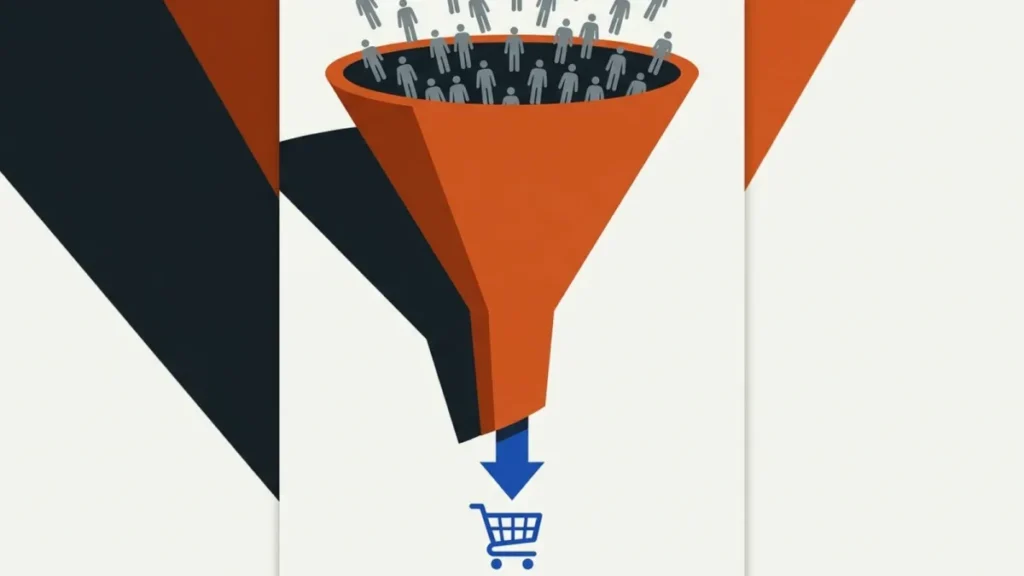
The traditional marketing funnel is collapsing. IAB Australia’s recent report on agentic search confirms that discovery, comparison, and transaction are now occurring in a single session within AI interfaces. Brands that lack "agent-legible" structures are effectively invisible.
This has triggered a new discipline: Generative Engine Optimization (GEO). Publishers like Germany’s BCN are launching "GEO Brand Impact" services, helping brands audit their positioning within LLMs. By providing structured, LLM-legible content, publishers are creating a new premium inventory segment. Similarly, USA Today is utilizing pre-written "shell files" for real-time events to ensure their content is surfaced in AI Overviews before competitors, treating AI visibility with the same strategic intensity as historical SEO or paid search.
Regulatory Compliance: The August 3 Deadline
While the industry looks toward an AI-driven future, the present remains constrained by EU privacy regulations. Google’s notification regarding IP-based ad measurement and personalization in the EEA, UK, and Switzerland—set for August 3, 2026—serves as a reminder that privacy-enhancing technologies (PETs) are the foundation of modern ad tech.
Google’s adoption of on-device processing, Trusted Execution Environments (TEEs), and secure multi-party computation represents a shift toward privacy-by-design. However, the operational burden on publishers is significant. Under the IAB Europe’s Transparency and Consent Framework (TCF), publishers must update their configurations to disclose "Feature 3" (device identification). Failure to comply will lead to a default to "limited ads," threatening revenue at a time when publishers are already reeling from the broader industry consolidation exemplified by the PMC-Vox deal.
The Consolidation of Influence
The finalization of the Vox Media acquisition by Penske Media Corporation (PMC) marks the end of an era for digital native publishing. By acquiring properties like The Verge, Eater, and SB Nation, PMC has solidified its position as the world’s largest digital publisher.
This consolidation is not merely about audience size; it is about inventory control. The Verge provides influence over the very tech practitioners who are building the ad tech products of tomorrow. Combined with Variety and Billboard, PMC now commands a unique cross-section of premium inventory that spans the intersection of Hollywood, technology, and lifestyle—a massive, singular asset pool that is increasingly attractive to the automated buying agents of the future.
Conclusion: A New Operating System for Advertising
The week of June 16, 2026, will be remembered as the moment the advertising industry switched to a new operating system. The shift from human-led dashboards to agentic, autonomous buying is not a future trend; it is a current reality supported by massive infrastructure investment and a race to establish governance standards.
For marketers, the mandate is clear: adopt agent-legible content strategies, demand transparency from DSPs, and prepare for a world where the speed of execution is measured in milliseconds. The industry has entered a phase where the primary competition is no longer just for eyeballs, but for the "attention" of the AI agents that now curate, validate, and execute the world’s commercial transactions. As Cannes Lions approaches, the conversation will no longer be about "creative" in the traditional sense, but about the quality of the data and the integrity of the agents that drive the multi-trillion-dollar engine of global commerce.
