
The Age of the Agentic Lovemark: How the PRISM Model is Redefining Brand Identity for an AI-Driven Future
Technology has shifted from a tool we operate to an environment we inhabit. In the current landscape, AI has transformed our digital interactions from static, transactional exchanges into fluid, conversational experiences. We are no longer merely browsing information; we are co-creating it with machines. As this shift accelerates, the traditional pillars of brand building—long considered the bedrock of marketing—are undergoing a radical transformation. To survive and thrive in this "agentic economy," brands must evolve from static entities into living, breathing personalities capable of navigating human relationships via machine intermediaries.
The Evolution of the Lovemark
In the early 20th century, marketing took a psychological turn, moving away from simple product utility toward emotional persuasion. Brands like Coca-Cola and Apple understood that deep, irrational emotional connections drove long-term loyalty. Kevin Roberts, former CEO of Saatchi & Saatchi, famously coined the term "Lovemarks" to describe brands that command loyalty beyond reason.
However, we are now entering an era defined by Arjan Kapteijns’ concept of the "Agentic Lovemark." In this new paradigm, the emotional connection is no longer exclusively directed at a human institution; it is mediated, and sometimes orchestrated, by AI agents. As consumers increasingly rely on digital assistants to make decisions, brands must ensure they are not just "seen" by these algorithms, but "loved" by the humans those algorithms serve.
The Limitation of Archetypes
For 25 years, the 12-brand archetype model—introduced by Margaret Mark and Carol Pearson in The Hero and the Outlaw—has served as the gold standard for brand identity. It provided a rational guide to the irrational behavior of consumers, offering a framework for how a brand should look, speak, and behave.
Yet, as we move into the agentic economy, the archetype model is showing its age. Archetypes are intentionally broad; they provide a general "vibe" that works well for television commercials or billboards. However, they lack the granular instructions required for a Large Language Model (LLM) to replicate a specific, consistent personality in a one-on-one, real-time conversation. If you provide an AI with a vague archetype like "The Explorer," it may interpret that in a thousand different ways, leading to fragmented and inconsistent brand experiences. To function in an agentic world, a brand needs a "digital soul" that is both legible to machines and lovable to humans.
The Legible-Lovable Law: Bridging the Technical Gap
Thomas Marzano, formerly of Philips and ASML, has articulated the "Legible-Lovable Law," a cornerstone for brands operating in this new ecosystem. The law posits a dual requirement:
- Legibility: The brand must be structured in a way that AI can read, understand, and render consistently.
- Lovability: The brand must maintain an emotional resonance that keeps it relevant to human decision-making.
If a brand fails to be "legible," it becomes invisible to the AI that acts as a gatekeeper for consumer choices. If it lacks "lovability," it remains a generic utility, failing to convert interest into deep-seated loyalty. This brings us to the urgent need for a more precise, technical, and psychologically robust framework: the PRISM model.
Introducing the PRISM Model
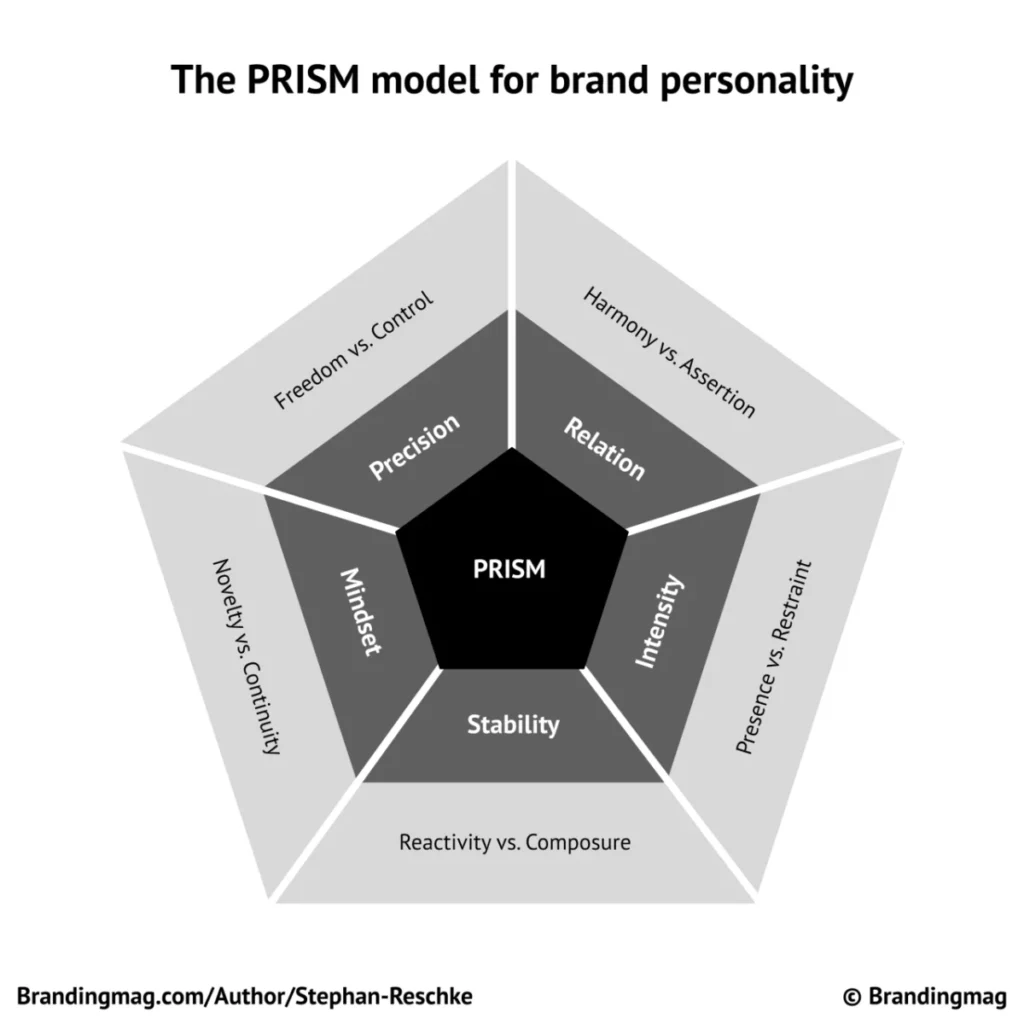
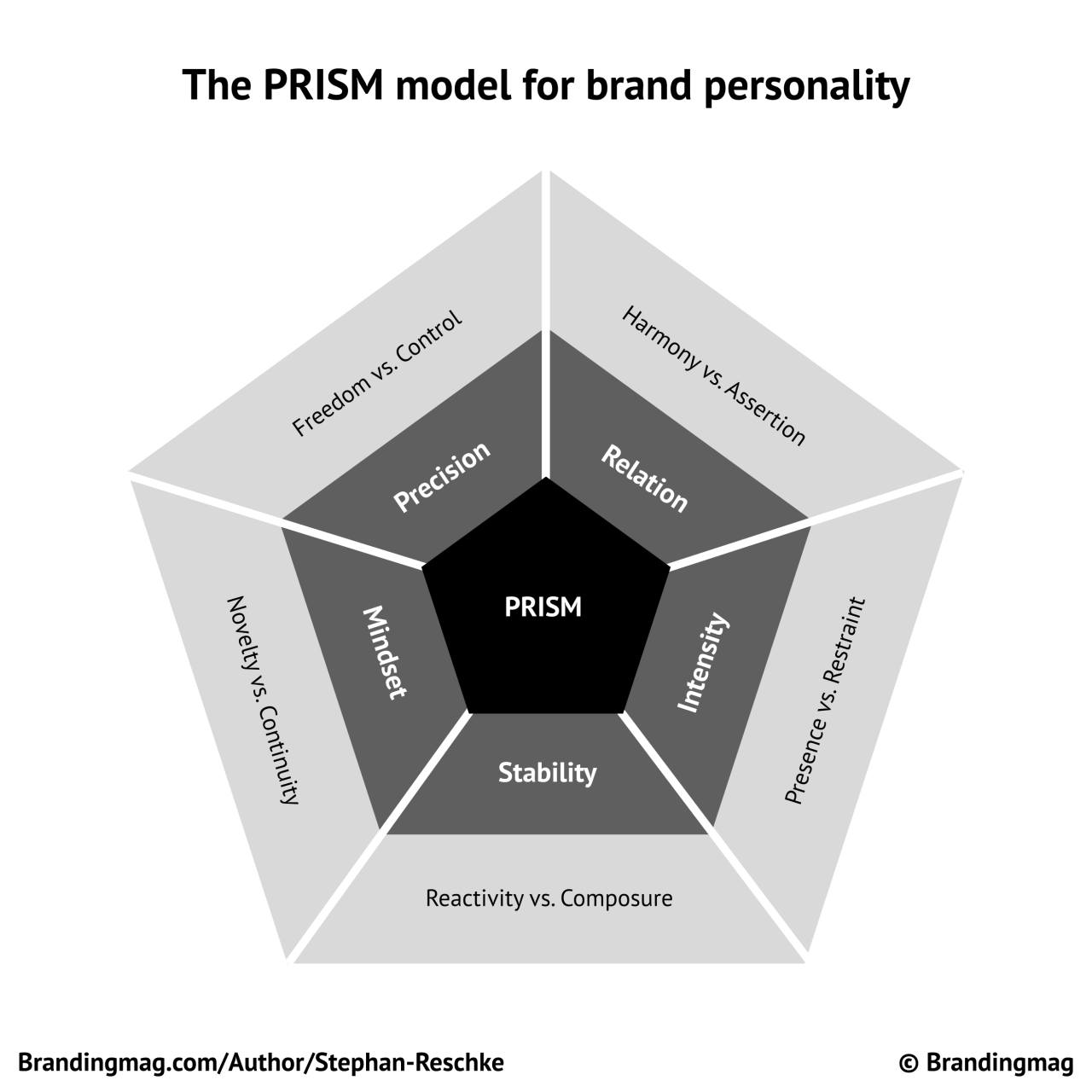
The PRISM model is a sophisticated evolution of the "Big Five" personality traits (OCEAN), specifically re-engineered for the modern brand. While archetypes rely on storytelling, PRISM relies on data-driven classification across five core domains:
- P – Psychological Core: The fundamental mindset and philosophical stance of the brand.
- R – Relational Tone: How the brand approaches human connection—is it formal, intimate, authoritative, or playful?
- I – Intellectual Stance: The brand’s approach to knowledge, innovation, and problem-solving.
- S – Stylistic Expression: The aesthetic and linguistic guidelines that govern the brand’s output.
- M – Motivational Drive: The underlying purpose that powers the brand’s actions and encourages user loyalty.
Each of these domains contains six defining characteristics evaluated on a sliding scale. This granularity allows for a high-fidelity personality profile. When programmed into an LLM’s system prompt, the PRISM model prevents the "random logo" effect, ensuring that whether a user interacts with a brand via voice, text, or haptic interface, the experience remains consistent, coherent, and distinctly "on-brand."
Implications for Brand Language
In an age where voice-driven interfaces (think Siri, Gemini, or future iterations of neural interfaces) are replacing screens, language has become the primary touchpoint. We are moving from a "brand campaign" era to a "brand language" era.
Traditional campaigns were designed to be viewed; brand language is designed to be spoken and heard. LLMs do not "watch" commercials; they process data and context. Therefore, a brand’s personality must be encoded into its verbal and behavioral grammar. By utilizing the PRISM model, companies can construct a digital infrastructure that allows their brand to:
- Maintain Consistency: Ensure that every AI-generated response aligns with the brand’s core values.
- Personalize Interaction: Adapt tone and vocabulary to the user’s context while remaining firmly rooted in the brand’s established personality.
- Build Trust: By operating with a predictable, human-like personality, the brand fosters the trust necessary to be recommended by AI agents.
A New Era of Strategic Planning
The transition to Agentic Lovemarks is not merely a technical upgrade; it is a fundamental shift in how organizations conceptualize their existence.
The Chronology of the Shift
- 1990s-2000s: The era of emotional branding and the dominance of the 12-archetype model.
- 2010s: The rise of digital marketing and the beginning of the "conversational" internet.
- 2023-2025: The "Agentic Awakening," where AI transitions from a tool to an active agent in the consumer journey.
- 2026 and Beyond: The standardization of the "Brand Constitution" and the widespread adoption of high-fidelity personality models like PRISM.
Official Perspectives and Expert Consensus
Industry leaders, including Arjan Kapteijns and Thomas Marzano, argue that the anxiety surrounding AI-driven branding stems from a misunderstanding of the technology. The fear is that AI will "dehumanize" the brand. However, the emerging consensus is that AI provides the infrastructure for deeper, more hyper-personalized human connections. By offloading the operational side of brand consistency to AI, humans are freed to focus on the higher-level strategic elements of brand purpose and narrative.
Strategic Recommendations
For CMOs and brand managers looking to navigate this shift, the path forward is clear:
- Audit your Brand Personality: Move beyond static archetypes. Use the PRISM model to map your brand’s personality across the five core domains.
- Develop a Brand Constitution: Create a "source of truth" document that is readable by both humans and AI. This document should govern your brand’s tone, vocabulary, and behavioral constraints.
- Invest in System Prompts: Your brand’s identity should not live solely in a PDF; it should live in the backend code of your customer-facing AI agents.
- Prioritize Language Architecture: Invest in linguistic expertise to ensure your brand’s voice is distinct, recognizable, and emotionally resonant in a voice-first environment.
Conclusion: Embracing the Future
The future of branding is profoundly complex, but it is not inherently uncertain for those who choose to engage with it. The PRISM model provides a bridge between the psychology of the past and the technology of the future. It allows brands to stop guessing how their customers will perceive them in a machine-mediated world and start designing those perceptions with precision.
The conversations have already begun. AI is already deciding which brands to recommend and which to ignore. The question is no longer whether your brand will have an agentic presence, but how "human" that presence will feel. By moving toward the Agentic Lovemark, brands can ensure they remain not just visible, but vital, in the lives of their consumers. The era of the digital soul has arrived; it is time to build accordingly.
