

Shopify vs. Basecamp: Why Your Ecommerce Stack Needs Both, Not a Choice Between Them
In the rapidly evolving digital landscape of 2026, the question of which software to choose often leads to a false dilemma. For founders, agency owners, and digital operations managers, the comparison between Shopify and Basecamp is frequently framed as a "versus" scenario. However, after an exhaustive analysis of both platforms—mapping their feature sets, pricing models, and operational roles—the conclusion is clear: Shopify runs your store; Basecamp runs your team.
They are not competing for the same budget line; they are filling two distinct, essential voids in the modern business stack. If you are building an online business today, you do not need one or the other—you need both working in tandem.
The Strategic Divide: Understanding Core Competencies
To understand why these platforms are complementary rather than competitive, we must first define their primary "jobs to be done."
The Shopify Mandate: The Commerce Engine
Shopify is a dedicated, hosted ecommerce platform. Its entire architecture is designed to facilitate the exchange of currency for goods. Whether you are operating a dropshipping store, a high-volume direct-to-consumer (DTC) brand, or a complex B2B wholesale operation, Shopify provides the infrastructure: product catalogs, inventory management, secure checkout, and omnichannel payment processing.
The Basecamp Mandate: The Operational Layer
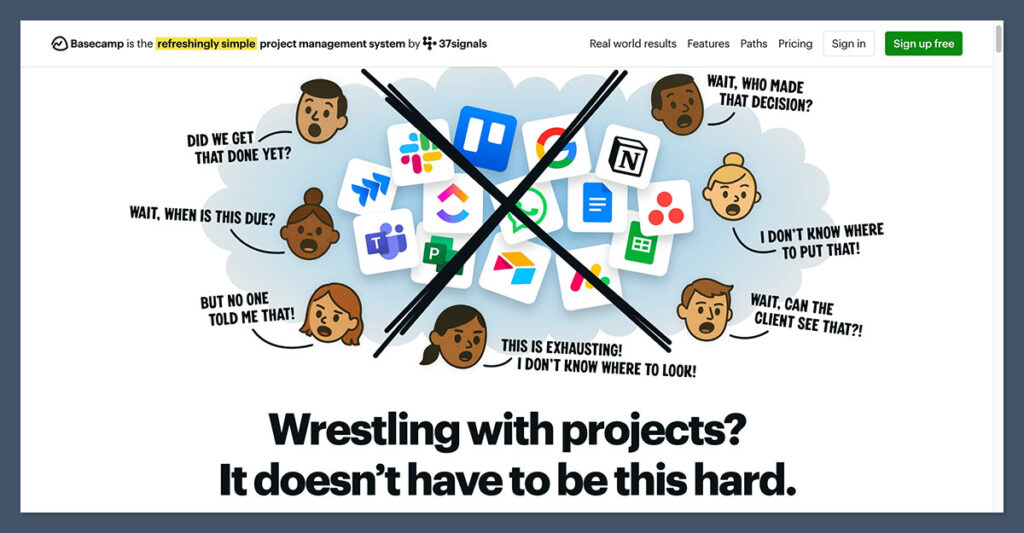
Basecamp, conversely, is an opinionated project management and team communication tool. It is built to solve the "noise" of modern work. It replaces the fragmented chaos of email threads, disjointed chat apps, and lost file attachments with a centralized, "calm" workspace. It does not touch inventory or payments; it manages the human effort required to keep the store running.
Chronology of Adoption: When to Deploy Each Tool
In the lifecycle of a growing business, the adoption of these two tools follows a distinct, predictable timeline.
Phase 1: The Solo Founder (Months 1–6)
In the early days, you are the marketing department, the fulfillment center, and the customer service agent. You start with Shopify because your primary objective is to make your first sale. At this stage, communication tools are secondary; you are effectively communicating with yourself.

Phase 2: The Scaling Team (Months 6–18)
As revenue increases, you hire your first virtual assistant, a marketing contractor, or a fulfillment partner. Suddenly, the "inbox zero" approach fails. Tasks slip through the cracks, and critical project briefs are buried in long email chains. This is the moment when Basecamp becomes a business necessity. You need a single source of truth for your team to coordinate launches, document standard operating procedures (SOPs), and communicate without the anxiety of instant-messaging platforms.
Phase 3: The Mature Enterprise (Year 2 and beyond)
Once your business is operational, the integration between the two becomes the bottleneck. You begin using middleware—like Zapier or Make—to pipe data from Shopify (e.g., a high-value order or a customer complaint) directly into Basecamp tasks. This creates a seamless flow where the "Commerce Engine" informs the "Operational Layer."
Supporting Data: Pricing and Value at Scale
One of the most common friction points in software procurement is pricing. Shopify and Basecamp utilize fundamentally different financial models that reflect their different market roles.
The Shopify Model: Value via Variable Costs
Shopify utilizes a tiered subscription model (Basic, Shopify, Advanced) coupled with variable payment processing fees. As your store grows, your costs scale proportionally with your success. While the promotional entry price of $1/month for the first three months provides a low barrier to entry, the true cost of ownership includes transaction fees and the likely investment in third-party apps from the 8,000-strong Shopify App Store.
The Basecamp Model: Predictability via Flat Fees
Basecamp disrupts the industry standard of "per-seat" pricing. By offering a flat monthly fee for unlimited users, Basecamp becomes exponentially more economical as your team grows. For a 30-person agency or a growing ecommerce brand with a large fulfillment team, this model provides budget certainty that SaaS tools like Asana or Monday.com simply cannot match.
| Comparative Snapshot: | Dimension | Shopify | Basecamp |
|---|---|---|---|
| Pricing Strategy | Scaled (Tiered + Fees) | Flat (Fixed for team) | |
| Primary Metric | Revenue/Sales volume | Team size (efficiency) | |
| Free Access | $1 for 3 months | 30-day trial (no credit card) |
Operational Implications: Why "Versus" is a Misnomer
The "versus" narrative suggests that you should replace one with the other. This is fundamentally impossible for a business that intends to sell products.
If you try to use Shopify as a PM tool:
You will struggle with a lack of internal communication. Shopify has staff permissions, but it lacks the message boards, collaborative document storage, and centralized task lists necessary to manage a team. You will find yourself reverting to email or Slack, leading to the very "tool sprawl" you were trying to avoid.

If you try to use Basecamp as an Ecommerce tool:
You will fail to take payments. Basecamp does not have a checkout, a product database, or tax calculation engines. It is an empty container—excellent for brainstorming a product launch, but incapable of processing the transaction.
Expert Insights and Future-Proofing
Industry analysts often point to the concept of the "Composability Stack." In 2026, the most successful brands are those that do not rely on an "all-in-one" suite that does everything poorly. Instead, they choose "Best-in-Class" components.
- For the Storefront: Shopify remains the gold standard for its deep API integrations and the sheer depth of its third-party ecosystem. Whether you are using the native themes or a "headless" build, Shopify provides the stability needed for uptime and security.
- For the Back-office: Basecamp serves as the "calm" antithesis to the high-pressure world of ecommerce. By forcing communication into "Message Boards" and "To-Dos" rather than "Campfire" (chat), it encourages deep work rather than constant notification-driven anxiety.
The Power of Integration
The true power of this stack is realized through automation. Consider the following workflow:
- Shopify identifies an inventory shortage for a high-selling SKU.
- Zapier triggers an alert to Basecamp.
- Basecamp automatically generates a "To-Do" for the Procurement Lead with the product link, current stock level, and supplier contact details attached.
- The team collaborates on the restock within the Basecamp project card.
This is the future of ecommerce operations: the store manages the data, and the management tool manages the people.
Final Verdict: Building Your 2026 Stack
If you are currently at the stage where you are evaluating these tools, your decision-making should be driven by your current bottleneck:
- If you cannot sell your products: Your bottleneck is the store. Choose Shopify. Focus entirely on your conversion rate, your catalog, and your customer experience.
- If you are selling products, but your team is drowning in tasks: Your bottleneck is execution. Choose Basecamp. Implement it to bring order to the chaos of your internal communication.
Ultimately, the most successful ecommerce businesses eventually require both. Shopify provides the revenue-generating infrastructure, while Basecamp provides the sanity-saving management structure. By integrating the two, you stop trying to force a single platform to be everything, and instead, you build a resilient, scalable engine for long-term growth.
Frequently Asked Questions (FAQ)
Q: Can I use Basecamp as my storefront?
A: No. Basecamp is strictly an internal tool for project management and communication. It contains no ecommerce-specific features such as shopping carts, payment gateways, or shipping integrations.
Q: Does Shopify have any project management features?
A: While Shopify allows for staff accounts and provides basic activity logs to track administrative changes, it is not a project management tool. It lacks task delegation, scheduling, and structured team communication features.
Q: How do I justify the cost of both tools to my stakeholders?
A: Frame it as a separation of concerns. Shopify is a "Cost of Goods Sold" and "Revenue Engine" expense, while Basecamp is an "Operational Overhead" expense. They serve different financial roles in your P&L.
Q: Is Basecamp better than Slack for ecommerce teams?
A: For fast-paced communication, Slack is faster. However, for ecommerce teams, Basecamp is often superior because it is asynchronous. It keeps project-related discussions tied to the specific task rather than lost in a scrolling chat window, which is vital for complex product launches or seasonal campaign management.
Q: Are there alternatives to this stack?
A: Certainly. You could use BigCommerce or WooCommerce for the storefront, and Asana or Notion for the management layer. However, the Shopify/Basecamp combination is widely regarded as the most "out-of-the-box" reliable stack for modern, growing businesses that want to focus on work rather than software maintenance.
