
Navigating Corporate Evolution: The Strategic Art of the Company Change Announcement
In the lifecycle of any successful business, change is not merely inevitable—it is often a sign of progress. Whether an organization is undergoing a comprehensive rebrand, merging with a partner, pivoting its market strategy, or simply updating its operational contact details, the way this transition is communicated can define its future success. A well-executed announcement is more than a administrative formality; it is a critical bridge that preserves customer trust, protects brand equity, and sustains long-term loyalty.
When the name on the door changes, customers naturally experience a moment of uncertainty. A strategic communication plan turns this moment of potential friction into an opportunity to re-engage your audience and reinforce the value proposition that makes your brand unique.
The Anatomy of a Successful Transition
At its core, a company change announcement serves to notify stakeholders of significant shifts in the business identity. These communications typically address changes in company name, visual identity, structural mergers, or updates to physical and digital contact points.

The primary objective is twofold: to mitigate customer confusion and to maintain continuity. When handled with transparency, these announcements do more than keep customers informed—they demonstrate that the company’s core mission and service standards remain steadfast, even as its outward appearance evolves.
The Business Case for Proactive Communication
A failure to manage these transitions effectively can lead to severe consequences. Most notably, companies that execute sudden, "surprising" changes often face a surge in unsubscribe rates and spam complaints. In an era of heightened cybersecurity awareness, an unexpected email from an unrecognized sender can easily be mistaken for phishing, resulting in the long-term degradation of a brand’s email deliverability and sender reputation.
By providing clear context and ensuring the announcement originates from a trusted, legacy email address, businesses can bridge the gap between their old identity and their new one, ensuring that the transition is perceived as a natural evolution rather than a suspicious development.

Chronology: A Roadmap for Effective Messaging
Success in corporate communication is rarely the result of a single email. It requires a sustained, multi-touch strategy that guides the customer through the transition.
Phase 1: Pre-Announcement (4–6 Weeks Out)
This is the planning phase. During this time, internal stakeholders should finalize the "why" behind the change. It is critical to prepare all assets—new logos, updated website copy, and FAQ documents—before any public communication goes out.
Phase 2: The Soft Launch (2–4 Weeks Before Change)
The initial announcement should be sent from your established, recognized sender address. The subject line must be unambiguous. Avoid clever or vague phrasing; instead, use direct headers like "Important: [Old Name] is evolving into [New Name]." This provides busy subscribers the context they need without requiring them to parse through marketing fluff.

Phase 3: The Transition Window (1 Week Before to Day-Of)
As the date of the change approaches, send targeted reminders to subscribers who did not open the initial announcement. On the day of the transition, a "Go-Live" confirmation email should be dispatched, clearly stating that the change is now effective.
Phase 4: Post-Change Follow-up (1–4 Weeks After)
The transition is not complete the day it happens. For several weeks afterward, maintain a "formerly known as" tag in your email footers and marketing materials. This serves as a continuous anchor for customers who may have missed the earlier communications.
Supporting Data: Why Strategy Matters
Industry benchmarks suggest that clear, context-heavy announcements see significantly higher engagement than abrupt transitions. Data indicates that companies that utilize segmented email lists—specifically targeting non-openers of the first announcement with a secondary, clearer subject line—experience a 20–30% increase in total awareness regarding the change.
Furthermore, companies that proactively address potential customer concerns, such as "Do I need to update my billing information?" or "Is the team changing?", report lower volumes of support tickets during transition periods. By preemptively answering these questions in the announcement body or a linked FAQ, businesses save internal resources and maintain a positive customer experience.
Official Responses: Learning from Industry Leaders
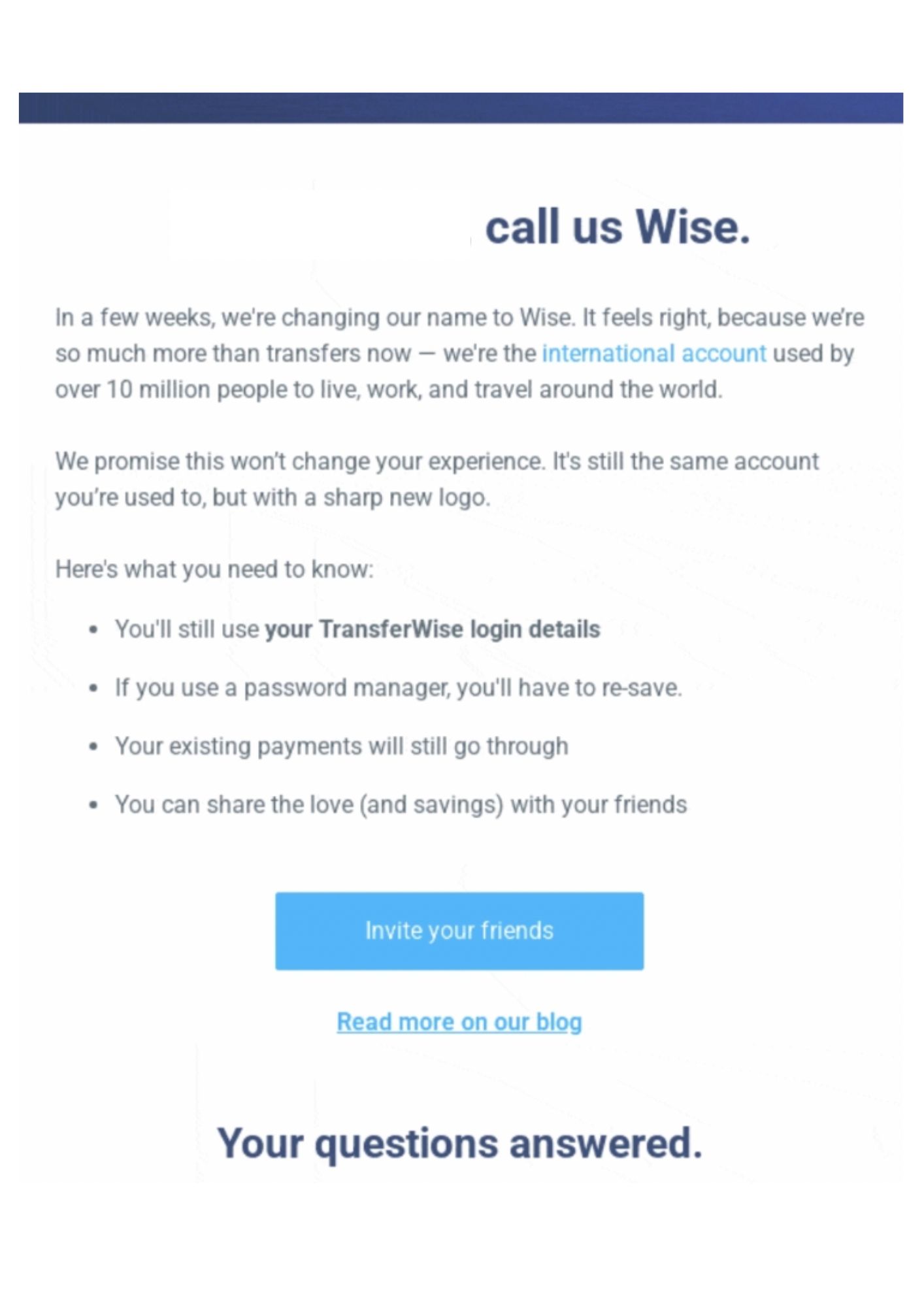
History provides clear examples of how to manage change. When TransferWise transitioned to Wise, they focused on simplifying their identity. Their communication was brief, highlighting that while the name was shorter, the underlying service was more efficient. They avoided a "wall of text," opting for clean, visual-heavy emails that made the change feel like an upgrade rather than a disruption.
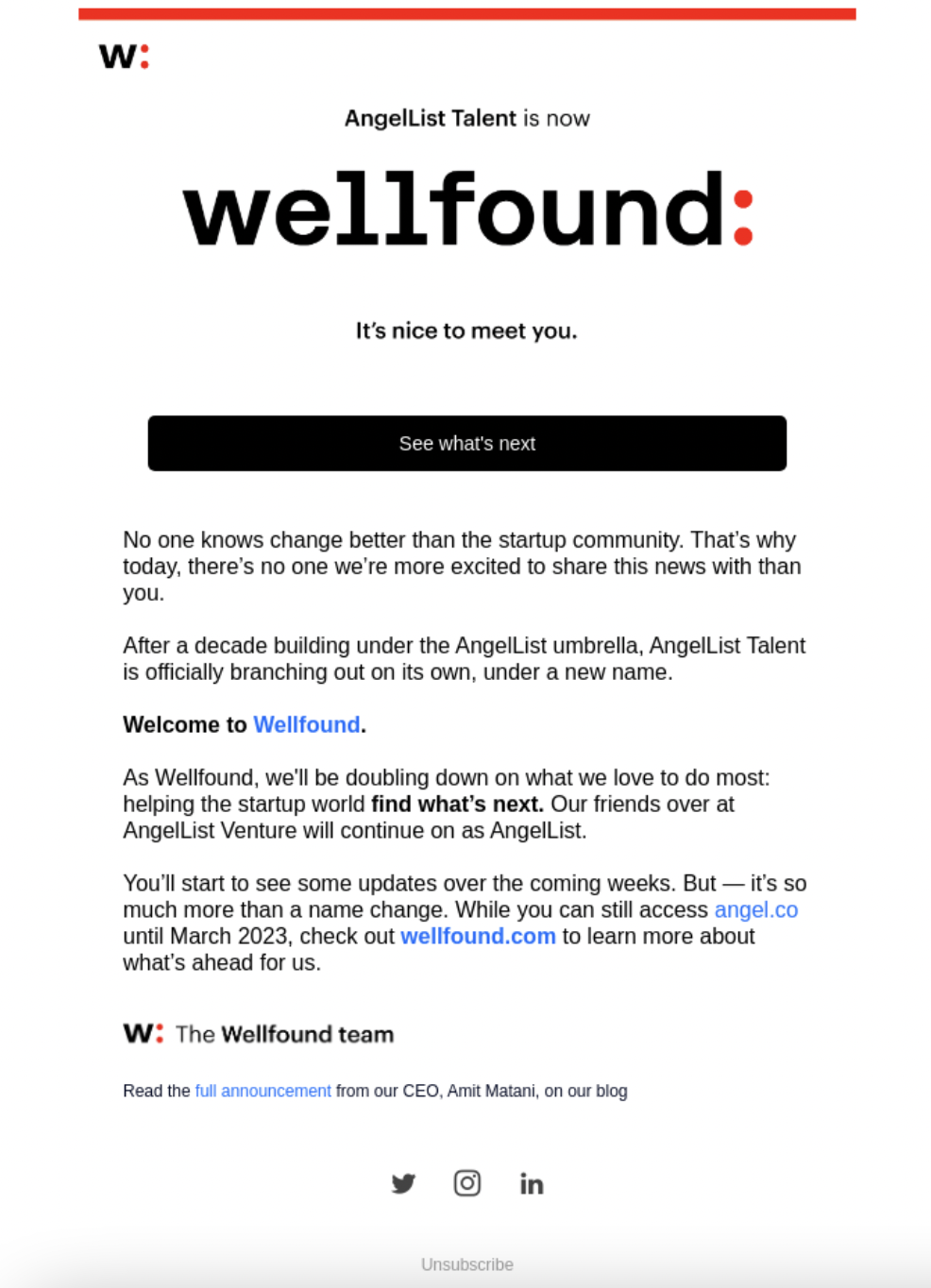
Similarly, Wellfound (formerly AngelList Talent) used their announcement to double down on their mission statement. By explicitly stating that their commitment to helping startups remained the primary focus, they reassured their user base that the change in name did not signify a change in values.

In the corporate sector, Lucent Health managed a major rebrand by positioning it as "The New Lucent." By tying the name change to the acquisition of several companies, they framed the transition as an expansion of capability, effectively turning a potential confusion point into a demonstration of growth and increased market power.
Implications: The Risks of Mismanagement
The risks of a poorly executed announcement are measurable and significant:
- Spam Filter Triggering: A sudden change in sender domain without prior warning to the subscriber base is a classic trigger for spam filters. Once your sender reputation is flagged, recovering your inbox placement can take months of technical remediation.
- Customer Churn: If customers feel that a company is being secretive or that their account security is at risk, they will leave. Transparency is the antidote to churn.
- Support Overload: A vague announcement is a catalyst for repetitive questions. If your support team is flooded with inquiries about whether payments are still safe, your operational efficiency will suffer.
Implementing a Multi-Channel Strategy
To ensure that no customer is left behind, organizations must leverage more than just email.
The Integrated Approach
- Email: Use this as your cornerstone. It is the most direct line to your established base.
- SMS Marketing: For high-value customers or time-sensitive changes, a concise SMS can provide a sense of urgency and importance. Keep it brief: "Company X is now Company Y. Same team, new look. Learn more at [link]."
- Social Media: Use your channels to create a "visual narrative" of the change. Share short videos or posts that explain the journey, keeping the conversation public and transparent.
- In-App/In-Product Notifications: For software and SaaS companies, an in-app banner is the most effective way to reach active users. Ensure this is non-intrusive but visible.
- Website: Update your landing pages and place a "Formerly Known As" notice in the footer for at least 90 days.
Measuring Success
How do you know if your announcement was successful? The metrics are simple but essential:
- Email Deliverability Rates: Monitor your bounce and complaint rates closely. A successful transition sees no abnormal spikes in either.
- Open and Click-Through Rates: High engagement with your announcement indicates that your audience was prepared for the news and trusts the sender.
- Support Ticket Volume: A decrease or stabilization in questions regarding "is this email legitimate" is a strong indicator of a well-handled communication.
- Customer Retention: Ultimately, the best metric is the absence of a drop in long-term retention. If your customers stick with you through the transition, you have succeeded.
The Bottom Line: Turn Change into Opportunity
A company change announcement is rarely just about a new logo or a new email domain. It is an exercise in relationship management. When a company is honest, clear, and proactive, it signals to the market that it is a mature, organized, and customer-focused entity.
By avoiding the "surprise switch," utilizing a multi-channel communication strategy, and maintaining transparency about what is changing—and, perhaps more importantly, what is not—companies can turn the friction of change into a powerful moment of brand reinforcement. As you move into your next chapter, remember that your customers are partners in your journey. Treat them as such, and they will stay with you through every evolution.
