
From Theory to Culture: How Industry Giants Gamify Innovation to Drive Growth
In the modern corporate landscape, the difference between a stagnant organization and a market leader often boils down to a single, elusive variable: the ability to foster innovation from the bottom up. While the mechanics of a growth operation—identifying hypotheses, running rapid experiments, and iterating based on data—are well-documented, the actual implementation remains a formidable challenge.
For many firms, the transition from merely "doing" growth to having it ingrained in their DNA is a chasm that few successfully cross. It requires moving beyond top-down mandates to create an environment where the frontline staff feels empowered to innovate. To bridge this gap, some of the world’s most successful companies have turned to an unlikely strategy: gamification. By turning the pursuit of growth into a rewarded, celebrated, and structured endeavor, these organizations are transforming their internal cultures into engines of relentless progress.
The Anatomy of a Successful Growth Operation
At its core, a successful growth operation decentralizes decision-making. When implemented correctly, every employee—from the base of the pyramid to the C-suite—becomes a potential source of innovation. The frontline staff, who interact daily with customers and products, are the primary generators of hypotheses. The specialized growth teams act as the operational engine, testing these ideas through rigorous scientific methodology. Finally, leadership serves as the final arbiter, no longer relying on intuition, but on the rich, data-backed insights generated by the experiments below them.
However, the initiation of this process is almost invariably top-down. Executives must first be educated on the methodology, middle management must build strategic frameworks to house these tests, and the growth teams must execute. The "chasm" occurs when the initial excitement fades. To keep the momentum, companies are finding that they must gamify the process, incentivizing risk-taking and turning innovation into a pursuit that every employee views as personal, rewarding, and essential.
Chronology of Institutionalized Innovation: A Historical Perspective
The movement toward incentivized innovation did not happen overnight. It evolved as organizations realized that bureaucracy was the natural enemy of growth.

1998: The Genesis of Amazon’s "Just Do It" Award
The story begins in a customer service department facing a backlog of 250 tickets. An associate proposed a simple, high-stakes challenge: clear the queue in 24 hours for a $200 bonus. The team succeeded, and Jeff Bezos realized that the success was not just about the money, but about the bias for action. This led to the creation of the "Just Do It" award, now one of the most prestigious honors at Amazon. Awarded only twice a year across a workforce of over 600,000, it specifically targets innovation that is both daring and immediately impactful.
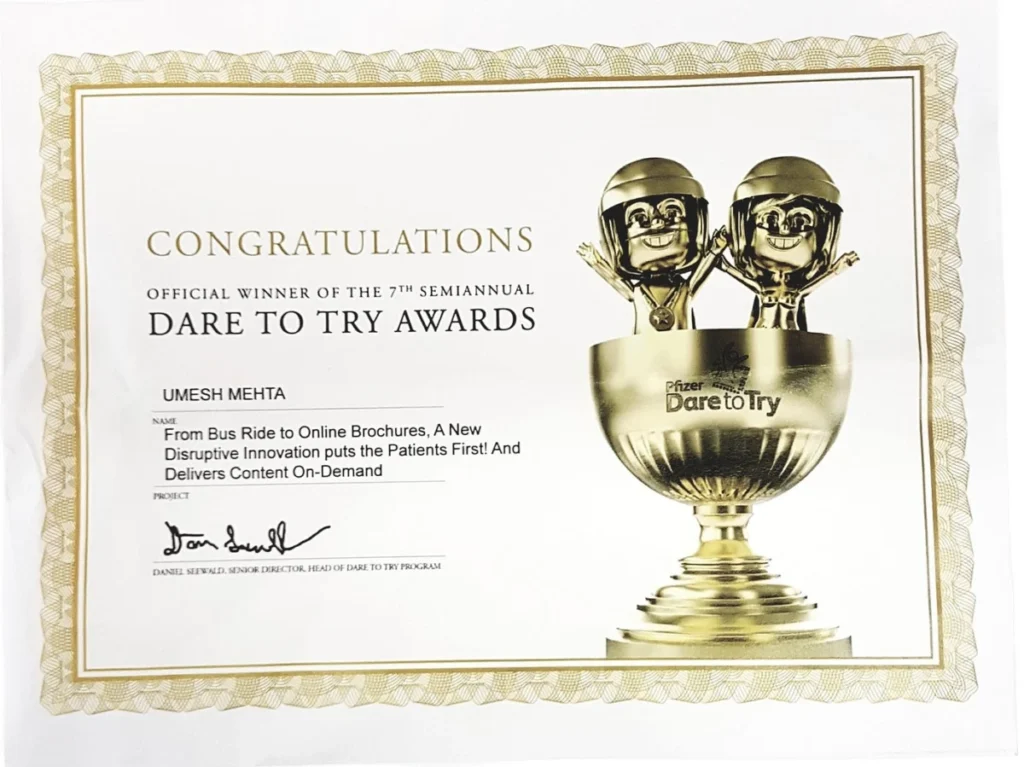
2013: Pfizer’s "Dare to Try"
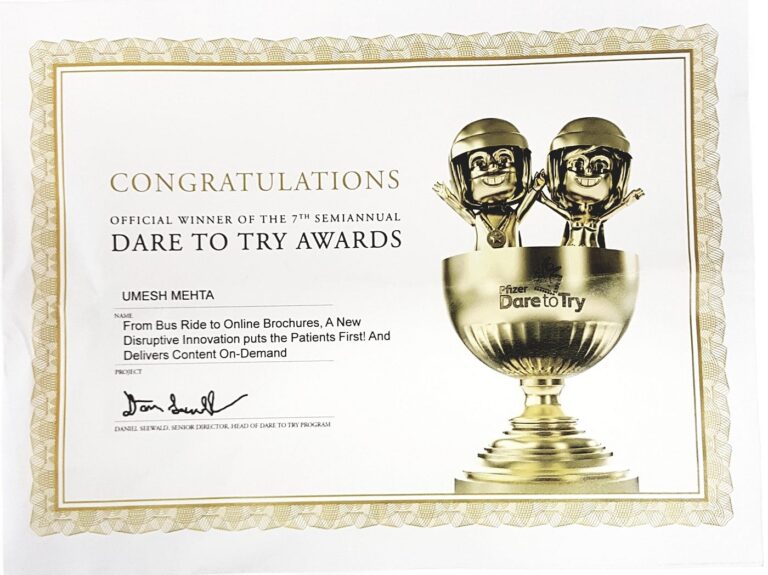
A decade ago, Pfizer faced the unique challenge of fostering a startup-like mentality within a highly regulated, risk-averse pharmaceutical giant. They launched "Dare to Try," a program designed to make failure "inexpensive." By creating a network of internal "champions," the company shifted the narrative from "risk avoidance" to "learning-based experimentation."
The 3M Legacy: The "Innovate or Die" Mandate
3M has long held the gold standard for innovation metrics. By mandating that 30% of a division’s revenue must come from products introduced in the last four years, they created a high-pressure, high-reward environment that forces continuous reinvention.
Supporting Data: The Power of Structured Experimentation
The data suggests that these gamified programs are not just morale boosters—they are profit centers.
- 3M’s Revenue Requirement: By enforcing the "30% revenue from new products" rule, 3M ensures that their portfolio never goes stale. This metric forces teams to innovate or face the natural decline of commoditized products.
- Google’s 20% Project: Perhaps the most famous example of incentivized innovation, the "20% Project" (a step up from 3M’s 15% rule) allowed employees to dedicate one-fifth of their work week to passion projects. The ROI on this was massive, leading to the creation of Gmail, Google News, and AdSense.
- Pfizer’s "Champion" Network: Through their "Dare to Try" program, Pfizer has successfully scaled the methodology of rapid testing, significantly reducing the "time to market" for various internal administrative and operational improvements.
Official Perspectives: The Philosophy of Failure
Leaders at these firms have consistently defended the necessity of these programs, arguing that the cost of inaction far outweighs the cost of a failed experiment.
At Amazon, the "Just Do It" award is a direct reflection of Jeff Bezos’s belief that bureaucracy is the "Day 2" state that leads to irrelevance. "If you don’t encourage the occasional, well-intentioned failure," executives have noted, "you are essentially banning innovation."
Pfizer’s leadership views "Dare to Try" not as a project, but as a cultural "brand." Their official stance is that by providing the tools and the permission to fail—provided the failure is learned from and cheap—the company can solve complex puzzles that traditional, slow-moving hierarchies would ignore. 3M, similarly, has structured its reward systems specifically to decouple "honest failure" from "punishment," ensuring that employees feel safe to push boundaries.
Implications for Modern Enterprises
What do these examples mean for the mid-sized business or the startup looking to scale? The implications are three-fold:
1. Culture is the Primary Engine
The methodology of growth (A/B testing, data analysis) is easily replicated. The culture that supports it is not. Companies that succeed treat innovation as a behavior, not a task. When employees see their peers being recognized and rewarded for "daring to try," the psychological barrier to suggesting new ideas drops.
2. Failure Must Be "Inexpensive"
The common thread among 3M, Amazon, and Pfizer is the de-risking of failure. If an experiment is a catastrophe, it should not jeopardize the employee’s career. By gamifying the process of experimentation rather than just the outcome, these firms ensure that the organization learns from every data point, regardless of whether the hypothesis was proven true or false.

3. Incentives Must Align with Strategy
Incentives cannot be abstract. They must be tied to the company’s core goals. Whether it is 3M’s 30% revenue rule or Amazon’s biannual award, the incentives provide a clear North Star. They communicate to every employee: This is what we value, and this is how you win.
Conclusion: The Roadmap Ahead
Implementing a growth operation is not merely an exercise in hiring data scientists and setting up analytics dashboards. It is a fundamental shift in corporate governance. As we have seen through the evolution of Amazon, Pfizer, 3M, and Google, the most resilient companies are those that transform the "scary" act of innovation into a gamified, daily habit.
For those looking to replicate this success, the path is clear:
- Define the rules of engagement: What constitutes a "good" experiment?
- Remove the stigma of failure: Create safe harbors for rapid testing.
- Celebrate the process: Recognize those who push boundaries, even when the outcome is not what was expected.
By fostering a culture where every employee feels like a stakeholder in the company’s growth, organizations move from a state of reactive survival to proactive market dominance. The gap between those who "do" growth and those who "are" growth is wide, but it is entirely bridgeable for those willing to commit to the long-term work of cultural transformation.
