
Fourthwall vs. Gelato: A Definitive Print-on-Demand and E-Commerce Platform Analysis
Main Facts: The Evolving Landscape of On-Demand Retail
The print-on-demand (POD) sector has transformed over the past decade, shifting from a niche cottage industry into a multi-billion-dollar global pillar of e-commerce. Content creators, independent designers, and entrepreneurial brands now demand sophisticated solutions that seamlessly bridge the gap between digital creativity and physical fulfillment.
At the center of this current market evolution stand two distinct heavyweights: Gelato and Fourthwall. While both platforms operate within the broader print-on-demand ecosystem, their foundational architectures, target audiences, and operational methodologies differ significantly.
- Gelato functions primarily as a global production and fulfillment infrastructure. It does not provide an independent e-commerce storefront; instead, it integrates directly into pre-existing retail channels such as Shopify, Etsy, Wix, Squarespace, and TikTok Shop. Its primary value proposition lies in a localized, sustainable production model spanning dozens of international hubs.
- Fourthwall operates as an all-in-one brand-building and e-commerce platform with native print-on-demand capabilities. It equips users with a fully customizable standalone website, a dedicated domain, integrated tools for selling digital downloads and memberships, and a Merchant of Record (MoR) framework that assumes heavy administrative burdens like sales tax compliance and catalog-item customer service.
Understanding the dichotomy between Gelato’s supply-chain dominance and Fourthwall’s brand-incubator model is essential for any merchant mapping out a sustainable e-commerce strategy.
Chronology: How Both Platforms Developed Their Market Positions
The divergent paths taken by Gelato and Fourthwall reflect the changing demands of internet commerce, moving from localized fulfillment networks to holistic creator economies.
The Rise of Gelato’s Production Network
Gelato entered the market with a heavy emphasis on logistics, software engineering, and environmental sustainability. Recognizing that traditional print-on-demand models relied on shipping heavy items across oceans—thus incurring high carbon footprints and extended delivery windows—Gelato engineered a decentralized network.
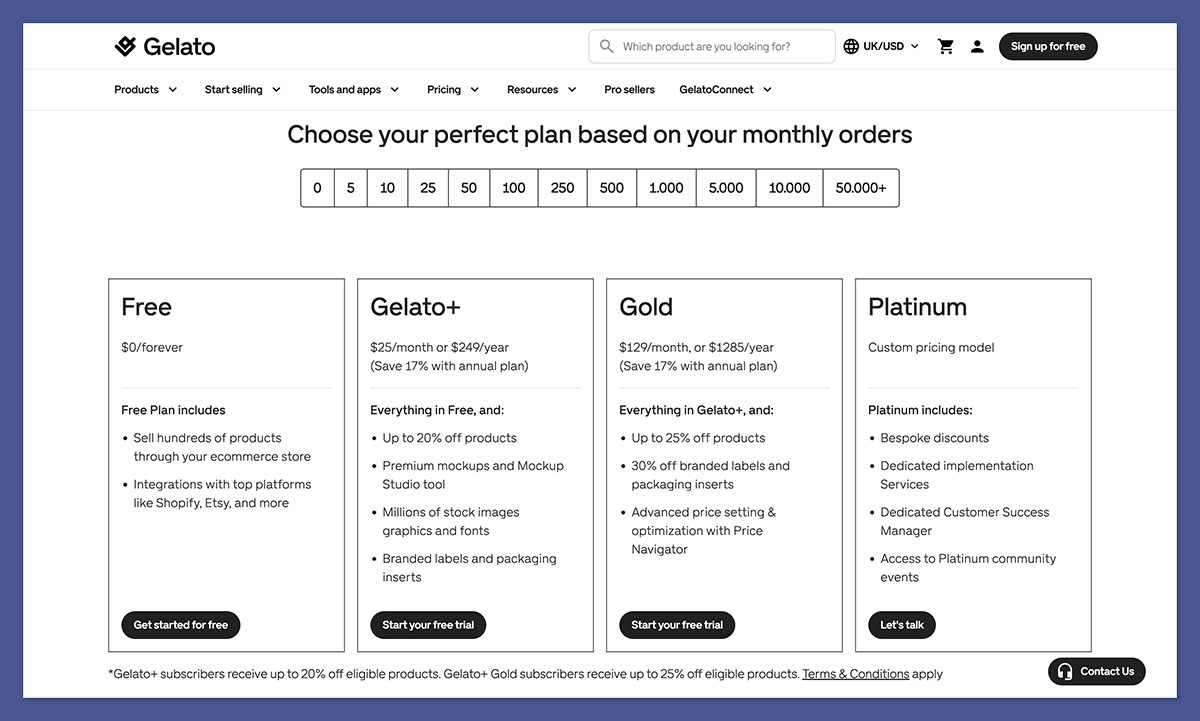
By partnering with local print houses across the globe, Gelato established a model where products are manufactured as close to the end consumer as possible. Over successive years, the platform expanded its digital tooling, introducing advanced mock-up generators, the Personalization Studio for custom-text/image end-user modifications, and tiered subscription models (such as Gelato+) designed to unlock deeper wholesale discounts and automation features.
Fourthwall’s Pivot Toward the Creator Economy
Fourthwall developed against the backdrop of the modern creator economy, where influencers, podcasters, and digital artists needed more than just a t-shirt printer—they needed a comprehensive digital storefront. Initially conceptualized to streamline merchandise operations for digital talent, Fourthwall quickly expanded its feature set to include custom domain management, subscription tiers, donation processing, and digital product hosting.
Rather than forcing creators to cobble together separate subscriptions for Shopify, email marketing, and third-party POD apps, Fourthwall unified the experience. Recent years have seen the integration of advanced tools, including AI assistants (Eli AI), dedicated designer marketplaces, and deep integrations with social commerce tools like YouTube Shopping and TikTok Shop.
Supporting Data: Pricing, Products, and Logistics
A rigorous evaluation of both platforms requires examining the quantitative metrics that directly impact a merchant’s profit margins, operational overhead, and customer satisfaction rates.
Pricing Structures and Cost Efficiency
Both platforms offer free-to-use entry tiers, making them accessible to boot-strapped entrepreneurs, though the underlying cost structures diverge significantly in practice.
| Evaluation Metric | Fourthwall | Gelato |
|---|---|---|
| Core Classification | Brand-building platform with native POD | Global fulfillment and production partner |
| Base Plan Cost | Free ($0/month) | Free ($0/month) |
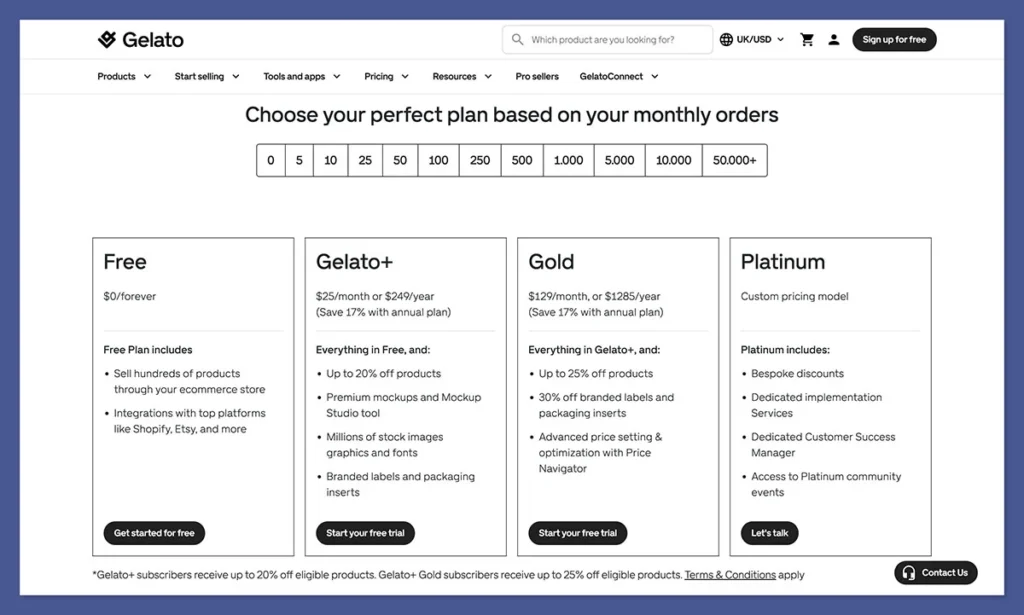
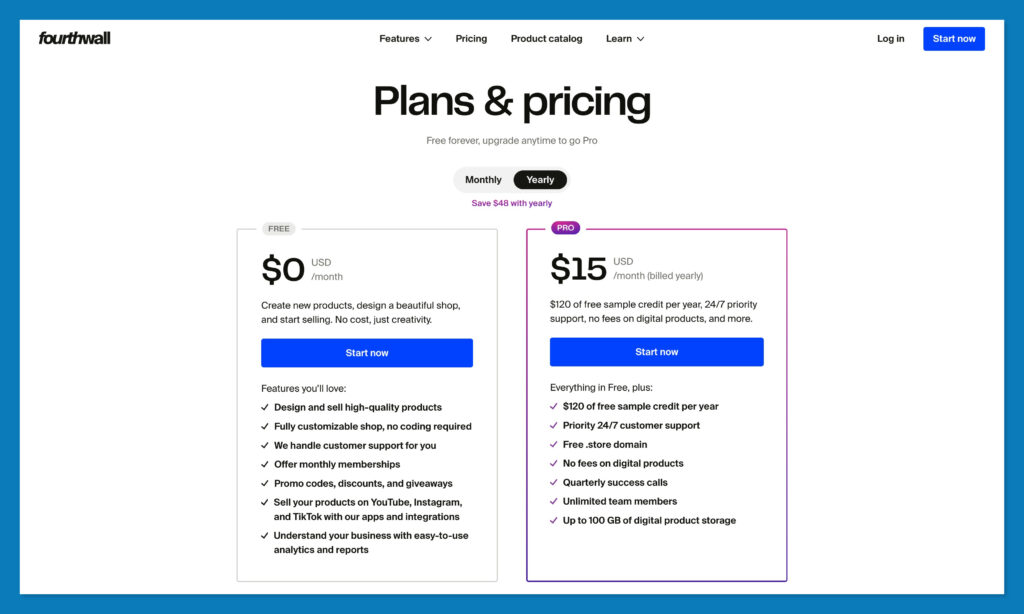
| Paid Plan Options | Pro Plan ($19/month) | Gelato+ Plan ($29.99/month) |
| Storefront Included? | Yes (Custom website, domain, checkout) | No (Requires external store like Shopify/Etsy) |
| Transaction/Platform Fees | 5% fee on digital downloads/memberships on the free plan | None (Platform fees depend on your external store) |
| Merchant of Record Status | Yes (Handles sales tax and compliance for transactions) | No (Merchant is responsible for tax/legal setup) |
While Gelato’s base plan is free, merchants must factor in the recurring costs of running an external e-commerce platform (such as Shopify’s monthly subscription) and separate marketing applications. Fourthwall often proves more economical for absolute beginners because the free tier includes the storefront itself, though digital downloads carry a 5% platform fee unless upgraded to the Pro tier.
Product Range and Quality Benchmarks
Both suppliers deliver retail-grade quality, though their catalogs cater to different aesthetic and practical priorities:
- Gelato: Offers an extensive catalog covering standard apparel, drinkware, and accessories, alongside exceptional paper products and wall art that regularly outperform industry standards. Its base manufacturing costs are highly competitive when benchmarked against legacy giants like Printful and Printify.
- Fourthwall: While its physical POD catalog is more curated, the raw quality is uniformly premium. Fourthwall stands out by offering specialized printing placements (such as sleeve prints) and seamlessly blending POD items with custom-sourced inventory that merchants can ship directly to Fourthwall’s warehouses for centralized fulfillment.
International Shipping and Sustainability Metrics
Logistics and environmental impact represent major differentiators between the two services:
- Gelato’s Eco-Focus: Gelato produces roughly 90% of its orders locally through a network spanning over 140 production hubs worldwide. This localized strategy allows the company to minimize transit times (with ~90% of orders arriving within five days) while drastically reducing carbon emissions via non-toxic inks and eco-conscious product lines.
- Fourthwall’s Global Reach: Fourthwall provides reliable worldwide shipping through robust fulfillment partners across the US, UK, EU, Canada, Mexico, Japan, and Australia, with average delivery windows hovering between 5 to 8 days. While Fourthwall offers sustainable product choices, environmental advocacy is not positioned as its primary brand pillar to the degree seen with Gelato.
Official Responses and Strategic Vision
Leadership teams across both organizations emphasize adaptability as the key to modern e-commerce success, though their strategic messaging highlights different priorities.
Gelato representatives consistently spotlight the company’s technological infrastructure and commitment to empowering local small-business ecosystems. By decentralizing production, Gelato aims to insulate merchants from global supply chain shocks while advancing corporate sustainability goals. Executives frequently point to features like the Personalization Studio and AI-driven mock-up tools as critical drivers for empowering independent artists to command higher retail margins without holding inventory.
Conversely, Fourthwall’s executive commentary focuses heavily on frictionless entrepreneurship and the convergence of digital and physical monetization. Leadership emphasizes that modern creators should not have to spend time wrangling tax compliance, customer support tickets for damaged goods, or disjointed software integrations. By positioning Fourthwall as a "Merchant of Record," the company explicitly takes on legal and financial administration, allowing creators to focus strictly on community building and design execution.

Implications: Which Platform Should You Choose?
The choice between Gelato and Fourthwall ultimately hinges on your existing infrastructure, technical proficiency, and long-term business model.
When to Choose Gelato
Gelato is the optimal solution if you have already established your storefront on an ecosystem like Shopify, WooCommerce, or Etsy, and you require a world-class production partner to handle execution.
- Ideal User: Established e-commerce merchants, multi-channel sellers, and eco-conscious brands.
- Key Advantage: Unmatched local production density, fast global transit times, exceptional wall art/paper goods, and deep flexibility to plug into your existing software stack.
When to Choose Fourthwall
Fourthwall is the superior choice if you are starting from scratch and want to launch a unified digital brand without the administrative friction of managing multiple software subscriptions.
- Ideal User: Content creators, influencers, independent communities, and entrepreneurs launching their first retail venture.
- Key Advantage: A fully integrated standalone storefront, Merchant of Record support (simplifying sales tax and compliance), bundled support for digital downloads and memberships, and built-in AI operational tools (Eli AI).
Summary Verdict
If your priority is fulfillment excellence and production scalability within an existing store, leverage Gelato. If your goal is to build an end-to-end brand encompassing physical merchandise, digital assets, and community memberships under one roof, deploy Fourthwall.
