
Decoding the Future: The Strategic Imperative of the ‘Martech for 2026’ Report
As the global marketing landscape prepares to close the book on 2025, the industry finds itself at a critical inflection point. For the past several years, the annual year-end collaboration between industry stalwarts Frans Riemersma and Scott Brinker has served as a lighthouse for marketing operations professionals navigating the fog of digital transformation. Moving beyond the speculative "prophecy season" that often dominates year-end discourse, their latest project, Martech for 2026, promises a pragmatic, data-driven autopsy of the current state of marketing technology.
Scheduled for release on December 2, this year’s installment is not merely a report; it is a strategic blueprint designed to help organizations transition from the experimental phase of AI adoption to operational maturity.
Main Facts: A Pragmatic Look at the Year Ahead
The Martech for 2026 report, a 100+ page document, represents a culmination of months of research, surveying, and industry analysis. Unlike traditional trend reports that rely on hyperbolic predictions, this study focuses on the "real-world patterns" currently emerging within marketing tech stacks.
"These aren’t the crazy fever-dream ‘predictions’ that you’re used to reading during this eye-rolling, end-of-year prophecy season," the authors note. Instead, the report aims to provide a tangible assessment of how existing martech infrastructures are evolving to accommodate new capabilities.
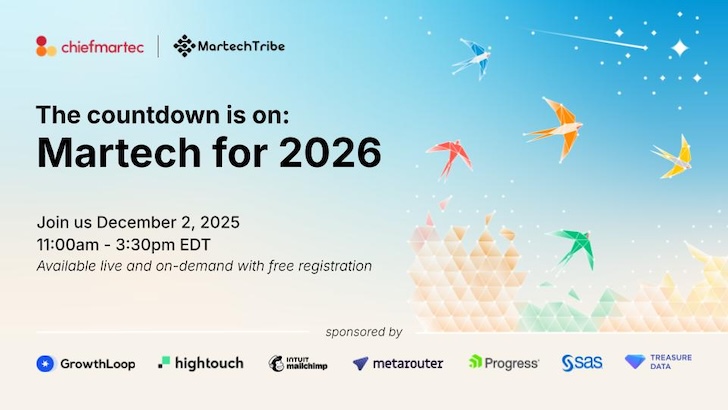
The centerpiece of the launch is a free, hour-long online seminar where Brinker and Riemersma will dissect the report’s most surprising findings. By registering, professionals gain access to both the live presentation and an on-demand archive that will be available throughout December, allowing teams to digest the findings before heading into the new year.
Chronology: Building Toward 2026
The trajectory of the martech industry has accelerated significantly over the last 24 months. To understand the gravity of the upcoming report, one must look at the timeline of the "AI Integration Era":
- 2023: The "Big Bang" of Generative AI. Organizations scrambled to integrate LLMs into content workflows, often without cohesive governance.
- 2024: The "Experimentation Phase." Companies moved from simple content generation to testing AI agents for lead scoring, data cleansing, and personalized customer journeys.
- 2025 (The Current State): A period of consolidation and "Context Engineering." Organizations began questioning whether their existing SaaS platforms were sufficient or if AI agents would fundamentally cannibalize legacy software.
- December 2, 2025 (The Launch): The release of Martech for 2026. This event marks the shift toward standardizing AI operations (AIOps) and preparing for a 2026 where AI is no longer an "add-on" but the underlying operating system of marketing.
Supporting Data: The AI Agent Paradigm
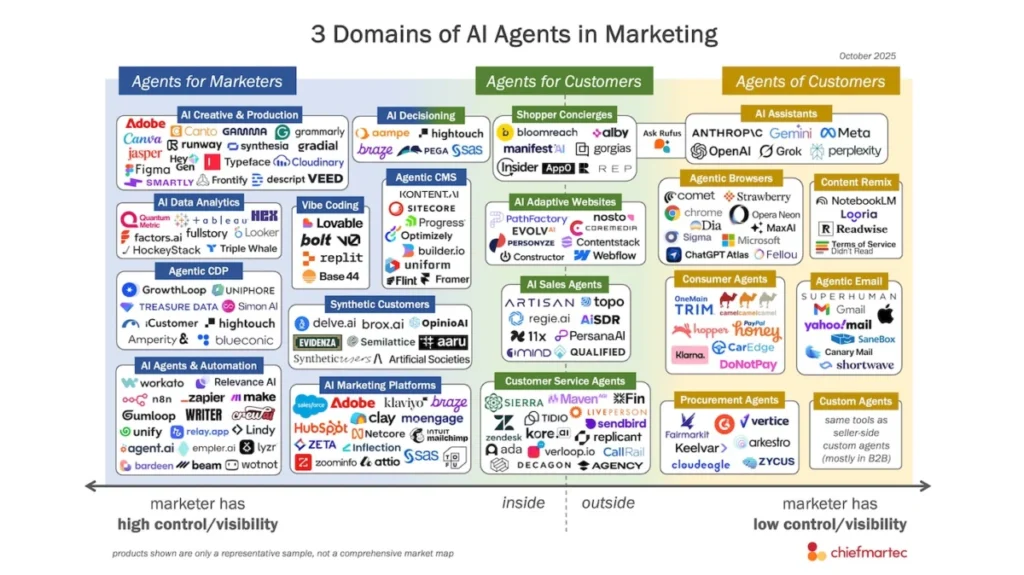
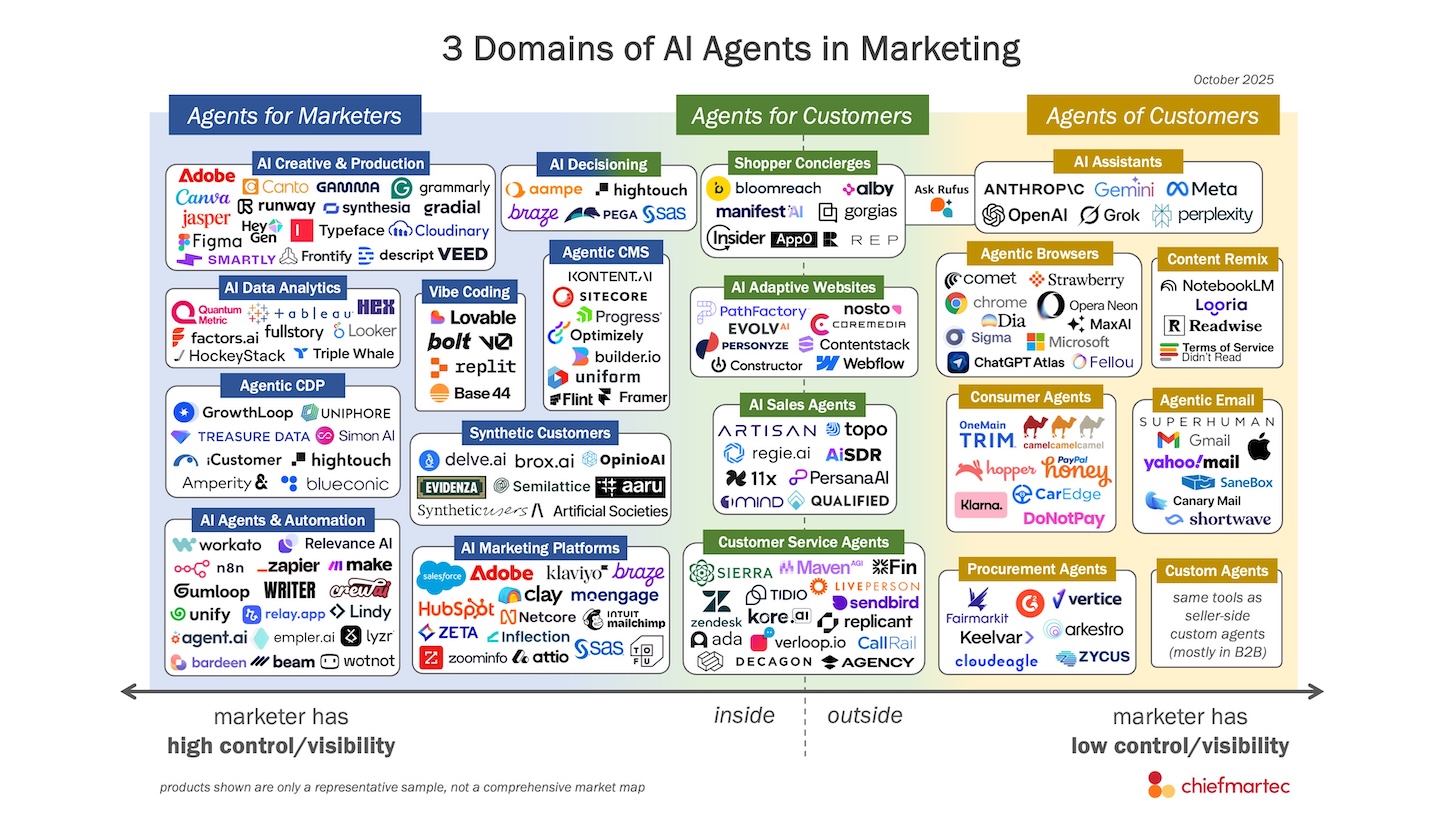
A primary focus of this year’s research is the classification of AI agents. The report identifies three distinct domains of AI agents currently orbiting the marketing sphere. By leveraging findings from the AI & Data in Marketing survey, the report provides empirical evidence regarding which agents are currently being deployed at scale and which remain in the "science fair" phase of development.
The Three Domains of AI Agents
- Workflow Automation Agents: Focused on high-frequency, low-latency tasks that optimize existing SaaS platform inputs.
- Strategic Analysis Agents: These entities process vast datasets—often connected to data warehouses—to provide predictive insights that inform high-level campaign planning.
- Customer-Facing Interaction Agents: Advanced agents capable of executing autonomous, multi-turn conversations or personalized experiences that previously required human intervention.
The report also introduces the concept of "context engineering"—the art of structuring data so that AI agents can deliver high-fidelity outputs. The authors argue that the success of a 2026 martech stack will be determined not by the sophistication of the AI model, but by the quality and relevance of the data fed into it.
Official Responses and Industry Perspectives
One of the most anticipated aspects of the Martech for 2026 event is the candid, non-sales-focused interview series that follows the main keynote. Rather than traditional vendor pitches, the organizers have curated a panel of senior product and marketing leaders from top-tier organizations, including:
- GrowthLoop
- Hightouch
- Intuit Mailchimp
- MetaRouter
- Progress
- SAS
- Treasure Data
These leaders will provide a "behind the curtain" look at how their respective organizations are observing AI integration within their customer bases. The emphasis is on "candid discussions"—a refreshing approach in an industry often plagued by marketing buzzwords and inflated performance claims.
Implications: The Future of the SaaS Stack
Perhaps the most pressing question addressed in the report is the changing relationship between AI agents and the existing SaaS landscape. Brinker and Riemersma propose a provocative framework:
- Augmentation: Are AI agents simply making existing tools (like CRMs or Email Platforms) faster and more efficient?
- Replacement: Are these agents effectively making specific legacy apps redundant by performing their functions more cheaply and effectively?
- New Use Cases: Are we seeing the emergence of entirely new categories of work that were previously impossible to execute at scale?
The implications of this analysis are profound. For Chief Marketing Officers (CMOs) and Marketing Operations (MOps) leads, the report suggests that 2026 will be the year of the "Tech Stack Audit." Organizations will be forced to determine which tools are truly essential and which are being rendered obsolete by the rise of agentic AI.
Navigating the "Holiday Window"
The choice to release the report in early December is strategic. By providing these insights before the holiday break, the authors enable professionals to return in January with a clear, informed roadmap. This prevents the "January scramble," where teams often rush to adopt trends without proper research.
Conclusion: Why You Should Engage
In an era where information overload is the standard, the Martech for 2026 report serves as a filter. By combining deep-dive research with a commitment to a "sense of humor," the report makes complex technological shifts digestible.
Whether you are a seasoned martech professional or a marketing leader looking to optimize your stack, this project offers a rare combination of:
- Actionable Data: Hard metrics on AI scaling and adoption.
- Expert Consensus: Insights from the companies actually building the infrastructure.
- Strategic Foresight: A 12-month outlook on where to invest time and budget.
To participate in this industry-wide initiative, interested parties are encouraged to register for the online event. Registration ensures you are at the front of the line to receive the full report upon release.
As the industry moves toward 2026, the question is no longer if AI will change your business, but how you will manage that change. Martech for 2026 provides the answers, ensuring you remain at the cutting edge of the most significant transition in modern marketing history.
For more information on the evolving world of marketing technology, join the 42,000+ professionals who subscribe to the latest insights from chiefmartec.
