
Bridging the Measurement Gap: AudienceProject and Pinterest Forge Strategic Integration for European Advertisers
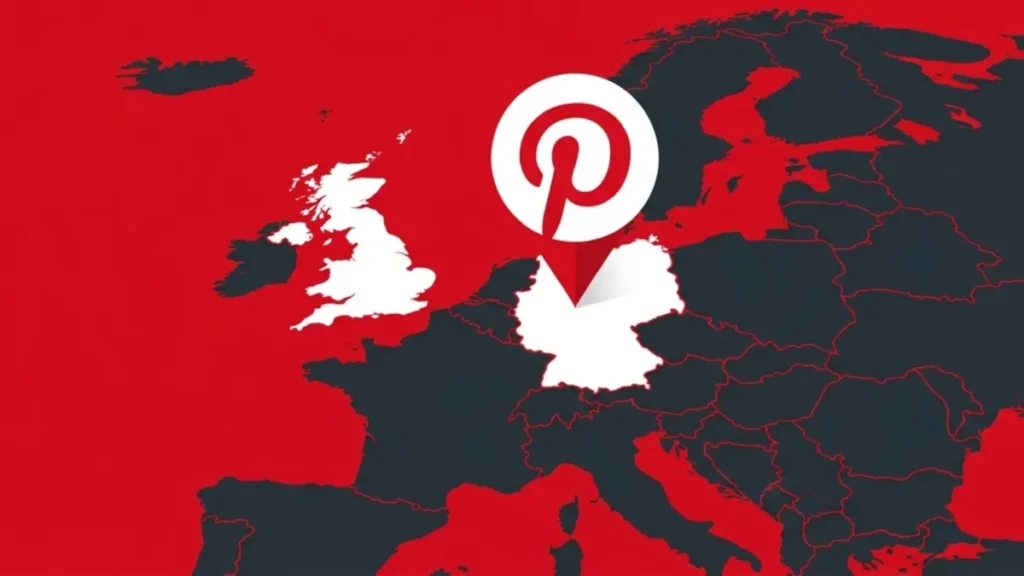
On June 18, 2026, Copenhagen-based AudienceProject, a leader in cross-media measurement solutions, officially announced a major expansion of its measurement ecosystem: a direct, API-level integration with the visual discovery platform, Pinterest. This development marks a significant milestone for digital advertising in the United Kingdom and Germany, as it allows brands to integrate Pinterest campaign data directly into AudienceProject’s flagship SaaS platform, AudienceReport.
By bridging the gap between Pinterest’s unique discovery-based environment and broader cross-media strategy, the move addresses one of the most persistent challenges in modern digital advertising: the ability to measure reach and audience overlap across fragmented platforms in a privacy-compliant, independent, and deduplicated manner.
The Core Functionality: Precision in a Fragmented Landscape
At its technical foundation, the integration enables advertisers to move beyond siloed performance reports. By importing Pinterest campaign data—covering mobile, tablet, and desktop inventory—into the AudienceReport dashboard, brands can now visualize how Pinterest contributes to their overall marketing footprint.
Deduplication and Incremental Reach
The most critical value proposition of this integration is the elimination of "double-counting." In a typical multi-channel campaign, a single user might be exposed to an advertisement on Pinterest, a video on a social platform, and a banner on the open web. Without sophisticated, independent measurement, an advertiser adding these individual platform reports together would arrive at an inflated, inaccurate reach figure.
AudienceProject’s methodology utilizes an AI-driven, privacy-first architecture to construct deduplicated audience figures. This ensures that the reach metrics provided reflect unique individuals rather than the sum of disconnected platform reports. Furthermore, the platform offers "incremental reach" metrics. This is the "holy grail" for media planners: it quantifies exactly how much new, unique audience Pinterest delivers that has not been reached by other channels in the mix. For an advertiser deciding where to shift budget, this distinction is transformative.
A Systematic Chronology of Expansion
The Pinterest integration is the latest in a series of strategic moves by AudienceProject to solidify its footprint in the European advertising market. The company has maintained a consistent pattern of expansion, targeting its most mature markets—the UK and Germany—as the testing ground for new capabilities before a wider continental rollout.
- October 1, 2025: AudienceProject launches a direct integration with Netflix, providing measurement for the streamer’s ad-supported tier across the UK, Germany, France, Italy, and Spain.
- January 21, 2026: The company expands its reach with a direct integration for Disney+, covering the same five major European markets.
- February 25, 2026: A partnership with The Trade Desk is formalized, enabling direct, independent measurement of programmatic campaigns across the European landscape.
- March 2, 2026: AudienceProject enters the Polish market, extending its cross-media framework to what it identifies as the largest advertising market in Europe outside of the "Big Five."
- May 27, 2026: A significant distribution partnership is inked with Omnicom Media Italy, providing agencies with structured access to AudienceProject’s measurement infrastructure.
- June 18, 2026: The Pinterest integration goes live, starting in the UK and Germany, with future expansion to other European markets currently on the roadmap.
Market Context and Economic Data
Pinterest enters this partnership from a position of rapid growth. As of Q1 2026, the company reported global revenue of $1.008 billion, representing an 18% year-on-year increase. Europe, a key focus for this integration, is performing exceptionally well, with revenue growing 27% year-on-year to reach $186 million in the first quarter of 2026.
Despite this, the platform recognizes that its European monetization remains in a growth phase. With 146 million monthly active users in the region, the Average Revenue Per User (ARPU) stands at $1.17, which is significantly lower than the $7.12 ARPU observed in the U.S. and Canada. This disparity highlights a massive opportunity for Pinterest to capture more brand budgets. By providing independent, third-party validation, Pinterest is effectively lowering the barrier to entry for European advertisers who are often hesitant to allocate larger portions of their budget to platforms that lack transparent, cross-channel comparability.
The Behavioral Edge
Pinterest’s user behavior is distinct. With 96% of searches on the platform being unbranded, users are in a "discovery" mindset. This intent-driven environment is inherently valuable for mid-to-upper funnel campaigns. By integrating this channel into a cross-media framework, AudienceProject allows advertisers to prove the value of that "discovery" phase relative to the "conversion" phase seen on other platforms.
Official Responses: Aligning for Transparency
The motivation for this partnership stems from a mutual desire to provide advertisers with the "truth" regarding campaign efficacy.
Antoine Le Notre, Director for Ads Measurement in Europe at Pinterest, noted the strategic necessity of the move: "Advertisers are increasingly looking for trusted, independent measurement to understand how platforms contribute to overall campaign performance. By integrating directly with AudienceProject, we’re making it easier for advertisers and agencies to access robust reach and audience profile insights for their Pinterest campaigns, helping them plan and optimise with confidence."
Stefania Fussi, Director of Partnerships at AudienceProject, emphasized the agency perspective: "Platforms like Pinterest play a vital role in helping brands inspire and engage consumers. Advertisers and agencies increasingly demand independent, cross-media measurement to understand performance across channels. With this integration, we’re making it easier for advertisers to measure Pinterest campaigns and access robust insights… directly in our SaaS platform."
Strategic Implications: The Future of Measurement
The implications of this integration extend far beyond a single feature launch. It represents a fundamental shift in how the advertising industry views platform data.
1. The Death of the "Walled Garden" Monopoly
For years, digital advertising was dominated by "walled gardens"—platforms that controlled both the ad delivery and the reporting. By utilizing third-party, independent measurement, brands can finally hold these platforms accountable. The industry is moving toward a standard where investment is dictated by independent validation rather than platform-provided metrics, which have historically been viewed with skepticism due to inherent conflicts of interest.
2. Privacy as a Competitive Advantage
In the wake of strict GDPR enforcement and the decline of third-party cookies, the industry has struggled to find a path forward for cross-media measurement. AudienceProject’s "privacy-first" architecture—which avoids reliance on persistent user identifiers—offers a sustainable solution. This approach ensures that the measurement remains compliant with European regulations while still providing the granular, actionable data that CMOs require.
3. Complementary, Not Competitive
It is important to note that this integration does not replace existing tools like Integral Ad Science (IAS) or attribution-focused platforms like Anonym. While IAS focuses on brand safety and viewability, and Anonym focuses on first-party data attribution, AudienceProject focuses on reach and deduplicated audience profiles. This creates a "best-of-breed" measurement stack for the modern advertiser, where different tools serve distinct, non-overlapping needs.
Conclusion: A New Standard for European Media Planning
The integration of Pinterest into the AudienceProject ecosystem is a bellwether for the European digital advertising market. As UK and German advertisers continue to set the standard for transparency and sophistication, the demand for independent, cross-channel, and privacy-safe measurement will only intensify.
By enabling advertisers to see Pinterest not just as a standalone channel, but as a critical, measurable component of a broader media mix, AudienceProject is helping to mature the European digital advertising landscape. While the timeline for expansion into other European markets remains fluid, the precedent is set: the future of media planning is independent, it is deduplicated, and it is increasingly transparent. For agencies and large-scale brands, this is the toolset required to navigate the complexities of the modern consumer journey with confidence and precision.
