
Beyond the Storefront: Why HubSpot is the Hidden Engine Powering Modern Ecommerce Growth
If you are currently drafting a business plan for an ecommerce startup, your initial search for software likely leads you to the usual suspects: Shopify, BigCommerce, or WooCommerce. These platforms are excellent at building digital shelves. However, there is a recurring narrative among successful digital retailers: they eventually realize that the "storefront" is only half the battle. The other half—the customer relationship—is where growth actually happens.
This is where HubSpot enters the conversation. Often overlooked during the early stages of store creation, HubSpot CRM has evolved into a powerhouse for managing the lifecycle of an ecommerce customer. While most merchants stumble upon it after their business has already scaled to a point of complexity, forward-thinking entrepreneurs are now integrating it from day one.
The Paradigm Shift: From Transactional to Relational Ecommerce
In the early days of the internet, ecommerce was purely transactional. You listed a product, the customer bought it, and the interaction ended. Today, that model is dying. Modern ecommerce is built on retention, personalization, and multi-touchpoint engagement.
HubSpot acts as the "operating system" for these interactions. While your storefront handles the checkout, HubSpot manages everything that happens around the checkout. It logs browsing behavior, tracks deal progression, maps email interactions to specific buyer profiles, and connects chat conversations directly to revenue. This level of granular visibility—the ability to see a complete timeline of a buyer’s journey—is a luxury that most standalone ecommerce platforms simply cannot offer.
The Problem of the Disconnected Stack
The typical ecommerce tech stack is a fragmented mess. A brand might use one app for cart recovery, another for email marketing, and a third for customer support ticketing. Data silos become inevitable, and the customer experience suffers as a result. HubSpot eliminates this friction by unifying these channels into a single, cohesive view. When an abandoned cart occurs, it is not just a lost sale; it is a trigger within the CRM that can automatically initiate a personalized sales sequence or a tailored discount offer.
Chronology of a Customer: How HubSpot Tracks the Lifecycle
To understand the power of the platform, one must look at the chronology of a customer journey as managed through the HubSpot ecosystem.
- The Discovery Phase: A prospective buyer arrives via an inbound marketing blog post created within the HubSpot CMS. The system logs their initial interaction and tracks which content piqued their interest.
- The Consideration Phase: The user browses product pages. HubSpot monitors this activity, flagging the visitor as "high intent" if they repeatedly view a specific category.
- The Friction Point: The user adds an item to their cart but abandons the purchase. Because the CRM is integrated, it automatically triggers a workflow that sends a personalized, helpful email—not just a generic "come back" notification.
- The Transaction: The user returns, completes the purchase via HubSpot Payments or an integrated checkout solution, and is automatically tagged as a "Customer."
- The Retention Phase: The system triggers an automated onboarding sequence, providing the user with setup guides or care instructions. Months later, the system flags the user for a replenishment or cross-sell opportunity based on their previous purchase history.
Supporting Data: The Case for Integration
The efficacy of this unified approach is not merely anecdotal. Organizations that move away from disconnected tools toward a centralized CRM environment consistently report significant gains in operational efficiency.
Take, for instance, the case of CODE41. By leveraging HubSpot’s integrated suite, the brand saw a 257% increase in sales and a 223% surge in total revenue. These numbers are driven by a fundamental truth: when sales, marketing, and support teams share the same data, they stop working against each other and start working in tandem.
Inbound marketing, a cornerstone of the HubSpot philosophy, is also a primary driver of revenue. Analytics show that many secondary and tertiary purchases are not the result of aggressive discounting, but of educational content—blog posts or video guides—that explains the utility of a product. HubSpot’s ability to attribute a sale to the specific piece of content that initiated the journey allows store owners to double down on what works and cut what doesn’t.
The Architecture of the Platform: How to Get Started
Building a store within the HubSpot ecosystem is a strategic move that requires a structured approach. Here is how leading brands are architecting their presence.
Phase 1: Establishing the CRM Brain
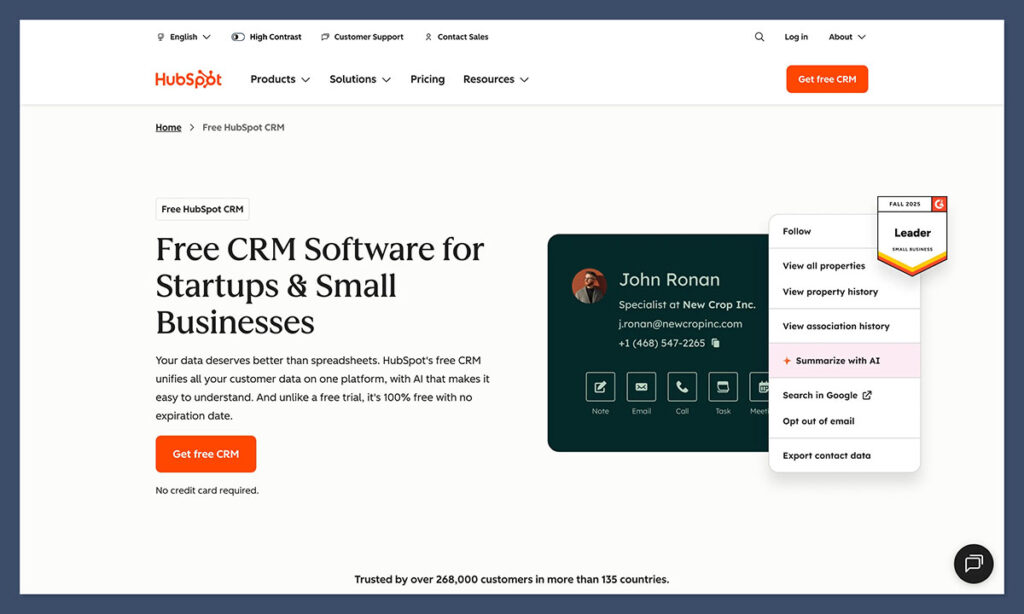
The CRM is the foundational layer. Every other feature—CMS, Commerce Hub, and Sales Hub—revolves around the contact record. By centralizing data here, you ensure that every interaction, whether it is a support ticket or a purchase, is recorded against the customer’s profile.
Phase 2: Selecting the Commerce Model
Depending on the size of your catalog, there are three primary approaches to ecommerce within HubSpot:
- The Lean Model: Using HubSpot CMS and Payments for a curated selection of products or digital goods.
- The Hybrid Model: Using a dedicated storefront like Shopify for inventory management while utilizing HubSpot for all marketing, sales, and post-purchase automation.
- The Enterprise Model: A fully integrated, high-volume environment where HubSpot acts as the middleware connecting inventory, logistics, and customer data.
Phase 3: Implementing Intelligent Automation
The goal of automation should not be to "set it and forget it," but to augment human effort. HubSpot’s automation is designed for real-world scenarios. For example, a simple workflow can be built to handle "Thinking About Churning" triggers: if a customer visits a cancellation page or support portal twice in one week, the system notifies a support rep to proactively reach out. This turns a potential loss into a retention victory.
Implications for the Future of Ecommerce
The integration of Artificial Intelligence into the HubSpot platform has further lowered the barrier to entry for smaller teams. AI-driven content tools assist with drafting emails, generating meta-descriptions, and suggesting segmentation patterns, effectively allowing a three-person team to operate with the output of a fifteen-person department.
However, the real implication here is the shift in competitive advantage. In an era where customer acquisition costs (CAC) are skyrocketing, the brands that win are not the ones with the most traffic, but the ones with the best customer understanding.
Why Brands Are Making the Switch
Professional observers in the ecommerce space note that while platforms like Shopify are world-class at the "transactional" experience, they often lack the "relational" depth required to turn a one-time buyer into a brand advocate. By pairing these storefront engines with HubSpot, brands create a "best-of-breed" environment. The storefront provides the utility, and HubSpot provides the strategy.
Frequently Asked Questions
How does HubSpot compare to dedicated ecommerce engines like Shopify?
Shopify is a dedicated storefront engine designed for the high-speed management of catalogs and transactions. HubSpot is a customer engine. They are not mutually exclusive; rather, they are highly complementary. Using both allows a brand to handle high-volume transactions while managing complex lead nurturing and customer relationships.
Is the cost of the platform justified for small shops?
HubSpot offers a tiered structure, including free CRM and CMS tools that are sufficient for early-stage growth. The ROI becomes clear as the business scales, specifically when the cost of manual labor to manage customer relationships outweighs the cost of the platform’s automation features.
Does HubSpot handle subscription-based models?
Yes. Through Commerce Hub, HubSpot supports recurring payments and subscription tracking. It can automatically manage billing events, renewal reminders, and the associated workflows, making it ideal for SaaS, subscription boxes, or consulting services.
Can the AI tools replace marketing staff?
No. The AI tools are designed to remove the "blank page" syndrome and handle repetitive, low-value tasks. Strategy, creative direction, and genuine human connection—the components that truly drive brand loyalty—remain the domain of the team.
Conclusion
HubSpot may not be the first name that comes to mind when you think of launching an ecommerce store, but for those focused on long-term, sustainable growth, it is becoming an essential component. By keeping the customer at the center of the business rather than just the transaction, HubSpot enables retailers to build a system that is as smart as it is scalable. Whether you are a solo entrepreneur or an established brand, the ability to view every customer action in a single, unified timeline is the ultimate competitive advantage in today’s crowded digital marketplace.
