
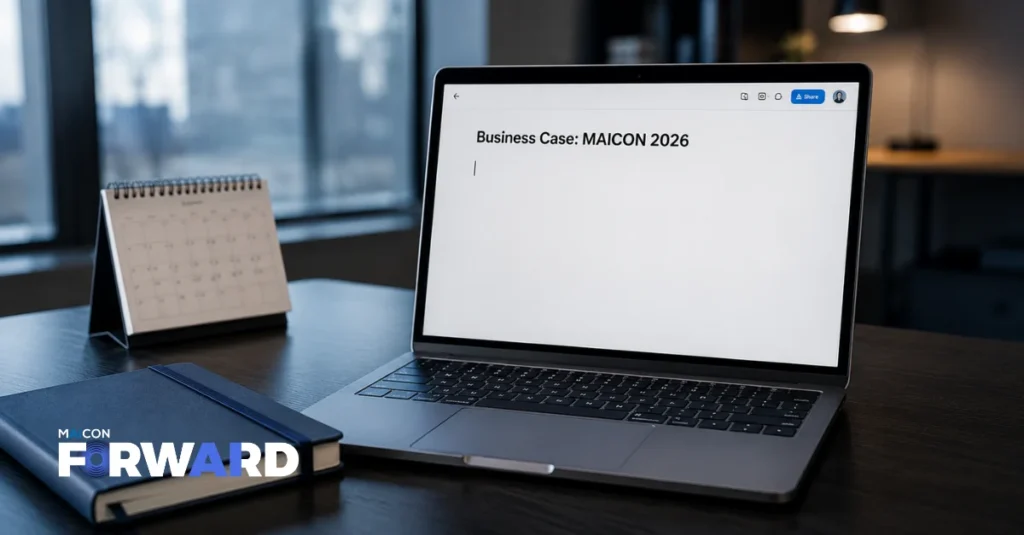
Beyond the Request: How to Pitch Conference Attendance as a Strategic Business Investment
In an era of tightening corporate budgets and an increased focus on operational efficiency, the "professional development request" has evolved. Gone are the days when a simple email asking for approval to attend an industry conference would suffice. Today, sending an employee to a high-level event—which can cost thousands of dollars when accounting for airfare, lodging, meals, and lost productivity—requires a rigorous, evidence-based business case.
To gain approval, employees must shift their internal narrative: they are not asking for a vacation or a learning perk; they are proposing a strategic investment that promises tangible returns for the organization.
The Shift from Expense to Investment: Setting the Stage
The fundamental error many professionals make when approaching their leadership is centering the request on their own desire for growth. While personal development is a noble pursuit, it is rarely the primary driver for a CFO or a department head tasked with managing a lean budget.
To secure approval, the pitch must pivot entirely to the organization’s current pain points. "Your boss doesn’t necessarily care that you want to attend a conference," says Cathy McPhillips, CMO at the Marketing AI Institute. "But they do care whether the conference helps solve a business problem."
Successful proposals begin with an audit of the company’s current priorities. Whether the goal is to reduce operational costs, accelerate digital transformation, or bridge a widening skills gap, the chosen conference must serve as a direct solution to these challenges. By working backward from a business objective to an event, the applicant transforms themselves from a supplicant into a problem-solver.
Aligning with Business Priorities: A Chronological Strategy
A winning business case follows a logical, chronological flow that builds momentum for the request.
Phase 1: The Needs Analysis
Before looking at dates or venues, conduct a diagnostic of your team’s current landscape. What is the one initiative that is currently underperforming? Is it the lack of AI integration in marketing workflows? Is it the struggle to scale content production? By identifying the gap, you provide the context necessary to explain why a specific conference is the required remedy.
Phase 2: The Strategic Selection
Once the problem is defined, identify an event that offers not just general knowledge, but specific, actionable intelligence. If the company is struggling with AI adoption, a broad, general-interest marketing event will likely be rejected. Conversely, a specialized summit focusing on the tactical application of AI signals to management that you have performed your due diligence.
Phase 3: The Budgetary Breakdown
Transparency is the hallmark of a professional pitch. Presenting a clear, itemized budget—inclusive of registration, travel, lodging, and meals—demonstrates fiscal responsibility. Do not hide the costs; instead, frame them against the potential outcomes.
Phase 4: The Post-Conference Deliverable
The most compelling business cases include a "Return on Investment" (ROI) plan. This is not a guarantee of future profits, but a commitment to accountability. Providing a roadmap of what you will produce upon your return—such as a white paper, a pilot project, or an implementation plan—mitigates the perceived risk of your absence.
The "Room Matters" Factor: Why Virtual Can’t Compete
One of the most frequent objections managers raise is: "Why can’t you just learn this online?" It is a valid question, particularly in an age where webinars and digital courses are ubiquitous. However, the sophisticated applicant understands the concept of the "room matters" factor.
Immersion is a qualitative asset that digital platforms cannot replicate. While online learning provides information, live conferences provide context, serendipitous networking, and immediate feedback loops. The ability to engage in a sidebar conversation with an industry peer who has already solved the problem you are currently grappling with is worth the price of admission alone.
Furthermore, a change of scenery acts as a cognitive catalyst. Stepping away from the daily grind allows for "big picture" thinking that is often stifled by the demands of the office. By emphasizing that this time away is a deliberate period of strategic reflection, you reframe the "time away from work" objection as an opportunity for "high-value innovation time."
Managing Objections and Mitigating Risk
A truly persuasive pitch anticipates the "No." By proactively addressing common concerns, you demonstrate a level of maturity and preparedness that builds trust.
- "What if you learn nothing?" Counter this by promising specific deliverables. Commit to a 30-day action plan that you will present to the team within a week of returning.
- "Why this conference in particular?" Clearly articulate the risk of inaction. For instance, in the fast-moving world of Artificial Intelligence, failing to stay updated on tools and regulations can lead to "inconsistent AI adoption" or "wasted spend on the wrong tools." By highlighting the cost of not attending, you make the conference an essential insurance policy for the company’s future.
Case Study: Making the Business Case for MAICON
To see this strategy in action, one need look no further than the Marketing AI Conference (MAICON). In a crowded landscape of events, MAICON has positioned itself not as a networking gala, but as a laboratory for business transformation.
For leaders and practitioners alike, MAICON serves a specific, high-stakes function: it bridges the gap between the theoretical promise of AI and the practical, daily realities of marketing teams. The sessions are curated to ensure that attendees walk away with "actionable use cases."
When pitching attendance for such a conference, the case becomes a matter of professional survival. By framing the attendance as a way to "rethink how we work," the employee is suggesting that the organization cannot afford to fall behind competitors who are already implementing the strategies discussed at the event.
The Role of Accountability: Post-Conference Integration
The business case does not end when the conference does. In fact, the most vital part of the process occurs upon your return. A successful attendee serves as an internal consultant for their team.
To truly cement the value of the investment, attendees should:
- Host a debrief session: Share the top takeaways with the wider team, ensuring the knowledge is democratized.
- Execute a pilot project: Apply at least one tool or strategy learned at the conference to a real-world business project within the first 30 days.
- Create an "AI/Innovation Resource Library": Document the materials and insights gathered so that they serve as a reference point for future projects.
Implications for Future Professional Development
The modern workplace is evolving toward a model where continuous, high-intensity learning is expected, but the funding for such activities is increasingly competitive. By mastering the art of the business case, you are doing more than just securing a trip to a conference; you are demonstrating your value as a strategic thinker.
When you treat your professional development as a line item on the corporate budget that must yield a positive return, you build a reputation as an employee who considers the bottom line in every decision.
As we look toward the future—with events like MAICON 2026, scheduled for October 13–15 in Cleveland, Ohio—the professionals who will be in attendance are those who have successfully navigated this process. They have done their homework, they have aligned their goals with the organization’s mission, and they have proven that their presence at the event is not a cost, but a critical investment in the company’s competitive advantage.
Ultimately, managers are not looking for a reason to say "no." They are looking for a reason to say "yes." By providing a comprehensive, data-backed, and strategically aligned proposal, you make it easy for them to justify the investment in your growth—and, by extension, the growth of the business itself.
