
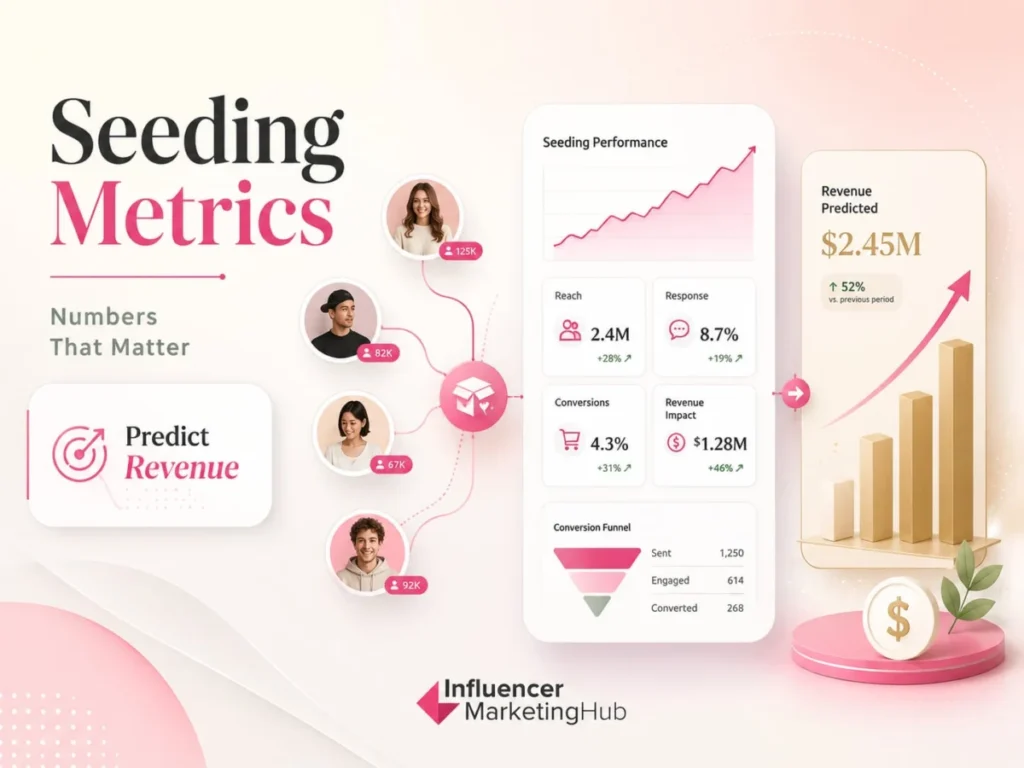
Beyond the Post: Transforming Influencer Seeding from a Cost Center to a Revenue Engine
In the modern e-commerce landscape, influencer seeding is often relegated to the status of a "content play." Marketing teams spend their days tracking package shipments, delivery confirmations, and the subsequent trickle of social media posts. Yet, when the quarterly planning meeting arrives, the conversation frequently hits a wall. When a CMO asks, "Is our influencer seeding actually working?" many managers find themselves unable to provide a data-backed answer. They have numbers regarding output—how many influencers accepted a product or how many posts went live—but they lack a clear line of sight between the capital invested and the long-term business value returned.
The trap is simple: when teams optimize exclusively for post counts, they remain on a perpetual "seeding treadmill." They run faster each quarter, generating more content, yet the program rarely gains structural momentum. To move beyond this cycle, brands must pivot from viewing seeding as a one-off marketing tactic to treating it as a rigorous, predictable pipeline.
The Three Pillars of Influencer Seeding
Most brands view the act of gifting product as a simple exchange: free goods for a social media mention. While this creates a library of reusable content, it ignores two-thirds of the strategic potential inherent in seeding. By neglecting these, brands allow significant value to evaporate.
Job 1: The Precision Filter
Every influencer interaction acts as a data point. When a brand sends a product, the outcome serves as a diagnostic tool. If a creator receives the product and remains silent, the brand has gained a vital, low-cost insight into their target audience fit. Conversely, if a creator posts unprompted, engages with check-ins, or requests additional information, they have signaled their value as a long-term partner. Most brands fail to systematically read these signals, meaning they lose the opportunity to filter for top-tier talent before committing larger budgets.
Job 2: Fueling the Affiliate Pipeline
For high-performing brands, the most lucrative affiliate partnerships almost always begin with a free product. Seeding is not the end of the journey; it is the entry point of the funnel. If a program lacks a defined pathway from "product received" to "affiliate offer," it is not a program—it is a series of disconnected, reset-every-month campaigns. By mapping the "Predictable Influence Pyramid," brands can structure their growth:
- Layer 1 (Seeding): Identifying genuine enthusiasm through product discovery.
- Layer 2 (Conversion): Inviting engaged creators from Layer 1 into commission-based partnerships.
- Layer 3 (Retention): Deepening relationships with high-performers through retainers and exclusive collaborations.
Analyzing the Seeding Program: A Three-Lens Framework
To answer the CMO’s inquiry with confidence, marketers must interpret their program through three distinct lenses: Signals, Benchmarks, and Metrics.
Signals: The Qualitative Foundation
Before attempting to quantify results, teams must categorize the responses they receive. Not all social media mentions are created equal. A high-production reel from a creator who loves the product is vastly different from a fleeting, blurry mention in a "haul" video. Teams should sort every batch into three categories:
- Strong Signals: Unprompted posts, enthusiastic replies, or direct messages asking for more product. These are prime candidates for immediate affiliate outreach (ideally within 48 hours).
- Lukewarm Signals: Polite responses, saved product, or light engagement. These deserve a low-pressure follow-up in two to three weeks.
- Cold Signals: No response or engagement. These creators should be removed from future outreach to protect the brand’s resources.
Benchmarks: Measuring Health
Without context, numbers like "50% response rate" are meaningless. A healthy seeding program operates within specific benchmarks that reveal the underlying efficiency of the team’s operations. For instance, an outreach response rate of 15-25% is standard; anything lower suggests a mismatch in targeting or messaging. A product acceptance rate of 40-60% indicates a compelling offer.
Crucially, the 48-hour follow-up rate is a metric of internal behavior, not creator behavior. Because influencers often receive dozens of packages weekly, the 48-hour window is the only time a brand holds the creator’s undivided attention. Failing to capitalize on this window due to a lack of systemized follow-up is one of the most common reasons programs fail to scale.
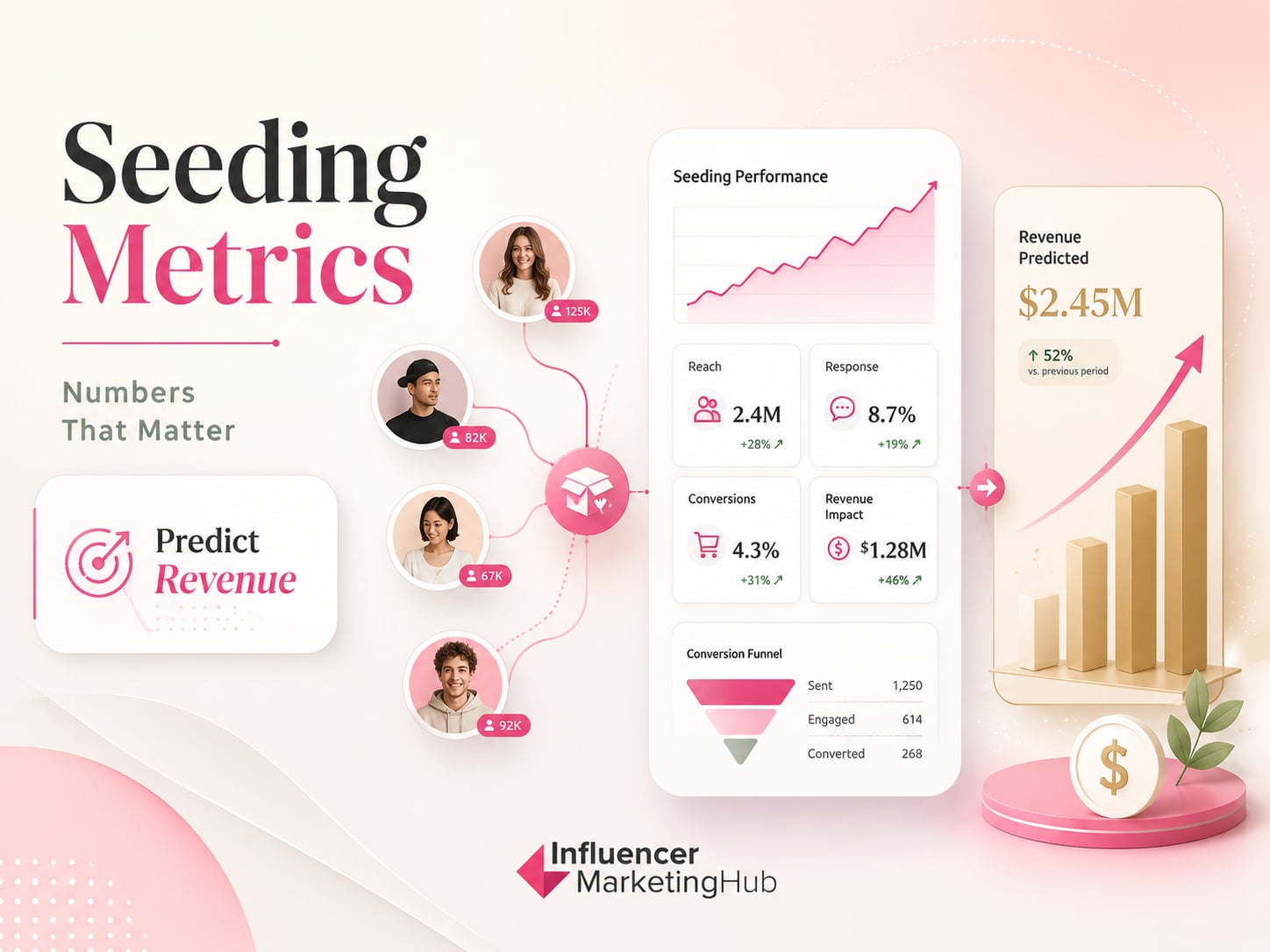
Metrics for Leadership: The Quarterly Narrative
When presenting to leadership, teams should avoid discussing "process" (how many emails were sent) and focus on "performance" (what those emails produced).
Monthly Activity Metrics:
- Cost per seeded creator: Measures spending efficiency.
- Post rate: Measures if the product is actually resonating with the intended demographic.
- Cost per usable content asset: Determines the value of the creative output generated by the program.
Quarterly Pipeline Metrics:
- Seeding-to-affiliate conversion rate: This is the "north star" metric. It calculates the percentage of seeded creators who transitioned into formal, revenue-generating partnerships.
- Revenue from seeding-sourced affiliates: The bottom-line impact.
- Time from seed to first affiliate post: A measure of pipeline velocity.
The seeding-to-affiliate conversion rate is the single most powerful figure a marketer can bring to a meeting. It proves that the program is not a cost center, but an investment vehicle that feeds the company’s bottom line.
Identifying and Closing the Gaps
Most programs do not fail catastrophically; they experience "death by a thousand cuts." By auditing the pipeline, teams can pinpoint exactly where the drop-offs occur. Is the response rate low? Is the conversion to affiliate stuck? By tracking the pipeline, managers can see where the bottleneck lies—whether it is in the initial outreach, the product selection, or the lack of a clear call to action for the creator.
A simple spreadsheet can suffice for a small operation, but as the volume grows to 50 or 150 seeds per month, the manual tracking of status fields becomes unsustainable. At this point, automation is not a luxury; it is a necessity for maintaining data integrity.
Implications for Future Growth
The transition from a "seeding treadmill" to a "revenue pipeline" changes the nature of the marketing department’s role within the company. Instead of being viewed as a team that gives away free goods, the influencer marketing group becomes a key engine of customer acquisition.
When a CMO asks if the program is working, the manager no longer needs to scramble for anecdotes about high-quality posts. They can present a comprehensive view: "We seeded 80 creators last quarter. 12 have entered our affiliate program, generating $X in attributable revenue. Based on our current conversion benchmarks, we are set to scale this to 200 creators next quarter with a projected increase in revenue of Y%."
This is the shift that separates a tactical influencer program from a strategic growth engine. It transforms the conversation from one of "cost management" to one of "capital allocation." In an era where organic reach is increasingly hard to secure, the ability to build, track, and scale a predictable influencer pipeline is not just a competitive advantage—it is the baseline for sustainable, long-term e-commerce success. By treating creators as partners rather than promotional assets, brands can build a resilient ecosystem that survives and thrives, regardless of the quarterly shifts in social media algorithms.
