
Beyond the Media Kit: How Data-Driven Ad Sales and Tubular Labs Are Transforming Modern Sponsorships
NEW YORK — In the modern digital media ecosystem, selling advertising space is no longer just about transacting impressions or pushing static media kits. Media publishers and sellers are fundamentally in the business of monetizing audiences. However, as digital budgets tighten and brand marketers demand hyper-accountability, proving the tangible value of an audience requires a sophisticated, data-driven methodology.
Media sellers today have access to a wealth of first-party audience data harvested directly from their owned-and-operated (O&O) channels, alongside real-time behavioral insights supplied by analytics platforms like Chartbeat. Yet, O&O data alone often presents an isolated view. To truly differentiate themselves in a fiercely competitive marketplace, publishers must contextualize their metrics. By integrating robust third-party social video intelligence—such as the global scale provided by Tubular Labs—ad sales teams are turning vanity metrics into hard proof of value, securing negotiation leverage, and accelerating deal cycles.
The Main Facts: The Evolution of Media Sales and Third-Party Enrichment
The modern ad sales landscape is defined by a shift from intuition-based buying to granular, behavior-driven targeting. Advertisers are no longer satisfied with broad estimates of a publication’s reach; they require microscopic validation that a publisher’s audience aligns seamlessly with their exact consumer targets.
While publishers possess a distinct foundational advantage through first-party data—offering real-time transparency into site and app activity—this information only tells half the story. It captures what users do on a specific property, but it fails to capture the broader lifestyle habits, cross-platform affinities, and content consumption preferences of those same individuals across the wider digital universe.
To bridge this gap, progressive media organizations are turning to third-party data enrichment. By harvesting cross-platform social video data from ecosystems like YouTube, TikTok, Instagram, and Facebook, sales teams can uncover comprehensive behavioral insights. This combination of first-party reliability and third-party context transforms a standard sales pitch from a generic inventory pitch into a targeted audience-matching proposition.

Chronology: The Shift Toward Cross-Platform Intelligence
- The Era of Static Media Kits (Early 2010s): Ad sales relied primarily on self-reported traffic numbers, basic unique monthly visitor (UMV) metrics, and general demographic estimates. Differentiation between competing publishers was minimal, often driven by relationship-building rather than data verification.
- The Rise of First-Party Analytics (Mid-to-Late 2010s): Publishers increasingly adopted real-time analytics engines like Chartbeat to understand user engagement on their owned properties. While this improved editorial performance and internal monetization, it still left sales teams siloed within their own digital borders.
- The Cross-Platform Fragmentation (2020–2023): As audiences fractured across social video giants—TikTok, YouTube Shorts, and Instagram Reels—advertisers began demanding cross-channel attribution. Traditional web analytics could no longer explain where consumers spent their attention upstream.
- The Modern Data-Driven Paradigm (Present Day): Leading sales organizations now utilize comprehensive social video intelligence platforms, such as Tubular Labs, to map audience affinities, cross-platform viewing behaviors, and deep demographic segmentations. This real-time intelligence has become the cornerstone of winning high-value brand partnerships.
Supporting Data: Why First-Party Plus Third-Party Wins the Pitch
Gathering data is only the initial hurdle; the second is weaponizing that data into a compelling narrative that secures premium sponsorships. An effective modern pitch must accomplish two critical objectives simultaneously: it must prove high reach and influence within an exact target demographic, and it must forcefully differentiate the publisher from every competing venue bidding for the same corporate marketing budget.
This is where global social video intelligence alters the playing field. By analyzing billions of data points across the social video landscape, sales teams can leverage specific, verifiable proof points across three primary dimensions: demographic segmentation, audience overlap data, and content performance insights.
1. Demographic Segmentation Beyond Basic Metrics
Standard media kits typically offer generalized age and gender breakdowns. Tubular-powered insights allow sales teams to drill down into granular, behavior-backed demographic cohorts across specific creators, genres, timeframes, and platforms.
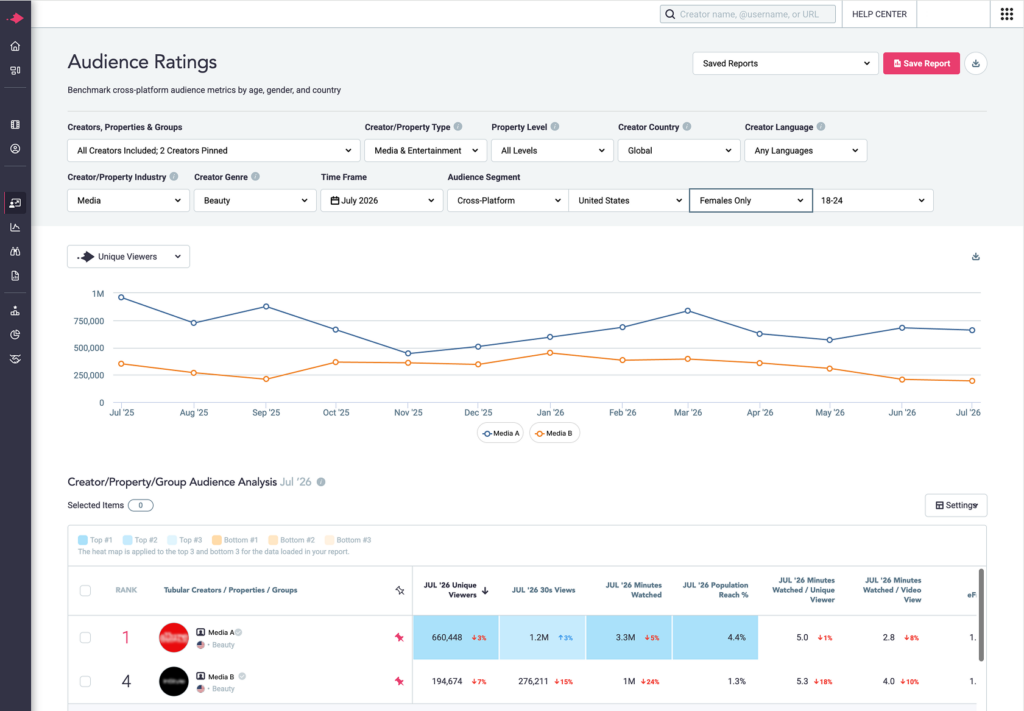
- Practical Application: Imagine two competing digital lifestyle publishers—Media Company A and Media Company B—pitching a major beauty brand targeting women aged 18–24. Without advanced analytics, their media kits look nearly identical. However, by deploying audience rating metrics, Media Company A can pinpoint its exact overlap with the target demographic on social video platforms, proving a superior concentration of engaged consumers where it matters most to the buyer.
2. Uncovering Hidden Audience Overlaps
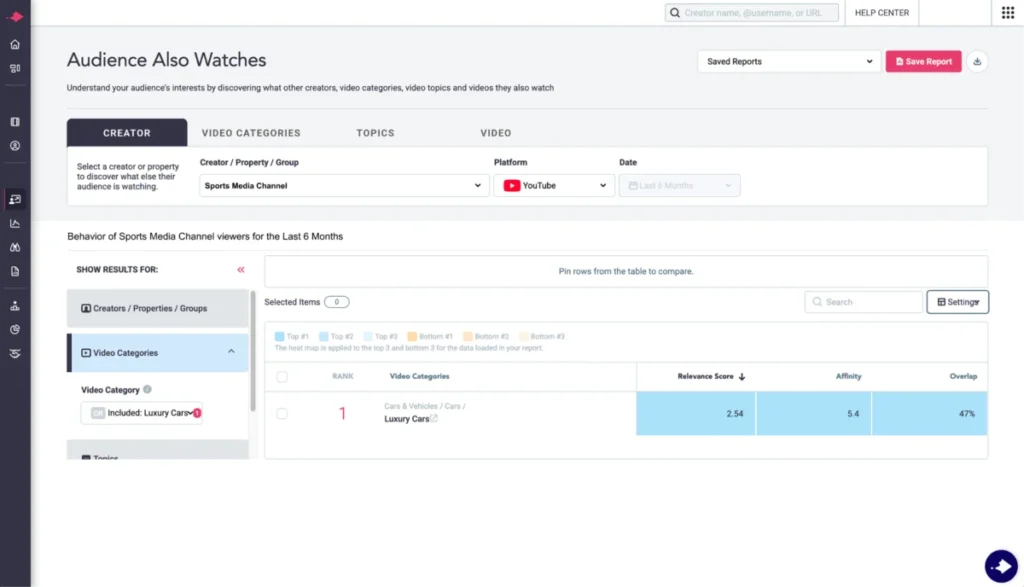
Ad sales teams frequently hit roadblocks when an advertiser’s core product category does not neatly match the publisher’s primary beat. Audience overlap data solves this challenge by mapping out affinities—revealing what else a publication’s audience watches across entirely different content categories.
- Practical Application: A premier sports media property can utilize audience affinity data to demonstrate that its core readership shares a 47% viewer overlap with luxury automotive content on YouTube. Armed with this insight, the sales team can approach a luxury car brand not merely as a sports publisher, but as an efficient pipeline to high-income car enthusiasts.
3. Granular Content Performance Trends
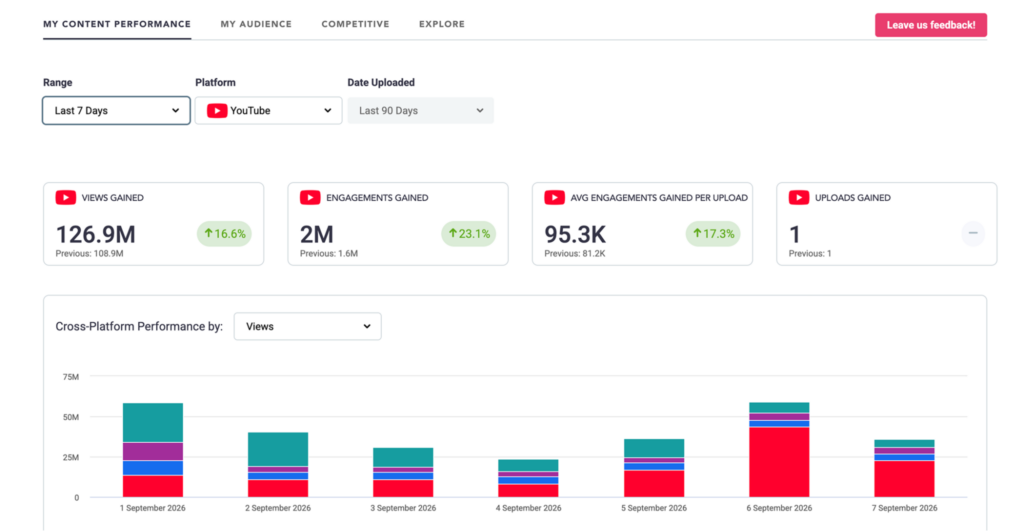
Growth narratives are essential for closing ad deals, but aggregate growth numbers often fail to impress skeptical media buyers. Tubular’s performance metrics allow sellers to isolate year-over-year or month-over-month momentum within specific age, gender, or regional brackets.
- Practical Application: Rather than telling an advertiser that overall platform views grew by 10%, a seller can prove a 55% year-over-year growth surge specifically among 25-to-34-year-old viewers on YouTube. This precision highlights undeniable momentum in the exact audience segment the brand is mandated to reach.
Official Industry Perspectives and Expert Insights
Industry leaders emphasize that the transition from qualitative selling to hard data verification is no longer optional—it is a survival mechanism for modern publishers.
"Ad sales is about much more than selling space to advertisers. Media sellers are selling an audience, and proving that audience’s value to a buyer demands a data-driven approach," industry analysts note. Publishers who rely solely on owned-and-operated metrics are essentially navigating blindfolded through an increasingly complex digital landscape.
Furthermore, monetization experts highlight that modern brands expect consultative selling. Advertisers do not want to be sold impressions; they want to be shown solutions. By integrating third-party social video metrics, publishers shift their market positioning from inventory vendors to strategic audience consultants.
Implications: A Real-World Case Study in Pitch Transformation
To fully understand the commercial implications of this data-driven methodology, consider an anonymized scenario involving a global news publisher pitching a lucrative branded content deal to a major international travel booking platform.
The Challenge
The travel platform’s explicit objective was to drive unaided brand awareness among UK millennials aged 25–34. Traditional media kits and general traffic stats were failing to convince the brand’s media agency that the news publisher was uniquely qualified for the campaign.

The Tubular-Powered Solution
The publisher’s ad sales team utilized social video data to extract two critical, undeniable proof points:
- Verified engagement superiority (outperforming competing news publications in views, comments, and shares among UK-based demographics).
- Deep behavioral affinity mapping within the publisher’s audience.
The Winning Pitch Narrative
Armed with this intelligence, the sales team restructured their pitch:
"Our content already outperforms competing publications on views, comments, and shares, proving that our audience is actively engaged. But our audience overlap data can give your campaign a definitive edge if you advertise with us.
We are seeing a notable crossover between travel intent and our audience’s ‘foodie’ subculture, specifically surrounding minimalist packing tutorials and aesthetic café content. Rather than running generic, interruptive travel ads to our broad audience, you can build creative campaigns tailored directly to those specific niches, reaching consumers who are already primed to pay attention."
The Takeaway for Media Sellers
The ultimate lesson for digital publishers and media sellers is clear: A pitch built on specific, verifiable data points will always defeat one built on broad reach assumptions and guesswork.
By uniting reliable first-party insights with comprehensive third-party social video intelligence, modern ad sales teams can successfully transform vanity metrics into undeniable proof of value, secure powerful leverage in high-stakes negotiations, and dramatically accelerate the path from pitch to signed contract.
