
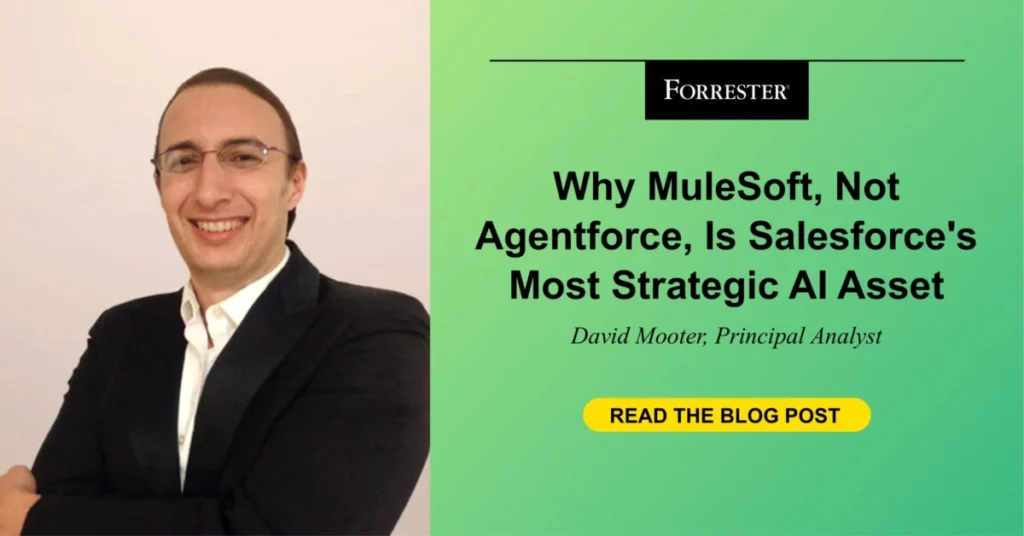
Beyond the Gateway: Why Salesforce’s "Agent Fabric" Is the High-Stakes Battleground for the Future of AI Governance
SAN FRANCISCO — In the fast-evolving landscape of enterprise artificial intelligence, subtle branding shifts can signal tectonic industry movements. Observers tracking enterprise tech closely noted a telling evolution at a recent Dreamforce keynote: the deliberate drop of the "MuleSoft" prefix from "MuleSoft Agent Fabric," replaced simply by "Agent Fabric," accompanied by the prominent placement of the Salesforce logo in the user interface.
This rebrand is more than a superficial marketing tweak. It marks a critical pivot in how enterprise technology giants approach the next frontier of artificial intelligence: agentic AI. As companies race to deploy autonomous agents capable of executing complex business workflows, the underlying infrastructure required to build, run, and govern these digital workers is undergoing radical scrutiny.
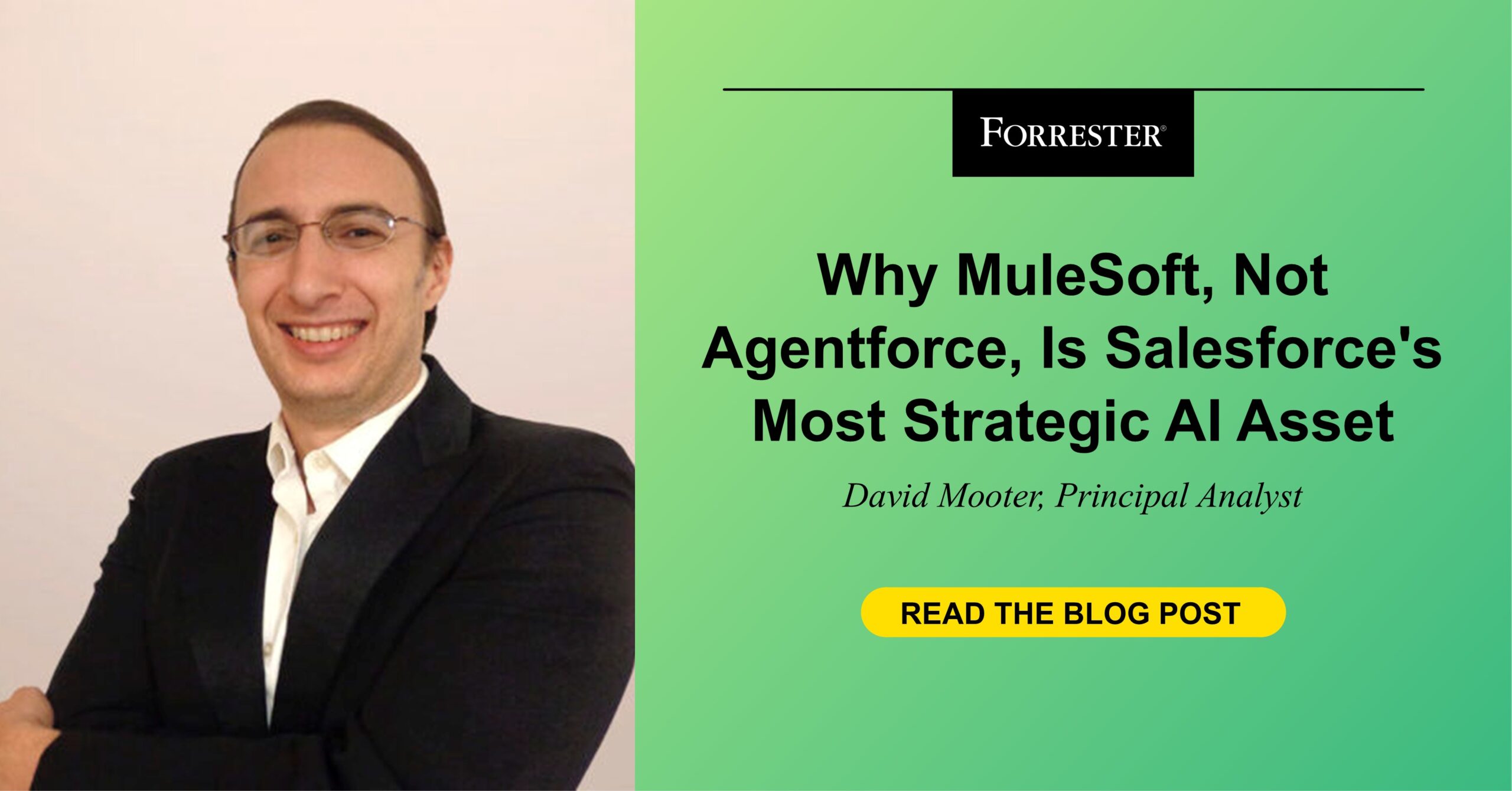
According to leading industry analysts, the race for agentic AI supremacy will not be won solely by the platforms that build agents, but by the control planes that govern them. And for Salesforce, "Agent Fabric"—born from its MuleSoft lineage—is rapidly emerging as its most strategic, albeit heavily contested, asset in the enterprise AI wars.
The Anatomy of Agentic AI: Build, Orchestrate, and Govern
To understand the strategic gravity of Salesforce’s move, one must examine the foundational architecture of agentic AI. Industry research from firms like Forrester delineates the agentic AI stack into three distinct planes:
- The Build Plane: Where developers and business technologists construct AI agents, defining their core capabilities and guardrails.
- The Orchestration Plane (Runtime): The operational engine where agents execute tasks, process data, and interact with enterprise systems in real time.
- The Control Plane (Governance): The centralized command center responsible for security, monitoring, compliance, analytics, and policy enforcement across all deployed agents.
Long-term industry forecasts suggest that the first two planes—building and orchestrating—will naturally converge. Typically, the platform used to build an AI agent dictates the environment where it must run. However, enterprises are unlikely to shoehorn all their autonomous agents into a single build-and-orchestrate platform. The reality of enterprise IT is multiplatform sprawl; organizations use a diverse mix of hyperscale clouds, specialized SaaS applications, and custom frameworks to build AI agents.
Because of this inevitable sprawl, the control plane must be multiplatform by design. Just as traditional API management tools evolved to govern APIs across an endless array of runtime platforms, the agentic AI control plane must act as an independent, centralized authority. This unique cross-platform requirement makes the governance and control layer inherently more strategic than the build or orchestration layers.
For Salesforce, that critical control plane is Agent Fabric.
Chronology of a Transformation: From MuleSoft Integration to Enterprise Control Plane
The journey toward Agent Fabric reflects Salesforce’s broader strategy of absorbing and synthesizing its massive portfolio of acquisitions to meet the generative and agentic AI wave.
- The Integration Era (Pre-2024): Salesforce relied heavily on its MuleSoft acquisition to handle enterprise integration, API management, and deterministic workflows via iPaaS (Integration Platform as a Service). Meanwhile, data initiatives like Data Cloud (Data 360) laid the groundwork for unified customer context.
- The Rise of Agentforce (2024–2025): As generative AI matured, Salesforce introduced Agentforce, a comprehensive platform designed to help companies build and deploy autonomous AI agents. However, the ecosystem quickly became a complex puzzle of overlapping tools, including Slack, Flow Automation, the Headless Toolkit, and recently integrated technologies like Informatica.
- The Agent Fabric Pivot (Late 2025–2026): Recognizing the critical need for cross-platform governance, Salesforce elevated MuleSoft’s agentic control framework, rebranding it as "Agent Fabric." By stripping away the MuleSoft product identity and anchoring it directly to the master Salesforce brand during the Dreamforce keynote, the company signaled that agent governance is no longer a sub-feature of integration—it is the overarching umbrella for Salesforce’s entire AI strategy.
Supporting Data and Market Dynamics: AI Governance Meets API Management
The race to control enterprise AI governance has put traditional API management vendors on a collision course with CRM and platform giants. Major API management players—including Kong, WSO2, Gravitee, and MuleSoft—recognize that agentic AI control planes represent the absolute future of their market.
Industry evaluations, such as upcoming technology wave assessments for API management software, are already contemplating renaming the category to "API and AI Management." The technical requirements for managing APIs and AI agents are converging rapidly:
- LLM and MCP Gateways: Vendors have built robust AI gateways to govern Large Language Model (LLM) and Model Context Protocol (MCP) connections securely.
- Token FinOps and Analytics: Just as companies tracked API call volumes and bandwidth, organizations now demand deep analytics for MCP and LLM token consumption to manage runaway cloud costs. Enterprise-grade FinOps for AI is becoming a C-suite mandate.
- Unified Portals: MuleSoft has successfully expanded its traditional API portal to encompass LLMs, MCP servers, and standardized "agent cards." Competitors like Gravitee are following suit with advanced beta portals offering similar cross-resource visibility.
- Endpoint Versioning: In a rapidly changing AI ecosystem, managing version control for LLM, MCP, and Agent-to-Agent (A2A) endpoints is critical to preventing downtime when foundational models are updated. Gravitee and MuleSoft are currently leading the market in delivering these capabilities.
Salesforce’s Unique Advantage: The Full-Platform Dilemma
Despite the aggressive posture of pure-play API management vendors, Salesforce possesses two distinct architectural advantages that competitors lack: a broad agentic AI orchestration platform and deep, real-time context data to feed agents at runtime.
Yet, this advantage is tempered by structural challenges. Currently, Salesforce’s broader agentic ecosystem resembles a stitched-together collection of acquired and homegrown assets—often criticized by enterprise architects as a "Frankenstein" architecture. The current stack relies on an amalgamation of:
- Agentforce (for agent creation and management)
- Data 360 / Data Cloud (for unified enterprise context)
- MuleSoft iPaaS (for deterministic workflows and API integrations)
- Slack (for human-in-the-loop collaboration and agent interaction)
- Informatica and Headless Toolkits (for advanced data engineering and integration pipelines)
Such bolted-together ecosystems inevitably introduce friction, manifesting as complex user experiences, siloed business units, and convoluted SKU purchasing models.
Two Potential Futures for Salesforce
Industry analysts point to two divergent paths for Salesforce’s agentic platform strategy:
- The Ideal Consolidation Path: Salesforce successfully unifies its disparate tools into a streamlined, holistic AI platform. In this future, the product catalog consolidates into three distinct, natively engineered pillars:
- Agent Fabric: Providing independent AI agent control, security, and governance.
- Agentforce Orchestrate: Handling AI agent building, execution, and workflow orchestration.
- Agent Data 360: Supplying rich, real-time enterprise context to fuel agent decision-making.
- The Stumble Path: Due to internal siloes—particularly between the Agentforce and MuleSoft business units—Salesforce struggles to unify its M&A products into a cohesive user experience. Friction mounts, allowing nimble competitors to capture market share among enterprise buyers exhausted by complex software pricing and integration hurdles.
Implications for Enterprise Buyers and Technology Vendors
For enterprise technology buyers, the emergence of Agent Fabric and the broader AI governance market carries profound strategic implications.
First, governance must precede orchestration. While orchestration platforms capture the bulk of immediate economic activity because they are closest to day-to-day work, the control plane remains the most strategic asset for long-term enterprise architecture. Organizations must resist the temptation to lock themselves into proprietary orchestration silos that lack multiplatform governance capabilities.
Second, the blurring lines of IT and business will test vendor execution. As business technologists build agents alongside professional developers, the need for transparent token tracking, robust security policies, and endpoint versioning will only intensify. Vendors that fail to provide unified management across both traditional APIs and autonomous AI agents will quickly find themselves sidelined.
The Road Ahead
Salesforce holds a formidable early lead in the agentic AI control plane wars through Agent Fabric. Whether the tech giant can successfully leverage this lead—or whether internal organizational friction will cause it to stumble—remains one of the most closely watched storylines in enterprise software.
For MuleSoft customers, competitors, and enterprise architects alike, the stakes could not be higher. The battle for the AI control plane is officially underway, and the architecture chosen today will define the enterprise automation landscape for the next decade.
