
Beyond the Dashboard: Redefining Creator Economy Measurement for 2026
As we move deeper into 2026, the creator economy has undergone a structural transformation. What began as a nascent channel for brand awareness has matured into a cornerstone of global marketing strategy. Yet, as budgets balloon and creator partnerships become deeply embedded in corporate P&Ls, a persistent friction remains: the disconnect between what platforms report and what businesses actually experience.
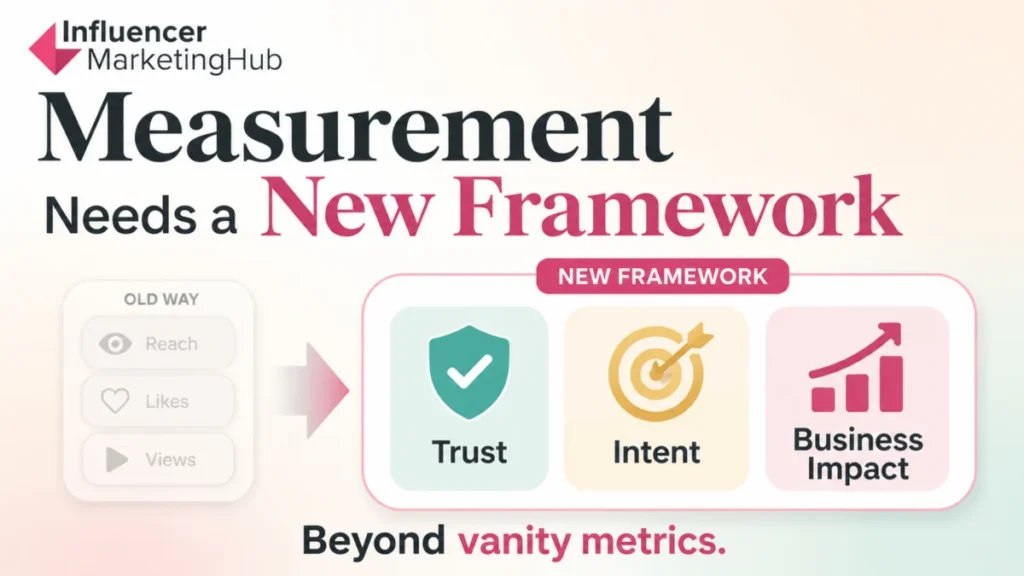
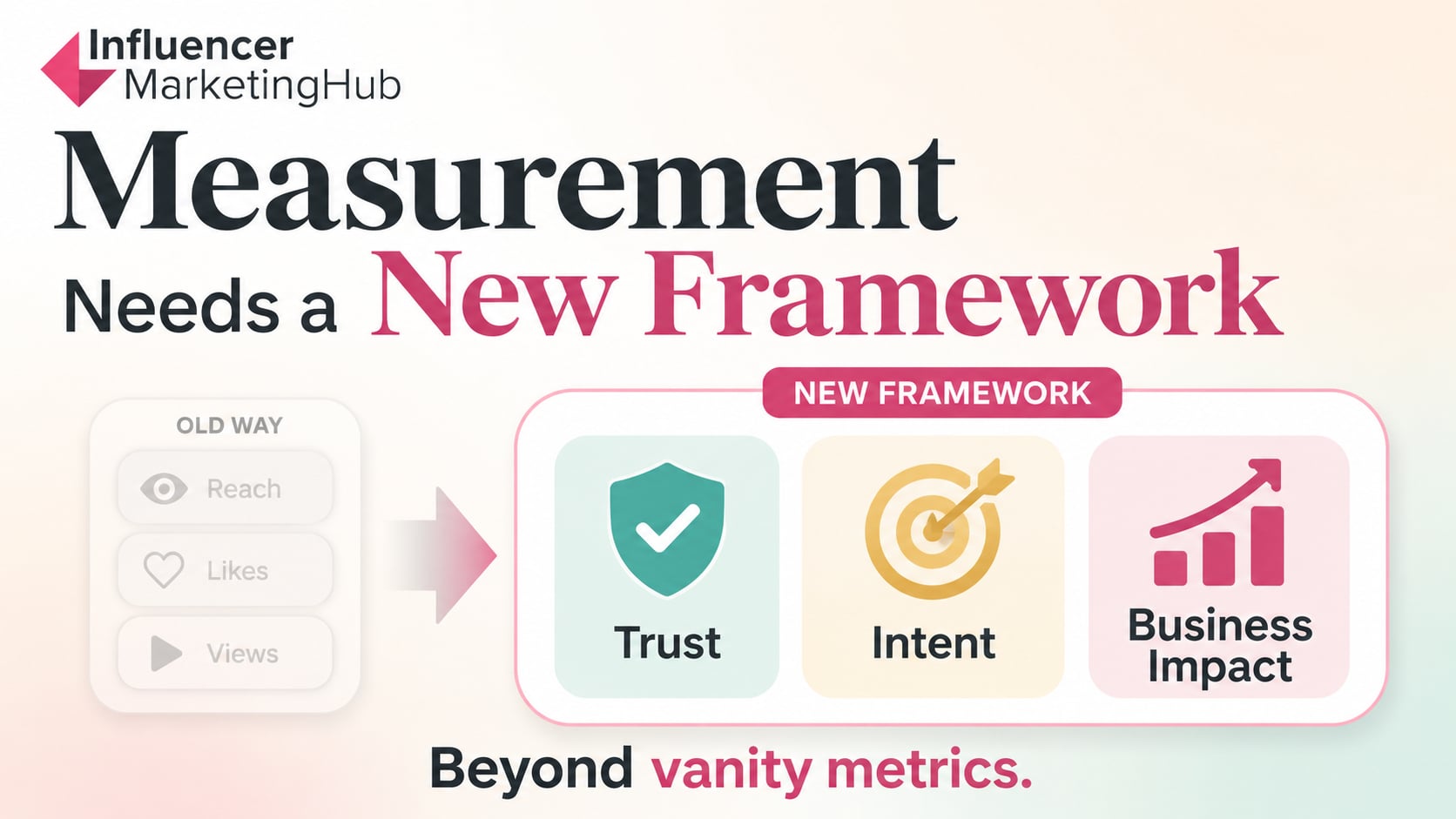
Industry discourse has reached a fever pitch regarding the obsolescence of traditional metrics. While views, completion rates, and engagement percentages remain standard industry currency, they are increasingly viewed as insufficient—or worse, misleading—when analyzed in isolation. For brands and agencies, the mandate for 2026 is clear: move beyond vanity metrics and adopt a layered, intent-based measurement framework that accounts for the complex, AI-influenced customer journey.
The Measurement Crisis: Why Standard Metrics Fail
The fundamental flaw in modern influencer marketing measurement is the "one-size-fits-all" scorecard. Too often, marketing teams evaluate a high-level brand awareness video using the same KPIs applied to a bottom-of-funnel shoppable post. This is a strategic error that strips content of its context.
When a brand treats a narrative-driven endorsement with the same scrutiny as a direct-response product demo, they walk away with incomplete data. If an awareness piece fails to drive immediate conversions, it is unfairly penalized; if a performance piece lacks reach, it is deemed a failure regardless of its ROI. This misalignment isn’t a result of "wrong" metrics, but rather the wrong application of those metrics.
The Role of Platform Signals
To be clear: platform metrics are not meaningless. They serve as essential indicators of distribution efficiency and attention capture. They tell us how far content traveled and whether the audience was sufficiently intrigued to stay. These are critical "top-of-funnel" signals. The problem arises when teams stop their analysis at the point of platform exit.
A Layered Measurement Stack: A New Framework
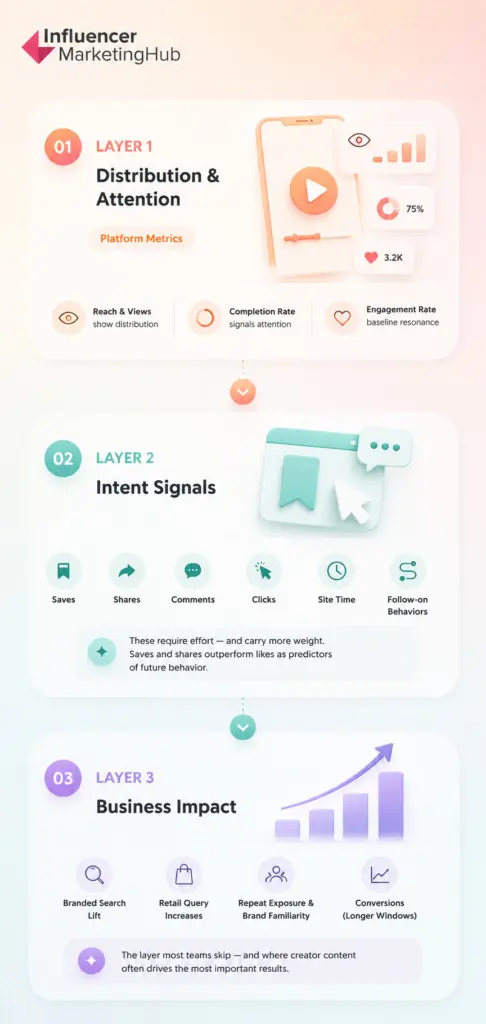
To achieve true clarity, the most sophisticated creator programs in 2026 have adopted a "Layered Measurement Stack." This approach ensures that every piece of content is measured against the specific business objective it was designed to achieve.
Layer 1: Distribution and Attention (The Platform Baseline)
This is the foundational layer. Metrics such as impressions, reach, and completion rates tell us if the content cleared the "attention hurdle." Did the algorithm favor it? Did the audience pause to watch? This layer is the bedrock of visibility, but it is merely the beginning of the story.
Layer 2: Intent Signals (The Engagement Depth)
This layer carries significantly more weight because it measures audience investment. We are seeing a shift in priority where saves, shares, and high-quality comments are becoming the primary predictors of future consumer behavior. While a "like" is a passive acknowledgement, a "save" implies utility, and a "share" implies advocacy. These metrics are the leading indicators of brand affinity and long-term purchase intent.
Layer 3: Business Impact (The ROI Reality)
This is the layer that most teams skip, yet it is where the most significant work occurs. It encompasses direct sales, coupon redemptions, and affiliate traffic, but also extends to broader business outcomes like branded search lift and retail foot traffic. By ignoring this layer, brands leave their most compelling evidence of value on the table.
The Catalyst: AI and the Discovery Revolution
The urgency for this measurement overhaul is being accelerated by a major technological shift: AI-driven discovery.
In 2026, the consumer journey is no longer linear. Consumers are increasingly turning to large language models (LLMs) and AI-powered search engines to solve problems and research purchases. Research indicates that over 50% of U.S. consumers now rely on AI tools as a primary step in their shopping research.
When a consumer asks an AI for a recommendation, the model isn’t creating new opinions—it is synthesizing existing high-quality content from across the web. This creates a seismic shift for brands:
- Content as Data Infrastructure: High-quality creator content acts as the training data for the brand’s reputation. If a creator’s review is indexed, it becomes part of the "expert opinion" the AI presents to the user.
- Invisible Influence: Creator content can now drive a sale even when the conversion occurs outside of a tracked link or platform dashboard. An AI might reference a creator’s video in a search response, leading to a direct Google search, which in turn leads to a retail purchase. The "last click" attribution models of the past simply cannot capture this.
Segmentation: Matching Intent to Success Criteria
The "new" framework is, in reality, a return to marketing fundamentals: matching the success criteria to the role of the content.
- Endorsement-Driven Content: Designed for deep connection. Success here is measured by saves, shares, and high-quality discourse. The impact often compounds over months, not days.
- Mental Availability Content: Designed for recall. Success here is measured through search behavior, brand familiarity studies, and aggregate retail performance.
By categorizing content into these roles, teams can move away from punitive measurement and toward a more honest assessment of how creator ecosystems contribute to the bottom line.
Strategic Implications for Global Brands
As creator programs become fully integrated into business operations, the implications for CMOs and marketing directors are profound. To succeed in this environment, teams must prioritize three core actions:
- Integrated Attribution: Move beyond single-platform tracking. Brands must correlate creator posting cadences with spikes in organic search, branded site traffic, and retail point-of-sale data.
- AI-Ready Content Strategy: Create content that is "AI-discoverable." This means focusing on detailed, informative, and high-quality narratives that provide AI models with the clear, structured information they need to recommend your brand.
- Outcome-Based KPIs: Stop evaluating influencer marketing as a "channel" and start evaluating it as a "business driver." If a campaign is designed to drive awareness, evaluate it against brand lift metrics. If it is designed for conversion, hold it to strict performance standards.
The Future of Measurement: A Closing Thought
The new measurement framework isn’t about complexity; it’s about honesty. It requires a commitment to transparency regarding what we are measuring and, more importantly, why.
At Intuition Media Group, we have spent over 15 years observing the evolution of this space. We have seen that the brands achieving the highest ROI are those that stop chasing vanity metrics and start building creator ecosystems designed for cultural relevance and sustained, measurable business impact.
As we look toward the remainder of 2026, the brands that thrive will be those that accept a fundamental truth: platform metrics are not irrelevant, but they are insufficient on their own. The future of influencer marketing belongs to those who can connect the dots between a creator’s post and the complex, AI-assisted reality of the modern consumer’s journey.
If you are currently rethinking your approach to creator performance, remember: the goal is not to measure everything, but to measure the right things, in the right way, at the right time.
About the Author: Paula Bruno is the founder and CEO of Intuition Media Group, an award-winning influencer marketing agency. With more than 15 years of experience in the creator economy, Paula has led large-scale campaigns for global brands including Canon USA, TikTok, Hyundai, GoDaddy, Unilever, and P&G, focusing on bridging the gap between cultural relevance and business performance.
