
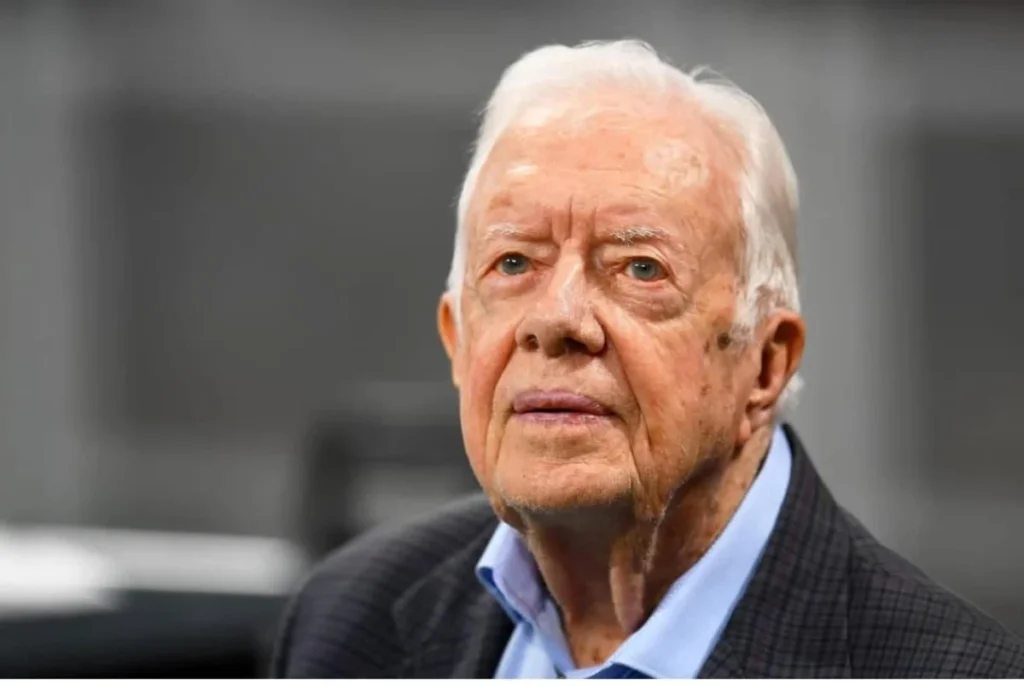
A Legacy of Service: Remembering the Life and Character of President Jimmy Carter
The passing of Jimmy Carter, the 39th President of the United States, marks the end of an era defined by profound moral clarity, tireless humanitarianism, and a commitment to service that transcended the confines of the Oval Office. As the nation mourns the loss of a leader who redefined the post-presidency, it is the smaller, personal moments—the quiet exchanges away from the cameras—that often paint the most vivid portrait of his character. One such encounter, occurring in the winter of 1988, serves as a poignant reminder of the grace and humility that defined the man behind the title.
A Legacy Beyond the Presidency: The 1988 Encounter
In early 1988, while visiting a local community, the former President engaged in a question-and-answer session that highlighted his approachable demeanor. An attendee, selected as one of six individuals to pose a question to the former leader, approached the microphone with a moment of uncertainty.
"Hello President Carter. I really do not have a question," the attendee admitted. Rather than dismissing the interaction, Carter responded with characteristic warmth, stating, "I like those kind of questions." The exchange shifted from a typical political interrogation to a moment of genuine human connection. The attendee used the platform to express gratitude for Carter’s ongoing commitment to Habitat for Humanity, a testament to his post-presidential dedication to public service.
Carter did not merely offer a polite nod; he spent nearly ten minutes detailing the mission of the organization, underscoring his deep-seated belief in building communities. The encounter concluded with a subtle, yet deeply meaningful gesture: as he exited the stage, the former President stopped, caught the eye of the attendee, and with a wink and a wave, mouthed a personal "thank you." This vignette, while seemingly minor, encapsulates the essence of Jimmy Carter: a man who never viewed himself as above the people he served, regardless of his station in life.
Chronology: A Life of Service
To understand the magnitude of the loss, one must examine the arc of a life that spanned nearly a century of American history.
The Early Years and Naval Service
Born James Earl Carter Jr. on October 1, 1924, in Plains, Georgia, he was the first president to be born in a hospital. His upbringing in a rural, segregated South instilled in him the values of hard work and faith. After graduating from the U.S. Naval Academy in 1946, he served as a submarine officer, a period that refined his discipline and technical acumen.

The Georgia Gubernatorial Years (1971–1975)
Before ascending to the national stage, Carter served as the Governor of Georgia. His inaugural address was historic, as he famously declared that the time for racial discrimination was over. This bold stance marked him as a leader of conscience in a region still grappling with the remnants of Jim Crow.
The Presidency (1977–1981)
Carter’s presidency was characterized by both historic achievements and immense political challenges. His tenure saw the brokering of the Camp David Accords, which brought peace between Egypt and Israel—a diplomatic feat that remains one of the most significant achievements in modern Middle Eastern history. However, his term was also marred by the Iran Hostage Crisis and a domestic economic downturn, challenges that would ultimately lead to his defeat in the 1980 election.
The Post-Presidency (1981–2025)
It is often said that Jimmy Carter’s most effective work began after he left the White House. Through the Carter Center, he spearheaded global initiatives to eradicate diseases like Guinea worm, monitored elections in unstable democracies, and became the world’s most famous volunteer for Habitat for Humanity. His post-presidency set the gold standard for how former heads of state can continue to influence the world for the better.
Supporting Data: The Impact of the Carter Center
The Carter Center’s influence is quantified by its relentless pursuit of humanitarian goals. Since its founding in 1982, the Center has:
- Disease Eradication: Through the Guinea Worm Eradication Program, the Center helped reduce the number of cases from an estimated 3.5 million in 1986 to just a handful of cases globally today.
- Democracy Promotion: The Center has observed 115 elections in 39 countries, helping to ensure the integrity of democratic processes in emerging nations.
- Conflict Resolution: Carter personally mediated peace negotiations in conflict zones ranging from Sudan to North Korea, often succeeding where traditional diplomacy had failed.
- Habitat for Humanity: Beyond his personal involvement, Carter’s global visibility helped the organization grow from a small non-profit into a global housing powerhouse, providing homes for hundreds of thousands of families.
Official Responses and Public Sentiment
The outpouring of grief following the news of his passing has been global. Current and former world leaders have issued statements reflecting on his character.
"Jimmy Carter was a man of unshakeable faith and a servant leader in every sense," noted a statement from the White House. "He reminded us that the measure of a leader is not found in the power they hold, but in the lives they touch and the good they do for their fellow man."
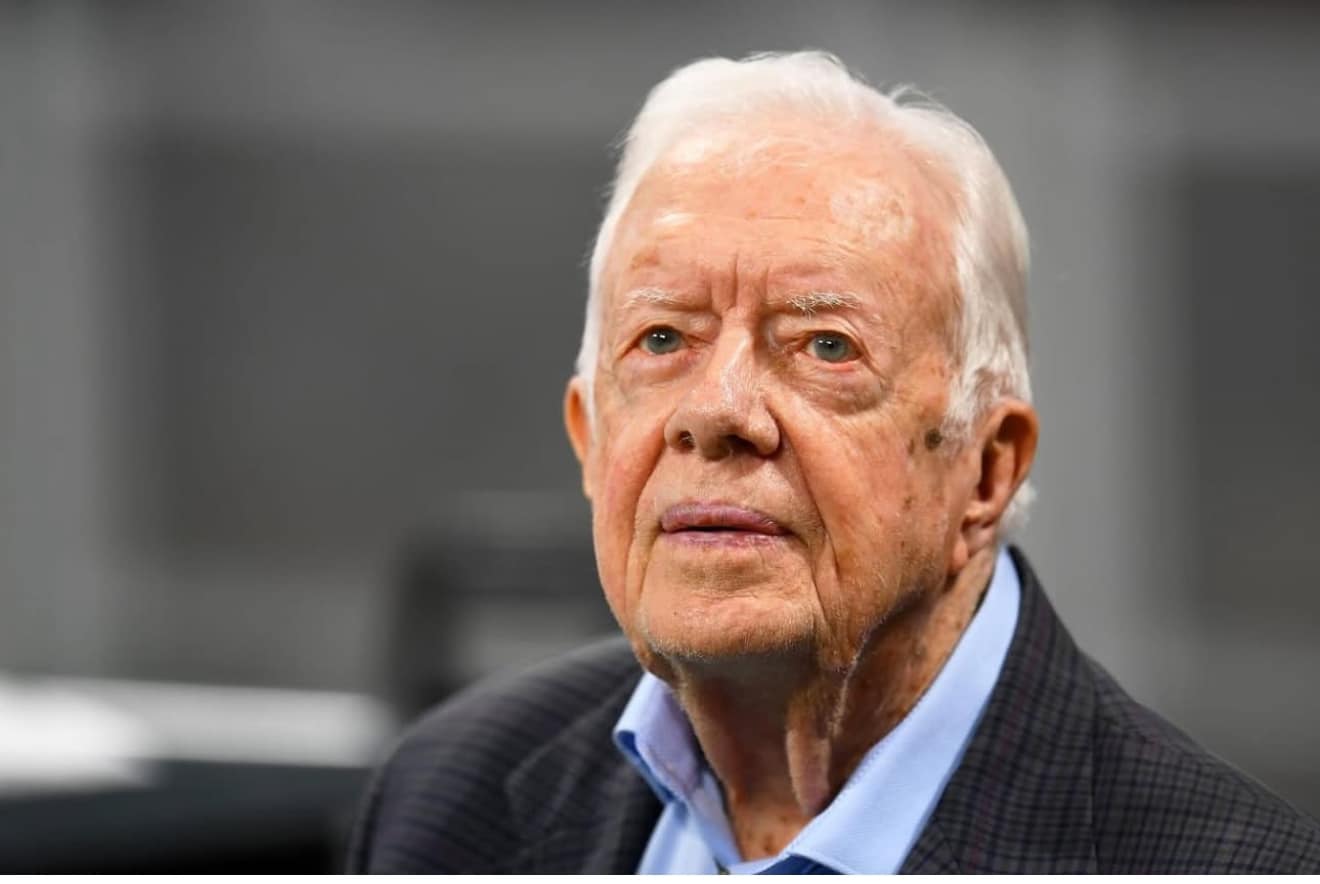
Humanitarian organizations across the globe have similarly praised his legacy. The leaders of Habitat for Humanity expressed that "President Carter was the heart and soul of our movement. He showed us that the hammer and the blueprint are tools for social justice."
The public response has been equally moving. Across social media and public forums, Americans from all political persuasions have shared anecdotes similar to the 1988 encounter, emphasizing his kindness, his approachability, and his "grace under pressure."
Implications: What We Lose and What We Retain
The passing of Jimmy Carter leaves a void in the American political landscape, but it also leaves a clear roadmap for future leaders. His life implies several vital lessons for the modern era:
- The Dignity of the Individual: Carter demonstrated that the most impactful political acts are often the small, personal ones—listening to a citizen, winking at a stranger, or showing up to build a house for someone in need.
- Service as the Highest Calling: His life challenges the perception that the presidency is the pinnacle of a person’s career. By viewing the post-presidency as a period of even greater service, he redefined the role of a former leader.
- Moral Courage: Carter was never afraid to stand for his principles, even when they were unpopular. Whether it was his stance on civil rights in the 1970s or his advocacy for human rights globally, he prioritized moral conviction over political expediency.
As we look toward the future, the legacy of Jimmy Carter serves as a bridge between a history of struggle and a future that demands empathy. He was a man who understood that true greatness is not measured by the accumulation of power, but by the extent to which one uses that power to elevate others.
In his later years, as his health declined, Carter remained a quiet but powerful presence, a symbol of a kinder, more thoughtful form of patriotism. As America mourns, it also reflects on the standard he set—a standard of grace, kindness, and an undying love of country.
The story of the man who said, "I like those kind of questions," reminds us that the best leaders are those who never stop listening. Jimmy Carter’s work is done, but the blueprint he provided for a life of service will continue to inspire generations to come. Rest in peace, Mr. President. Your impact remains, etched into the very fabric of the causes you championed and the countless lives you touched.
