

The State of YouTube in 2026: 40 Essential Statistics Shaping the Future of Digital Media
In an era defined by rapid digital transformation, YouTube remains the undisputed titan of the internet. As we navigate through 2026, the platform has evolved far beyond its origins as a repository for home videos, cementing its status as the world’s most significant cultural, educational, and commercial engine. Whether you are a content creator, a brand strategist, or a casual viewer, understanding the data behind YouTube is no longer optional—it is a prerequisite for navigating the modern attention economy.
With over 2.6 billion monthly active users, the platform’s influence is monolithic. Below, we break down the 40 most critical statistics for 2026 and examine what they mean for the future of digital marketing and content consumption.

Main Facts: The Digital Landscape in 2026
YouTube’s dominance is not merely a matter of sentiment; it is backed by empirical data that highlights its essential role in global infrastructure.
- The Internet’s Second Home: YouTube continues its reign as the second most visited website in the world, trailing only its parent company, Google.
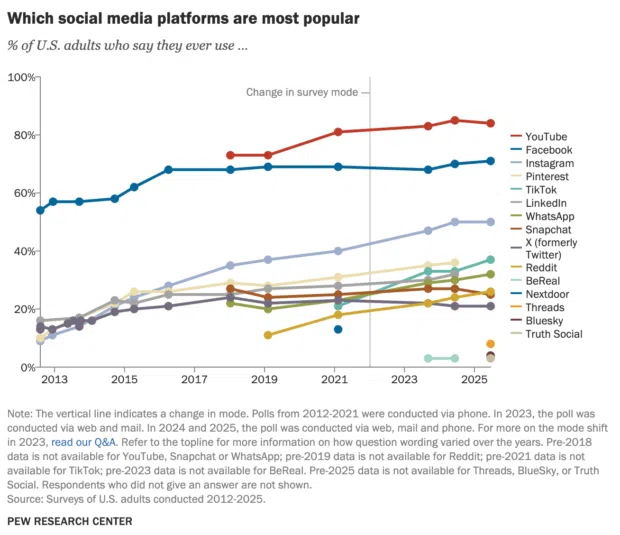
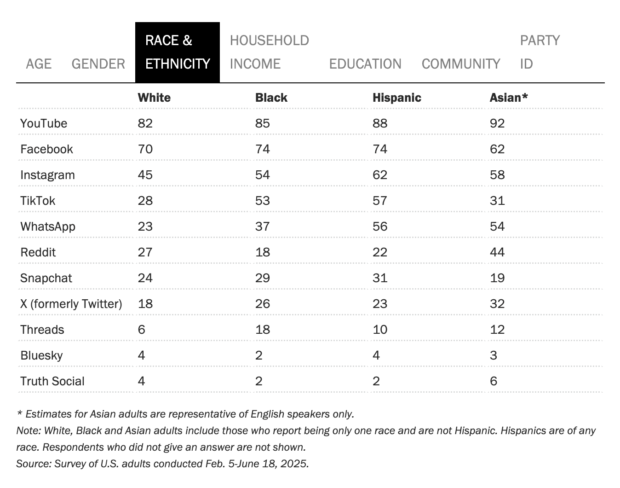
- U.S. Market Supremacy: Within the United States, YouTube holds the title of the most popular social media platform, outperforming Facebook, Instagram, and the rapid-fire engagement of TikTok.
- The Mobile Powerhouse: YouTube is currently the most-used mobile app globally, dominating both in terms of monthly active users and the total time users spend within the application.
- A Global Language: The platform’s reach is truly borderless, available in over 100 countries and supporting 80 different languages.
- The Rise of the Creator Economy: There are now over 87 million content creators on the platform, fostering a competitive ecosystem that pushes the boundaries of video production.
Chronology and Growth: How YouTube Evolved
YouTube’s journey to 2026 has been marked by strategic pivots that have allowed it to outlast competitors. While early growth was driven by viral user-generated content, the current era is defined by a hybrid model of short-form "Shorts" and long-form, high-production-value video.

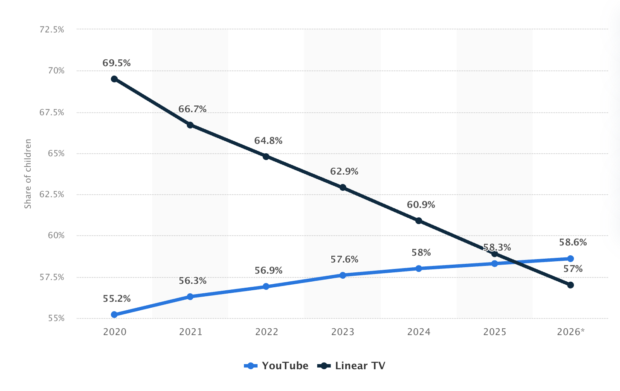
- The Streaming Takeover: For nearly three years, Nielsen has consistently ranked YouTube as the most-watched streaming platform in the U.S., signaling a permanent shift away from linear television.
- The Rise of Shorts: Launched as a direct response to the vertical video boom, YouTube Shorts now averages a staggering 200 billion daily views. It has effectively become the platform’s primary acquisition funnel for younger demographics.
- Monetization Maturity: With 125 million paid subscribers across YouTube Premium and YouTube Music, the platform has successfully diversified its income streams, moving beyond a pure ad-supported model to a stable, recurring revenue system.
Supporting Data: Understanding the Audience
Who is behind the screen? Demographic data reveals a surprisingly diverse and stable user base that defies the "youth-only" stereotype often associated with social media.
The Demographic Breakdown
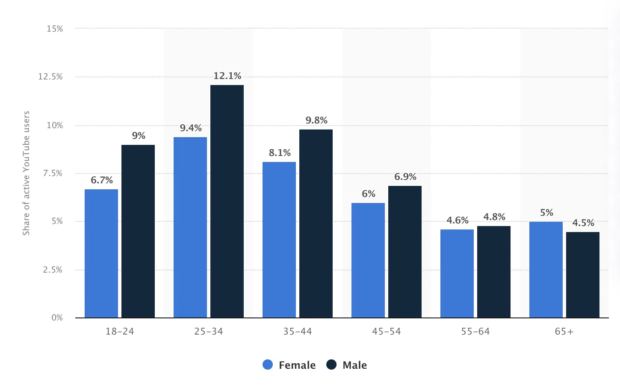
- Age Dynamics: Unlike platforms that lean heavily into Gen Z, YouTube’s largest user cohort falls within the 25–34 age bracket, followed by the 35–44 range. This demographic stability makes the platform highly attractive to advertisers looking for high-intent consumers.
- Gender Distribution: The platform maintains a slight male majority, with 54.3% of users identifying as male and 45.7% as female.
- Global Reach: India stands at the forefront of global usage with 491 million users, followed by the United States (253 million) and Brazil (144 million).
Consumption Habits
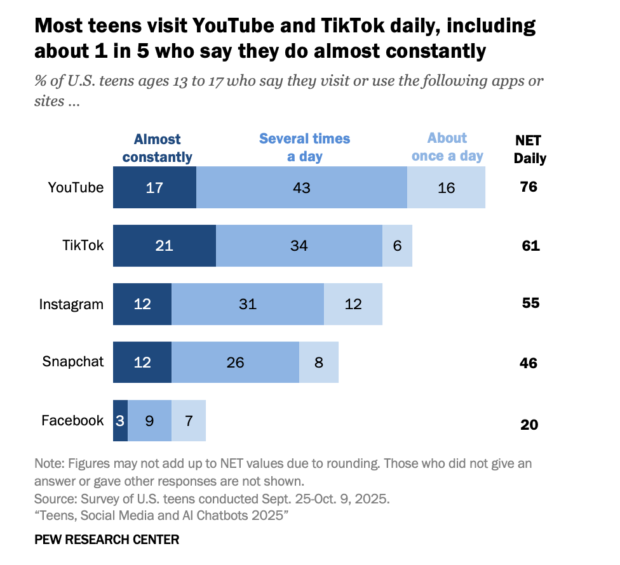
- The Daily Habit: Almost half of all U.S. adults visit YouTube every single day. Among teenagers, the figure jumps to 76%, with 17% reporting that they are on the platform "almost constantly."
- The News Shift: 35% of U.S. adults now report getting their news from YouTube, a significant rise from 23% in 2020. It has become a primary source for political, scientific, and cultural discourse.
- Educational Depth: YouTube users are statistically well-educated, with 87% having attended some college and 89% of that subset having graduated.
Official Responses and Strategic Shifts
YouTube leadership has emphasized a "multi-format" approach. By integrating Shorts, long-form, and live-streaming under one roof, they have created a "stickiness" that is difficult for competitors to replicate.
The introduction of the 45% revenue share for Shorts creators was a landmark decision that signaled to the industry that YouTube is committed to keeping the best talent on their platform. By incentivizing short-form creativity, they have successfully stunted the migration of top-tier creators to other platforms.
Furthermore, the platform’s push into Connected TV (CTV) has yielded massive dividends. With over 40% of users viewing ads on their living room televisions, YouTube has successfully bridged the gap between the traditional TV experience and the digital content library.
Implications: What This Means for Business
For marketers and enterprise leaders, the data points toward three clear imperatives for 2026:
1. The ROI of Video Marketing
YouTube is currently ranked as the third-highest ROI social platform. With 69% of companies now incorporating YouTube into their marketing mix, it is no longer an "experimental" channel. The data suggests that brands should prioritize high-quality, long-form content for trust-building and utilize Shorts for top-of-funnel brand awareness.
2. The Shopping Journey
YouTube is no longer just a media platform; it is a commerce destination. Last year, users consumed over 35 billion hours of shopping-related content. Brands that integrate seamless "how-to" and product demonstration videos are seeing direct correlations to conversion rates.
3. The Power of Influencer Marketing
With over half of all U.S. marketers planning to invest in YouTube influencer marketing, the ecosystem is prime for collaboration. The existence of 87 million creators means there is a niche for every product—from hyper-local services to global consumer goods.
Seven Metrics to Master in 2026
To thrive on the platform, brands must move beyond "vanity metrics" like raw view counts. Success in 2026 is defined by these seven key performance indicators:
- Watch Time: The total minutes viewers spend on your content.
- Average View Duration: The percentage of the video the average viewer completes.
- Audience Retention: Identifying the exact moments where viewers drop off to optimize future edits.
- Click-Through Rate (CTR): The effectiveness of your thumbnails and titles in driving traffic.
- Engagement Rate: Comments, likes, and shares, which signal to the algorithm that the content is valuable.
- Subscriber Growth: A measure of long-term brand loyalty and community health.
- Conversions: Tracking off-platform actions (purchases, sign-ups) directly attributed to your video content.
Conclusion: The Path Forward
The data from 2026 makes one thing abundantly clear: YouTube is the backbone of the modern digital experience. It is where we learn, where we are entertained, and where we make our purchasing decisions.
For businesses, the strategy is straightforward: stop viewing YouTube as a place to dump commercials and start treating it as a platform for building a library of value. By focusing on the audience’s needs—whether through informative long-form content or entertaining, bite-sized Shorts—brands can leverage the platform’s massive scale to drive sustainable, long-term growth.
As we look further into the year, the brands that win will be those that embrace the nuances of the algorithm, respect the intelligence of their viewers, and remain agile enough to adapt to the ever-evolving habits of the global digital population.
