
Beyond the Numbers: Why Your Affiliate Program Needs a Reality Check
Most affiliate managers suffer from "list inflation." They measure success by the total count of affiliates in their database, treating the number like a vanity metric in a monthly report. If the headcount grows, the program looks healthy. But in the world of e-commerce, this is a dangerous delusion.
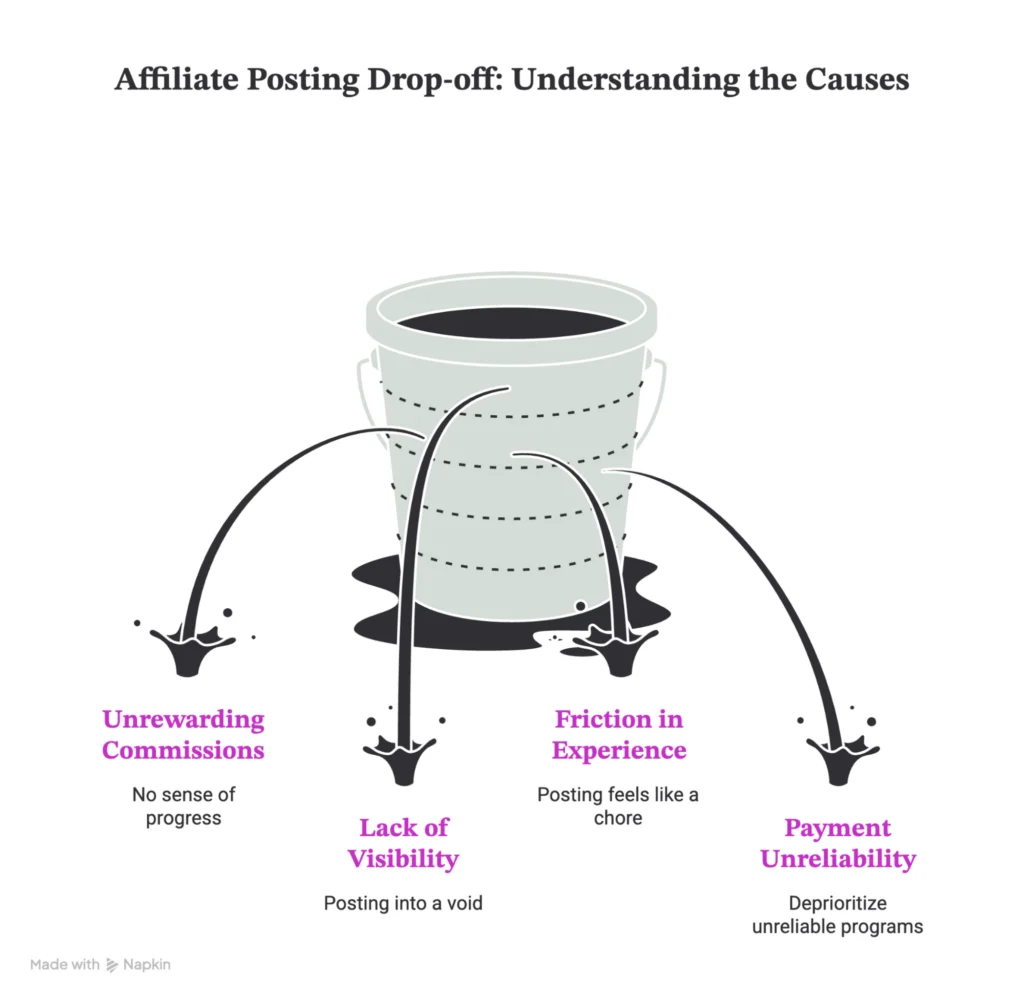
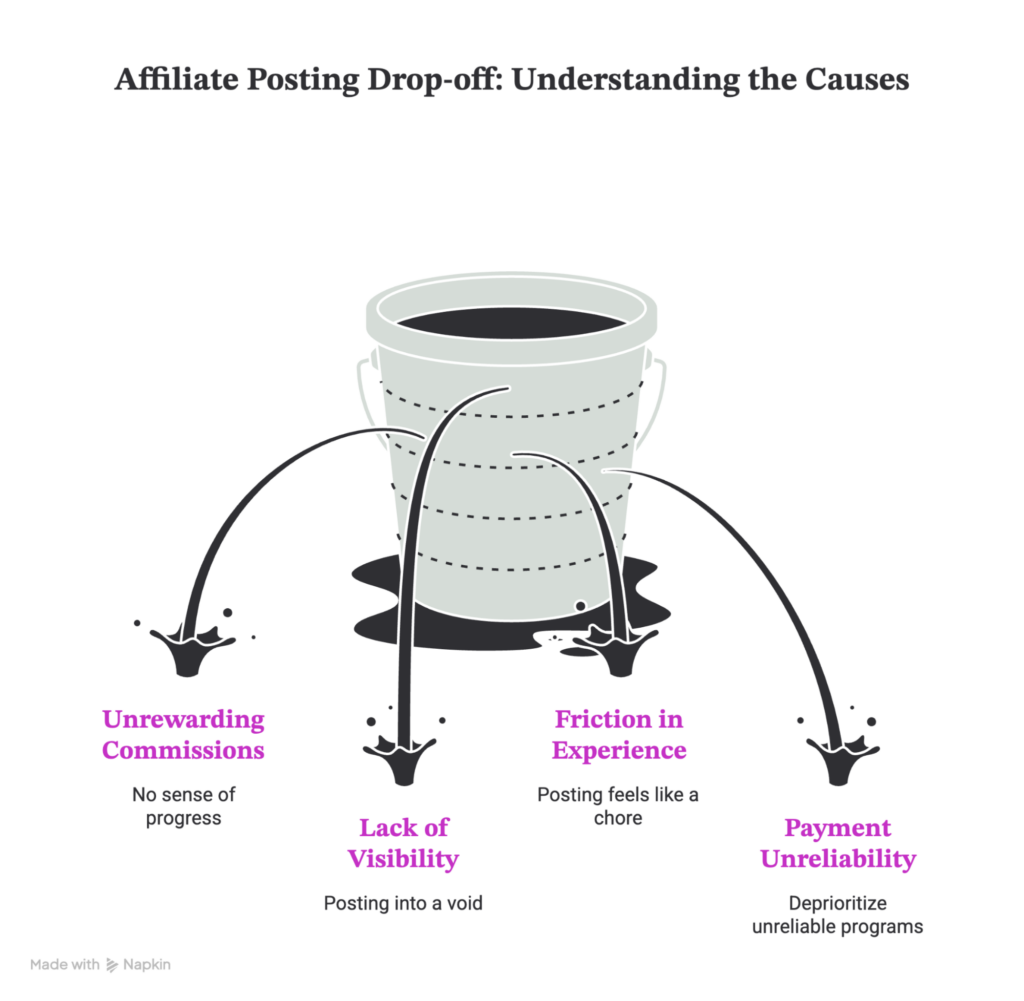
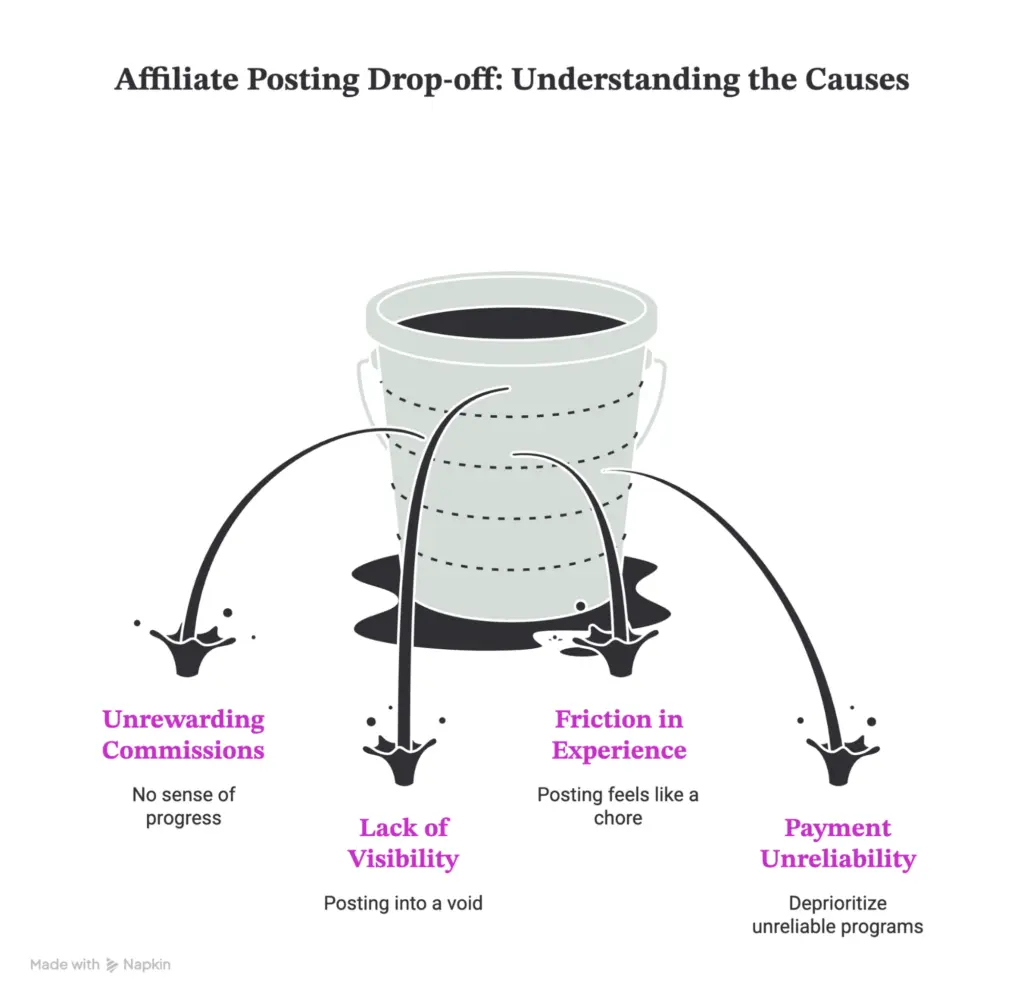
The truth is that a program with 500 affiliates and a massive retention problem is far less valuable than a lean team of 50 highly engaged partners. When your recruitment efforts outpace your retention strategy, you are merely filling a leaky bucket. To build a sustainable, high-growth revenue channel, you must stop obsessing over the top of the funnel and start diagnosing the bottom.
The Diagnostic: Measuring What Actually Matters
The primary metric that exposes a stagnant program is Revenue Per Affiliate (RPA). Unlike total reach, which can be manipulated by aggressive outreach, RPA provides a clinical look at the health of your existing relationships.
The formula is straightforward:
Total Affiliate Revenue / Number of Affiliates who drove at least one sale in the period.
If your RPA is low, it means your list is filled with "noise"—people who signed up, received their tracking links, and vanished. They aren’t just inactive; they represent a significant sunk cost. You spent time sourcing them, onboarding them, and seeding them with products. When they churn, that investment evaporates.
The Recruitment Loop: A Cycle of Stagnation
Most programs fall into a predictable, self-defeating cycle: you onboard 50 affiliates, send the welcome package, and hope for the best. Three months later, you find that only eight are still active. The instinctive reaction is to double down on recruitment. You hire more outreach staff or increase ad spend to fill the pipeline, hoping to compensate for the attrition.
However, if your retention rate is abysmal, increasing the number of new recruits will never fix the underlying issue. You are simply running an expensive treadmill. The brands that successfully turn affiliate marketing into a powerhouse channel shift their focus. They treat the post-onboarding experience with the same intensity as the initial recruitment phase.
The Power of Compounding Trust
Why does a small, active group outperform a large, dormant list? It comes down to the nature of trust.
Affiliate marketing is not a numbers game; it is a transfer of trust. When an audience follows a creator for years, a single, well-placed recommendation carries more weight than twenty disconnected mentions from casual, one-off affiliates.
An affiliate who posts repeatedly builds a track record. They understand the product, they know how to speak to their specific audience, and they become a recurring source of revenue. A "dormant" affiliate, by contrast, is a missed opportunity. They have the link, they have the brand knowledge, but they have lost the incentive or the habit of posting.
Why Affiliates Stop Posting
Churn is rarely a single event; it is a gradual fade. By auditing your program, you can identify three common patterns that lead to affiliate silence:
- The "Forgotten Link" Syndrome: The brand failed to provide fresh creative assets or updates, leaving the affiliate with nothing new to share.
- Lack of Visibility: The affiliate has no idea how their content is performing. When they cannot see their own data, they stop feeling like a partner and start feeling like a stranger.
- The "Commission Ceiling": The affiliate has reached a point where they feel their efforts have plateaued. Without a clear path to higher earnings or rewards, their motivation to continue wanes.
Give Them a Ladder: The Art of Milestone Gamification
A standard commission rate is merely a floor—it’s the minimum required to get an affiliate to say "yes." To keep them posting six months down the line, they need a ladder.
The first milestone is the most critical. It must be achievable for a novice affiliate. If your rewards only trigger after 100 sales, but your average new affiliate only makes five, you have created a demotivating structure.
A Practical Incentive Structure
| Milestone | Reward |
|---|---|
| First $100 in sales | Free product or $50 cash bonus |
| $1,000 in cumulative revenue | Commission increase from 15% to 20% |
| $5,000 in cumulative revenue | $500 bonus + early access to new launches |
By layering time-bound challenges—such as a "three posts in 30 days" bonus—you drive short-term activation during peak seasons. Tools like SATHI have revolutionized this by automating the process. A UK-based beverage brand recently used SATHI to implement these triggers, resulting in an affiliate activity rate jump from 25% to over 60% in a single month, all without adding a single new affiliate to their roster.
Transparency as a Retention Lever
One of the most underutilized tools in the affiliate manager’s arsenal is transparency. If your affiliates have to email you to ask about their sales, you have already failed.
When an affiliate logs into a dashboard and sees their own progress, their top-performing content, and the specific milestones they are close to hitting, it creates a self-reinforcing feedback loop. Good performance leads to visibility, which leads to motivation, which leads to more posting. If your data is trapped in a "black box," you cannot expect your partners to remain engaged.
Foundations: Fix the Friction
Before you launch a complex gamification strategy, you must audit your affiliate experience for friction. Treat your affiliate onboarding as you would your e-commerce checkout flow.
- Is the sign-up process more than three clicks?
- Do they receive an automated welcome email with all necessary assets?
- Is the payout process manual, or is it automated?
The most significant "silent killer" of affiliate programs is payment friction. If an affiliate has to chase you for their commission, they will eventually stop working with you. Automated, predictable payouts aren’t just a courtesy; they are a professional requirement. When affiliates trust that their payment is guaranteed, they stop worrying about the administrative side and focus entirely on content creation.
The Quarterly Check-Up: A Roadmap for Growth
Every quarter, perform a hard review of your RPA. If you find your RPA is stagnating or dropping, stop the recruitment efforts immediately.
Instead, take your top ten highest-performing affiliates and conduct a "post-mortem" of their success. Ask them: What assets do they use most? What is their biggest barrier to posting more? What incentive would make them double their output?
Building your program around the behaviors of your top performers is how you scale. If your current list is a "list" rather than an asset, you are likely suffering from a leak that no amount of new recruitment can patch.
Implications for the Future
The shift in affiliate marketing is moving away from mass-recruitment toward high-value, high-retention partnerships. As customer acquisition costs (CAC) continue to rise across paid social channels, the brands that win will be those that treat their affiliate partners like internal team members.
By focusing on RPA, automating the rewards, and removing every ounce of friction from the partnership, you transform your affiliate program from a volatile, numbers-obsessed spreadsheet into a stable, compounding engine for growth. The goal is no longer to add more people to the top; it is to make the people you have more effective, more loyal, and more profitable.
