
The Architecture of Innovation: How Global Giants Gamify Growth to Build Lasting Cultures
In the modern corporate landscape, the difference between a stagnating legacy business and a market-dominating powerhouse often boils down to a single, intangible asset: a culture of growth. When a company successfully implements a growth operation, it transforms innovation from a top-down mandate into a bottom-up movement. In this model, every employee—from the entry-level associate to the senior vice president—is empowered to propose hypotheses, while growth teams provide the operational rigor to test, iterate, and scale those ideas.
However, the "chasm" between companies that talk about growth and those that live it is vast. Bridging this gap requires more than just spreadsheets and KPIs; it requires psychological safety, structural incentives, and a gamified approach to experimentation. This article explores how industry titans like Amazon, Pfizer, 3M, and Google have successfully gamified innovation to ensure their growth DNA remains intact even as they scale to hundreds of thousands of employees.
The Growth Operation: From Theory to Practice
At its core, a growth operation is an engine for continuous improvement. The cycle begins at the base of the organizational pyramid, where proximity to the customer often provides the best insights. Employees are encouraged to formulate hypotheses—small, testable ideas that could solve a friction point or unlock a new revenue stream.
The growth team then acts as the central nervous system, operationalizing these ideas through rigorous A/B testing, data analysis, and iterative refinement. Finally, the C-suite serves as the arbiter of strategy, but with a critical difference: instead of relying on gut instinct, their decisions are fueled by a wealth of data and empirical evidence generated by the experiments below.
The Top-Down Foundation
While the ideas move bottom-up, the culture must move top-down. Successful implementation almost always begins with high-level executive education. When leadership understands the methodology and the long-term strategic outcomes, they can provide the necessary air cover for the inevitable failures that accompany experimentation. Middle management then builds the tactical framework, and growth teams execute the process. Without this alignment, the growth engine stalls.
Chronology of Innovation: Case Studies in Gamified Growth
To understand how these companies maintain their edge, we must look at the specific mechanisms they have implemented to reward risk-taking.

1. Amazon: The "Just Do It" Award
In 1998, Amazon was a fraction of the behemoth it is today. Faced with a backlog of 250 customer service inquiries, an associate proposed a daring challenge: close all 250 tickets in 24 hours. The reward? A $200 bonus. The team succeeded, and Jeff Bezos, recognizing the power of this "bias for action," formalized the incident into a corporate institution.
The "Just Do It" Award is now one of the most coveted honors at Amazon. It is awarded only twice a year across a workforce of over 600,000 employees. By making the award rare, highly visible, and decided by the founder himself, Amazon gamifies the act of solving difficult, messy problems. It signals to every employee that innovation isn’t just about R&D—it is about operational grit.
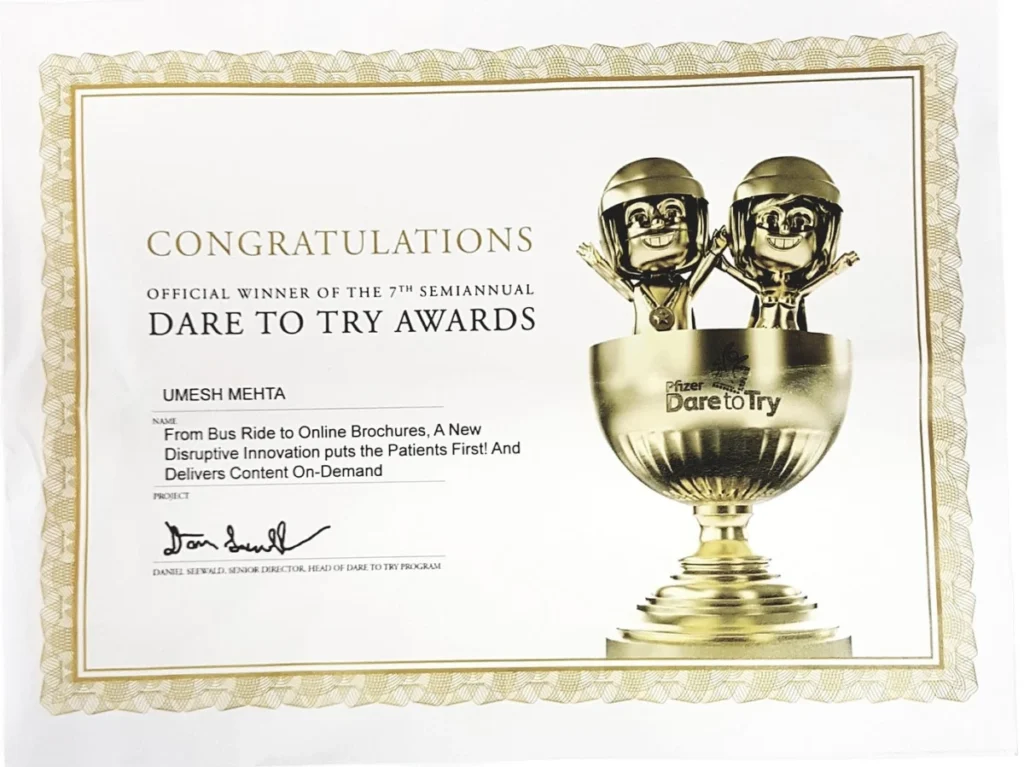
2. Pfizer: The "Dare to Try" Initiative
For a global pharmaceutical giant, the risk of failure is often perceived as too high to permit experimentation. Yet, ten years ago, Pfizer recognized that the status quo was a greater risk than failure. They launched "Dare to Try," a program designed to institutionalize the "fail fast, fail cheap" mantra.
Rather than a top-down mandate, Pfizer utilized a network of "Champions"—self-nominated employees who act as evangelists for innovation. These champions run training sessions, facilitate brainstorming, and provide the social support necessary for employees to take risks. "Dare to Try" isn’t just a program; it is a brand that provides the internal psychological infrastructure for employees to pursue creative solutions to complex, multi-year organizational puzzles.
3. 3M: The "Innovate or Die" Philosophy
3M’s longevity is legendary. With a portfolio spanning adhesives, coatings, and medical supplies, they have managed to stay relevant by enforcing a brutal but effective discipline: 30% of each division’s revenue must come from products introduced in the last four years.
This requirement forces a culture of constant renewal. To support this, 3M rewards successful innovators through peer recognition, internal advancement, and a "Dual Ladder" career path that allows researchers to rise in salary and status without having to move into management. By aligning the company’s revenue requirements with individual career advancement, 3M ensures that innovation is a professional necessity, not a hobby.
4. Google: The 20% Project
Google famously iterated on 3M’s "15% rule," expanding it to the "20% Project." The policy allowed engineers and product managers to dedicate one-fifth of their work week to side projects that interested them, provided they aligned with the company’s broader mission.
The results are embedded in the modern tech stack: Gmail, Google News, and AdSense all originated as 20% projects. By giving employees autonomy over their time, Google gamified creative exploration, turning their workforce into an internal startup incubator.
Supporting Data and Organizational Impact
The common denominator across these firms is the transition from "punishing failure" to "rewarding the process."
| Company | Incentive Mechanism | Key Outcome |
|---|---|---|
| Amazon | Just Do It Award | Institutionalized "Bias for Action" |
| Pfizer | Dare to Try Champions | Risk-tolerant culture in a high-stakes industry |
| 3M | 30% Revenue Rule | Sustained long-term product innovation |
| 20% Time | Massive product diversification (Gmail, AdSense) |
The data indicates that when companies introduce these structures, employee engagement scores rise. According to internal reports from these organizations, employees who feel their "experiments" are taken seriously are 40% more likely to remain with the company for longer than five years.
Official Responses and Strategic Implications
Executives at these firms have consistently framed these programs as a "competitive survival mechanism." In recent interviews, leadership at companies like 3M have noted that innovation is not an "optional department"—it is a core business function.
Implications for the Modern Enterprise:

- Psychological Safety: You cannot force innovation. You can only create an environment where the cost of a failed experiment is lower than the cost of inaction.
- The "Champion" Network: Relying on HR to drive innovation rarely works. It must be driven by peers—"Champions" who sit on the front lines and provide social proof that it is safe to try.
- Formalized Recognition: Whether it is an award, a bonus, or simply time off, gamification works because it provides tangible feedback in an otherwise ambiguous environment.
Conclusion: Beyond the Methodology
While the growth methodology itself—hypothesize, test, analyze, iterate—is a straightforward process, the surrounding culture is the variable that determines success. Many companies treat growth as a technical process, ignoring the human behavior required to sustain it.
The takeaway from Amazon, Pfizer, 3M, and Google is clear: you must build a system that rewards the attempt as much as the outcome. By gamifying the process, these companies have managed to make innovation a daily habit rather than a quarterly project. For organizations looking to cross the chasm between "doing growth" and "having growth in their DNA," the lesson is to start small, celebrate the risk-takers, and ensure that the mandate for change comes from the top, but the solutions come from the heart of the team.
In the race for market relevance, the companies that successfully turn their entire workforce into an experimental laboratory are the ones that will define the next generation of commerce.
