
Navigating the Future: Scott Brinker and Frans Riemersma Unveil the "Martech for 2026" Roadmap
As the calendar turns toward the end of the year, the marketing technology (martech) industry is often bombarded with a cacophony of speculative "predictions." These end-of-year forecasts frequently veer into the realm of science fiction, offering hyperbolic visions of the future that lack grounding in the realities of daily marketing operations.
However, for the past several years, industry authorities Scott Brinker (ChiefMartec) and Frans Riemersma have taken a different approach. Instead of forecasting based on whimsy, they produce a deeply researched, data-backed assessment of the current state of the industry. Their latest project, Martech for 2026, promises to be their most comprehensive analysis yet, offering a pragmatic roadmap for marketing leaders navigating an increasingly complex technological landscape.
The Core Mission: Pragmatism Over Prophecy
The Martech for 2026 initiative, set for an official release on Tuesday, December 2, is designed to cut through the noise. Rather than relying on "fever-dream" predictions, the report utilizes existing, real-world patterns observed across thousands of marketing tech stacks to extrapolate actionable trends for the next 6 to 12 months.
"These aren’t the crazy, eye-rolling prophecies people are used to," Brinker notes. "It’s a pragmatic assessment of what is actually happening inside marketing tech stacks and the industry as a whole."
By focusing on observable behaviors and structural shifts within organizations, Brinker and Riemersma provide a blueprint that helps marketing operations (MOps) professionals and CMOs prepare for the fiscal and operational challenges of the coming year.
Chronology of the Release and Event
The rollout of Martech for 2026 is structured to provide both immediate value and long-term utility for the marketing community:
- Pre-Launch Phase: Throughout late October and November, marketing leaders are invited to register for the accompanying online seminar. This allows attendees to secure priority access to the 100+ page report the moment it drops.
- Launch Day (December 2): The formal release of the comprehensive report. On this day, Brinker and Riemersma will host a live, no-holds-barred presentation, dissecting their most surprising findings.
- The December Residency: For those unable to attend the live broadcast, the session and the report findings will be available on-demand throughout the entire month of December.
- The Executive Roundtable: Following the core keynote, the event will feature a series of candid interviews with senior leadership from sponsoring organizations, providing a "behind-the-curtain" look at industry trends.
The AI Frontier: Agents, Context, and Integration
Perhaps the most significant component of the Martech for 2026 report is its deep dive into the proliferation of AI agents. While AI has been a buzzword for several years, the transition from large language models (LLMs) to autonomous "agents" marks a fundamental shift in how marketing stacks are architected.
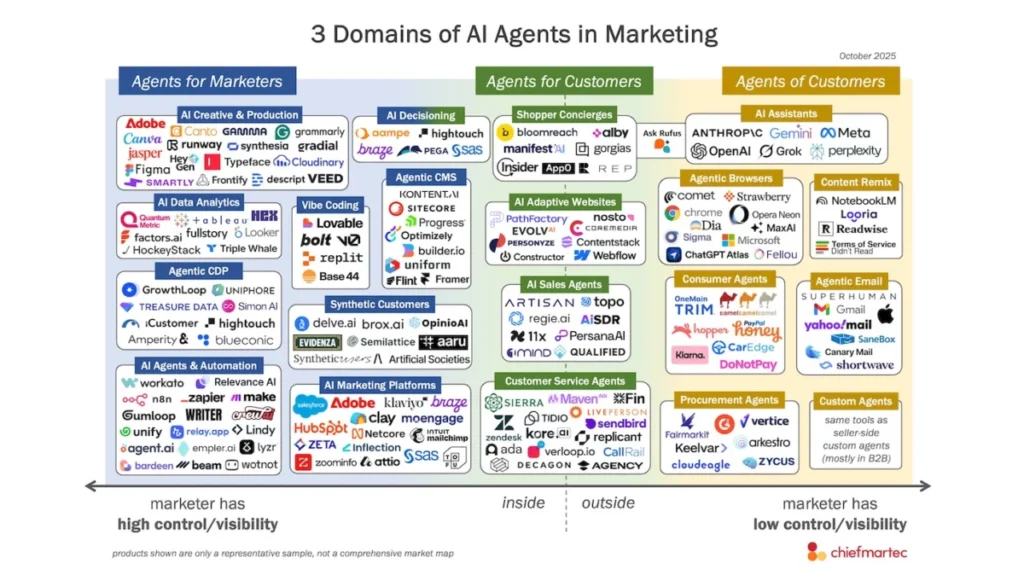
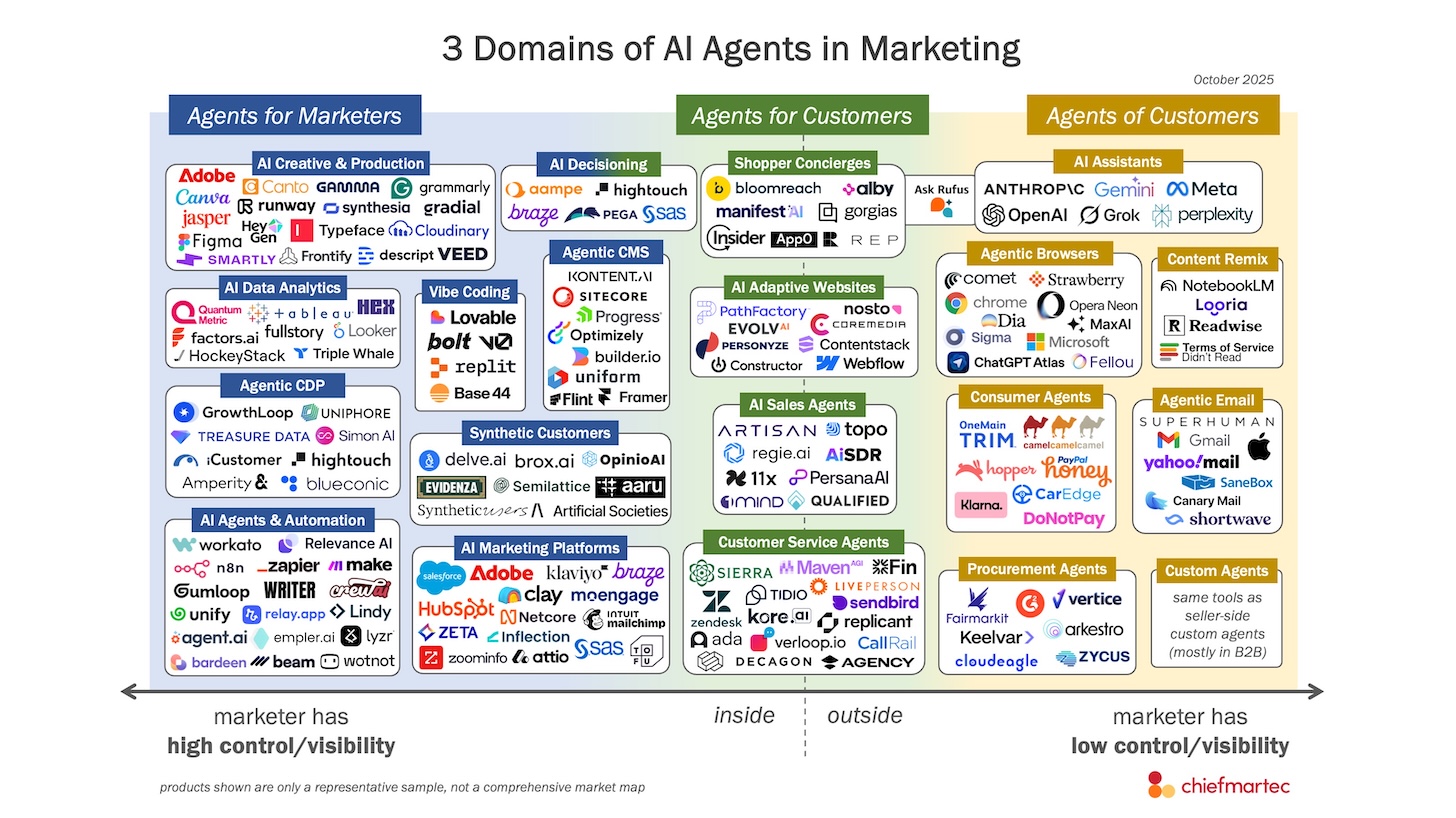
The Three Domains of AI Agents
The report categorizes AI agents into three distinct domains. By analyzing where these agents exist within the marketing ecosystem, the authors aim to clarify which technologies are ready for prime time and which remain experimental.
- Production-Ready Agents: These are the tools that have moved beyond the "science fair" phase and are actively scaling within enterprise organizations to deliver measurable ROI.
- Emerging Frameworks: Technologies that show promise but require further refinement before they can be considered standard components of a stable martech stack.
- The Context Engineering Layer: A new, critical area of study identified by the authors. This involves the art of preparing, structuring, and feeding data to AI agents to ensure their outputs are relevant, accurate, and brand-aligned.
Augmentation vs. Replacement
One of the central questions addressed in the research is the existential status of existing SaaS platforms. As AI agents become more sophisticated, the report asks: Are these agents merely augmenting existing apps, or are they destined to replace them entirely?
Brinker and Riemersma provide empirical data from their AI & Data in Marketing survey to answer this, offering insights into whether AI is simply adding a layer of efficiency to current tools or if it is addressing entirely new, previously impossible, use cases.
Supporting Data and Evidence-Based Insights
The Martech for 2026 report is not merely an opinion piece; it is underpinned by extensive data collection. The survey data regarding AI and data connectivity serves as the backbone of the report. By tracking the full spectrum of data sources currently being connected to AI agents, the authors reveal the "plumbing" of modern marketing.
This data is crucial for MOps professionals. As organizations grapple with data silos, understanding which connections are actually yielding results—and which are just adding technical debt—is the key to a lean, efficient tech stack.
Perspectives from Industry Leaders
To ensure the report offers a holistic view of the market, the researchers have partnered with several industry giants, including GrowthLoop, Hightouch, Intuit Mailchimp, MetaRouter, Progress, SAS, and Treasure Data.
In a departure from traditional industry webinars, the event organizers have committed to a "no sales pitch" policy. Following the keynote, senior product and marketing leaders from these firms will engage in candid, unscripted discussions. The goal is to get their unfiltered perspective on what they are seeing within their own organizations and, more importantly, what their customers are reporting as they attempt to integrate AI into their daily workflows.
Strategic Implications for 2026
For the CMO or Marketing Technologist, the implications of this research are profound. As we head into 2026, the strategy is shifting from "AI adoption" to "AI integration and governance."
1. The Shift to "Context Engineering"
As LLMs become commodities, the competitive advantage will lie in the data companies feed into their agents. The report suggests that "context engineering" will become a core competency for marketing teams, requiring a new level of collaboration between data engineers and marketing strategists.
2. Tech Stack Rationalization
With the arrival of AI agents, many legacy tools that previously performed singular tasks (such as basic email scheduling or simple data entry) may become redundant. The report encourages a hard look at the current stack to identify which tools are providing unique value and which are being outpaced by intelligent agents.
3. Operational Agility
The velocity at which these technologies are evolving means that a static 12-month plan is no longer viable. The research highlights the need for modular, flexible tech stacks that can swap out components as superior AI agents emerge.
Conclusion: Preparing for the Year Ahead
In an industry defined by rapid change, the Martech for 2026 project stands out as a lighthouse of clarity. By stripping away the marketing jargon and focusing on the empirical realities of what is happening on the ground, Scott Brinker and Frans Riemersma are providing the marketing community with the tools needed to make informed, strategic decisions.
Whether you are a CMO looking to optimize your budget, a marketing operations leader aiming to streamline your tech stack, or a technologist trying to understand the next wave of AI, this report offers the insights necessary to stay ahead of the curve.
How to Engage:
Interested professionals are encouraged to register for the free event via the official registration portal. By registering in advance, attendees ensure they are the first to receive the report and gain full access to the live and on-demand sessions throughout the month of December.
As the holiday season approaches, this resource provides a rare opportunity to step back, recalibrate, and enter the New Year with a clear vision of the technological landscape that lies ahead. Don’t wait until January to formulate your strategy—the work of 2026 begins in December.
