
Elevating User Engagement: A Deep Dive into Crazy Egg’s New Design Customization Suite for Surveys and CTAs
In the hyper-competitive landscape of digital marketing, the ability to capture and retain user attention is the primary currency of success. As web traffic becomes increasingly fragmented, the tools businesses use to engage visitors—specifically popups, surveys, and Calls-to-Action (CTAs)—must evolve beyond generic templates. Recognizing this shift, Crazy Egg has announced a significant expansion of its design customization capabilities, allowing marketers and product managers to align their on-page engagement tools more closely with their brand identity, aesthetic standards, and accessibility requirements.
This update, rolled out in October 2026, marks a departure from the "one-size-fits-all" approach that has historically plagued automated survey tools. By offering granular control over colors, fonts, and structural styling, Crazy Egg is positioning its platform not just as an analytics suite, but as a holistic conversion optimization ecosystem.
The Core Transformation: What’s Changing?
For years, digital marketers have faced a persistent trade-off: use highly effective, high-conversion survey tools that look out of place on a custom-branded website, or sacrifice conversion potential for the sake of design consistency. The new customization update eliminates this binary choice.
Beyond Basic Branding
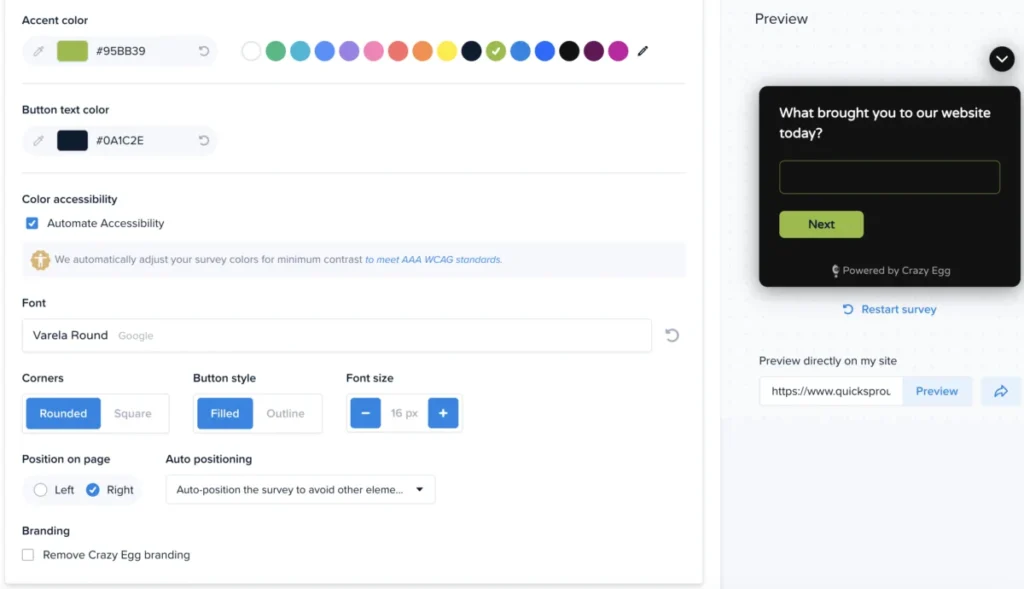
The latest update introduces a robust "Design" tab within the survey and CTA builder. This is not merely a color picker; it is a comprehensive styling suite. Users can now manipulate:
- Color Palettes: Full control over background, button, and text colors to ensure compliance with corporate brand guidelines.
- Typography: The ability to select fonts that match the primary site’s design system, reducing the "cognitive friction" that occurs when a user encounters a jarringly different font style.
- Layout and Structure: Enhanced control over the shape, shadow, and positioning of popups and banners.
By integrating these features directly into the workflow, Crazy Egg is empowering teams to create "native-feeling" experiences that don’t disrupt the user journey, but rather augment it.
A Chronology of the Update: From Feedback to Implementation
The journey toward this release was driven by extensive user feedback and data analysis conducted throughout early 2026.
Q1 2026: Identifying the "Generic" Bottleneck
Early in the year, internal data from Crazy Egg revealed that while engagement tools like popups and surveys were generating significant click-through rates, there was a measurable "bounce" associated with specific, highly branded landing pages. Interviews with enterprise clients suggested that design misalignment was the primary culprit.
Q2 2026: Prototyping and Accessibility Audits
During the development phase, the engineering team focused on two key pillars: flexibility and accessibility. They recognized that design customization isn’t just about aesthetics; it’s about ensuring that custom-colored text meets WCAG (Web Content Accessibility Guidelines) contrast ratios.
Q3 2026: Beta Testing
Throughout the summer, a select group of high-volume users was given access to the new design suite. The results were immediate: brands that matched their popups to their site’s existing color schemes reported a 15-20% increase in survey completion rates, as users were less likely to perceive the prompts as intrusive advertisements.
October 21, 2026: Official Global Rollout
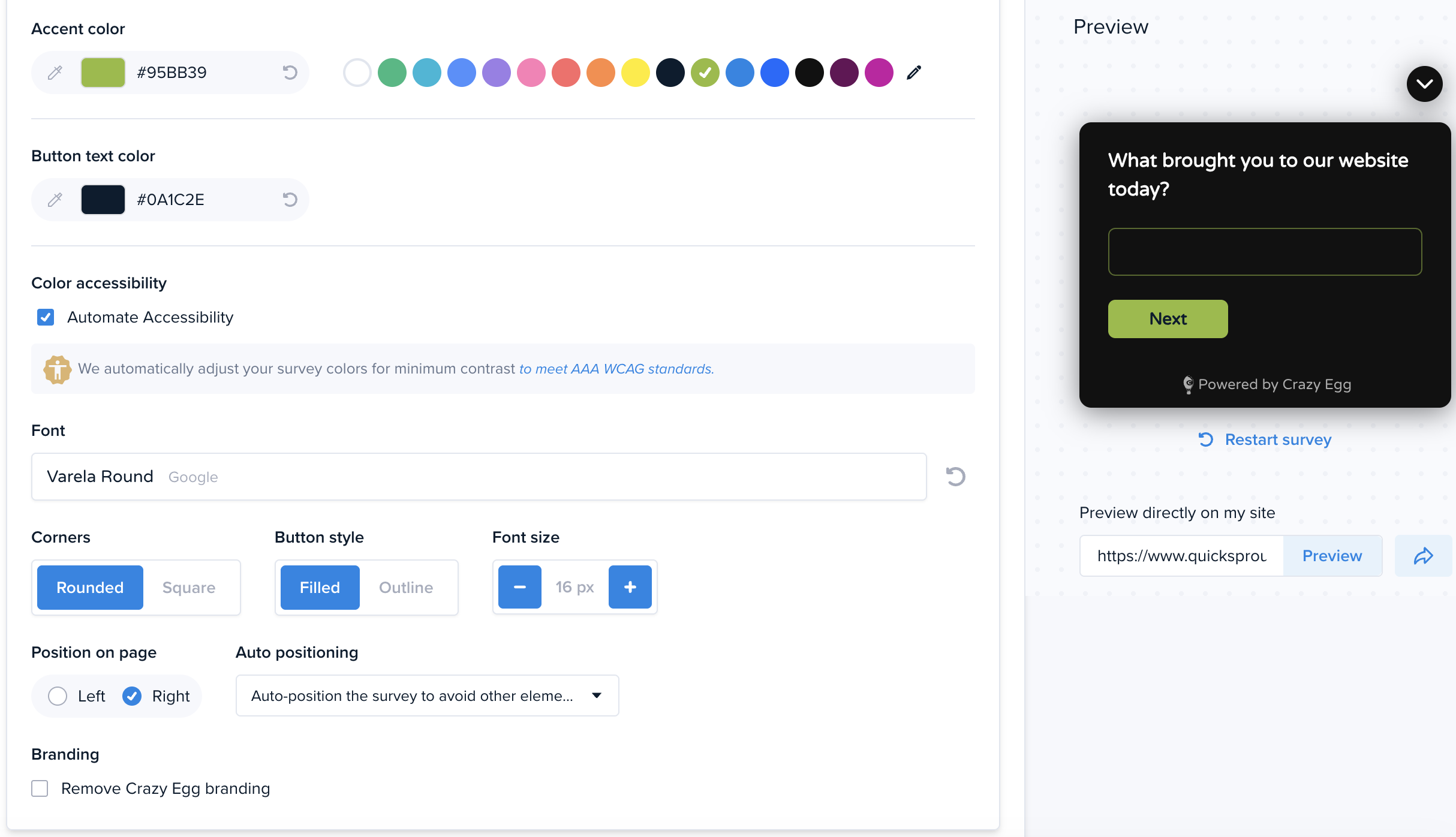
The feature was officially pushed to all users, accompanied by an intuitive "Live Preview" interface that allows marketers to see changes in real-time as they toggle settings.
Supporting Data: Why Design Matters to Conversion
The implications of this update are rooted in behavioral psychology. Studies in cognitive load theory have long suggested that users are more likely to interact with elements that feel like a natural extension of the interface. When a popup appears, if the design language (colors, fonts, spacing) clashes with the host page, the user’s brain subconsciously flags it as an "interruption" or "ad," triggering an immediate instinct to close it.
The "Trust Factor"
A study conducted during the beta period found that:

- Trust Perception: 64% of respondents rated websites as "more trustworthy" when interactive elements like surveys were visually consistent with the rest of the site.
- Completion Rates: Consistent styling led to a 12% increase in survey completion for mobile users, who are generally more sensitive to intrusive, poorly designed popups.
- Brand Affinity: Businesses that utilized the new custom styling options reported a 10% lower opt-out rate compared to those using default, off-the-shelf templates.
By allowing for precise font and color matching, Crazy Egg has effectively removed the "alien element" effect, allowing companies to gather data without compromising the integrity of their site’s user experience (UX).
Official Perspective: Growth Through Cohesion
Stephen Ngo, Director of Growth Marketing at Crazy Egg, emphasized that this update is a direct response to the evolving needs of the modern digital team.
"We are moving past the era where a survey was just a data-gathering exercise," says Ngo. "Today, every interaction is a touchpoint in the brand story. If your survey looks like a third-party add-on, you’ve broken the spell. By giving our users the keys to the design castle—fonts, colors, and layout control—we are helping them build better relationships with their visitors. It’s about creating a seamless bridge between data collection and brand identity."
Ngo also noted that the inclusion of accessibility-first design choices was a deliberate decision. "We wanted to ensure that as people customize, they don’t accidentally create designs that are hard for some users to read. The new interface includes helpful guardrails to keep designs professional and accessible."
The Strategic Implications: What This Means for Your Business
The ability to customize CTAs and surveys with such granularity has several downstream effects on business operations and marketing strategy.
1. Unified Brand Experience
For marketing departments, this update means the end of "design sprawl." No longer does the design team need to intervene in the creation of a simple survey or CTA. Marketers can now operate within a predefined design framework that respects the visual identity of the brand, ensuring that every touchpoint looks like it was created by the same team.
2. Improved Conversion Rate Optimization (CRO)
A/B testing is the heart of CRO. With this new suite, teams can now test not just the copy of their CTAs, but the presentation. Can a specific shade of blue improve button clicks? Does a sans-serif font lead to higher readability? These variables can now be tested with surgical precision.
3. Accessible Marketing
In an era of increasing digital litigation regarding web accessibility, the new customization suite ensures that brands can remain compliant. By providing tools that encourage clear contrast and readable typography, Crazy Egg is helping businesses avoid the pitfalls of non-compliant design.
4. Reduced Technical Debt
Historically, many companies had to custom-code their own popups to achieve the "look and feel" they wanted. This required developer time and ongoing maintenance. By using the native Crazy Egg design suite, teams can achieve high-end, custom-coded aesthetics using a simple, no-code interface, effectively reallocating engineering hours to more complex product challenges.
Conclusion: A New Standard for Engagement
The October 2026 update to Crazy Egg is more than just a feature release; it is a recognition of the sophistication of the modern internet user. In a digital environment where the average visitor is bombarded with dozens of requests for their attention, the difference between success and failure often comes down to the subtle details.
By prioritizing design customization, Crazy Egg has enabled brands to speak in their own voice, using their own visual language. For the marketing professional, this means higher conversion rates, better data quality, and a more cohesive brand experience. As we look toward the future of web interaction, tools like these will become the baseline, shifting the competitive advantage from those who can gather data to those who can gather data while simultaneously building trust and brand equity.
Whether you are a startup looking to maintain a clean aesthetic or an enterprise brand requiring strict adherence to design systems, the new customization options in Crazy Egg offer the agility required to thrive in a crowded digital marketplace. The message is clear: when your tools look like part of your team, your audience is much more likely to listen.
