
Decoding the Total Experience: A Definitive Playbook for Revenue Growth and Brand Survival
In the modern marketplace, the traditional boundaries separating marketing, customer service, and brand strategy have completely dissolved. Today’s consumers view every interaction with a company—from initial discovery and social media engagement to post-purchase support and long-term loyalty—as a single, continuous narrative. Recognizing this fundamental shift, research and advisory powerhouse Forrester has introduced its comprehensive Total Experience (TX) framework.
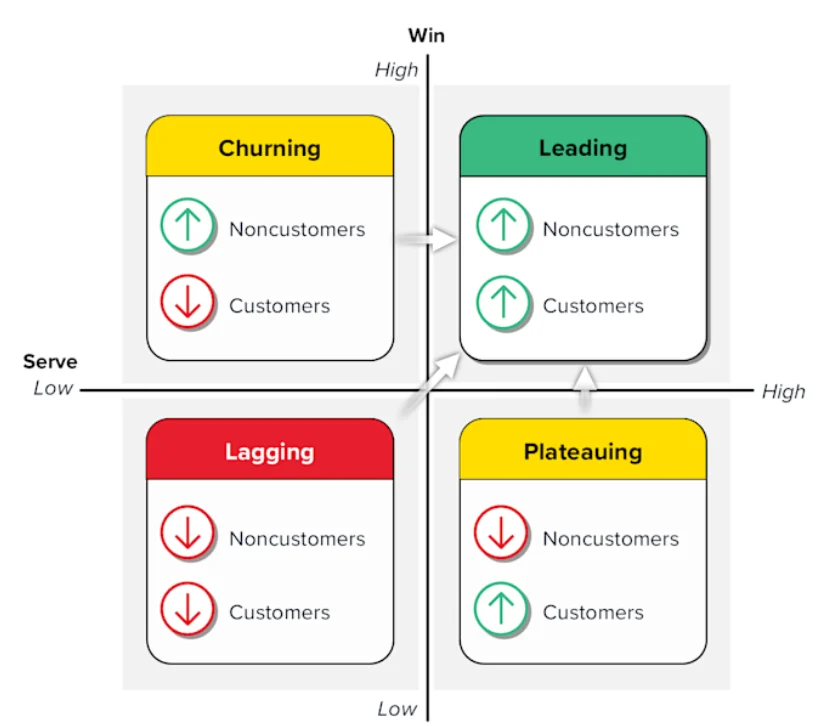
Designed to help organizations accurately measure and optimize their overall performance with both prospects and existing customers, the framework serves as a vital diagnostic tool. At its core is Forrester’s proprietary Growth Grid, a strategic matrix that maps brands into one of four distinct operational quadrants: Leading, Churning, Plateauing, and Lagging.
Navigating this grid requires businesses to make difficult, deliberate choices. A company’s trajectory within a specific product or service category can vary wildly compared to industry peers residing in alternative quadrants. To help organizations navigate these complex dynamics, Forrester has released a definitive new research report titled, Acquire Customers And Serve Them Better With A Total Experience. Authored by Forrester Analyst Dipanjan Chatterjee, the report acts as a practical playbook for revenue growth, offering actionable strategies no matter where a brand currently finds itself on the grid.
Main Facts: The Four Quadrants of the Forrester Growth Grid
The Forrester Growth Grid evaluates businesses across two critical vectors: their ability to attract prospective buyers and their success in satisfying and retaining current customers. By cross-referencing these performance metrics, companies are categorized into four distinct archetypes, each presenting its own set of distinct advantages, vulnerabilities, and strategic imperatives.
1. Leading Brands: The Precarious Pinnacle
Leading brands represent the gold standard of market performance. These organizations excel simultaneously at two difficult tasks: capturing the attention of new prospects and consistently satisfying their active customer base. They have optimized their acquisition funnels while delivering exceptional post-purchase value.
However, the report emphasizes that market leadership is inherently precarious. Because consumer expectations shift rapidly and disruptive competitors continually enter the fray, leaders cannot afford to rest on their laurels. To maintain their dominance, top-tier brands must actively monitor category trends, track competitive movements, and commit to continuous innovation. Failing to look ahead can quickly leave a market leader blindsided by more agile upstarts.
2. Churning Brands: The High-Cost Acquisition Trap
Churning brands find themselves caught in a frustrating, costly cycle. On the surface, these companies are often quite successful at attracting prospective buyers through robust marketing campaigns, flashy advertising, and strong top-of-funnel initiatives. Unfortunately, their operational reality falls short of the marketing hype.
Once prospects convert into customers, the experience sharply deteriorates. Because these brands fail to satisfy their buyers, customer retention rates plummet. Consequently, companies in the churning quadrant spend heavily to acquire customers only to lose them before they can recoup that initial acquisition investment. The financial drain of a leaky bucket makes sustainable growth nearly impossible until fundamental operational fixes are implemented.
3. Plateauing Brands: The Loyalty Echo Chamber
Plateauing brands face the exact inverse problem of their churning counterparts. These companies have perfected the art of customer satisfaction; their existing user base is intensely loyal, happy, and engaged. However, these brands suffer from a profound lack of market reach and visibility. They struggle mightily to attract new prospects from outside their immediate ecosystem.
This dynamic creates a dangerous illusion of stability. Without achieving broader market relevance, a company’s loyal customer base will eventually shrink due to natural attrition, changing demographics, or shifting lifestyle needs. Plateauing brands must find ways to break out of their echo chambers and capture the attention of new, uninitiated audiences.
4. Lagging Brands: The Comprehensive Deficit
Lagging brands occupy the most vulnerable quadrant on the Forrester Growth Grid. These organizations struggle across the board, failing equally at attracting new prospects and retaining existing customers. Lacking distinct market differentiation, effective marketing, or satisfactory service delivery, laggards face an existential threat to their market share and ongoing viability.
For brands trapped in this quadrant, piecemeal fixes rarely work. A comprehensive structural diagnostic is required to understand why the business is failing to resonate with target audiences on both ends of the customer lifecycle.
Chronology: The Evolution of Customer-Centric Frameworks
To fully understand the significance of Forrester’s Total Experience framework, it is necessary to examine how modern business strategy has evolved over the past several decades.
Era 1: The Siloed Approach (Late 20th Century)
Historically, business operations were strictly compartmentalized. Sales departments chased quotas, marketing teams focused exclusively on top-of-funnel lead generation and brand awareness, and customer service departments operated as isolated cost centers designed to handle complaints. Little to no formal data-sharing occurred between these departments. The consumer journey was viewed as a linear relay race, where one department handed off the consumer to the next with minimal coordination.
Era 2: The Rise of Customer Experience (CX) (2010s)
As digital transformation accelerated, businesses realized that siloed operations resulted in fragmented, frustrating experiences for the end-user. This realization sparked the Customer Experience (CX) revolution. Companies began investing heavily in customer satisfaction scores (CSAT), Net Promoter Scores (NPS), and dedicated CX leadership roles.
While this focus dramatically improved post-purchase retention and brand loyalty for many firms, it frequently left marketing and acquisition teams operating in a parallel universe. Organizations optimized the back-end experience while struggling to connect those improvements back to top-line revenue growth and prospect acquisition.
Era 3: The Total Experience (TX) Paradigm (Present Day)
Recognizing that prospects and customers inhabit the same continuous ecosystem, analysts and thought leaders began championing the Total Experience framework. By merging prospect acquisition metrics with customer retention realities, frameworks like Forrester’s Growth Grid bridge the historic divide between marketing and service delivery.
Today, the Total Experience model acknowledges a simple truth: you cannot separate how a brand acquires customers from how it treats them. Acquisition marketing sets expectations; customer experience either fulfills or shatters those expectations. The two forces are inextricably linked, forming the foundation of modern enterprise strategy.
Supporting Data and Strategic Insights
Navigating the nuances of the Forrester Growth Grid requires data-driven introspection. According to insights featured in Chatterjee’s report, companies must tailor their strategic roadmaps precisely to their current operational quadrant rather than applying generalized growth tactics.
Strategic Priorities for Churning Brands
For organizations trapped in the churning quadrant, financial models show that pumping more money into awareness-building marketing is a losing battle. If a brand spends $100 to acquire a customer, but that customer leaves after a single transaction worth $50, the business is effectively burning capital.
- Shift the Investment Focus: Prudence dictates an immediate reallocation of resources. Before investing another dollar into top-of-funnel acquisition, churning brands must redirect funds toward improving the core customer experience.
- Prioritize Retention Mechanisms: Loyalty programs, onboarding optimization, and proactive customer success initiatives must become top organizational priorities. Only once the leaky bucket is repaired does aggressive acquisition marketing make economic sense.
Strategic Remedies for Plateauing Brands
For plateauing brands, the challenge is unlocking the "well-kept secret" of their own success. Because their current customers are genuinely satisfied, the product or service itself is rarely the issue; rather, the problem is a lack of market visibility and broad-based relevance.
- Leverage Customer Advocacy: Satisfied customers are a brand’s most credible marketers. Plateauing brands must implement formal advocacy programs—such as referral incentives, user-generated content campaigns, and case study development—to spread awareness of their strengths among non-customers.
- Tune Up Brand Positioning: In addition to advocacy, plateauing brands frequently need to re-evaluate their brand positioning. By modernizing their messaging and tailoring value propositions to fit emerging customer segments, these brands can successfully win over new audiences without alienating their loyal base.
The Turnaround Blueprint for Lagging Brands
For brands categorized as laggards, recovery demands humility and rigorous benchmarking. Because these organizations struggle with both acquisition and retention, internal brainstorming sessions are rarely sufficient to enact a turnaround.
- Identify Success Drivers: Laggards must start by conducting exhaustive research into the key drivers of brand and customer experience success within their specific industry category.
- Emulate Market Leaders: By analyzing what leading brands in their sector do right—from frictionless digital interfaces to responsive support channels—laggards can build an actionable, step-by-step blueprint for operational reform.
Official Responses and Expert Perspectives
As organizations worldwide grapple with shifting consumer behaviors and economic uncertainty, industry analysts emphasize that strategic clarity has never been more important.
In his recent advisory sessions with enterprise clients, Dipanjan Chatterjee has consistently highlighted the danger of treating brand building and customer acquisition as isolated disciplines. According to Forrester, executive leadership teams often fall into the trap of setting growth goals that completely contradict their operational capabilities.
"Growth strategy requires tough choices," Chatterjee notes in the report. "A brand’s trajectory in a given category may vary widely from peers in other quadrants. Leaders must track competitive and category trends and continuously innovate to avoid being blindsided, rather than resting on their laurels."
Industry observers note that frameworks like the Growth Grid provide a much-needed objective mirror for executive boards. By stripping away corporate optimism and evaluating performance strictly across the dual axes of acquisition and retention, companies can confront uncomfortable truths about why their growth has stalled or why their marketing spend is failing to yield sustainable returns.
Implications for the Future of Business Strategy
The implications of Forrester’s Total Experience framework extend far beyond immediate marketing fixes; they signal a permanent transformation in how sustainable enterprise value is created, measured, and protected.
1. The Death of Functional Silos
As the TX framework gains traction across global enterprises, the traditional walls separating marketing, sales, and customer service will continue to crumble. Future organizational charts will increasingly feature unified leadership roles—such as Chief Customer Officers or Chief Experience Officers—who oversee the entire lifecycle from initial brand awareness to long-term advocacy.
2. Agility as a Survival Mechanism
For leading brands, the primary implication is that complacency is fatal. In an era defined by rapid technological innovation and shifting consumer preferences, the distance between market leadership and obsolescence is shorter than ever. Leaders must embed continuous market research and rapid prototyping into their corporate DNA to stay ahead of competitive threats.
3. Capital Efficiency Over Growth at All Costs
For churning and lagging brands, the framework reinforces a vital macroeconomic lesson: growth for growth’s sake is unsustainable. In tight capital markets, investors and executives are increasingly prioritizing efficiency, customer lifetime value (LTV), and profitable retention over vanity metrics like top-of-funnel reach. By aligning spending with actual operational performance, companies can achieve resilient, long-term revenue growth.
How Forrester Clients Can Engage
For organizations seeking deeper insights and personalized guidance based on the Acquire Customers And Serve Them Better With A Total Experience report, Forrester offers several direct avenues for engagement:
- Read the Report: Forrester clients can access the complete analysis, detailed data charts, and specific strategic recommendations by reading the full report on the Forrester Research Portal.
- Follow the Research: To stay updated on future insights from the author, visit Dipanjan Chatterjee’s Forrester Bio and select the "Follow" option.
- Schedule an Inquiry: Forrester clients interested in discussing how the Total Experience framework applies to their specific business challenges can schedule an inquiry session directly with Chatterjee.
- Book an Onsite Workshop: Enterprise clients looking to bring these strategies to their executive teams can contact their dedicated Forrester account management tier or reach out directly via email at [email protected] to arrange a customized advisory workshop or onsite strategy session.
