
The Rise of the Vibe Economy: How AI is Transforming Coding and Marketing
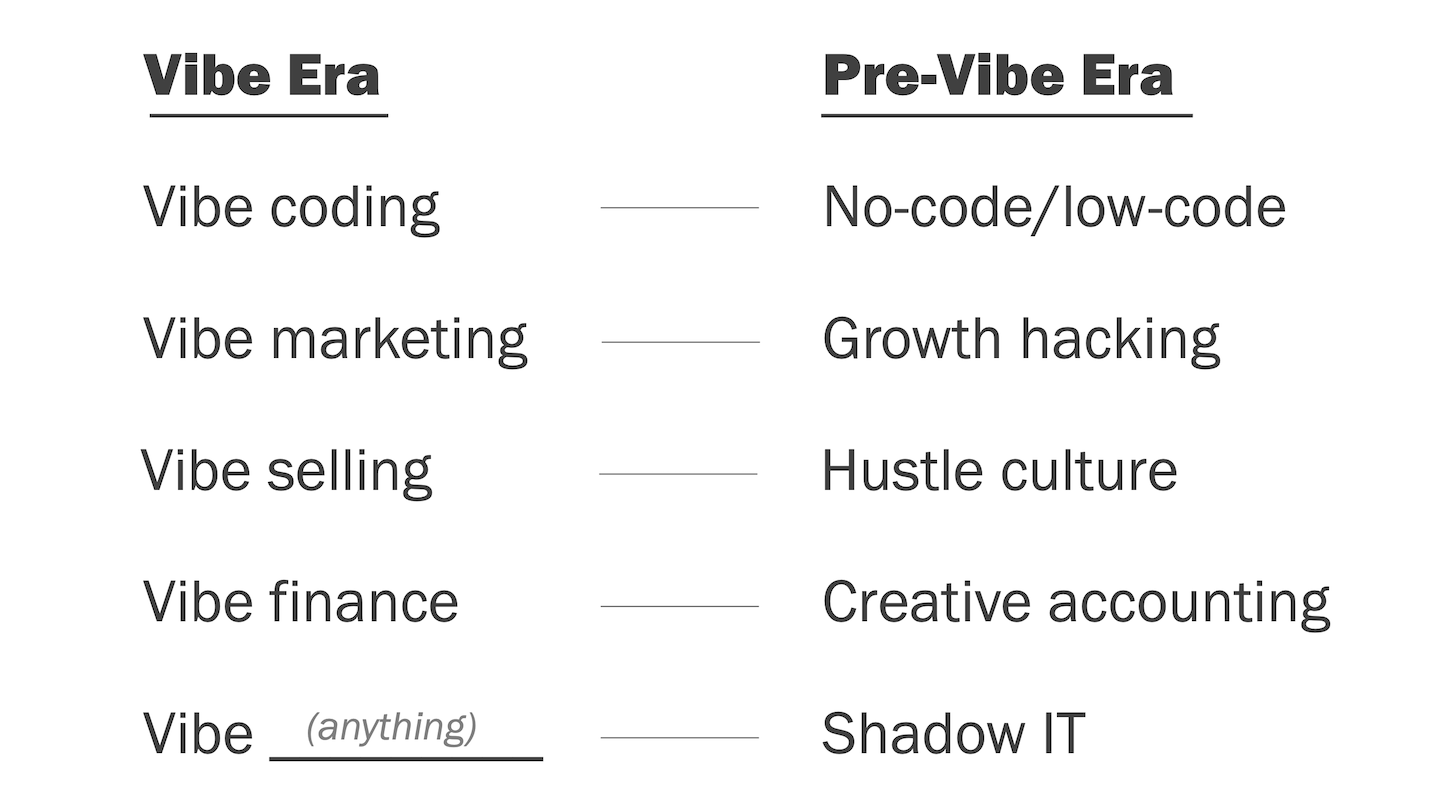
The tech industry is currently gripped by a linguistic phenomenon that is as perplexing as it is pervasive. The word "vibe"—once a colloquial staple of 1960s counterculture—has been hijacked by the silicon elite to describe the most significant shift in software development and marketing strategy since the dawn of the internet.
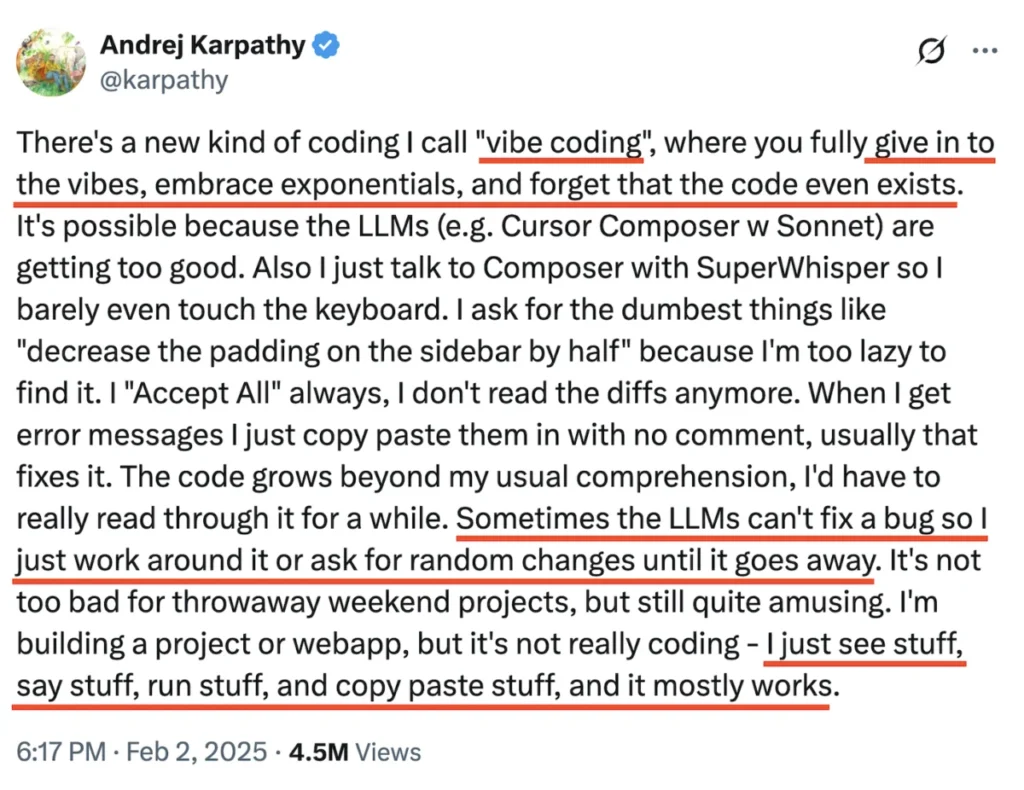
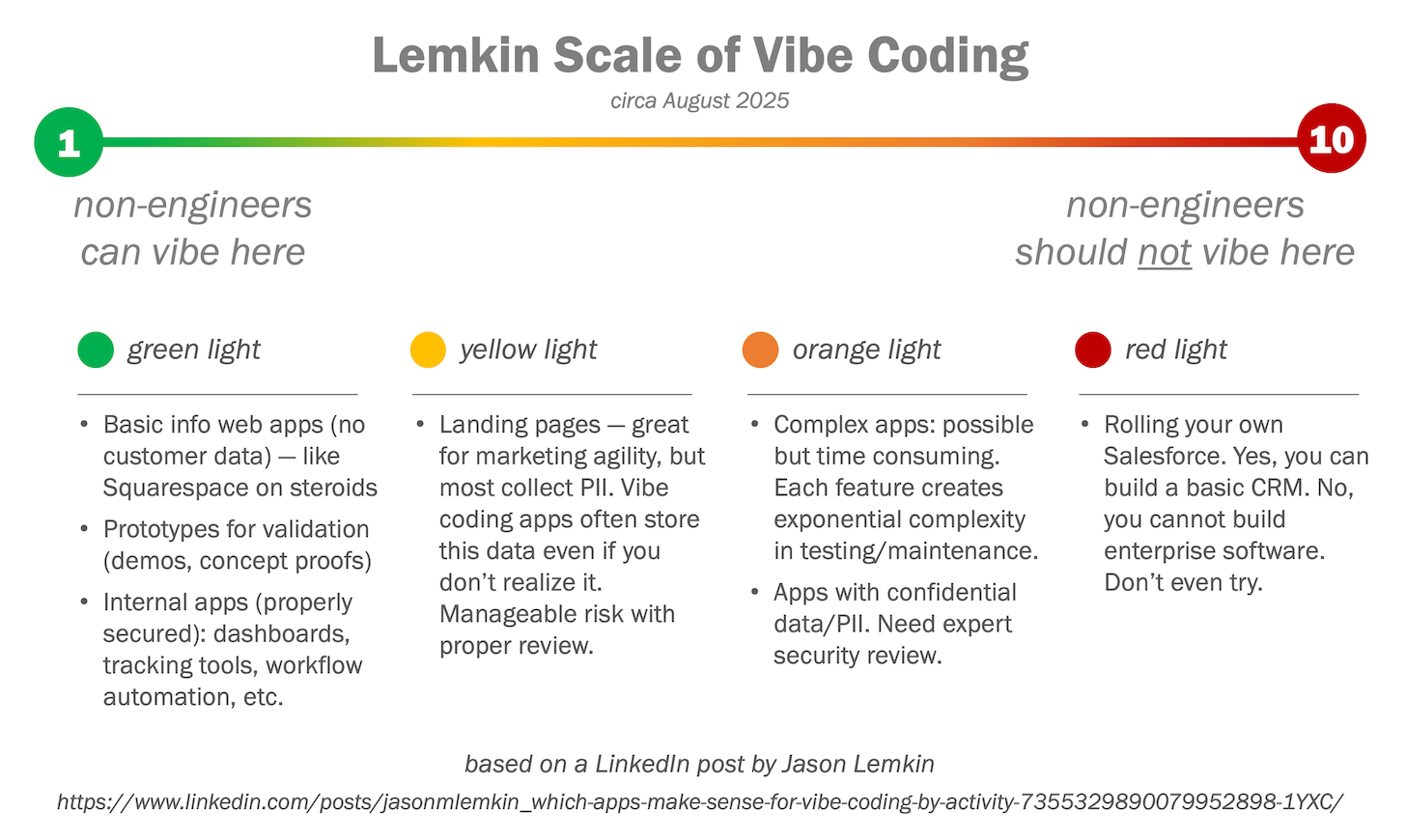
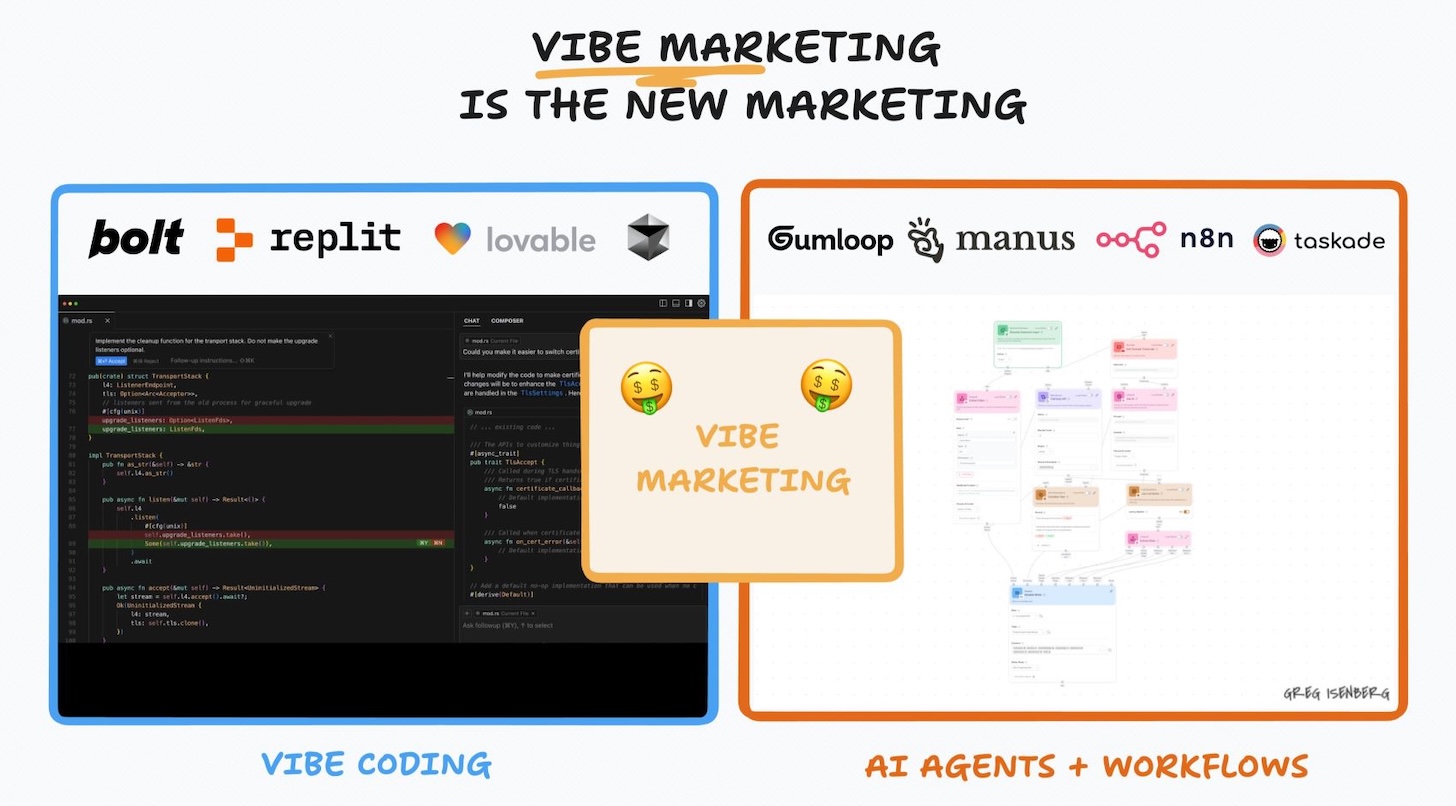
"Vibe coding," a term coined by OpenAI co-founder Andrej Karpathy, has transcended its niche origins to become the defining ethos of 2025. It represents a fundamental departure from traditional, syntax-heavy development, replacing rigorous structural discipline with a conversational, iterative approach to AI-assisted creation. As this trend bleeds into the professional marketing landscape, we are witnessing the birth of "vibe marketing"—a high-velocity, experimental approach to customer engagement that is rewriting the rules of the corporate playbook.
The Genesis: What is Vibe Coding?
The term originated in early 2025 via a post from Andrej Karpathy, who described the practice as a radical new workflow for building software. "I just see stuff, say stuff, run stuff, and copy paste stuff, and it mostly works," Karpathy wrote.
At its core, vibe coding is the ultimate evolution of low-code and no-code development. It leverages Large Language Models (LLMs) to act as an intermediary between human intent and machine execution. By simply conversing with an AI coding assistant, users—including those without formal computer science backgrounds—can manifest applications, internal tools, and complex workflows. The "vibe" refers to the intuition-led, rapid-fire nature of the process: if it feels right and functions, the underlying technical debt is often ignored in favor of immediate utility.
While purists may shudder at the "it mostly works" caveat, the results are undeniable. Startups like Lovable have seen meteoric growth, reaching $100 million in Annual Recurring Revenue (ARR) in less than a year, largely by capitalizing on this demand for friction-less, AI-powered software creation.
A Chronology of the Vibe Shift
The rapid adoption of vibe-centric workflows can be traced through a series of key milestones:
- Late 2024: The foundation is laid as AI coding assistants move from simple autocompletes to full-stack application generators.
- Early 2025: Andrej Karpathy popularizes the term "vibe coding," framing it as a legitimate, albeit chaotic, alternative to traditional software engineering.
- Mid-2025: Influential figures like Jason Lemkin of SaaStr conduct public experiments, documenting over 100 hours of effort spent "vibe coding" applications on platforms like Replit. These experiments highlight both the accessibility of the tools and the clear limitations of using them for mission-critical enterprise infrastructure.
- Summer 2025: The "Summer of Vibes" sees the term migrate from the engineering department to the marketing boardroom. Greg Isenberg and other thought leaders begin defining "vibe marketing" as the logical extension of vibe coding.
The Lemkin Scale: Assessing Viability
Not all projects are created equal in the world of AI-assisted development. Jason Lemkin’s public documentation of his attempts to build software served as a catalyst for a necessary conversation regarding the limits of these tools. To help practitioners navigate this, industry analysts have developed the Lemkin Scale of Vibe Coding.
This continuum, ranging from 1 to 10, provides a rubric for the difficulty of a project. A "1" on the scale represents a project that is a perfect candidate for vibe coding—think internal dashboards, personal productivity trackers, or simple data visualization tools. These are "green light" projects where the risk of failure is low and the time-to-market is the primary objective.
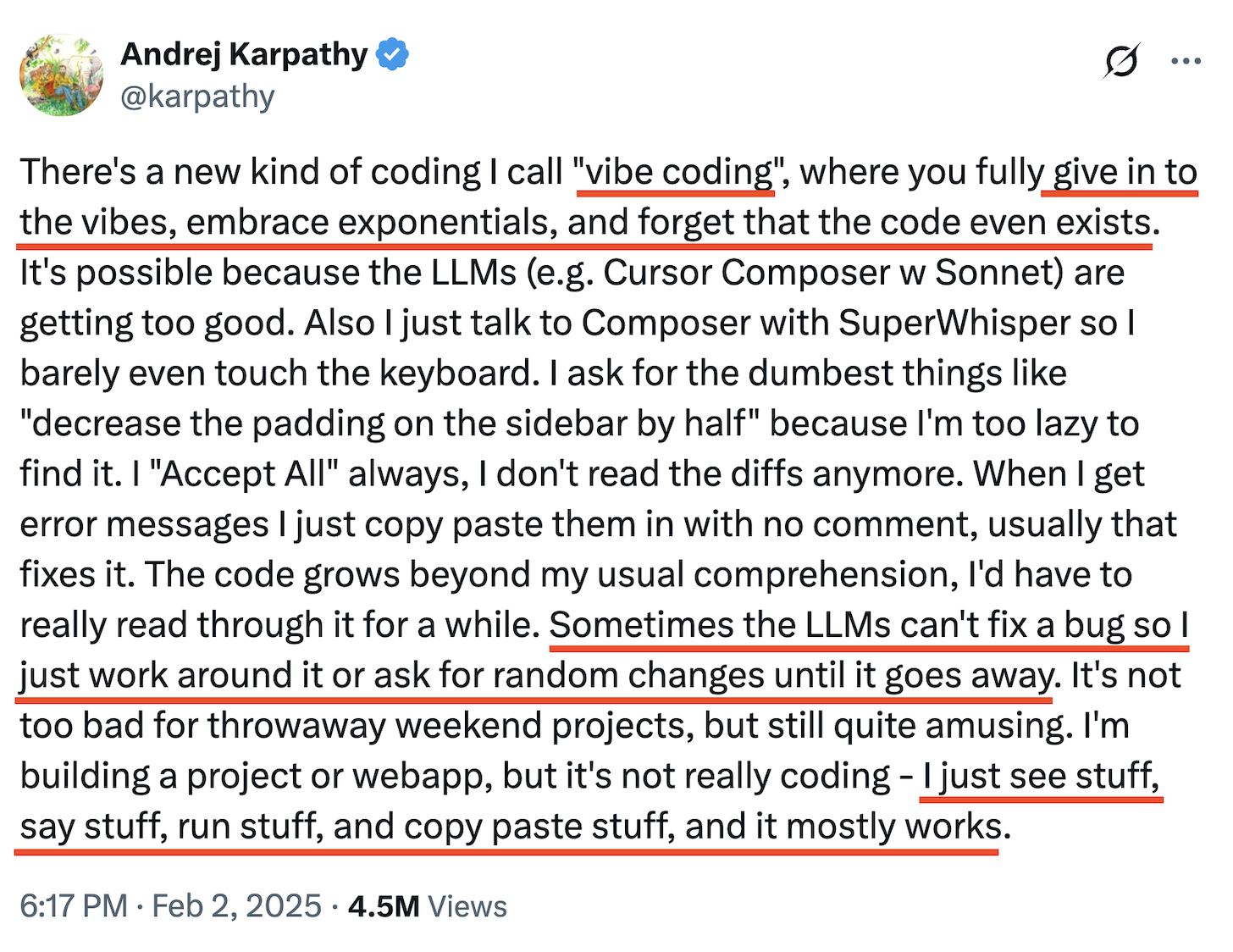
Conversely, a "10" on the scale represents "here-be-dragons" territory—projects like attempting to rebuild an enterprise-grade CRM like Salesforce from scratch. These are "red light" zones where the complexity of architecture, security, and integration requires deep, formal engineering expertise. While AI tools are improving at an exponential rate, the gap between a "7" and a "3" on this scale is closing, suggesting that what is currently considered "complex" will soon fall within the reach of the average user.
Supporting Data: The Growth of AI-Driven Production
The velocity of this shift is backed by substantial market data. The rise of platforms like Lovable, Replit, and Bolt signifies a massive shift in capital toward "GTM (Go-To-Market) engineers"—professionals who sit at the intersection of marketing and technical execution.
Current metrics suggest that companies employing "vibe" workflows are able to ship prototypes at a rate 5x to 10x faster than traditional development teams. While these prototypes often lack the robustness of enterprise software, their ability to gather user feedback and validate product-market fit in real-time provides an invaluable competitive advantage.
Vibe Marketing: The Next Evolution of Growth Hacking
If vibe coding is the, "I wonder if I can build this" spirit, then vibe marketing is the, "I wonder if this resonates with the customer" spirit.
Marketing thought leaders define vibe marketing as the use of AI agents to perform complex, multi-layered tasks that previously required a department of specialists. However, there is a critical distinction to be made: true vibe marketing is not merely about automating the production of spam. If the goal is to delight customers, mass-automated outbound emails are the antithesis of the "vibe."
Instead, the professional community is beginning to view vibe marketing as a framework for Big Experimentation. By using AI to mine data warehouses for answers to complex questions, marketers can generate hypotheses, create multimodal campaigns, and deploy them at a scale that was previously impossible for an individual marketer to manage alone.
The Role of Marketing Operations
The burden of safety, in this era of rapid experimentation, falls on Marketing Operations. These teams are no longer just custodians of the CRM; they are the architects of the "scaffolding" that allows the broader team to experiment safely. By setting up robust guardrails—managing data privacy, brand standards, and API compliance—they enable the creative team to push boundaries without risking the company’s reputation.
Implications: The Human Element
The implications of the "vibe" era are profound. We are witnessing the democratization of creation. For developers, it means the ability to bypass the drudgery of boilerplate code and focus on higher-level architecture. For marketers, it means the ability to move from static, long-term planning cycles to a state of perpetual, data-backed experimentation.
However, the "vibe" language itself remains a point of contention. Critics argue that the term is overly casual and perhaps a sign of a tech industry that has become too comfortable with "black box" solutions. There is a legitimate concern that as we "give in to the vibes," we may lose sight of the foundational principles of logic, security, and long-term sustainability that define high-quality output.
Furthermore, there is the question of sustainability. Can a culture built on "vibe" sustain the rigors of an enterprise environment? The answer likely lies in the transition from "vibe" as a synonym for "haphazard" to "vibe" as a synonym for "fluid efficiency."
Conclusion: Beyond the Summer of Vibes
Whether the term "vibe" survives the next fiscal year is secondary to the reality of the tools it represents. We are entering an era where human creativity is the only bottleneck. The technical barriers to entry are collapsing, and the ability to turn a thought into a functional reality is becoming a baseline expectation.
For the modern professional, the lesson is clear: do not fear the ambiguity of the "vibe." Embrace the experimentation, leverage the AI, and focus on the human connection. As we navigate this new frontier, the marketers and developers who will thrive are those who can balance the raw, imaginative power of AI-assisted creation with the professional discipline required to ensure that the results are not just fast, but meaningful.
The "vibe" may be a passing linguistic trend, but the transformation of how we build, market, and create is permanent. The question for every organization is no longer "should we use AI," but "how quickly can we build our own experimental scaffolding?" The future belongs to the experimenters.
