
Decoding the Titans: Five Strategic Pillars Behind the Meteoric Rise of Uber, Spotify, and Airbnb
In the modern digital economy, a select group of companies has moved beyond mere market participation to become synonymous with the industries they created. Uber, Spotify, and Airbnb did not just launch products; they fundamentally altered human behavior. By transforming how we move, how we listen to music, and how we experience travel, these giants have rewritten the playbook for scalable growth.
However, their success was never a matter of serendipity. Behind the polished interfaces and global ubiquity lies a rigorous, disciplined, and often daring approach to growth hacking. By dissecting the early strategies and operational philosophies of these unicorns, business leaders today can extract actionable blueprints for sustainable, rapid expansion.
The Chronology of Disruption: From Niche to Necessity
The growth trajectories of these companies share a common, albeit distinct, timeline. They began by identifying a massive inefficiency in an incumbent industry and solving it with a "minimum viable" digital solution.
- Uber (2009): Originally conceived as "UberCab," a high-end black car service in San Francisco. It solved the friction of hailing a taxi in a premium, on-demand format. By 2012, the pivot to UberX democratized the service, transitioning it from a luxury tool to a mass-transit utility.
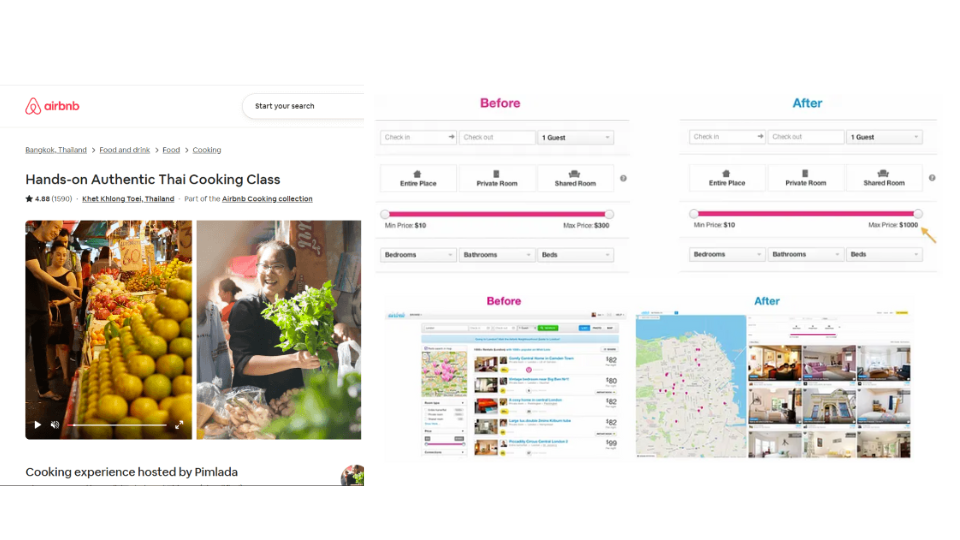
- Airbnb (2008): Starting as a humble "AirBed & Breakfast" during a design conference, the founders focused on the "trust deficit" in peer-to-peer lodging. The pivotal moment came when they realized that high-quality photography was the catalyst for conversion, leading to their professional photography program.
- Spotify (2006): Born in Sweden during the peak of digital piracy, Spotify faced the impossible task of convincing users to pay for music they could steal. By creating a seamless, legal streaming experience that outperformed pirated files, they turned the music industry on its head.
Five Pillars of Scalable Growth
1. The Culture of Constant Experimentation
The most profound commonality among these three is an obsession with the "Scientific Method" of business. They do not guess; they hypothesize.

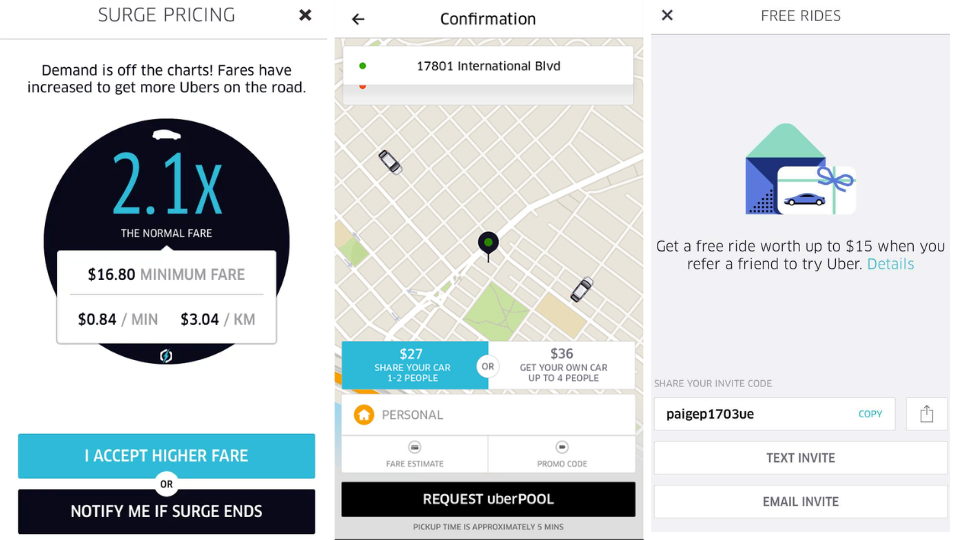
Uber’s history is a testament to this, having tested everything from surge pricing models to the ambitious UberPOOL. The latter was a radical experiment in mass-transit efficiency that transformed the business from a taxi alternative to a legitimate public transportation competitor. Similarly, Airbnb’s growth is built on the back of thousands of small, iterative tests. Their decision to offer professional photography wasn’t just a marketing gimmick—it was a data-backed response to a conversion problem that effectively "professionalized" the platform overnight.
2. The Data-Driven Decision Engine
In these organizations, intuition is a secondary advisor; data is the primary architect. These companies treat their platforms as giant, living laboratories.
- Spotify’s Algorithmic Personalization: Spotify’s reliance on machine learning to curate Discover Weekly and personalized playlists is a classic example of data-driven retention. By feeding user behavior back into the product, they create a "lock-in" effect where the product becomes more valuable the more you use it.
- Airbnb’s Dynamic Pricing: By analyzing seasonality, local events, and historical demand, Airbnb’s search algorithms provide hosts with real-time pricing suggestions. This maximizes host revenue while keeping prices attractive for guests—a perfect feedback loop of data-driven value.
3. Risk-Taking and the "Fail Fast" Philosophy
Innovation is inherently dangerous. To scale at the speed of Uber or Airbnb, companies must be willing to burn ideas that don’t work.
"Fail fast" is not about being reckless; it is about minimizing the cost of failure. When an experiment fails at these firms, it is treated as a data point rather than a professional setback. By fostering a culture where engineers and product managers feel safe to launch, test, and discard features, these companies remain lean and agile despite their massive headcounts. This prevents the "corporate bloat" that often kills innovation in older, more traditional firms.
4. The Power of Cross-Functional Collaboration
Growth is not the sole responsibility of the marketing department. At companies like Spotify, product, engineering, and data science teams operate as a unified front.
Spotify’s organizational structure—often cited for its "squads and tribes" model—is designed specifically to eliminate silos. By placing a designer, a data analyst, and an engineer in the same room, they ensure that the technical implementation of a feature matches the user experience requirements. This horizontal communication allows for faster iteration, as there is no "tossing work over the wall" between departments. When marketing needs data for a campaign, the data team is already integrated into the process, allowing for instantaneous feedback loops.
5. Obsession with the Seamless User Experience (UX)
Ultimately, these platforms won because they reduced friction.
- Uber: Reduced the friction of payment and waiting.
- Airbnb: Reduced the friction of booking and trust.
- Spotify: Reduced the friction of access and discovery.
In the digital age, convenience is the primary currency. By prioritizing intuitive UI, secure payment gateways, and reliable performance, these firms turned complex, real-world services into one-click digital experiences.
Supporting Data: The Impact of Iteration
The effectiveness of these strategies is reflected in the numbers. For instance, Airbnb’s commitment to UX has led to a platform where over 500 experiments are running simultaneously at any given time. This relentless testing cadence has helped them maintain a competitive edge despite aggressive moves by incumbents like Booking.com and Expedia.
Uber’s implementation of surge pricing, while controversial, provides a quantitative masterclass in supply-side economics. By dynamically adjusting prices, they ensure that ride availability remains high during peak demand, effectively balancing the market in real-time—a feat that traditional taxi dispatchers could never achieve.
Implications for Today’s Businesses
For the modern startup or the established legacy firm looking to digitize, the message is clear: Growth is a discipline, not a lucky break.
- Stop Siloing: If your marketing team is separated from your product engineers, you are losing speed. Integrate your teams to foster collective intelligence.
- Quantify Everything: If you cannot measure the impact of a feature or a campaign, do not build it. Use A/B testing to validate every strategic shift.
- Normalize Failure: Create a culture where a failed experiment is a celebrated lesson. If your team isn’t failing, they aren’t pushing the boundaries of what is possible.
- Prioritize the User Journey: Look for the "friction points" in your customer’s experience. Every click that can be removed and every wait time that can be reduced is an opportunity for growth.
Conclusion: The Path Forward
The success of Uber, Spotify, and Airbnb was not inevitable. It was the result of a deliberate, sustained, and highly scientific approach to business. They viewed their platforms as organic entities that needed constant care, testing, and optimization.
By embracing these five pillars—experimentation, data-driven decision-making, risk-taking, cross-functional collaboration, and a seamless user experience—any business can start to unlock their own potential for hyper-growth. The giants of today were once small startups with limited resources; what set them apart was not their budget, but their methodology. The tools to replicate their success are available; the question remains whether you have the discipline to use them.
