
The Growth Marketer’s Secret Weapon: Why Python is Redefining Marketing Strategy
In the modern digital landscape, growth is no longer just about intuition or creative campaigns; it is the calculated intersection of data, analytics, and rapid experimentation. As the volume of marketing data grows exponentially, traditional tools like Excel are increasingly proving inadequate for the task. Enter Python—a programming language that has quietly become the most vital asset in the arsenal of the modern growth marketer.
By moving beyond the limitations of spreadsheets, Python enables marketers to automate mundane tasks, perform complex predictive analysis, and optimize advertising spend with mathematical precision. This article explores why Python is the language of choice for growth, how it is transforming the marketing function, and how you can begin your journey into the world of data-driven growth.
The Strategic Shift: Why Python?
For many, programming feels like a domain reserved for software engineers. However, Python has emerged as the "lingua franca" of the data science and marketing world for several key reasons.

Unmatched Flexibility and Integration
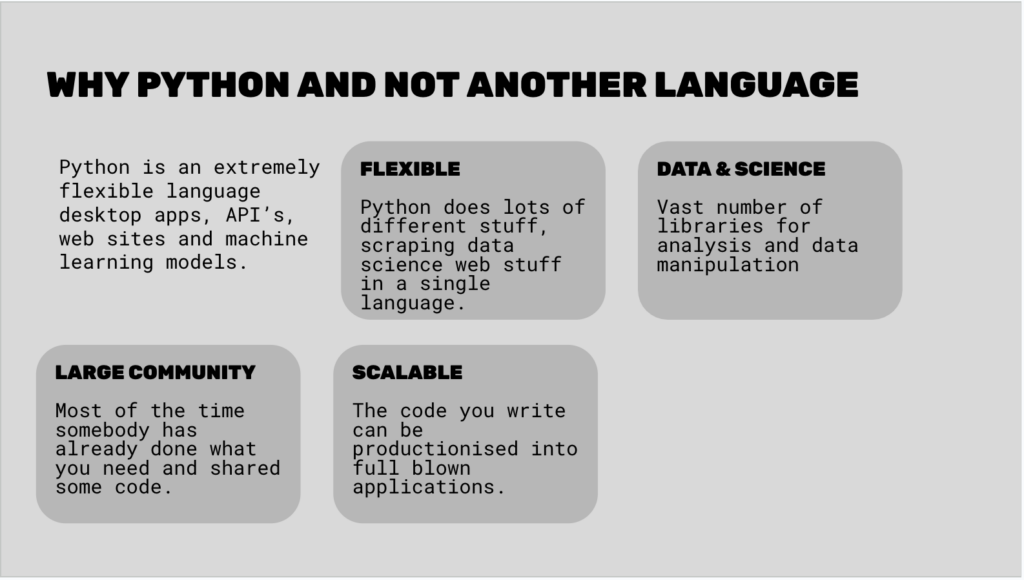
Unlike specialized software that locks you into a specific workflow, Python is an open-source, general-purpose language. Whether you are building custom dashboards, connecting disparate marketing APIs, or running machine learning scripts to predict churn, Python handles it all. Its flexibility allows marketers to build bespoke solutions tailored to their specific business problems rather than trying to force their data into rigid, pre-built templates.
The Power of the Community
Python boasts arguably the largest and most supportive community in the programming world. If you encounter a challenge—whether it is scraping data from a social media platform or building a forecasting model—it is highly probable that someone else has already solved that problem. This vast ecosystem of pre-written libraries means that you don’t need to "reinvent the wheel"; you simply need to implement existing, peer-reviewed solutions.
Scalability and Future-Proofing
Marketing data is rarely static. As a business grows, the volume of data generated across channels (Google Ads, Facebook, CRM, Email) increases. Python scripts are inherently scalable; they can be scheduled to run automatically in the cloud, handle millions of rows of data, and integrate with enterprise-grade infrastructure. By adopting Python, growth marketers aren’t just solving today’s problems—they are building a foundation that can grow alongside their company.
Chronology of Adoption: From Spreadsheets to Code
The evolution of the "Growth Marketer" profile has followed a clear trajectory:
- The Manual Era: Marketers relied heavily on manual data entry, basic CRM reporting, and standard spreadsheet functions. Decision-making was reactive and often lagged behind real-time market changes.
- The Dashboard Era: The rise of BI tools like Tableau and Looker allowed for better visualization. However, marketers remained dependent on the data connections provided by these platforms, which often lacked the granularity needed for deep behavioral analysis.
- The Automation & Code Era: Today, top-tier growth teams are bypassing the limitations of "no-code" tools by writing their own scripts. By utilizing Python, they can extract raw data, transform it, and push it directly into automated bidding systems or predictive models, removing the "human in the loop" from routine operational tasks.
Supporting Data: The Practical Applications
As Alistair Allan, a prominent voice in the growth space, aptly puts it: "Growth is that crossover of data, analytics, and testing. You can do all of that stuff manually, or you can try and figure out how to automate it, how to make decisions without having a human in the loop."
Here is how Python is currently being applied across the marketing funnel:
1. Automation and API Connectivity
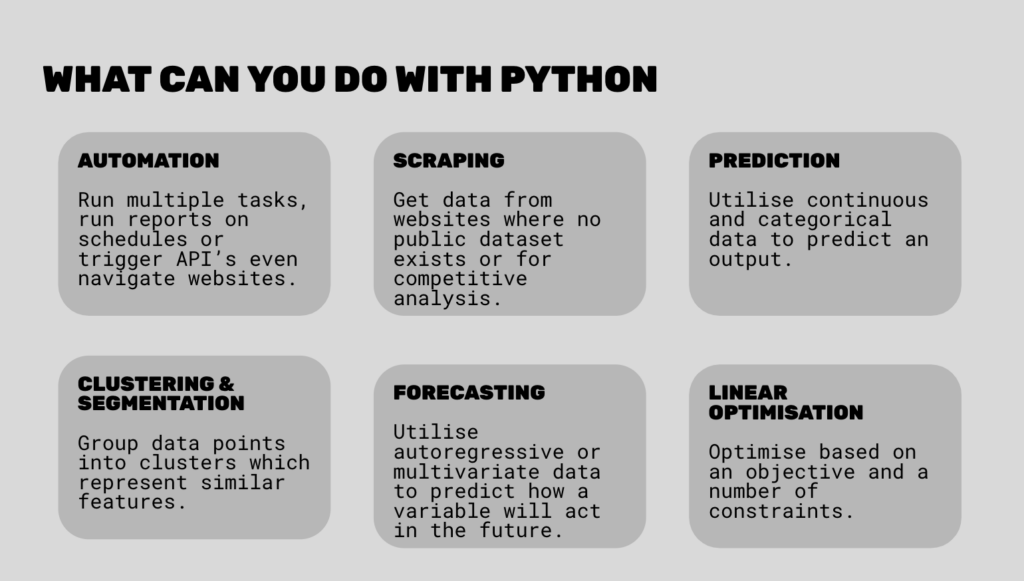
Python acts as the connective tissue between services. A marketer can write a script to pull performance metrics from Google Ads and Facebook, merge them with offline sales data, and automatically adjust budgets for underperforming campaigns—all without opening a single spreadsheet.
2. Intelligent Data Scraping
Public datasets, competitor pricing, and market trends are gold mines for growth. Python’s scraping libraries allow marketers to automate the retrieval of this information, turning competitor sites and public trends into structured data ready for analysis.
3. Predictive Modeling and Forecasting
Using libraries like Prophet, marketers can move beyond simple year-over-year growth projections. They can account for seasonality, holiday effects, and historical trends to forecast future ad performance and customer acquisition costs with much higher accuracy.
4. Clustering and Customer Segmentation
Rather than relying on basic demographics, Python allows for advanced behavioral clustering. By using machine learning algorithms (like K-means clustering), marketers can group customers based on actual behavior—such as purchase frequency or feature usage—allowing for highly personalized, hyper-targeted campaigns.
5. Linear and Spend Optimization
Resource allocation is a mathematical problem. Python’s optimization libraries allow marketers to set constraints (e.g., "maximize ROI while keeping CAC under $50") and automatically calculate the most efficient budget distribution across channels.
6. Advanced Data Analysis and Visualization
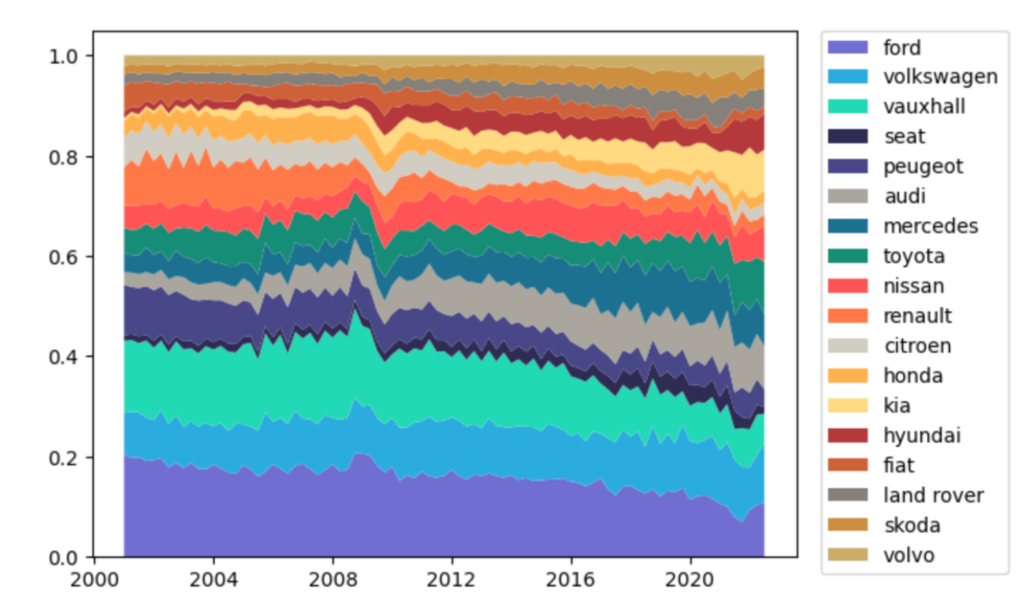
While tools like Excel struggle with datasets exceeding a few hundred thousand rows, Python’s pandas library can handle millions of data points effortlessly. Coupled with visualization libraries like Matplotlib and Seaborn, marketers can create professional-grade, insightful visuals that clearly communicate data-driven narratives to stakeholders.
Implications for the Modern Marketing Team
The adoption of Python represents a fundamental shift in the marketing profession. It moves the discipline from a "creative-led" function to a "data-led" one.
- Increased Autonomy: Marketing teams no longer need to wait for the engineering or data science departments to pull reports or run queries. They can get answers in real-time.
- Reduced Human Error: Manual formulas in spreadsheets are notoriously prone to error. Code-based processes are repeatable, version-controlled, and testable, significantly increasing the reliability of marketing reports.
- Speed to Market: In a competitive environment, the team that experiments faster wins. By automating the data processing pipeline, marketers spend less time "cleaning" data and more time designing experiments and interpreting results.
Getting Started: A Roadmap for the Non-Coder
If you are intimidated by the prospect of learning to code, it is important to realize that you do not need to become a full-stack developer to see results.
Start with Google Colab
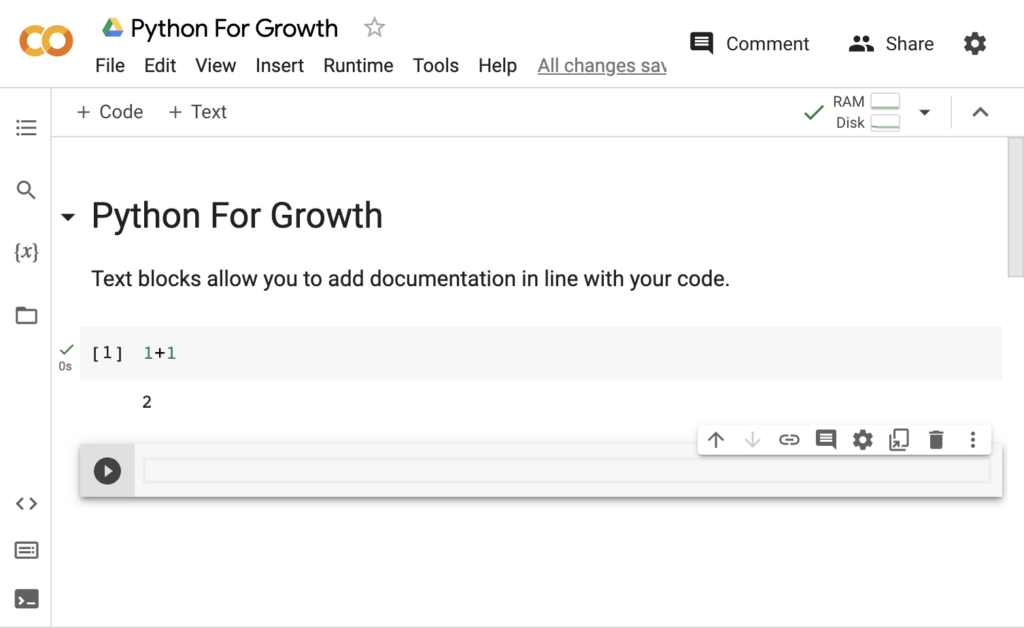
The biggest hurdle to learning Python is often the environment setup. Google Colab eliminates this by providing a browser-based, pre-configured environment that feels as intuitive as a Google Doc. You can mix text, images, and executable code blocks in a single, shareable document.
Leverage AI and "Assistive" Tools
You don’t have to write every line of code from scratch.
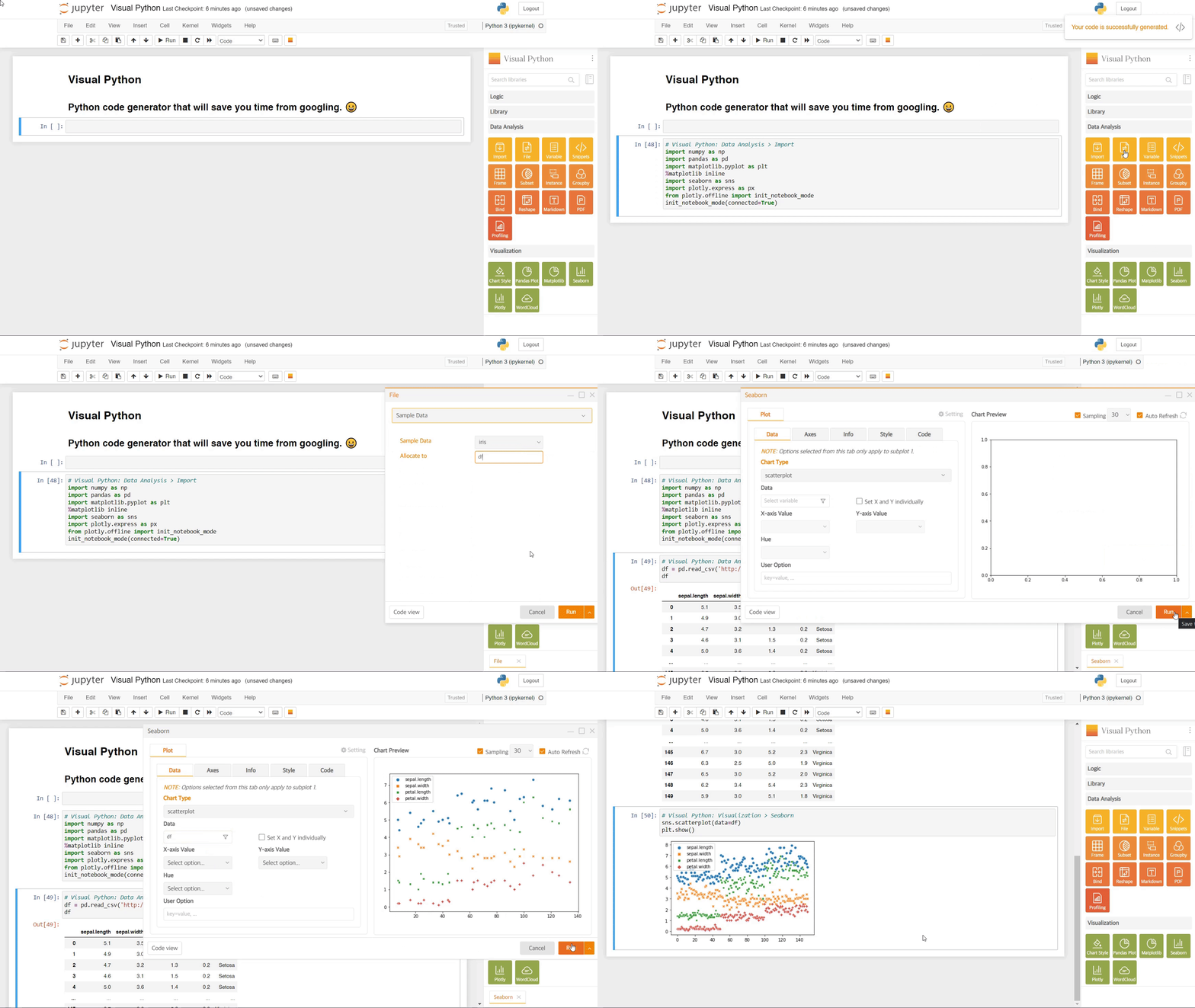
- Visual Python: A Google Colab add-on that allows you to generate code blocks visually, which is excellent for beginners who are learning the syntax.
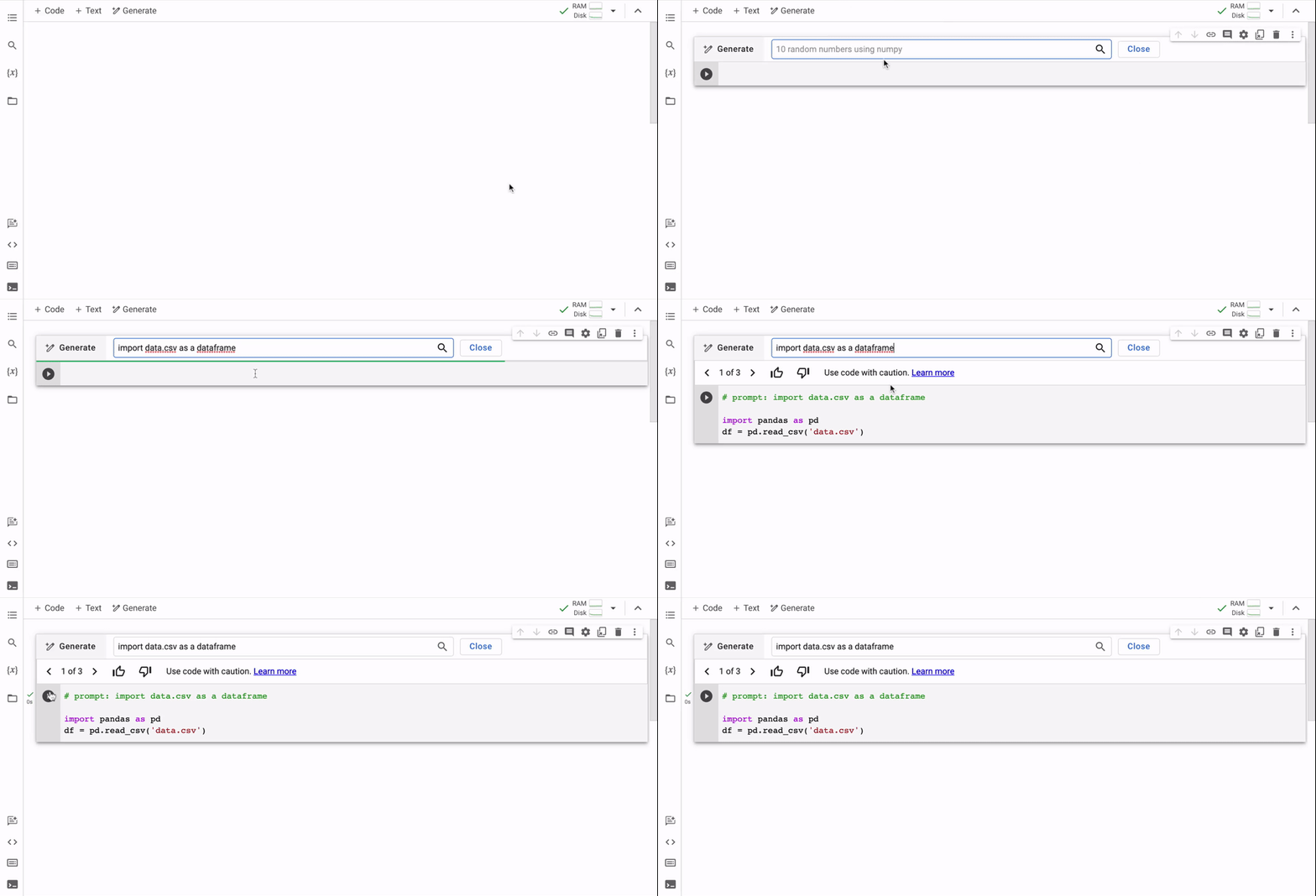
- AI Coding Assistants: With the integration of AI coding models (like Google’s Cogdey), you can describe what you want to achieve in plain English, and the model will generate the necessary Python code for you to review and execute.
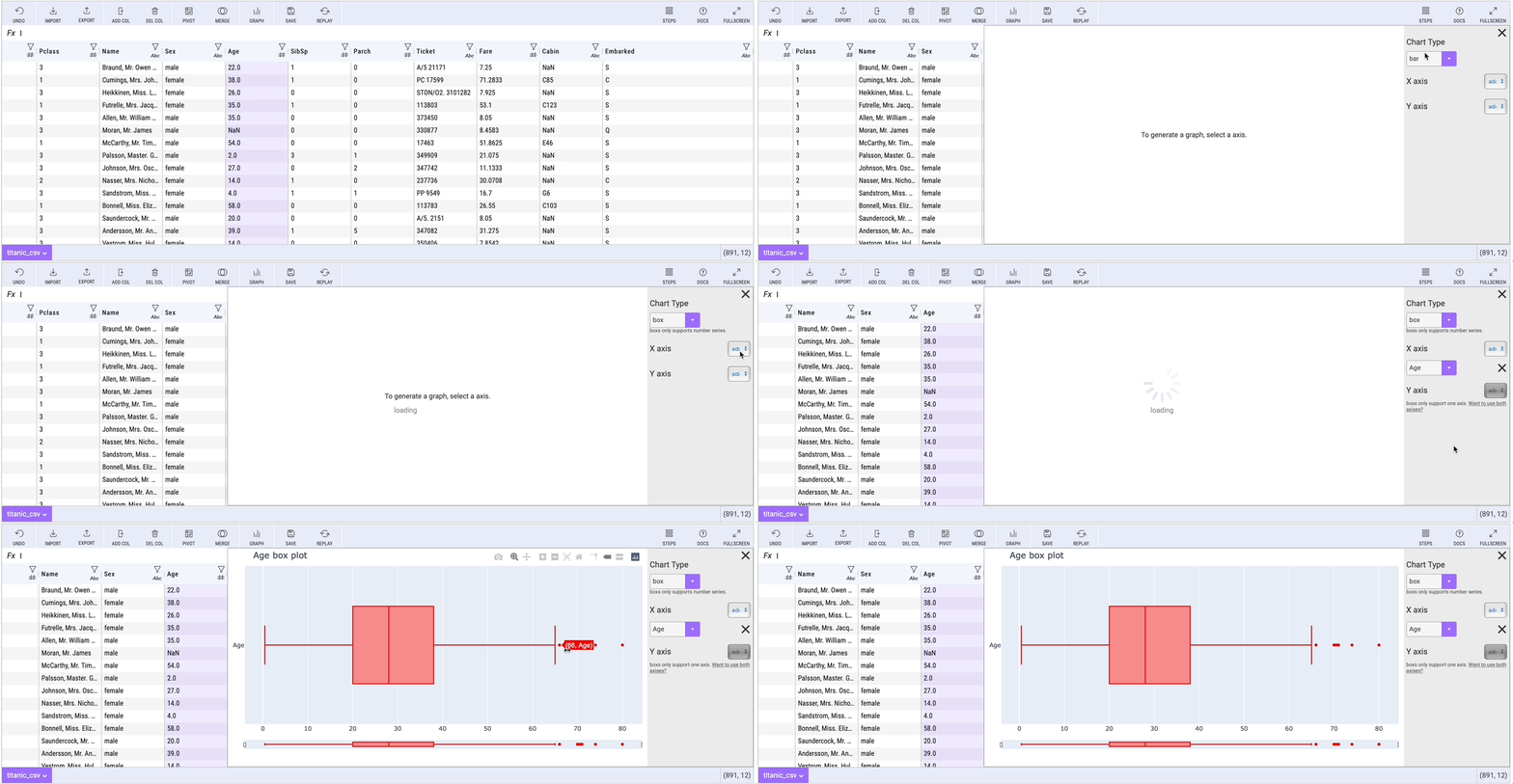
- Mito: For those who love the spreadsheet interface but need the power of Python, Mito is a game-changer. It functions like a spreadsheet, but every action you take is automatically converted into Python code in the background.
Focus on Libraries
The "secret" to Python’s power is its libraries. As a marketer, you only need to master a handful:
- Pandas: For data manipulation and analysis.
- Requests/BeautifulSoup: For data scraping and API interaction.
- Prophet/Scikit-learn: For forecasting and basic machine learning.
- Matplotlib/Seaborn: For data visualization.
Conclusion: The Path Forward
The transition to using Python for growth marketing is not merely a technical upgrade; it is a professional evolution. By adopting these tools, growth marketers can reclaim their time from tedious manual reporting and redirect it toward high-leverage strategic initiatives.
The barrier to entry is lower than ever before. With AI-assisted coding and user-friendly platforms like Google Colab, the "coding" aspect is becoming less about memorizing syntax and more about understanding logic and strategy. For the growth marketer willing to embrace this shift, the potential to optimize, predict, and outperform the competition is virtually limitless. The era of the "data-literate" marketer has arrived—and it speaks Python.
