

The 2026 Productivity Manifesto: How Marketing Teams Can Beat Tool Sprawl and Reclaim Their Workflow
In the modern marketing landscape, the difference between a high-performing team and one mired in administrative quicksand often comes down to a single variable: the tech stack. In 2026, the promise of “productivity software” is often overshadowed by the reality of “tool sprawl.” For every app designed to save time, teams frequently find themselves saddled with another login, another notification stream, and another siloed dashboard that fragments the creative process rather than unifying it.
A truly effective productivity tool should act as a force multiplier, giving marketers time back to focus on strategy and creativity. A poor tool, however, merely adds another layer of friction. As teams navigate the complexities of 2026, building a lean, integrated stack is no longer a luxury—it is a competitive necessity.

The Anatomy of a Productivity Tool: Defining Success
What separates a genuine productivity asset from a digital distraction? A true productivity tool is any software that measurably reduces the time and effort required to complete a core marketing task. Whether through the automation of repetitive manual labor or the simplification of complex cross-functional workflows, the primary goal must be the elimination of friction.
To earn its place in a modern stack, a tool should satisfy three criteria:

- Workflow Integration: It must connect with existing systems, preventing the need for manual data migration or constant tab-switching.
- Scalable Utility: It should be useful for both individual contributors and team leads, offering enough depth for complex tasks without overwhelming new users.
- Measurable ROI: It must solve a specific, identifiable pain point—not just provide a list of flashy features that go unused.
The 2026 Landscape: Categories That Matter
Marketing teams do not need a tool for every micro-task. Over-indexing on niche software leads to fragmentation. Instead, teams should focus on four essential pillars of the marketing ecosystem:
- Content Creation: From visual assets to copy polish, these tools should facilitate rapid iteration.
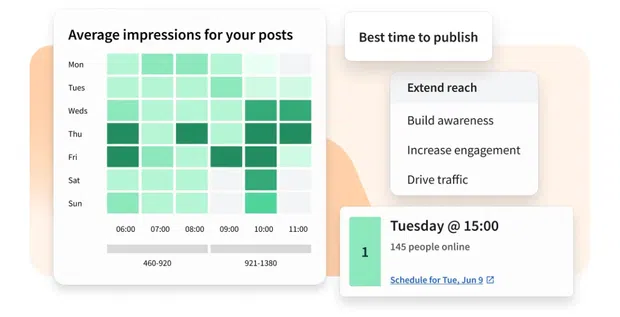
- Scheduling and Publishing: The command center for your brand’s outward-facing presence.
- Collaboration and Approvals: The connective tissue that prevents bottlenecks during the review process.
- Analytics and Reporting: The diagnostic tools that allow teams to pivot based on real-time performance data.
Essential Productivity Tools for 2026
While every team’s needs are unique, the following tools represent the current gold standard for balancing functionality with efficiency.
| Tool | Category | Primary Benefit |
|---|---|---|
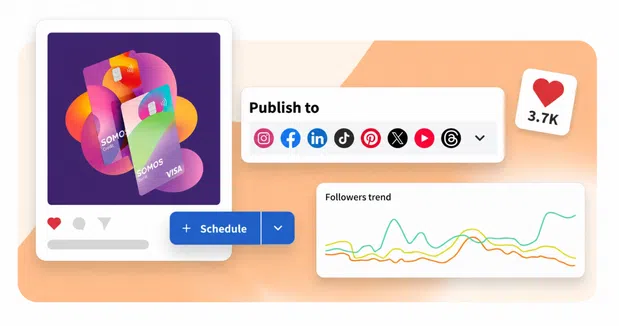
| Hootsuite | Scheduling & Analytics | Centralized cross-channel management |
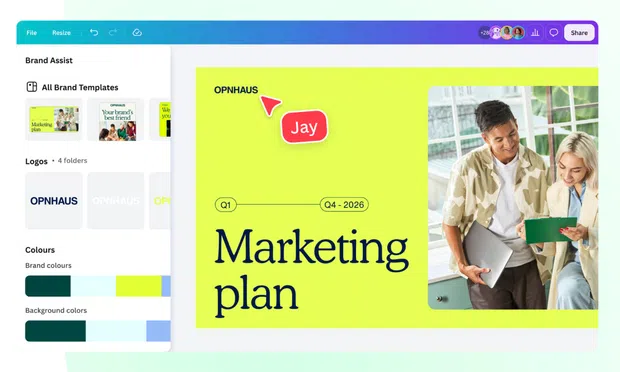
| Canva | Content Creation | Fast, brand-consistent visual design |
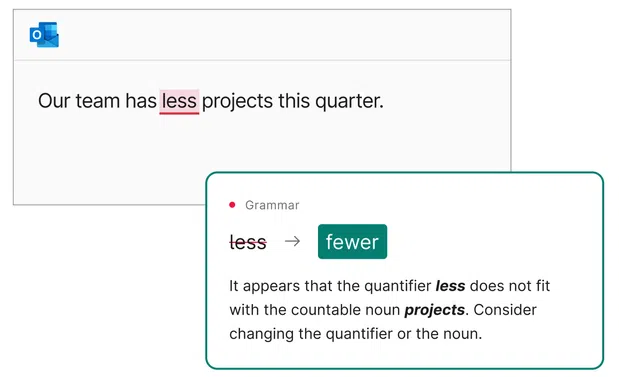
| Grammarly | Content Creation | AI-driven copy and tone refinement |
| Notion | Collaboration | Versatile project and knowledge management |
| Slack | Communication | Real-time team alignment |
| Google Analytics | Analytics | Deep-dive website and traffic intelligence |
| Todoist | Focus | Lightweight, high-velocity task management |
| RescueTime | Time Management | Insight into actual work-time allocation |
Strategic Implementation: Building a Lean Stack
The most common mistake marketing leaders make is "feature shopping"—buying tools based on what they could do rather than what they actually need to do.
1. Mapping the Workflow
Before purchasing a new subscription, audit the path a project takes from ideation to publication. If a team is producing a social media post, trace the journey: Does it go through four emails, a Slack thread, a Google Doc, and then a manual upload to a publisher? If the path is convoluted, the answer isn’t a new tool; it’s a structural change. Identify the "weak spots" and target your tech investment specifically at those bottlenecks.
2. Establishing Procurement Rules
Allison Flood, Marketing Team Leader at GPI, suggests a rigorous vetting process: "Before we add something new, I want to know what problem it solves, who will actually use it, and whether it simplifies the process for the team." If a tool fails to pass these three questions, it is rejected. This prevents the "tool creep" that drains annual budgets and creates technical debt.
3. The Power of Consolidation
Mark Mashaw, VP of Marketing at Campus, emphasizes the "replace-before-add" rule. "We cut a creative performance tool we actually liked because our paid social platforms, with a little AI on top, could recreate what it did. If tools you already pay for can do the job, the standalone tool gets hard to justify."
The Dangers of Tool Overload
When a stack becomes too bloated, "shadow work" emerges. This occurs when employees, frustrated by a clunky official tool, create their own workarounds—like managing sensitive project data in personal spreadsheets or handling approval requests in private DMs. Shadow work is the canary in the coal mine; it signals that your official tools are creating more friction than they are eliminating.
Furthermore, failing to assign a "Tool Owner" is a recipe for stagnation. Every piece of software should have a designated lead responsible for auditing its usage, ensuring team training, and evaluating its continued necessity during contract renewal periods.
The Role of Centralized Platforms: A Case Study in Efficiency
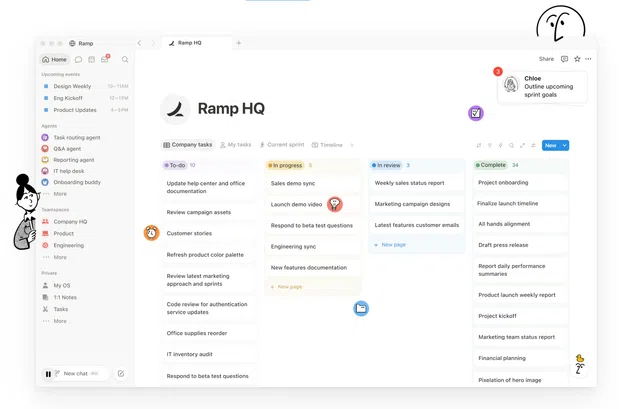
The primary argument for an all-in-one platform like Hootsuite is the reduction of "context switching"—the cognitive cost of moving between different apps. When a team manages their content calendar, social inbox, and analytics in one place, they eliminate the need to bounce between tabs.
Streamlining the Social Workflow
With features like Perch, Hootsuite allows teams to manage the entire lifecycle of a post—from initial concept and multi-stakeholder approval to scheduling and publication—within a single interface. This eliminates the "ping-pong" effect of sending drafts back and forth via email.
Data-Driven Decisions with AI
In 2026, the bottleneck is often not a lack of data, but the inability to parse it. Hootsuite’s Wisdom AI agent addresses this by allowing marketers to ask questions in natural language. Instead of exporting CSVs and manually building reports, a marketer can simply ask, "Which of our LinkedIn posts from the last quarter drove the highest conversion rate?" and receive an immediate, data-backed answer.
Unified Customer Care
Finally, by housing social inbox and comment moderation in Nest, Hootsuite ensures that community management doesn’t become a neglected silo. When support and content live in the same ecosystem, the team can pivot from proactive posting to reactive community engagement without a change in software environment.
FAQ: Productivity Tools for Marketers
Q: What are the best productivity tools for a small marketing team?
A: Start with a robust foundation like Google Workspace for communication and file storage. As you grow, integrate a specialized social media manager like Hootsuite and a project management tool like Notion to keep documentation and task-tracking aligned.
Q: What productivity tools do social media managers use?
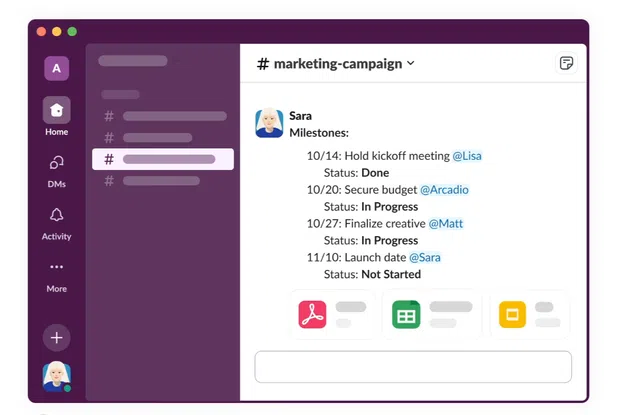
A: Successful managers rely on a triad: a scheduling platform (Hootsuite), a visual creation suite (Canva), and a real-time communication app (Slack or Teams). Increasingly, AI writing and strategy assistants are becoming a fourth pillar.

Q: How do I know if I have "tool sprawl"?
A: If your team is constantly exporting data from one tool to import it into another, or if you have three different apps that all claim to handle "project management," you have officially entered the territory of tool sprawl.
Q: What integrations are non-negotiable?
A: Look for tools that connect natively to your CRM and your primary communication channels. If a tool requires a manual data entry step, it is likely doing more harm than good.

Conclusion: The Path Forward
In 2026, productivity is not about the number of tools in your stack; it is about the fluidity of your workflow. By ruthlessly consolidating, prioritizing integrations, and ensuring that every piece of software serves a clearly defined, measurable purpose, marketing teams can escape the trap of administrative overload.
The goal is to spend less time managing the "how" and more time delivering the "what." With the right, unified strategy, you can turn your tech stack from a collection of hurdles into a high-performance engine for growth. Try Hootsuite today to see how a connected platform can streamline your team’s entire social media operation.
