
The Infinite Expansion: Decoding the 2025 Martech Landscape
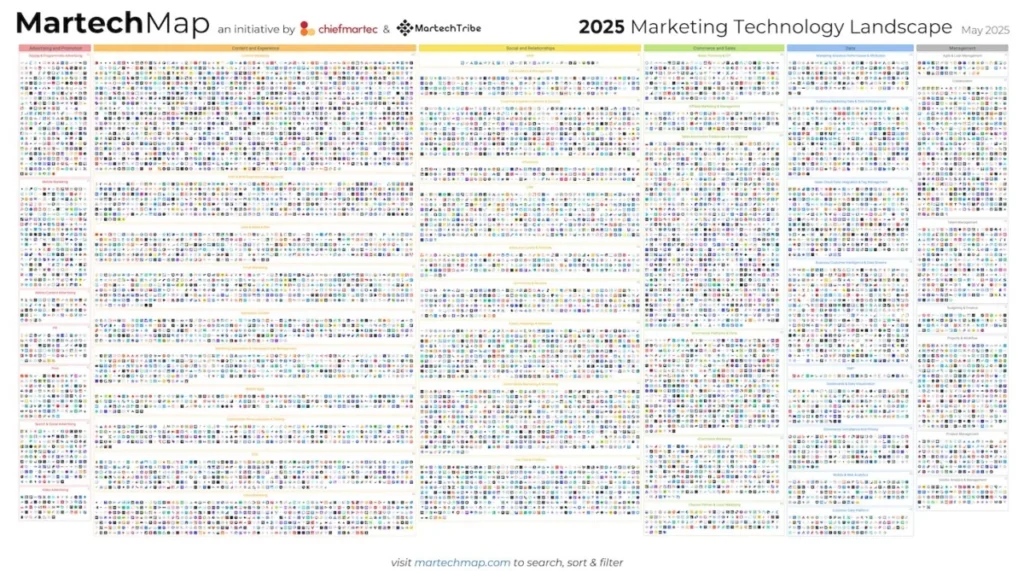
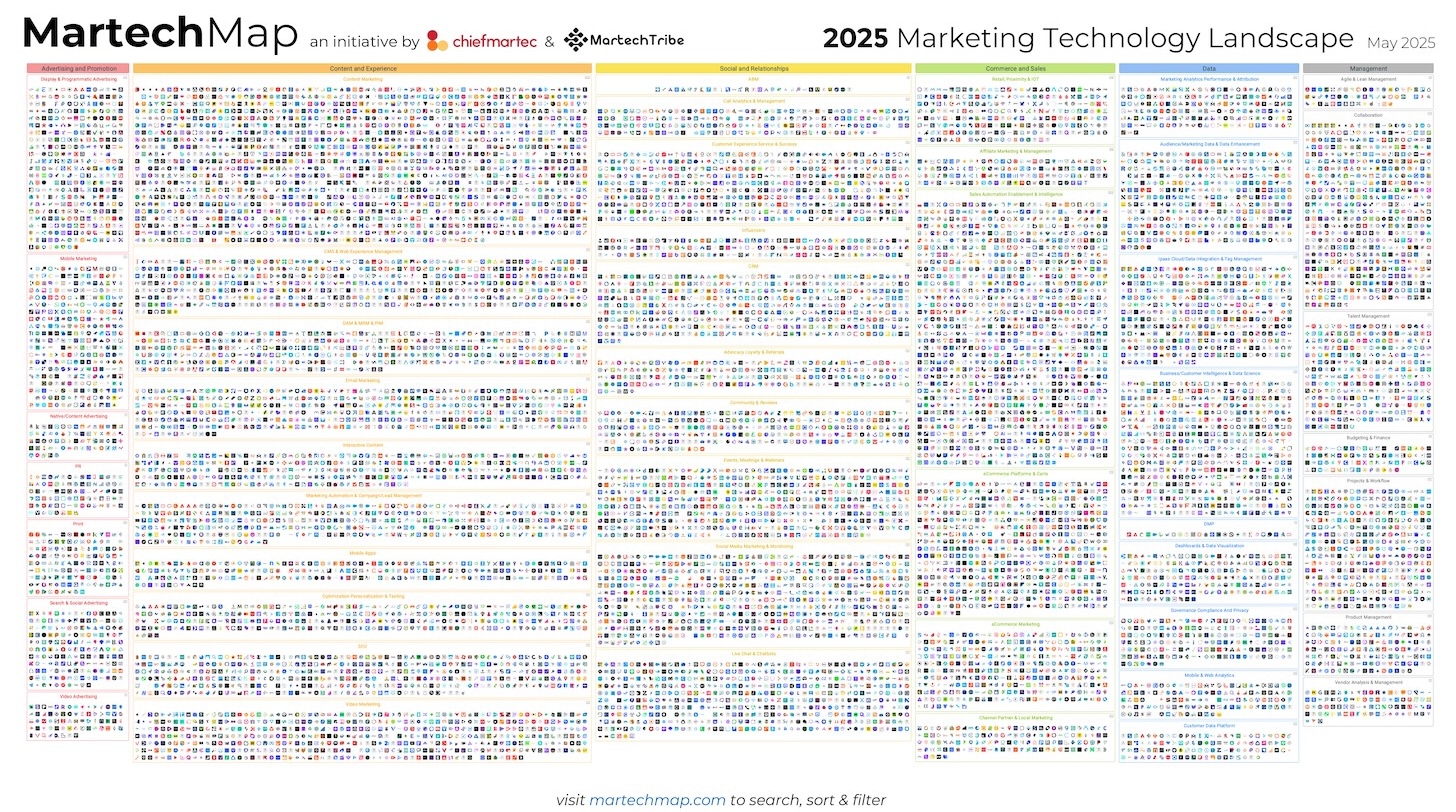
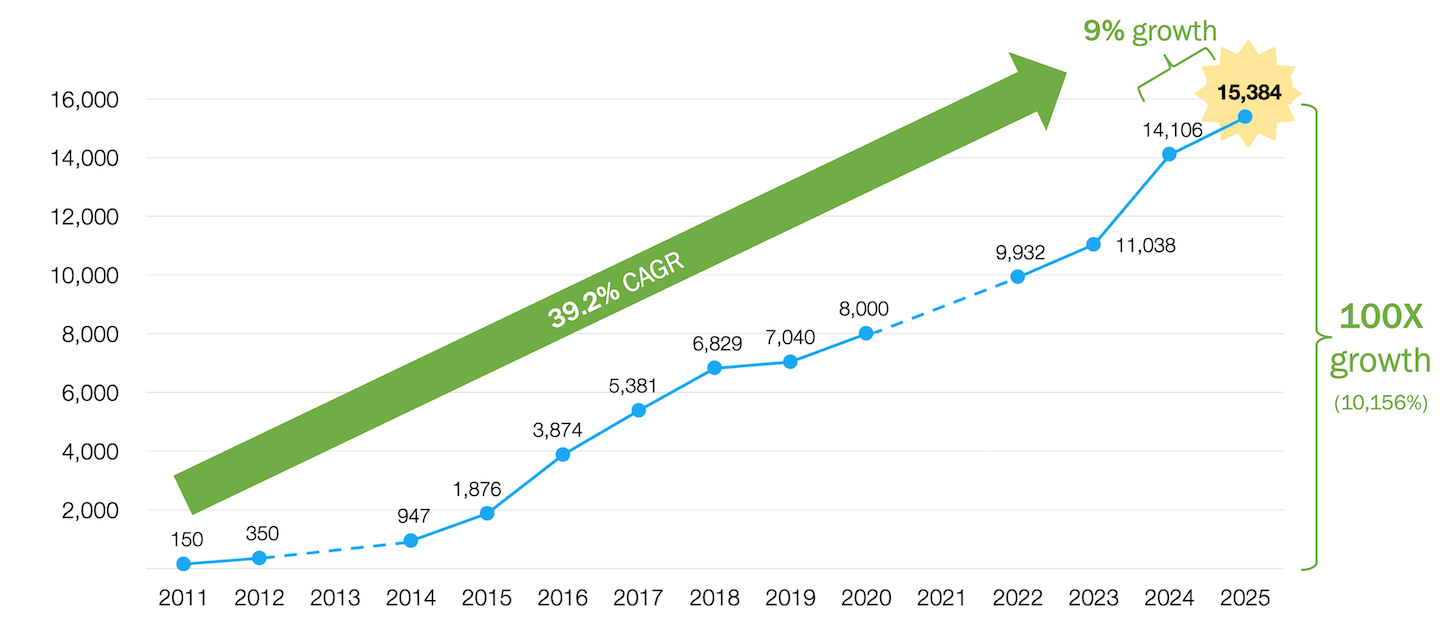
In the rapidly evolving theater of digital business, few benchmarks have become as iconic—or as daunting—as the annual Marketing Technology (Martech) Landscape Supergraphic. What began fifteen years ago as a humble slide presented by Scott Brinker to a small room of skeptical CMOs has blossomed into a global industry barometer. Today, with the release of the 2025 State of Martech report, the landscape has reached a staggering 15,384 solutions, marking a 9% year-over-year increase.
As the industry grapples with the promise and chaos of artificial intelligence, the "Martech 15K" serves as more than just a data point; it is a testament to the fact that marketing has fully completed its metamorphosis into a technology-integrated discipline.
A Chronology of Unchecked Growth
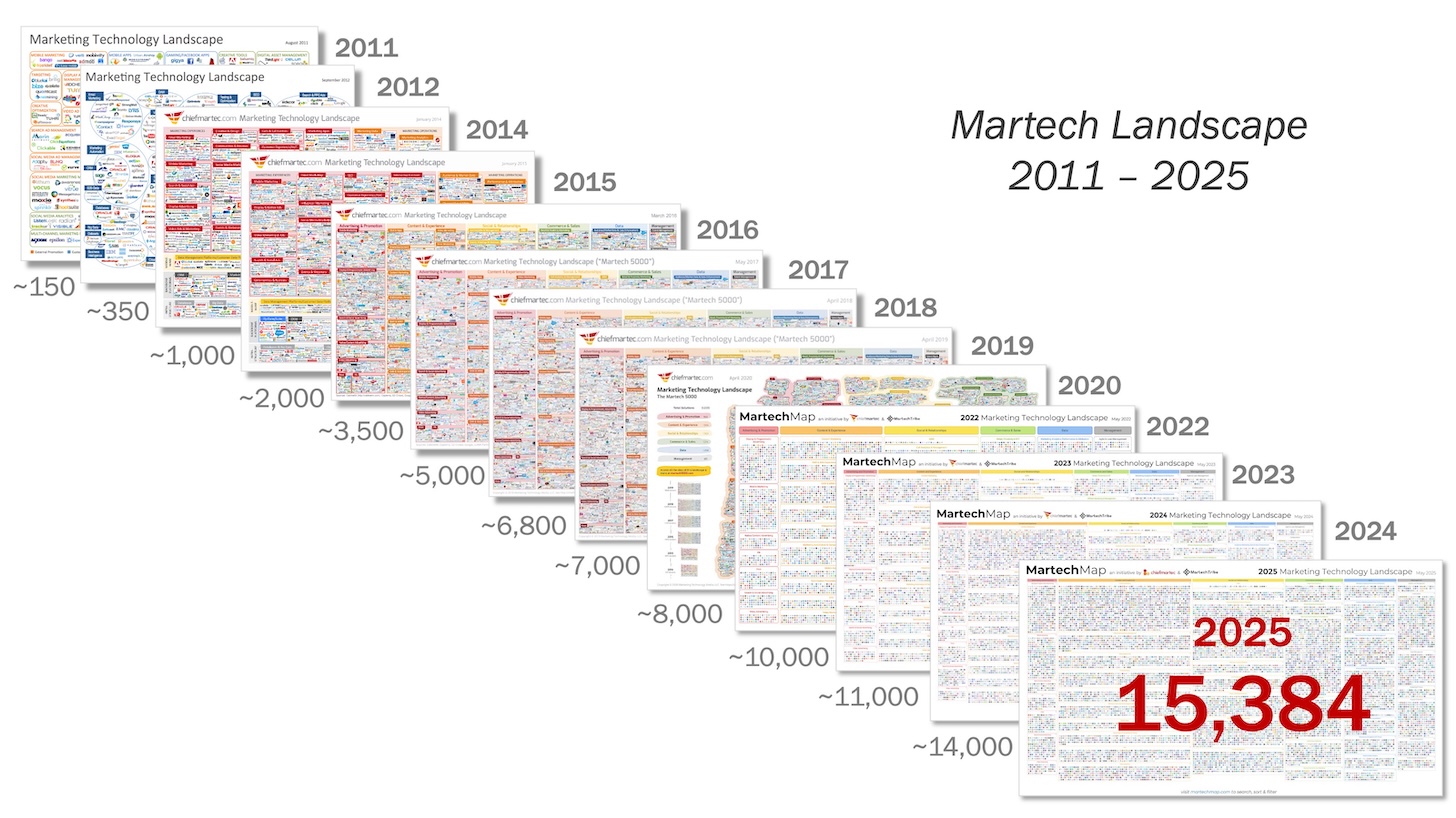
To understand the current state of marketing technology, one must look at its trajectory. In 2011, the first official landscape identified 150 solutions. Critics and industry analysts have spent the better part of the last decade predicting a "great collapse," arguing that such a fragmented market was unsustainable. Yet, reality has defied these forecasts at every turn.
- 2011: The inaugural landscape launches with 150 solutions.
- 2015-2018: The "era of explosion," where venture capital flooded the space, leading to the rise of specialized SaaS platforms.
- 2021-2023: The integration phase, characterized by the rise of enterprise platforms and the beginning of "stack" consolidation.
- 2024-2025: The AI-native era, where generative AI lowered the barrier to entry, triggering a new wave of startups despite macroeconomic pressures.
Since 2011, the martech landscape has grown by an incredible 100x. If represented as a percentage, that is a 10,156% increase—a figure that underscores the relentless appetite for specialized digital tools to solve granular business problems.
Supporting Data: The Dynamics of Churn and Innovation
The growth of the landscape is often misinterpreted as a "bloated" market where every product survives. The 2025 report provides a sobering look at the reality of the ecosystem. While the number of solutions increased, this is a net figure that hides a turbulent cycle of birth and death.
The Churn Reality
This year, the research team evaluated 11,133 new candidates. Out of that massive pool, only 2,489 met the criteria to be added to the landscape. Simultaneously, 1,211 solutions were removed—a churn rate of 8.6%.
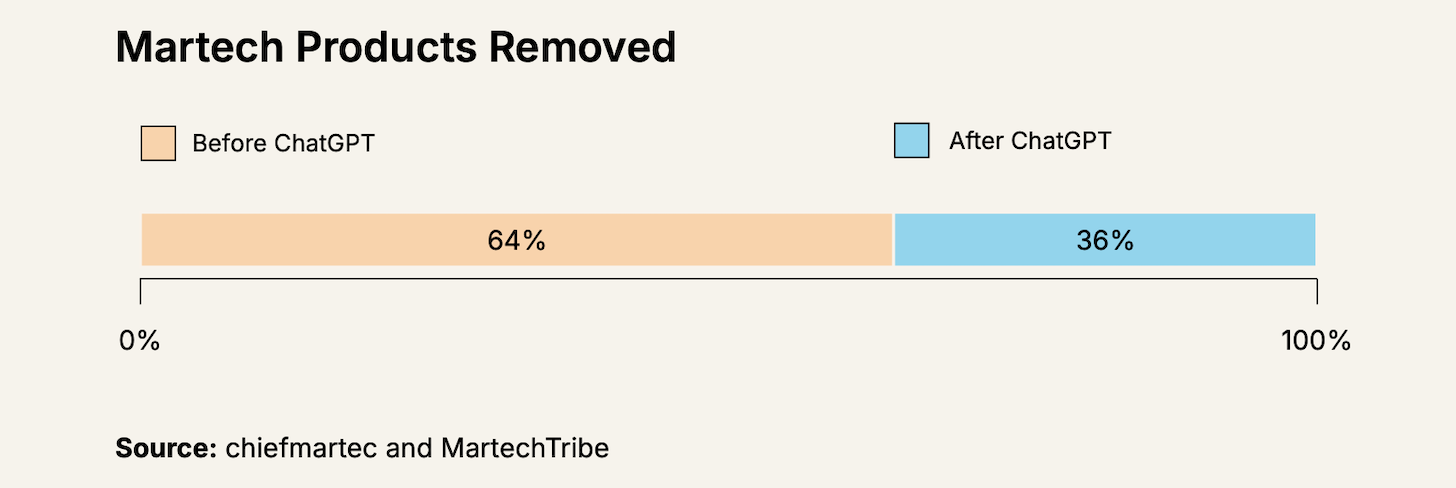
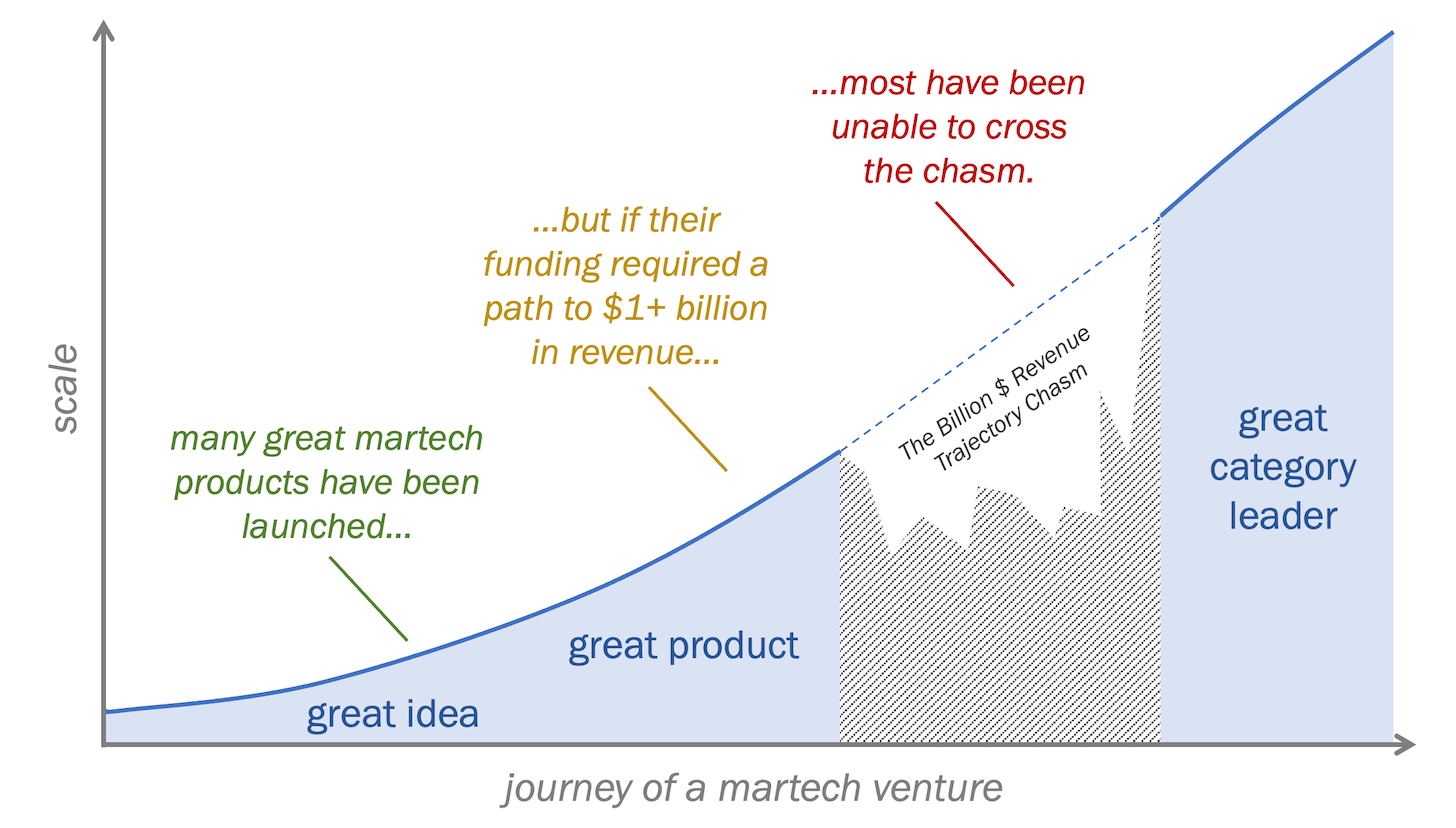
Crucially, the "death" of these companies is not limited to the new, AI-native entrants. Two-thirds of the companies removed this year originated in the 2010–2020 window. This signals a significant "Great Consolidation." The early pioneers of the martech boom are either being absorbed into larger ecosystems or are failing to find a sustainable path to profitability as the market matures. As the report poignantly notes, referencing Four Weddings and a Funeral, these companies had their moment of adoration, but the laws of economic gravity have finally caught up with them.
Growth Across Sectors
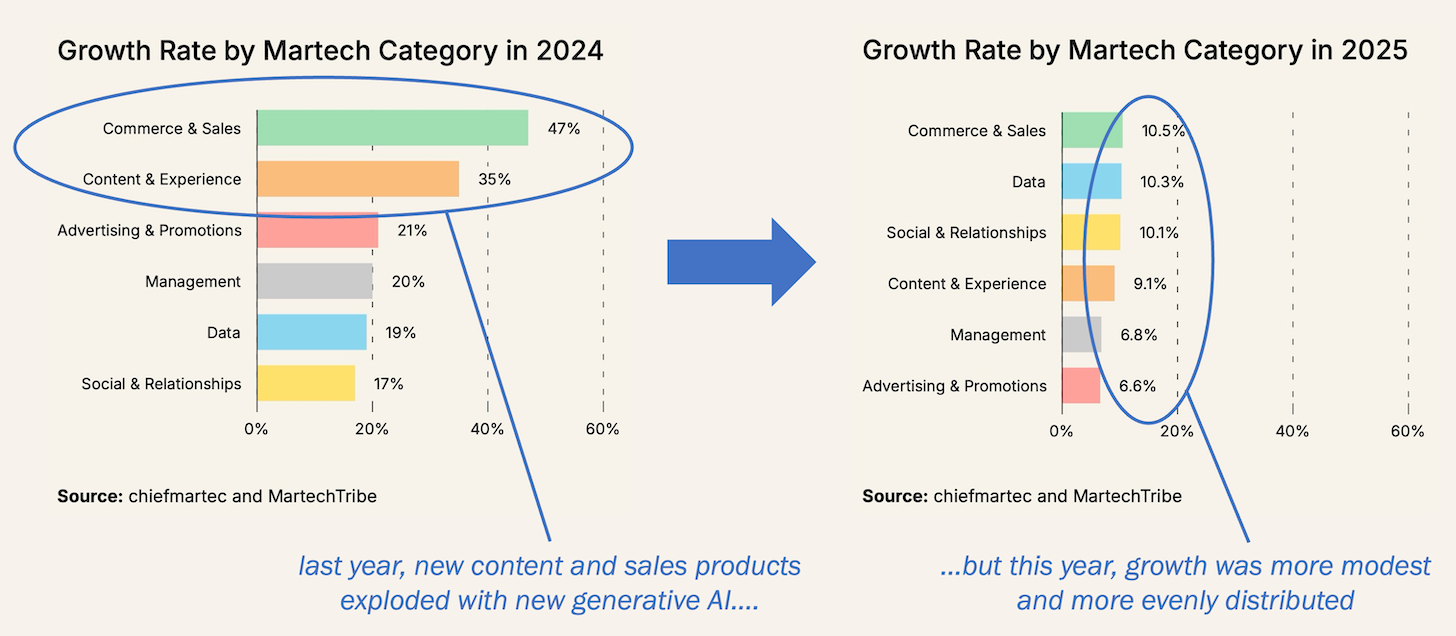
While last year saw massive spikes in content and sales categories—driven by the immediate utility of generative AI—the 2025 growth is more balanced. Across the six major domains of the landscape, we see a steady 7-10% expansion.
One outlier is the SEO category, which grew by 24%, rising from 212 to 262 products. This growth is inherently ironic given the persistent industry chatter that "SEO is dead." However, the data suggests a pivot rather than an end: the emergence of "AI Optimization" (AIO) has created a fresh sub-sector, proving that when one technological door closes, another opens to service the new AI-driven search environment.
The Strategic Shift: Redefining the "Center" of the Stack
As the number of tools grows, marketing operations leaders are facing a "stack management" crisis. The 2025 report reveals a subtle but critical shift in what companies consider the "center" of their operations.
B2B Dynamics
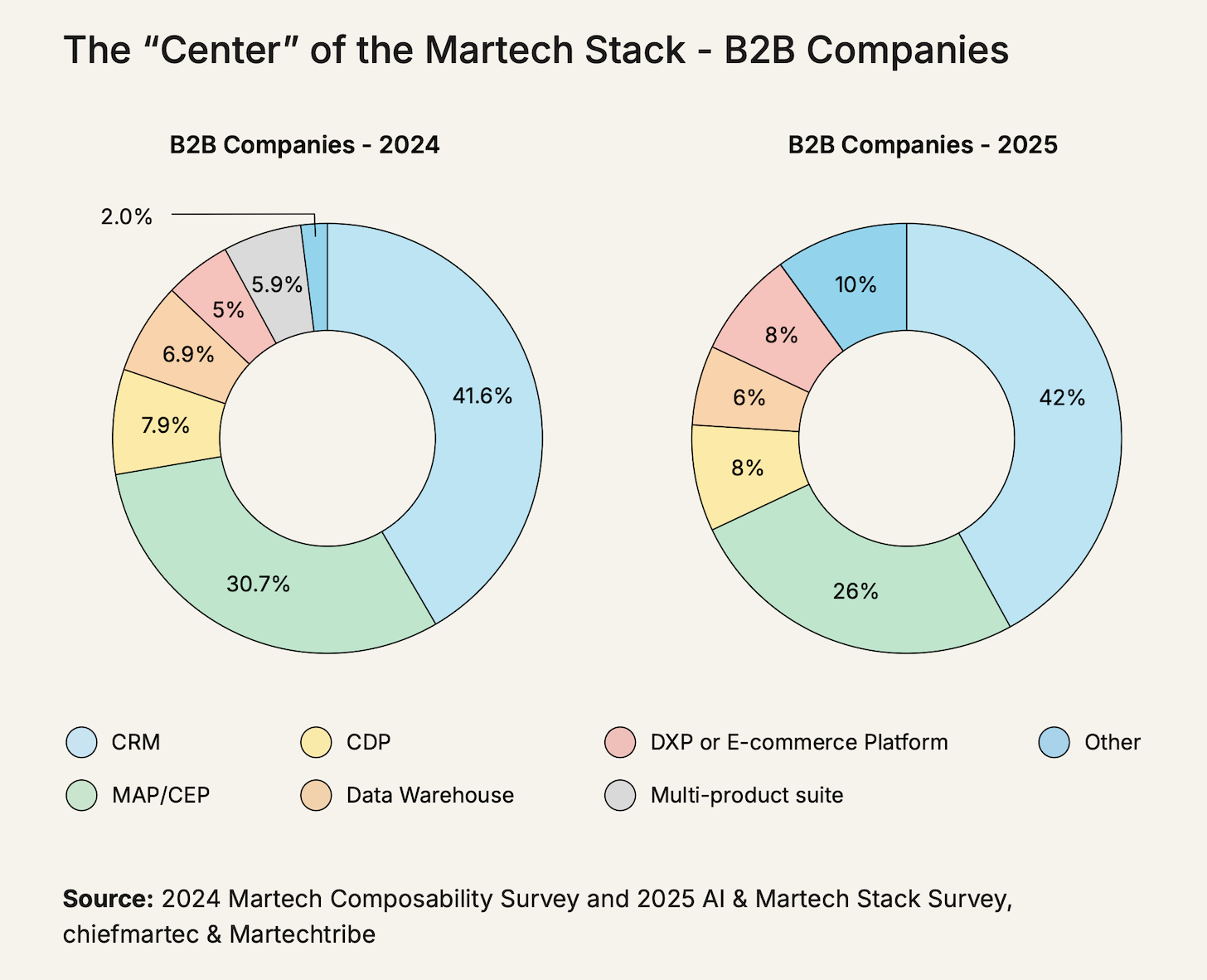
In the B2B space, the status quo remains largely intact. The CRM and the Marketing Automation Platform (MAP) continue to hold the center. However, there is a notable 5x increase in the "Other" category—rising from 2% to 10%. This indicates that more companies are opting for custom-built, proprietary platforms rather than relying on off-the-shelf monolithic suites.
The CDP Squeeze (B2C/Hybrid)
The most radical shift occurred in the B2C sector, where Customer Data Platforms (CDPs) saw a decline in their status as the central "hub" of the stack, dropping from 26.9% to 17.4%. This is not necessarily a sign of failure for CDPs, but rather a functional evolution.
The data suggests that CDP capabilities are being bifurcated. They are being pushed "down" into the cloud data warehouse layer (the rise of "composable CDPs") or "up" into the engagement layer, where CRM and MAP vendors are increasingly baking CDP functionality directly into their platforms.
The Rise of the "Hypertail"
While the 15,384 products in the official landscape are impressive, they are merely the tip of the iceberg. The report introduces a new concept: the Hypertail.
This refers to the billions of custom-built applications, agents, and automation workflows that are being generated within organizations. Five to ten years ago, building custom software was a high-barrier endeavor reserved for large engineering teams. Today, the convergence of low-code/no-code platforms and Generative AI has democratized software creation.
The "Vibe Coding" Era
Professional developers are increasingly utilizing "vibe coding"—using natural language prompts to generate functional applications in hours rather than weeks. For the non-technical "citizen developer," the effect is even more profound. AI assistants like ChatGPT, Claude, and Gemini act as silent partners, spinning up custom scripts and workflows in the background of everyday tasks.
This leads to a paradox: while the official martech landscape is consolidating at the top, the internal martech landscape is exploding at the bottom. Organizations are becoming ecosystems of ephemeral software that may exist for only a single campaign or a specific operational hurdle.
Implications for the Future
The 2025 Martech Landscape sends a clear message: The era of the monolithic, one-size-fits-all stack is over.
1. Resilience Through Integration
For marketing leaders, the proliferation of AI-native tools means that "stack sprawl" is inevitable. The competitive advantage will not come from limiting the number of tools, but from the ability to integrate them seamlessly. The winners will be those who can connect the "hypertail" of custom AI agents to the core systems of record (CRM/Data Warehouse).
2. The Return to Customization
The 5x increase in custom-built platforms in B2B suggests that companies are tired of "vendor lock-in." When software is cheap to build and easy to maintain, the incentive to build a proprietary tool that fits a unique business process outweighs the ease of buying a generic, feature-bloated SaaS product.
3. The New Skillset
The role of the "Marketing Technologist" has evolved. In 2010, it was about connecting APIs and managing databases. In 2025, it is about "AI orchestration"—managing the relationship between human strategy and autonomous software agents.
Conclusion: Download the Full Report
The 2025 State of Martech report is a comprehensive roadmap for an industry in constant motion. It confirms that despite the fears of a market bubble, the demand for technological solutions to business problems remains insatiable.
As we look toward 2026, the question is no longer "How many tools can we manage?" but rather "How effectively can we curate, automate, and orchestrate our software?" The landscape is vast, but with the right framework, it remains navigable.
For those seeking to navigate this complexity, the full State of Martech 2025 report is available for download, providing deep-dive data, expert analysis, and a comprehensive breakdown of the 49 categories defining the next generation of marketing.
