
The Blueprint of Disruption: Scaling Lessons from Uber, Spotify, and Airbnb
In the modern digital economy, the difference between a stagnant startup and a global juggernaut often boils down to a specific set of operational philosophies. Companies like Uber, Spotify, and Airbnb have done more than just enter their respective markets; they have fundamentally rewritten the rules of engagement. By transitioning from niche platforms to essential utilities, these firms have demonstrated that accelerated growth is not a matter of luck, but the result of a rigorous, repeatable framework.
For businesses looking to navigate the complexities of rapid technological advancement and shifting consumer expectations, the growth strategies of these three titans offer a masterclass in modern business architecture. By dissecting their early-stage maneuvers and scaling methodologies, we can identify five pillars of success that any ambitious organization can apply today.
1. The Culture of Perpetual Experimentation
At the heart of the "growth hacker" mentality is the rejection of static planning. Uber, Spotify, and Airbnb operate on the principle that if you aren’t testing, you aren’t learning.
From Black Cars to Global Logistics
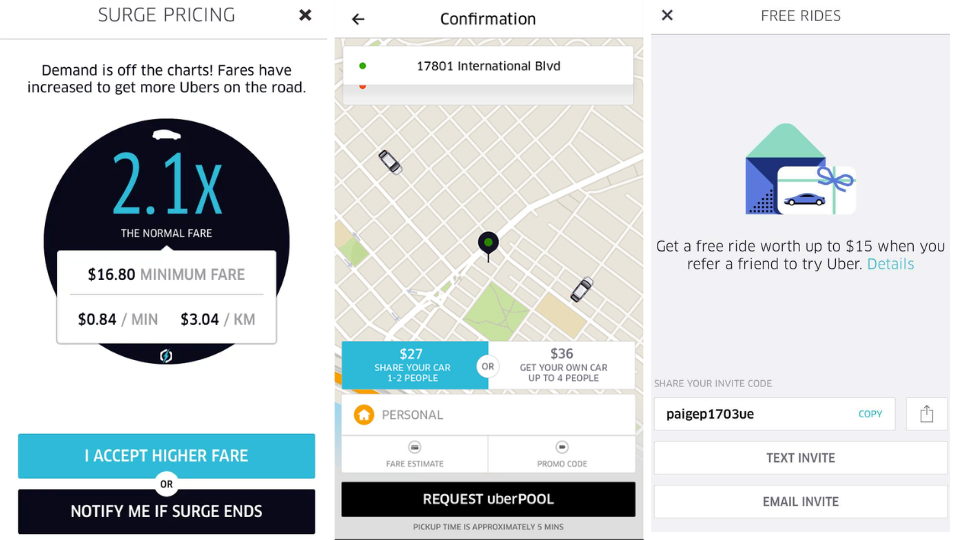
Uber’s trajectory serves as a primary example of iterative evolution. When it launched as UberCab in 2010, it was a high-end black car service. Had the company remained tethered to that initial vision, it would likely have remained a boutique luxury service. Instead, the company treated its business model as a living experiment. By launching UberX, then UberPOOL, and eventually UberEats, the company effectively tested the elasticity of its logistics network.
The introduction of "Surge Pricing"—a mechanism to balance supply and demand—was arguably the most significant experiment in the company’s history. It moved the company away from fixed-rate taxi models and into a dynamic, real-time marketplace. Similarly, the UberPOOL experiment sought to solve efficiency issues by testing whether users would sacrifice privacy for lower costs. The success of these experiments was not predetermined; they were calculated risks backed by real-time user feedback.

Visual Trust: The Airbnb Photography Pivot
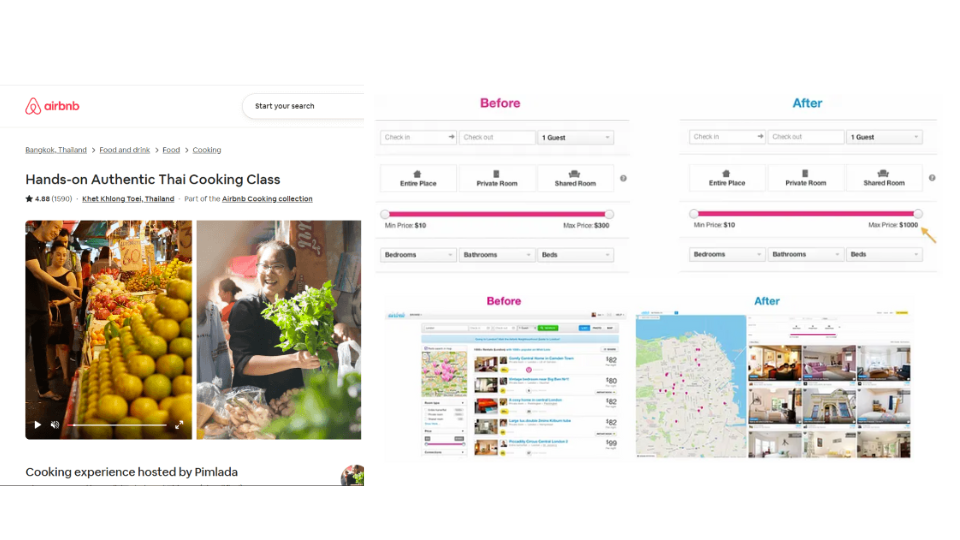
In the early days of Airbnb, the company faced a significant conversion hurdle: low-quality, amateur photos of apartments were failing to build the trust necessary for strangers to book stays. Instead of relying on marketing copy, Airbnb leadership conducted a "boots-on-the-ground" experiment. They personally went to New York City to take professional-grade photos of listings.
The data was immediate and undeniable: professional photography led to significantly higher booking rates. This small-scale experiment became a global standard, transforming the platform from a "couch-surfing" site into a premium travel alternative. Today, Airbnb runs over 500 concurrent tests to optimize every micro-interaction of the guest-host journey.
2. Data-Driven Decision Making: Beyond Intuition
In the past, business strategy was often guided by executive intuition. Today, the most successful companies treat data as the ultimate source of truth.
Algorithmic Personalization
Spotify’s dominance in the music industry is not merely a result of its catalog size, but of its algorithmic intelligence. By analyzing millions of data points—skip rates, search queries, listening times, and time of day—Spotify creates hyper-personalized experiences like "Discover Weekly."
This is not just a feature; it is a retention engine. By leveraging machine learning to curate music, Spotify reduces the "decision fatigue" that plagues other streaming services. The data tells the company what the user wants before the user even knows they want it.
Smart Pricing and Predictive Routing
Airbnb and Uber utilize sophisticated data-driven engines to manage their marketplaces. Airbnb’s "Smart Pricing" tool analyzes local events, seasonality, and demand trends to help hosts set prices that maximize their earnings while ensuring high occupancy.
Similarly, Uber’s routing algorithms process vast amounts of traffic data to provide drivers with the most efficient paths. These systems turn a chaotic urban environment into a predictable, measurable ecosystem, ensuring that reliability remains consistent regardless of the scale of the operation.
3. The "Fail Fast" Philosophy
Innovation is inherently risky. The companies that survive the long term are those that have institutionalized the ability to fail gracefully.
Calculated Risk at Scale
"Failing fast" is often misunderstood as being reckless. In reality, it is a disciplined approach to identifying the viability of a project before it consumes too many resources.
- Airbnb: Early on, the founders faced rejection from investors and struggled to find market fit. They learned that they had to stop "selling" and start "listening." They embraced the feedback that guests were more concerned with the quality of their stay than the price, leading to their focus on trust-building mechanisms like verified IDs and robust review systems.
- Spotify: The company’s pivot toward podcasts is a masterclass in aggressive, calculated risk. By acquiring networks and exclusive content like The Joe Rogan Experience, Spotify essentially bet its future on becoming an "audio-first" company rather than just a "music-first" one. They accepted the risk of alienating some purists to capture a larger share of the general audio market.
4. Cross-Functional Collaboration: Breaking Silos
Large organizations often fail because departments operate in isolation. The "Growth Hacker" ethos requires that engineering, design, marketing, and data science work as a unified front.
The Power of Integrated Teams
Airbnb’s growth is built on the integration of its functional teams. When launching a new feature, they don’t just assign a product manager; they assemble a cross-functional "pod." This ensures that the technical constraints are understood by the marketers, and the user experience (UX) is refined by the engineers.
At Spotify, the "Squad" model—where autonomous teams are composed of members from different disciplines—has become the industry standard for agile development. By breaking down departmental silos, Spotify ensures that the software engineers understand the music licensing business, and the music curators understand the technical limitations of the app’s interface. This cohesion allows for rapid deployment of new features without the friction of bureaucratic overhead.
5. The Obsession with Seamless UX
Ultimately, the most successful growth strategy is a product that is so easy to use it feels invisible.
Removing Friction
Uber’s fundamental value proposition was the removal of friction from the taxi-hailing process. No more waving down cabs, no more cash transactions, no more tipping uncertainty. The "magic" of the Uber app is that it makes the logistics of transportation disappear.
Similarly, Airbnb’s platform is designed to make the daunting process of staying in a stranger’s home feel as safe and routine as booking a hotel. Through transparent reviews, secure payment gateways, and a clean, responsive interface, they have normalized a behavior that, twenty years ago, would have seemed dangerous or strange.
The Role of Design in Growth
Spotify’s interface is designed for exploration. By allowing users to seamlessly transition between devices—a feature known as "Spotify Connect"—the company ensures that the music never stops. This commitment to a frictionless, multi-device experience is what keeps users loyal to the platform, even as competitors emerge with similar libraries.
Implications for Modern Business
The strategies employed by Uber, Airbnb, and Spotify are not exclusive to Silicon Valley giants. The underlying principles—constant testing, data-driven strategy, a culture that embraces failure, cross-functional unity, and a ruthless focus on user experience—are accessible to any business leader willing to implement them.
As the digital landscape continues to fragment, companies that refuse to adapt will inevitably lose their competitive advantage. The lesson for the modern entrepreneur is clear: growth is a byproduct of a systematic approach to innovation. By treating every product update as an experiment and every user interaction as a data point, companies can move beyond mere survival and enter a cycle of sustained, exponential growth.
The question for your organization is no longer "what is our next big idea?" but rather, "how quickly can we test our next hypothesis?" In the age of disruption, speed of learning is the only sustainable competitive advantage.
