

Navigating the Shift: A Comprehensive Guide to Managing Company Change Announcements
In the fast-paced world of business, evolution is inevitable. Whether a company is undergoing a strategic rebrand, navigating a complex merger, or simply updating its contact infrastructure, the way these changes are communicated to the public is a defining moment. A company change announcement is more than a mere administrative update; it is a critical touchpoint that can either solidify customer trust or lead to a catastrophic loss of brand equity.
For stakeholders and customers, change often creates uncertainty. A well-crafted announcement acts as a bridge, reassuring the audience that the core values and service quality they rely on remain intact, even if the corporate exterior is transforming.
The Anatomy of a Successful Transition
A company change announcement is a formal notification designed to inform clients, partners, and the public of significant organizational shifts. These communications typically address changes in company branding, mergers, acquisitions, leadership transitions, or shifts in operational contact details.
The primary objective is to mitigate confusion. When a business fails to communicate clearly, it risks triggering “brand disconnect”—a state where customers no longer recognize the entity they once trusted. By contrast, a transparent, proactive announcement strategy serves to reinforce the company’s value proposition and provides a platform to re-engage the audience with a renewed vision.

The Strategic Importance of Communication
The stakes of these announcements extend far beyond public relations. They are fundamentally tied to the company’s operational health and bottom line.
Protecting Sender Reputation and Deliverability
One of the most overlooked risks of a rebrand or domain change is technical. When a company abruptly shifts its email domain without warning, it often triggers spam filters. Subscribers who receive an email from an unfamiliar “From” address are likely to mark it as spam, which can permanently damage the sender’s reputation and hinder deliverability for all future communications.
Mitigating Churn and Negative Feedback
Sudden, unexplained shifts in corporate identity often lead to an immediate spike in unsubscribes and customer support complaints. Data consistently shows that providing context—explaining the “why” behind the change—significantly boosts engagement and reduces the friction associated with the transition.
Turning Change into a Marketing Opportunity
A rebrand is not just a defensive measure; it is a powerful marketing tool. Many organizations leverage these moments to launch new product lines, highlight growth milestones, or pivot their focus toward better-aligned market segments. It is a rare moment where a company has the undivided attention of its entire audience.

Executing the Transition: A Seven-Step Protocol
To ensure a seamless transition, companies should follow a structured communication framework.
1. Clarity in the Subject Line
The subject line is the gatekeeper of your message. It must be immediate and unambiguous. Avoid vague phrases like “Important Update from Our Team.” Instead, utilize direct, descriptive language:
- For Rebrands: "We’ve got a new look! Introducing [New Name]."
- For Mergers: "Exciting news: [Company A] and [Company B] are joining forces."
- For Contact Changes: "Important: Our email address is changing."
2. Leverage Trusted Channels
When announcing a change, the initial email should be sent from the existing, recognized “From” address. This maintains the established trust signal. Once the announcement has been socialized, the transition to the new email address can occur gradually.
3. Contextualize the "Why"
Customers need to understand the intent behind the change. Are you simplifying your name for better global recognition? Are you merging to provide better services? Be transparent about what is changing—and, perhaps more importantly, what is staying the same.

4. Address Customer Anxieties Proactively
Anticipate the "fear of the unknown." Address concerns regarding account access, payment methods, and service quality head-on. A brief FAQ section or a link to a support hub can prevent an influx of support tickets.
5. Visual Continuity
For visual rebrands, ensure that both the old and new branding appear in the announcement. This visual anchor allows the customer to draw a direct line between the company they know and the new identity you are presenting.
6. The Power of the Call-to-Action (CTA)
Every announcement needs a clear next step. Whether it is to “Learn More,” “Update Your Bookmarks,” or “Explore Our New Look,” a strong CTA guides the user’s journey through the transition.
7. The Multi-Wave Communication Plan
A single email is rarely enough. A successful strategy includes a sequence:
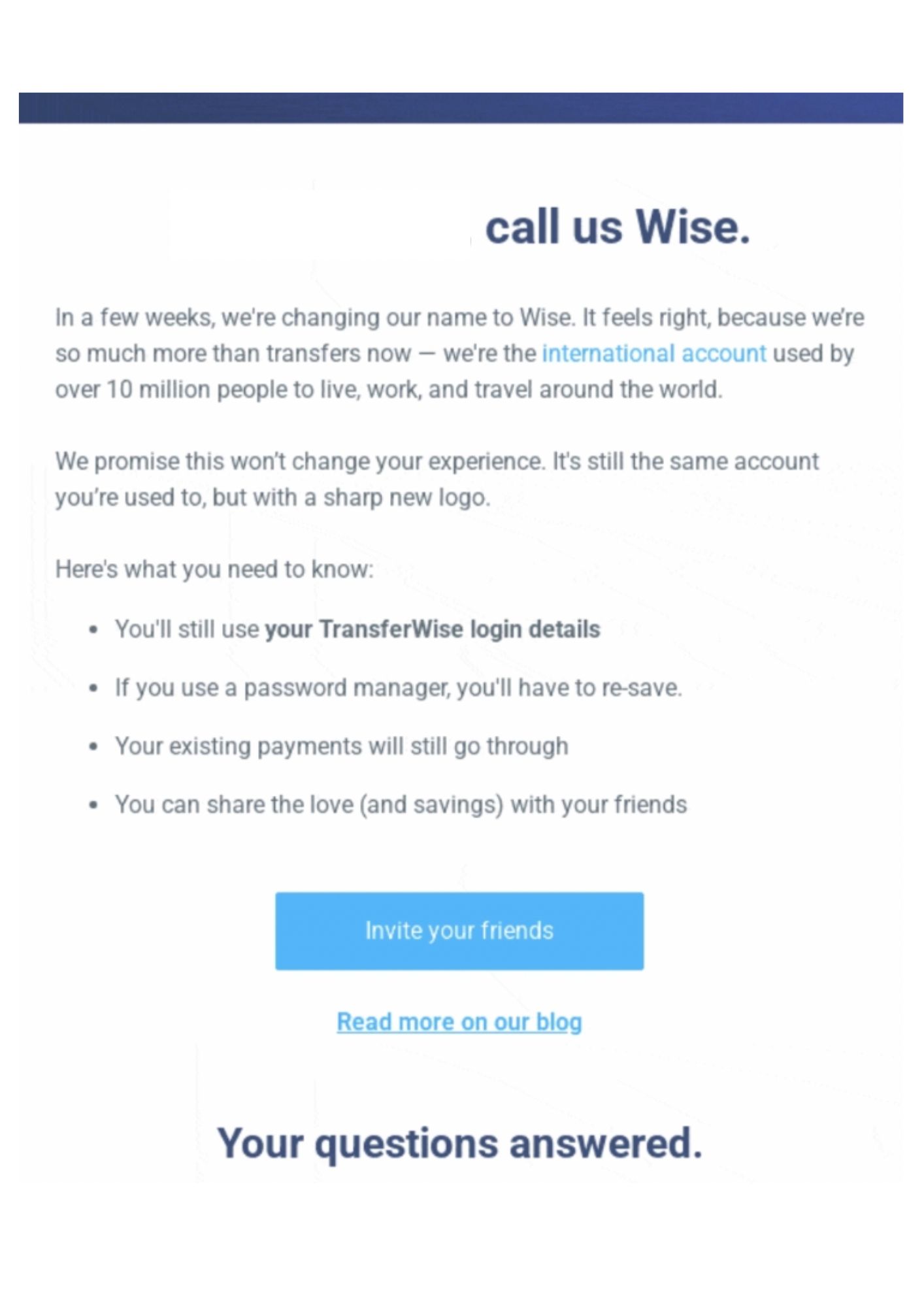
- 4 Weeks Out: Initial announcement.
- 1 Week Out: A reminder for those who missed the first message.
- Day Of: A "Go-Live" confirmation.
- Post-Transition: A follow-up addressing questions and re-engaging the user.
Multi-Channel Coordination
Email remains the cornerstone of any transition, but it should be supported by a multi-channel strategy.
SMS and Mobile Messaging
For high-value customers or time-sensitive operational changes, SMS provides a high-visibility channel. Keep these messages concise: "Heads up: [Company Name] is now [New Name]. Same service, fresh look. Visit [URL] for details."
Social Media and Web Presence
Update all social media profiles simultaneously to prevent confusion. Your website should feature a banner or a dedicated landing page explaining the transition, ensuring that organic traffic is met with the same narrative as your email subscribers.
In-App and In-Product Notifications
If your business operates through a software platform, in-app notifications are critical. Users who log in after a change should be greeted by a simple overlay or tooltip that explains the changes to the interface or branding.

Measuring Success: Metrics that Matter
A successful announcement is not measured by the absence of complaints, but by the presence of engagement. Track the following:
- Email Analytics: Open rates, click-through rates, and, crucially, the unsubscribe rate. An abnormal spike in unsubscribes suggests the communication was not handled with sufficient clarity.
- Customer Support Volume: A successful transition minimizes the influx of "What’s happening?" tickets. Monitor the volume of inquiries in the days surrounding the announcement.
- Long-Term Retention: In the months following the change, monitor customer lifetime value and churn rates to ensure the rebrand has not negatively impacted customer loyalty.
Common Pitfalls to Avoid
- The "Surprise Switch": Changing your brand identity without notice is a classic mistake. It is viewed as suspicious and often triggers spam filters.
- The "One-and-Done" Approach: Assuming that one email reaches 100% of your audience is a fallacy. Inboxes are crowded; you must communicate through multiple channels and multiple waves.
- Ignoring Automations: Often, a company will update its main newsletter but leave legacy branding in automated "Welcome," "Receipt," or "Password Reset" emails. This creates a fragmented and unprofessional user experience.
The Bottom Line: Change as Opportunity
A company change announcement is an inflection point. It is an opportunity to prove your organization’s maturity and commitment to its clients. By being transparent, proactive, and technically prepared, companies can ensure that their audience feels like a partner in the journey rather than a bystander to a mystery.
Whether you are a startup refreshing your visual identity or a corporation navigating a global merger, the goal remains the same: preserve the trust you have earned while paving the way for the future. With a well-executed communication strategy, you don’t just announce change—you manage the narrative, reinforce your brand value, and set the stage for your next chapter of growth.
Disclaimer: This guide provides general information and discussion about business communication and related subjects. The content provided should not be construed as and is not intended to constitute financial, legal, or tax advice. You should seek the advice of professionals prior to acting upon any information contained herein.
