
The Ultimate Social Media Image Size Guide for 2026: A Strategic Handbook for Digital Marketers
In the rapidly evolving landscape of digital marketing, visual content remains the primary driver of engagement. Yet, for social media managers, one persistent technical hurdle remains: the constantly shifting landscape of platform-specific image dimensions. Whether you are launching a high-stakes campaign or managing daily community interactions, using the incorrect image size can result in pixelated content, awkward cropping, and a loss of professional authority.
As we navigate 2026, the platforms have refined their requirements to prioritize mobile-first, high-resolution experiences. This guide serves as your comprehensive, definitive resource for navigating the current image dimension standards across every major social network.
![Social media image sizes for all networks [October 2026]](https://blog.hootsuite.com/wp-content/uploads/2023/01/Social-Media-Image-Sizes-2023.png)
The Evolution of Visual Standards: A Chronology of Change
Social media platforms rarely make sweeping, singular changes to their design interfaces. Instead, they implement incremental updates based on device hardware advancements and user behavior patterns.
- Pre-2022: The era of the "Square Post" dominated, with most platforms enforcing strict 1:1 aspect ratios to maintain grid uniformity.
- 2023–2024: The "TikTokification" of social media shifted the focus toward full-screen, 9:16 vertical video and image formats. This forced legacy platforms like Facebook and LinkedIn to adopt more forgiving, vertical-friendly layouts.
- 2025–2026: The current era is defined by high-density displays (Retina/4K) and adaptive containers. Platforms now use "smart cropping," where images are rendered differently based on whether the user is on a foldable phone, a tablet, or a desktop monitor.
Understanding this chronology is essential: it explains why your images from three years ago may look "stretched" or "blurry" today. The platforms aren’t broken; they are simply optimized for the next generation of screen technology.
![Social media image sizes for all networks [October 2026]](https://blog.hootsuite.com/wp-content/uploads/2026/09/BLOG-2-556x556.png)
Core Platform Dimensions: 2026 Standards
To maintain brand consistency, your creative team should operate under these established guidelines for the current year.
Instagram: The Visual Gold Standard
Instagram remains the most unforgiving platform regarding dimensions.
![Social media image sizes for all networks [October 2026]](https://blog.hootsuite.com/wp-content/uploads/2025/12/Social-media-image-sizes-for-all-networks-January-2026-1-620x465.png)
- Profile Picture: 320 x 320 pixels. While displayed as a circle, you must ensure your logo or face is centered to avoid edge-cropping.
- Feed Posts: The 4:5 vertical aspect ratio (1080 x 1350 pixels) is the "sweet spot" for maximizing screen real estate.
- Stories & Reels: 1080 x 1920 pixels. Always keep text, logos, and critical CTAs within the "safe zone"—roughly 14% from the top and 35% from the bottom to avoid UI overlap.
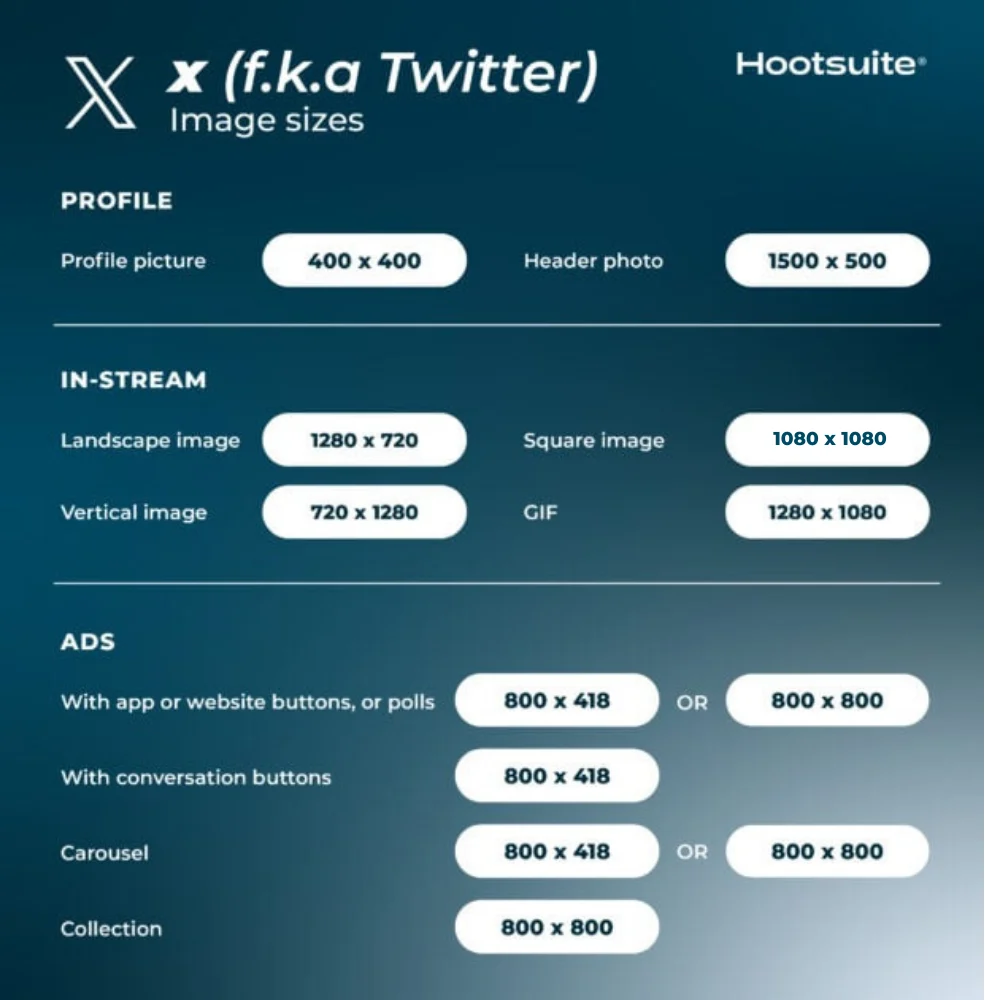
X (Formerly Twitter): The Multimedia Pivot
X has moved beyond text, focusing heavily on its new video and image-rich feed.
- Profile Photo: 400 x 400 pixels.
- Header Photo: 1500 x 500 pixels. Note that mobile devices will crop the sides, so keep your branding centered.
- In-Stream Photos: 1600 x 900 pixels remains the industry-recommended resolution for high-fidelity rendering.
Facebook: The Desktop-Mobile Hybrid
Facebook’s dual-nature (desktop and mobile) makes it the most complex to optimize.
![Social media image sizes for all networks [October 2026]](https://blog.hootsuite.com/wp-content/uploads/2025/04/Social-media-image-sizes-Instagram-620x558.jpg)
- Cover Photo: 851 x 315 pixels for desktop. For mobile, the platform will crop this significantly, so ensure the primary visual interest is in the center 640 x 315 pixels.
- Shared Link Previews: 1200 x 627 pixels. This ensures your URL cards don’t appear truncated in the feed.
LinkedIn: Professional Precision
LinkedIn’s algorithm prioritizes high-resolution, professional imagery.
- Company Logo: 300 x 300 pixels.
- Cover Image: 1128 x 191 pixels.
- Standard Post: 1200 x 627 pixels for link-based posts; 1200 x 1200 pixels for image-only posts to maximize engagement.
TikTok & Emerging Platforms
- TikTok: Stick to 1080 x 1920. With the rise of "Photo Mode" carousels, these dimensions are critical for ensuring your content remains immersive.
- Bluesky: As this platform grows, keep to the 1000 x 1000 pixel standard for profiles and 3000 x 1000 for banners.
- Threads: Use 1440 x 1920 for posts to ensure the highest quality rendering on Meta’s latest text-based interface.
Supporting Data: Why Dimensions Affect ROI
Research indicates that "optimally sized" images—those that do not trigger a platform’s auto-compression algorithms—receive up to 40% higher engagement rates. When an image is uploaded in a size that the platform must shrink or stretch, the server applies aggressive compression. This compression causes "artifacting," where the image looks fuzzy or blocky.
![Social media image sizes for all networks [October 2026]](https://blog.hootsuite.com/wp-content/uploads/2025/12/Social-media-image-sizes-for-all-networks-January-2026-1-1-620x629.png)
User psychology plays a significant role here: a clean, sharp, professional image signals brand legitimacy. Conversely, a blurry or poorly cropped image subconsciously signals that the brand is either technologically behind or does not pay attention to detail.
Official Responses and Platform Logic
Representatives from Meta and LinkedIn have frequently noted that their "Auto-Resize" features are designed to save bandwidth, not to improve aesthetic quality. By using the platform’s native recommended dimensions, you bypass their automated compression engines.
![Social media image sizes for all networks [October 2026]](https://blog.hootsuite.com/wp-content/uploads/2025/12/Social-media-image-sizes-for-all-networks-January-2026-3-620x753.png)
- The "Safe Zone" Rule: All platforms now utilize dynamic UI overlays (like "Follow" buttons or "Share" icons). Official platform documentation consistently warns that failing to account for these overlays will result in blocked text, which directly correlates to lower click-through rates (CTR).
Strategic Implications for Modern Enterprises
For global brands and small businesses alike, the manual resizing of assets for five or more platforms is a drain on resources.
The Cost of Inconsistency
If an enterprise publishes a campaign with an incorrect aspect ratio, they risk:
![Social media image sizes for all networks [October 2026]](https://blog.hootsuite.com/wp-content/uploads/2025/04/Social-media-image-sizes-LinkedIn-620x651.jpg)
- Brand Dilution: When logos or taglines are cut off by a crop, the brand’s visual identity is weakened.
- Algorithmic Penalties: While not always explicitly stated, social media algorithms often down-rank content that is reported as "low quality" or "distorted."
- Wasted Spend: In paid advertising, a distorted image is a waste of ad budget. If a user cannot read the text in your ad due to an incorrect size, they will not click.
Solving the Workflow Crisis
The most effective way to manage these requirements is through centralized content creation platforms. Tools like Perch by Hootsuite allow teams to design, edit, and export assets using platform-specific templates. By standardizing the workflow—moving from a high-resolution "Master Asset" to automated, pre-sized "Platform Assets"—teams can reduce the time spent on administrative design tasks by up to 60%.
Conclusion: The Future of Visual Content
As we move further into 2026, the distinction between "image" and "video" is blurring. With the advent of AI-generated assets and dynamic content, the importance of resolution control is only increasing.
![Social media image sizes for all networks [October 2026]](https://blog.hootsuite.com/wp-content/uploads/2025/04/Social-media-image-sizes-Pinterest-620x517.jpg)
To stay ahead, social media teams should:
- Audit: Review your top-performing posts from the last six months. Did the ones with the highest engagement follow these size guidelines?
- Template: Create a library of "brand-safe" templates for every platform.
- Verify: Always check your posts on both a high-end mobile device and a desktop browser before final scheduling.
By mastering these dimensions, you aren’t just filling a digital container; you are ensuring that your brand’s message is delivered in the highest possible fidelity, preserving the integrity of your visual storytelling and, ultimately, driving better results for your organization.
